The modern mullet is a stylish, textured men’s haircut that blends controlled length in the back with a cleaner, more wearable shape through the top and sides. The latest variations combine the classic style with custom fades, tapers, layers, fringes and flows, making it much more versatile than the old-school look. These sharper, more intentional styles, built on precisely blended cuts on the sides, are alluring, functional and aesthetically pleasing, making them popular with younger guys.
As a barber, I look at the modern mullet as a balance of contrast and flow. The right version can make thick hair look lighter, curly hair look more defined, and straight hair look more textured, but the wrong version can quickly become bulky, disconnected or hard to style.
In this guide, I’ll break down 23 trending modern mullet haircut styles for men, explaining who each look works best for while sharing practical tips on how to ask for, style, grow, and maintain the look. I will also cover choosing one based on your hair texture and asking your barber for it once you’re in the chair.
What Is The Modern Mullet?
A modern mullet is a haircut that keeps the hair short to medium on the top and sides while leaving deliberate length at the back. Trending variations combine the classic cut with fades, tapers, sharp layering and intentional texture. The founding principle, shorter in front and longer in back, remains intact, but what has changed is the execution. Where the original relied on grown-out, feathered sides, the latest style is precise, structured and unmistakably deliberate.

Every modern mullet is defined by three elements: the top and front, back and sides. The top is textured and layered, often finished with a fringe that falls toward the forehead. The sides are faded, tapered or scissor-cut, providing clean contrast. The back is the signature, a longer curtain or tail of hair that gives the cut its name and its attitude. The interplay between these three sections, and how aggressively they contrast, is what separates a subtle modern mullet from a bold one.

Styling also plays a major role in making the cut feel current. The goal is usually control with movement, not stiffness. Matte clay, texture spray or styling cream can enhance the top and crown, while curl cream or sea salt spray works well for natural waves and curls. Regular trims keep the sides clean and the back shaped, ensuring the mullet grows with intention rather than drifting into an unkempt look.
Modern Mullets with Fades and Tapers
Taper Fade Mullet
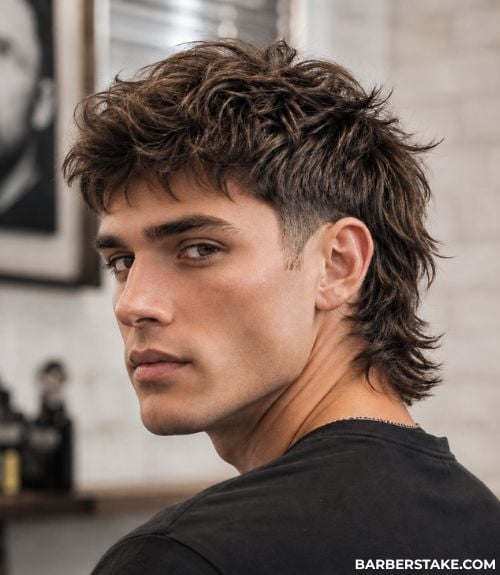
The taper fade mullet is the most common variation of the hairstyle, offers an accessible entry point into the trend and is the version I recommend most often to first-timers. The sides taper gradually without exposing skin, keeping the cut grounded and forgiving, while the textured top and modest back length introduce the mullet shape without shouting about it. It flatters nearly every face shape and grows out gracefully. Work matte clay through the top and let the back fall naturally for a relaxed, wearable finish.
Burst Fade Mullet
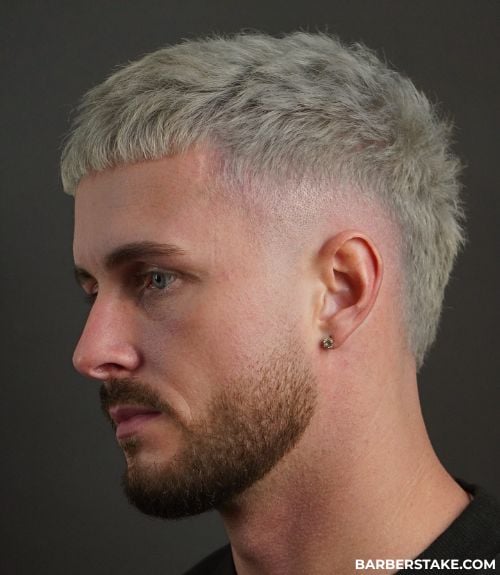
The burst fade mullet is all about contrast and curve. The fade arcs around the ear in a clean semicircle, leaving the area behind it longer and drawing the eye toward the mullet’s signature length at the back. The result feels dynamic and sculptural, a favorite among younger guys and anyone drawn to the cut’s more expressive side. Apply a texturizing spray or matte paste to the top, and ask your barber to keep the burst sharp with touch-ups every couple of weeks.
Drop Fade Mullet
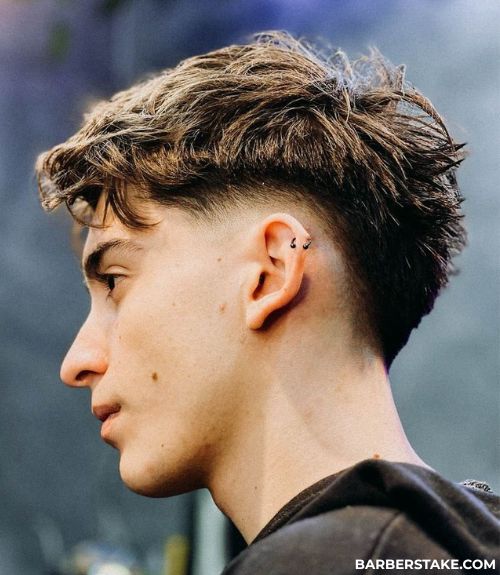
The drop fade mullet sends the fade on a downward arc behind the ear, mirroring and emphasizing the descending line of the mullet itself. It is a cohesive, harmonious pairing, the fade and the tail seeming to belong together rather than compete. This variation suits oval and oblong faces particularly well. Style the top with a light cream for movement, and let the back follow the natural curve the drop fade sets up.
Low Fade Mullet
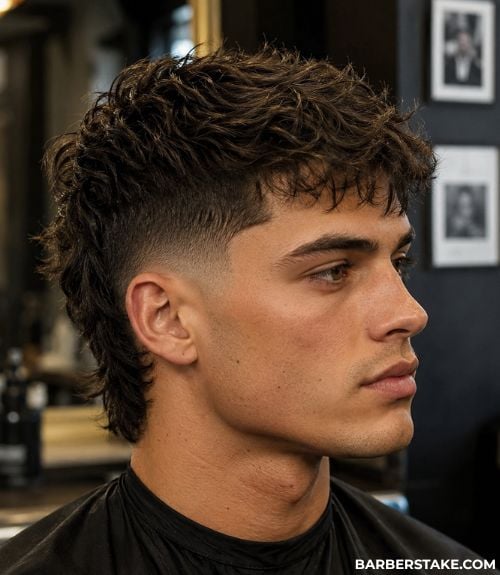
The low fade mullet keeps the fade close to the hairline, just above the ears, for a subtle, refined take on the cut. Most of the length and texture stays intact, which makes this one of the more conservative ways to wear a mullet. It is a smart choice for guys testing the waters or working in environments that reward restraint. Finish with a matte product and a loose hand for an understated, polished result.
Mid Fade Mullet
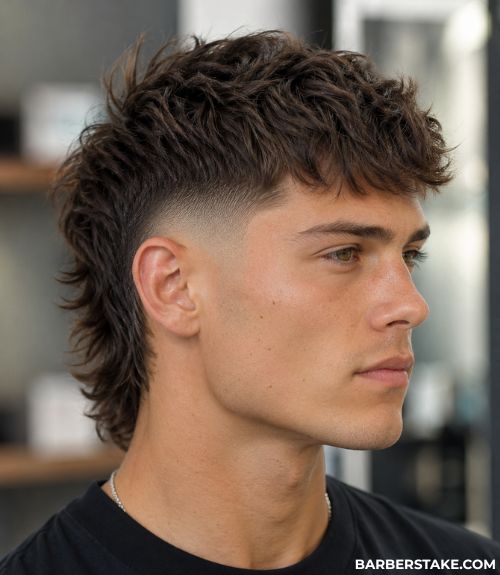
The mid fade mullet strikes the balance point, with the fade beginning around the temples to deliver noticeable contrast without the boldness of a high fade. It is the most versatile fade pairing for the mullet, flattering across face shapes and easy to dress up or down. Work texture through the top with clay or paste, and keep the back at a moderate length for a cut that reads modern without tipping into extreme.
High Fade Mullet
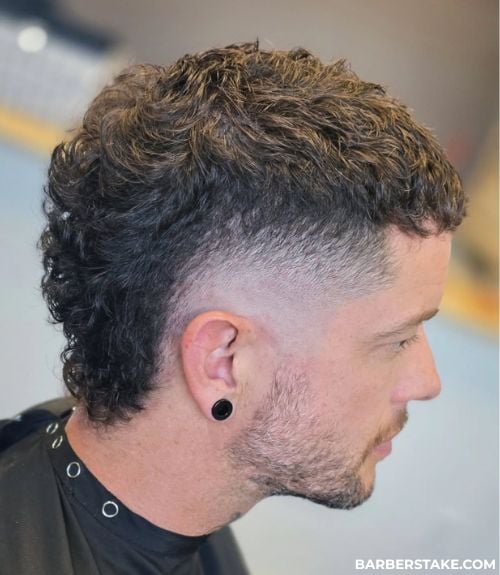
The high fade mullet is built for impact with faded sides that climb well above the temples, creating a stark, dramatic contrast against the length on top and at the back. This is the mullet at its most graphic and attention-commanding, best suited to confident wearers and rounder or oval face shapes that can carry the vertical emphasis. Style the top with a strong-hold matte product to keep the contrast crisp and deliberate.
Skin Fade Mullet

The skin fade mullet takes the contrast to its limit, blending the sides all the way down to bare skin. The effect is sharp, clean and unmistakably modern, the longer back made all the more striking by the smoothness of the faded sides. It is a high-maintenance choice, requiring a touch-up every ten to fourteen days, but few mullet variations look quite as fresh. Best on strong face shapes that suit a bold finish.
Scissor-Cut Taper Mullet

This scissor-cut taper mullet skips the clippers on the sides entirely, relying on a barber’s shears to taper the hair down gradually. The result is softer and more textured than a clipper fade, with a natural, slightly tousled quality that suits wavy and curly hair beautifully. It is the most low-maintenance mullet in the fade family, growing out gently rather than sharply. Apply a sea salt spray and let the cut air dry for an effortless finish.
Trendy Mullets Based on Hair Texture
Curly Mullet
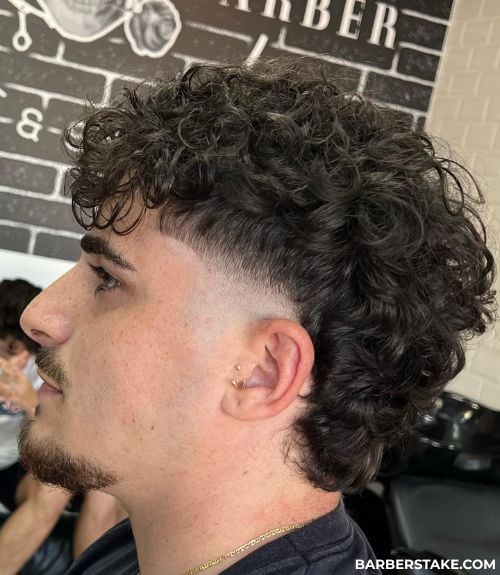
The modern curly mullet is a bold, expressive style that lets natural texture do most of the work. The curls create built-in volume through the top and crown, while the longer back gives the cut its signature shape and movement. Instead of looking harsh or overly retro, the curl pattern softens the silhouette, making the mullet feel more wearable, relaxed and effortlessly cool.
Ask your barber to keep the sides tapered or lightly faded to remove bulk and bring structure to the cut. The top should stay layered and textured, allowing the curls to sit naturally without collapsing, while the back should be shaped enough to flow without looking heavy.
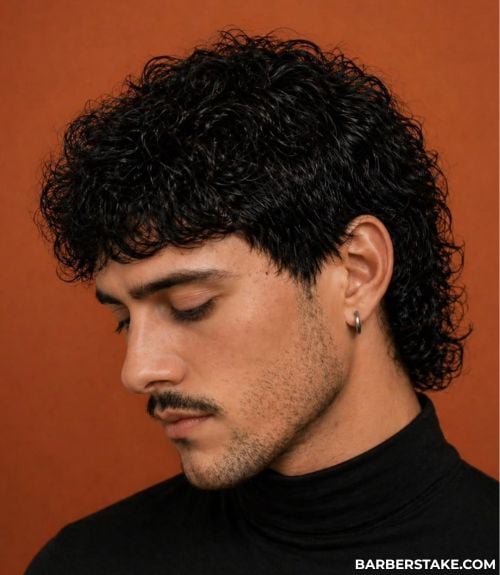
To style it, work a curl cream or lightweight mousse into damp hair, scrunch the curls into place, then air dry for a natural finish or diffuse for more volume and definition. The goal is controlled movement, not stiffness.
Straight Hair Mullet

The straight hair mullet is the cleanest, sharpest expression of the cut. Without natural curl or wave to soften it, every line, layer and length contrast reads with precision, which makes a skilled barber essential. The straight mullet rewards bold layering and sharp point-cutting. Apply a matte clay for grip and definition, since straight hair can otherwise fall flat, and consider a fringe to add interest at the front.
Textured Mullet

The textured mullet is a stylish men’s hairstyle that features point-cut layering and choppy, deliberate separation throughout the cut. The top, the fringe and the back all carry visible movement and grit. It is the antidote to anything that looks flat or blunt. Work a matte paste or texturizing powder through the hair with your fingers, and embrace the slightly undone, imperfect finish.
Wavy Mullet
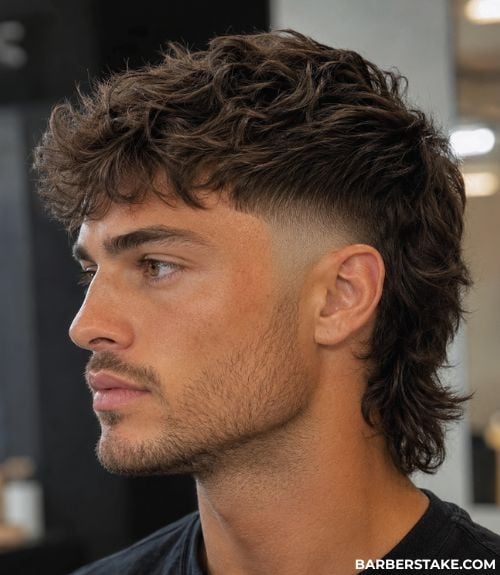
The modern wavy mullet is a stylish, natural-looking cut that uses movement to make the shape feel effortless. The waves add texture through the top and crown, while the longer back creates a soft, flowing finish that feels relaxed rather than rigid. Keep the sides tapered or lightly faded to remove bulk and give the cut structure. To style it, work in sea salt spray or a lightweight cream, then finger-style the hair back or let the waves fall naturally for an easy, confident look.
Edgy, Statement Mullets
Mohawk Mullet
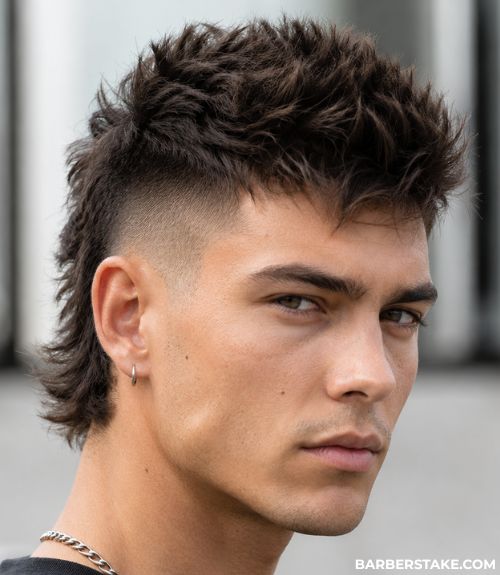
This mohawk mullet is an edgy hairstyle that combines two rebellious cuts into one uncompromising look, narrowing the length into a central strip that flows from the front all the way into the mullet’s tail. The sides are faded close or shaved for maximum contrast. This is the mullet at its loudest, a cut for guys who want to be noticed and have the confidence to back it. Use a strong-hold product to lift and shape the central strip.
Slicked-Back Mullet
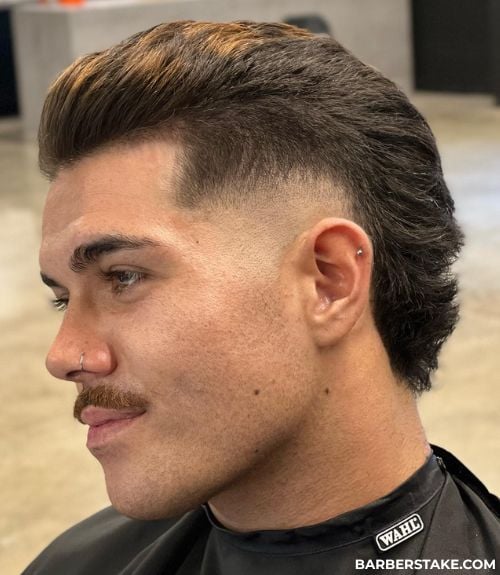
The slicked-back mullet is the most refined and unexpected member of the family, sweeping the top and the back away from the face for a sleek, almost formal silhouette. It proves the mullet can be polished rather than rebellious. This is a strong choice for guys who want the cut’s shape without its rough edges. Use a low-shine pomade or styling cream, and comb the hair back cleanly while it is still damp.
Thick Textured Mullet Fade with Heavy Fringe
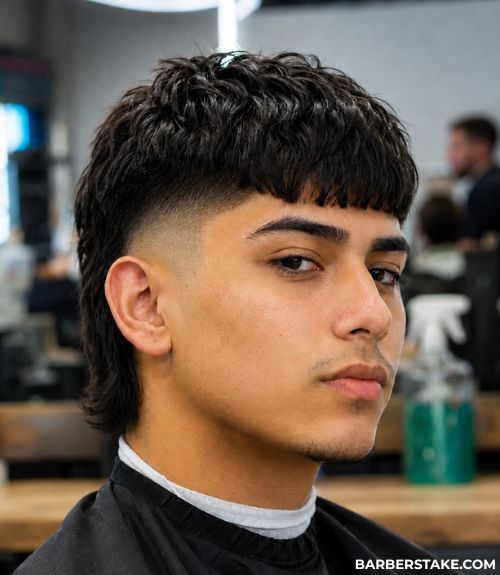
This thick, textured mullet fade features a heavy fringe, offering a stylish look for modern, trend-conscious men. The fuller fringe falls forward to frame the face, while choppy layers through the crown create movement and prevent the top from feeling bulky. A clean fade on the sides adds sharp contrast, making the longer back look intentional rather than grown out. Use matte clay or texture powder to separate the fringe, lift the crown and give the style a rugged, controlled finish.
Mullet with Hair Designs
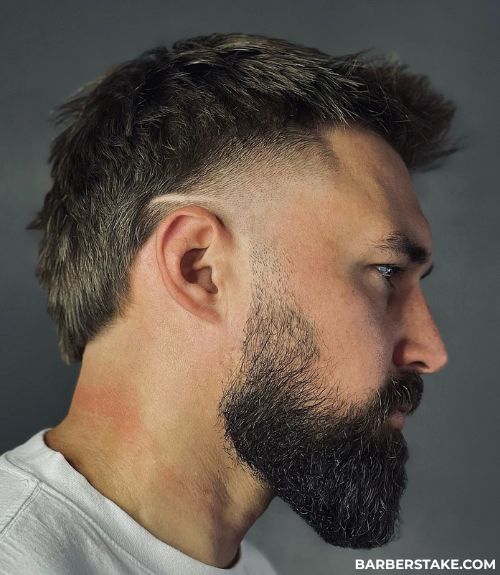
The mullet with hair designs introduces shaved lines into the faded sides, turning the cut into a canvas. The longer back and textured top stay intentionally simple so the artwork on the sides can speak. It is a personalized, expressive choice, and the designs can be refreshed or changed at each visit. Find a barber confident with detail work, and keep the rest of the cut clean so the design leads.
Long Mullet

The longer mullet is a trendy, edgy style that leans into length, texture and movement while keeping the expressive shape intentional. The back becomes a genuine length statement rather than a subtle nod. This variation suits guys committed to the look and willing to maintain it. Keep the back conditioned and trimmed to prevent split ends, and balance the length with a clean fade or taper so the cut still reads sharp rather than shaggy.
Shaggy Mullet
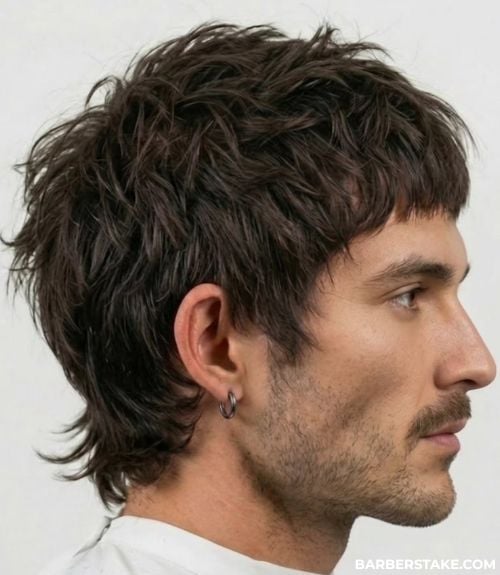
The modern shaggy mullet is relaxed, rebellious and built around natural movement. Choppy layers through the top and crown create volume, while the longer back gives the cut its signature flow. Unlike a sharper fade mullet, this version should feel softer and more lived-in, with textured ends that move easily instead of sitting too perfectly. Keep the sides lightly tapered to control bulk, then style with sea salt spray or matte cream for separation, shape and an effortless, rock-inspired finish.
Classy Mullets
Short Mullet
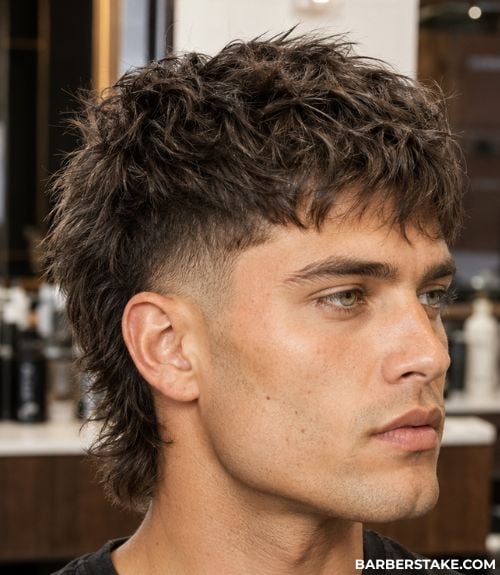
The modern short mullet is a clean, wearable take on the classic cut, offering shape and attitude without too much length. The top stays textured and controlled, while the back is left just long enough to create the signature mullet silhouette. Keep the sides tapered or faded to sharpen the look and make the style feel fresh rather than retro. Use a matte clay or styling cream to add separation, then finger-style the top for a relaxed, effortless finish.
Mullet with Fringe
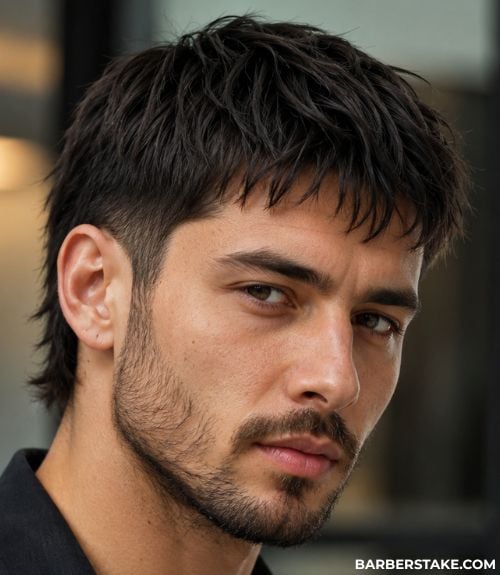
The modern mullet with fringe is a youthful, textured style that brings shape and attitude to the front while keeping length through the back. The fringe frames the face and adds movement, while the mullet shape creates a bold, expressive finish. Keep the sides tapered or faded to balance the heavier top and prevent the cut from looking bulky. Use a matte cream or clay to define the fringe, add separation through the crown and keep the style controlled without making it stiff.
Mullet with Line Up

The mullet with line up adds a crisp, defined edge along the hairline and temples, sharpening the style for men who want a cool, bold touch. The line up is a small detail with a large effect, the difference between a mullet that looks intentional and one that looks merely grown. It suits every texture and pairs with any fade. Ask your barber to finish each visit with a clean line up, and the cut will always read deliberate.
Mullet with Beard
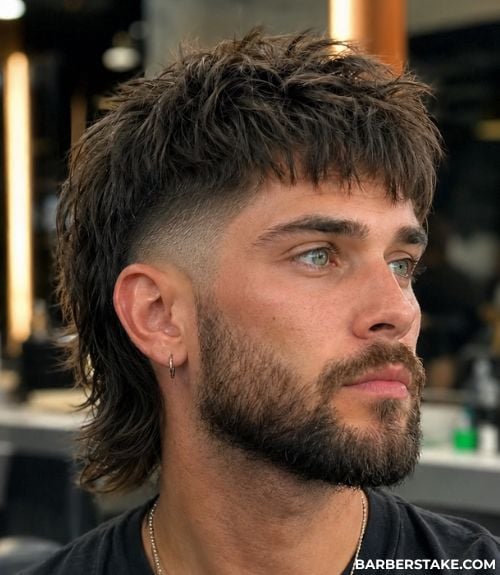
The mullet with beard pairs the cut with deliberate facial hair, and the combination is more than the sum of its parts. The beard balances the length and texture above, anchoring the face and lending the whole look a rugged, cohesive maturity. It is a favorite of guys who want the mullet to feel grown rather than youthful. Keep the beard shaped and trimmed in proportion to the cut.
Modern Textured Brush Back Mullet

This textured brushed back mullet is a confident, controlled style that blends volume, movement and shape. In this example, the hair flows back from the forehead with a loose, windswept finish, while the longer back gives the cut its signature edge. Keep the sides tapered or faded to sharpen the silhouette and prevent the style from feeling too heavy. Use a lightweight styling cream or matte paste, then brush the hair back with your fingers for natural separation, lift and an effortless finish.
Edgar-Style Mullet
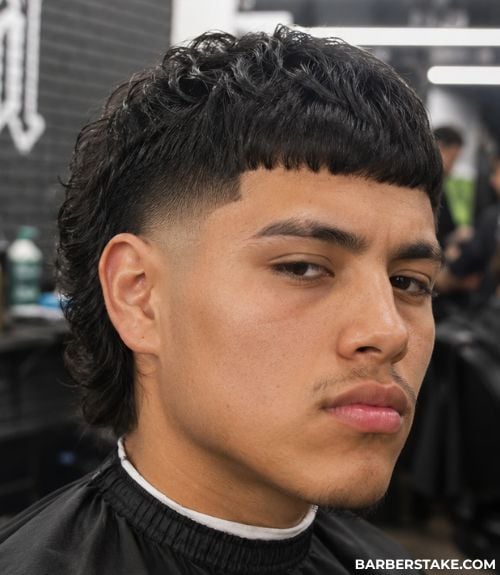
The Edgar-style mullet is a popular men’s hairstyle with deep roots in Mexican-American youth culture: the blunt, squared fringe of the Edgar at the front and the longer tail of the mullet at the back. Often called a Takuache mullet, it is sharp, distinctive and culturally specific. Ask your barber for a straight, blunt forehead line and a clean fade, and keep the back textured. It is a bold, identity-driven take on the cut.
How To Ask Your Barber For A Mullet
From experience, I can tell you the clients who walk out happiest are the ones who arrive with a clear picture of what they want. The mullet is adaptable, covering from barely-there to unmistakable, so the conversation in the chair matters. Here is how to get it right.
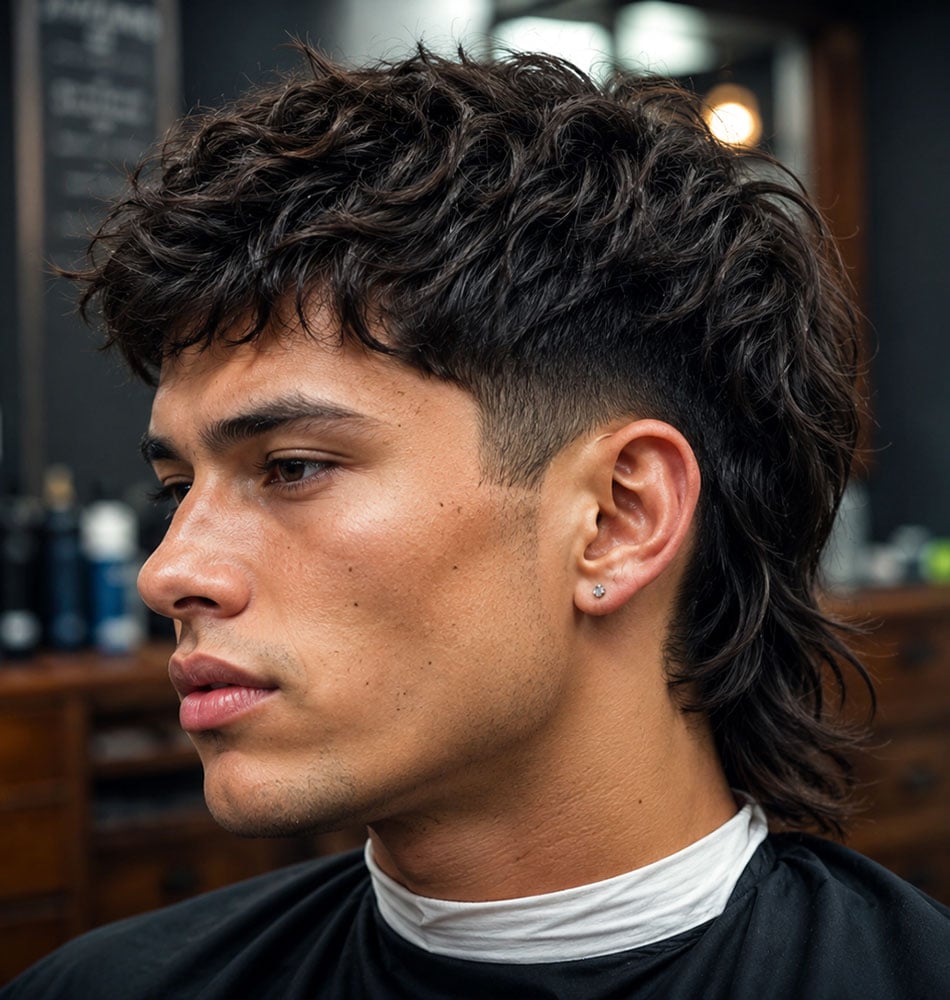
Say “Modern,” Not Just “Mullet”
The word “mullet” alone leaves too much room for interpretation. Some barbers will picture the 1980s version, others the contemporary one. Specify that you want a modern mullet, and describe the fade and texture you have in mind. The more precise you are, the closer the result will be to what you imagined.
Cover the Specs
Every mullet conversation should address the length on top, the sides (fade or taper level), the length of the back, and how much texture you want throughout. If you can speak to all four, your barber has everything needed to deliver the cut you are picturing.
Talk Through the Fade
The choice of fade changes the character of the mullet. A burst, drop, low, mid or skin fade each create a different look. If you are not sure, tell your barber the vibe you are after, conservative or bold, and let them recommend the fade that fits.
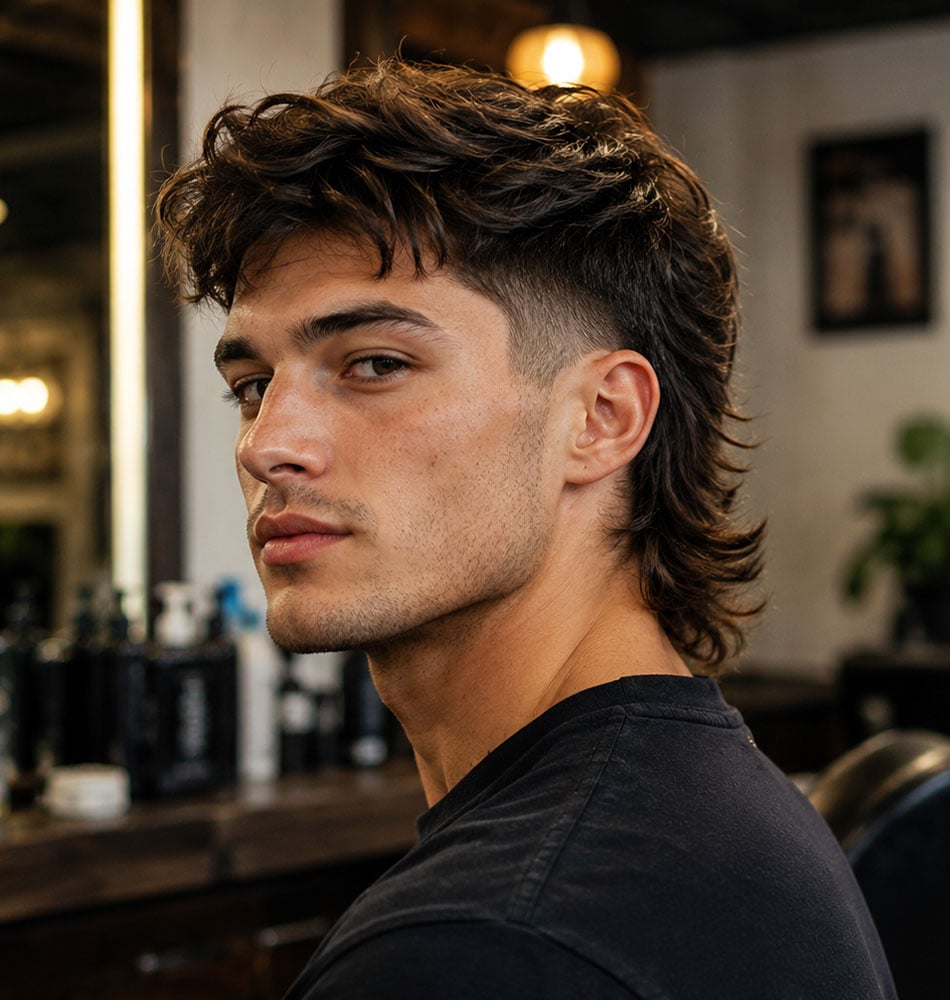
Bring a Reference Photo
A photo communicates more than words ever will. Bring one or two, and choose images of men with hair texture similar to yours. A mullet on straight hair will not translate directly to curls, and a good reference accounts for that.
Decide How Bold You Want to Be
Tell your barber where you want to land, from the subtle to the extreme-contrast version. This direction prevents the most common mismatch between what a client expects and what they receive.
Start Conservative on the First Visit
If you are new to the mullet, ask for a more restrained version to begin with. You can always go shorter on the sides or longer at the back next time. What you cannot do is undo a back that was cut too short. Build toward the bold version over a couple of visits.
How To Style A Mullet
The Everyday Styling Routine
- Wash your hair, or simply rinse it, then towel-dry until it is damp rather than soaking wet.
- Apply your chosen styling product (we recommend a clay) to your palms and work it evenly through the hair.
- Create texture and shape through the top and fringe with your fingers.
- Check the silhouette from the side to review this profile-driven style.
Choosing the Right Hair Product
Match the product to your texture. Straight and wavy hair do well with a matte clay or paste for grip and definition. Curly and coily hair need a curl cream to shape and hydrate. A sea salt spray adds grit and movement to any texture and is especially good for wavy and shaggy mullets.
Do Not Neglect the Back
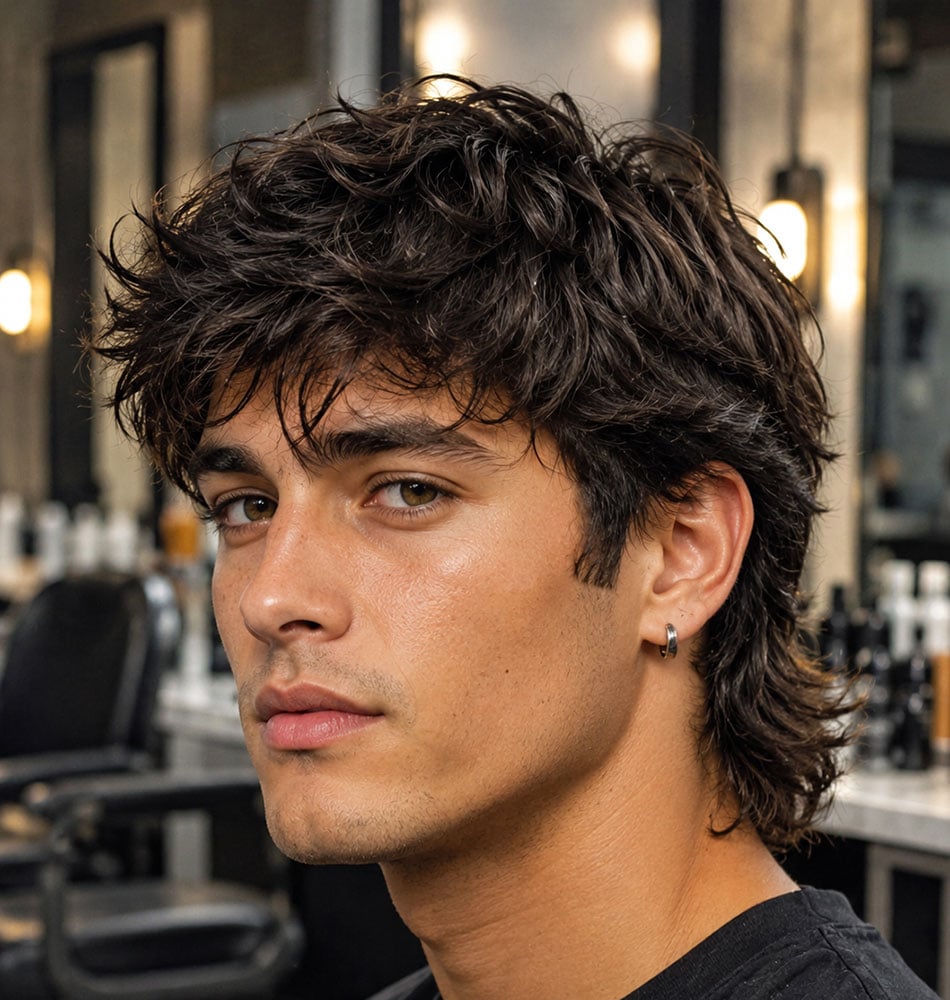
The back is the signature of the cut, so give it attention. Comb or finger-style it so it sits cleanly, and make sure it looks deliberate. A back that is simply ignored is what separates a sharp mullet from a sloppy one.
Blow-Dry or Air-Dry
Air drying suits wavy, curly and shaggy mullets, preserving natural texture. A blow-dry with a brush builds volume and control, useful for straight hair or for a more polished, sculpted finish. Choose based on the look you want and the time you have.

How to Maintain A Modern Mullet
How Often to Visit the Barber
The fade is the limiting factor. A skin fade mullet needs the sides refreshed every ten to fourteen days to stay sharp. Burst, drop and mid fade mullets can stretch to two or three weeks. Taper and scissor-cut mullets are more forgiving, holding up for five to six weeks. The top and back can generally go six to eight weeks between cuts.
The Maintenance Imbalance
Here is the quirk of mullet upkeep: the back can look great while the sides have grown out, or the reverse. Schedule a haircut to refresh the fade while keeping the length on top and back growing out.
Washing and Care
Wash according to your texture rather than a fixed schedule. Straight and wavy hair can be washed every two to three days; curly and coily types benefit from less frequent washing and more conditioning. The longer back and top, in particular, needs conditioning to stay healthy and prevent split ends.
When to Trim the Back
Decide early whether you are growing the back or maintaining it at a set length. If maintaining, have your barber trim it at each visit. If growing it out, leave the length, but still ask for the ends to be cleaned up so the hair stays healthy.
How to Grow Your Hair Out for a Mullet
Growing into the style takes patience and a plan, but the process is more manageable than it looks.
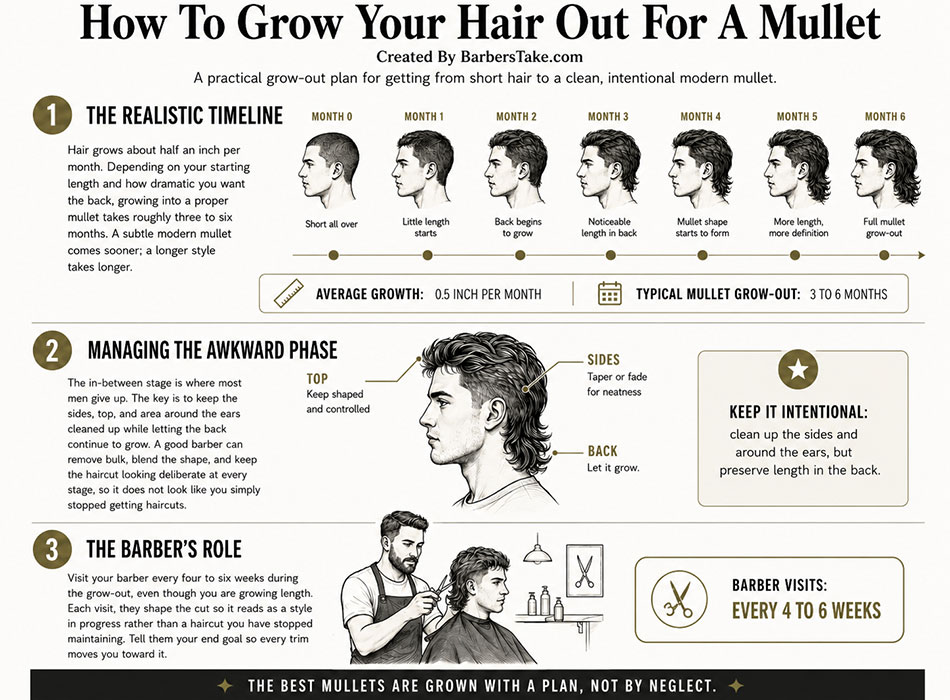
The Realistic Timeline
Hair grows about half an inch per month. Depending on your starting length and how dramatic you want the back, growing into a proper mullet takes roughly three to six months. A subtle modern mullet comes sooner; a longer style takes longer.
Managing the Awkward Phase
The in-between stage is where most men give up. The key is to keep the sides, top, and area around the ears cleaned up while letting the back continue to grow. A good barber can remove bulk, blend the shape, and keep the haircut looking deliberate at every stage, so it does not look like you simply stopped getting haircuts.
The Barber’s Role
Visit your barber every four to six weeks during the grow-out, even though you are growing length. Each visit, they shape the cut so it reads as a style in progress rather than a haircut you have stopped maintaining. Tell them your end goal so every trim moves you toward it.
The Best Modern Mullets by Hair Texture
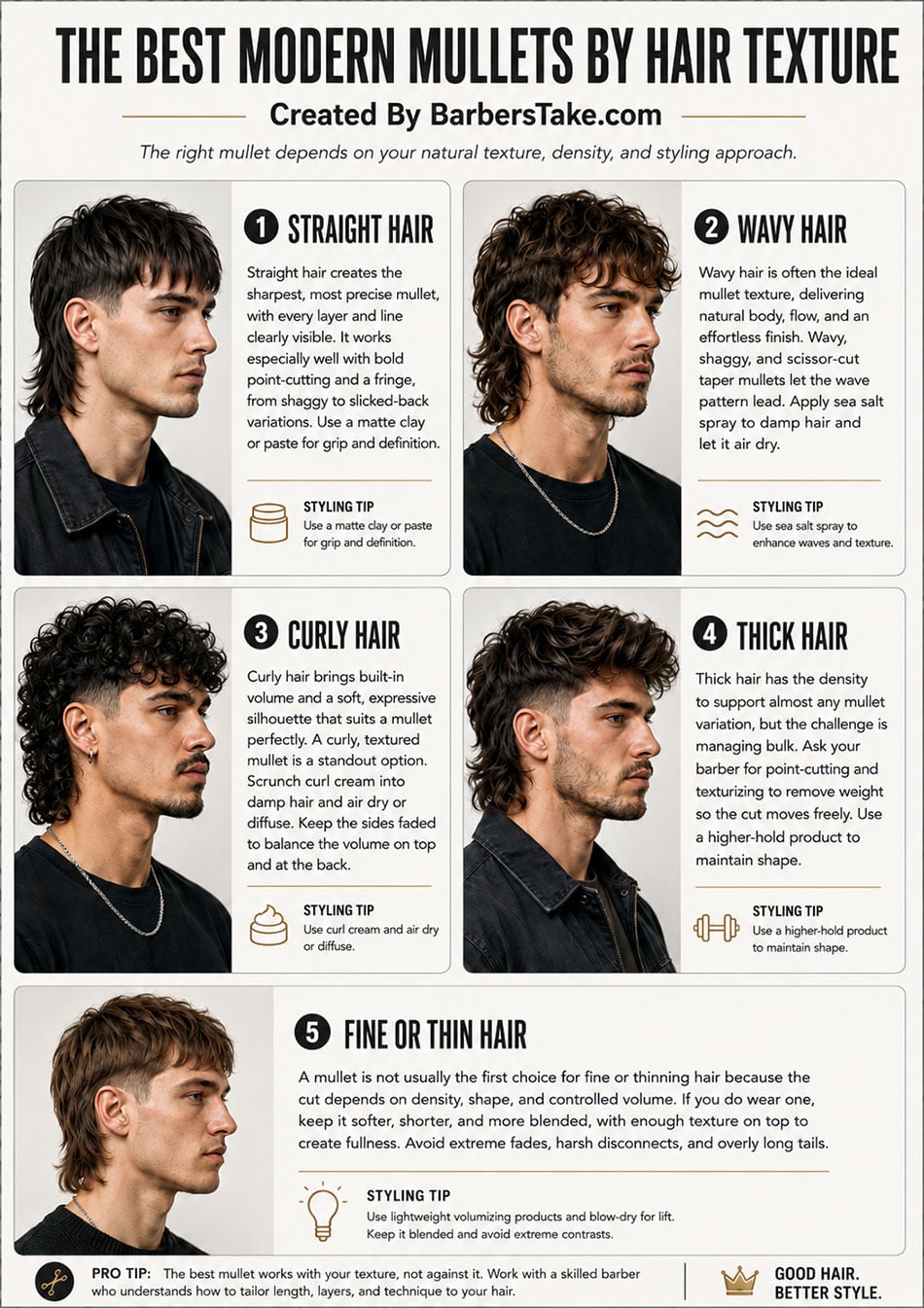
Straight Hair
Straight hair produces the sharpest, most precise mullet, with every layer and line clearly visible. It rewards bold point-cutting and benefits from a fringe to add front-end interest, allowing for everything from the shaggy to slicked-back variations. Use a matte styling clay or paste is essential for grip and definition.
Wavy Hair
Wavy hair is arguably the ideal mullet texture, offering natural body, flow with minimal effort and a stylish finished aesthetic. The wavy, shaggy and scissor-cut taper mullets all let the wave pattern lead. Apply sea salt spray to damp hair and let it air dry for an effortless, lived-in result.
Curly Hair
Curly hair brings built-in volume and a soft, expressive silhouette that the mullet frames perfectly. The curly, textured mullet is a standout choice for men who want to experiment with a fresh look. Scrunch a curl cream into damp hair and air-dry or diffuse. Keep the sides faded to balance the volume on top and at the back.
Thick Hair
Thick hair has the density to support every variation, from casual and simple to the boldest. The challenge is managing the bulk. Ask your barber to use point-cutting and texturizing techniques to remove weight, so the cut moves freely rather than sitting heavy. Thicker hair requires a higher-hold product to hold its shape, but styling is often straightforward.
Fine or Thin Hair
I generally don’t recommend a mullet as the first choice for men with fine or thinning hair because the cut depends on density, shape and controlled volume. If the hair is too sparse through the crown or too wispy in the back, the extra length can make thinning areas more noticeable.
With that said, it can be done with the right approach. The key is to keep the mullet softer, shorter, and more blended, with enough texture on top to create fullness and depth. I would avoid an extreme fade, harsh disconnect, or overly long tail because those details can make finer hair look thinner by contrast.
The Modern Mullet vs. Classic Mullet At A Glance
| Feature | Classic Mullet | Modern Mullet |
|---|---|---|
| Sides | Uniform length, no fade | Faded, tapered, or scissor-cut |
| Length Contrast | Dramatic, often extreme | Controlled and balanced |
| Texture | Feathered, minimal layering | Sharp point-cut layering |
| Fringe | Rare | Common |
| Overall Finish | Loose and grown-out | Precise and intentional |
The practical takeaway: when you talk to your barber, the word “modern” does real work. It is the difference between a contemporary, fade-driven cut and a feathered throwback.
A Brief History of The Mullet and Its Modern Revival
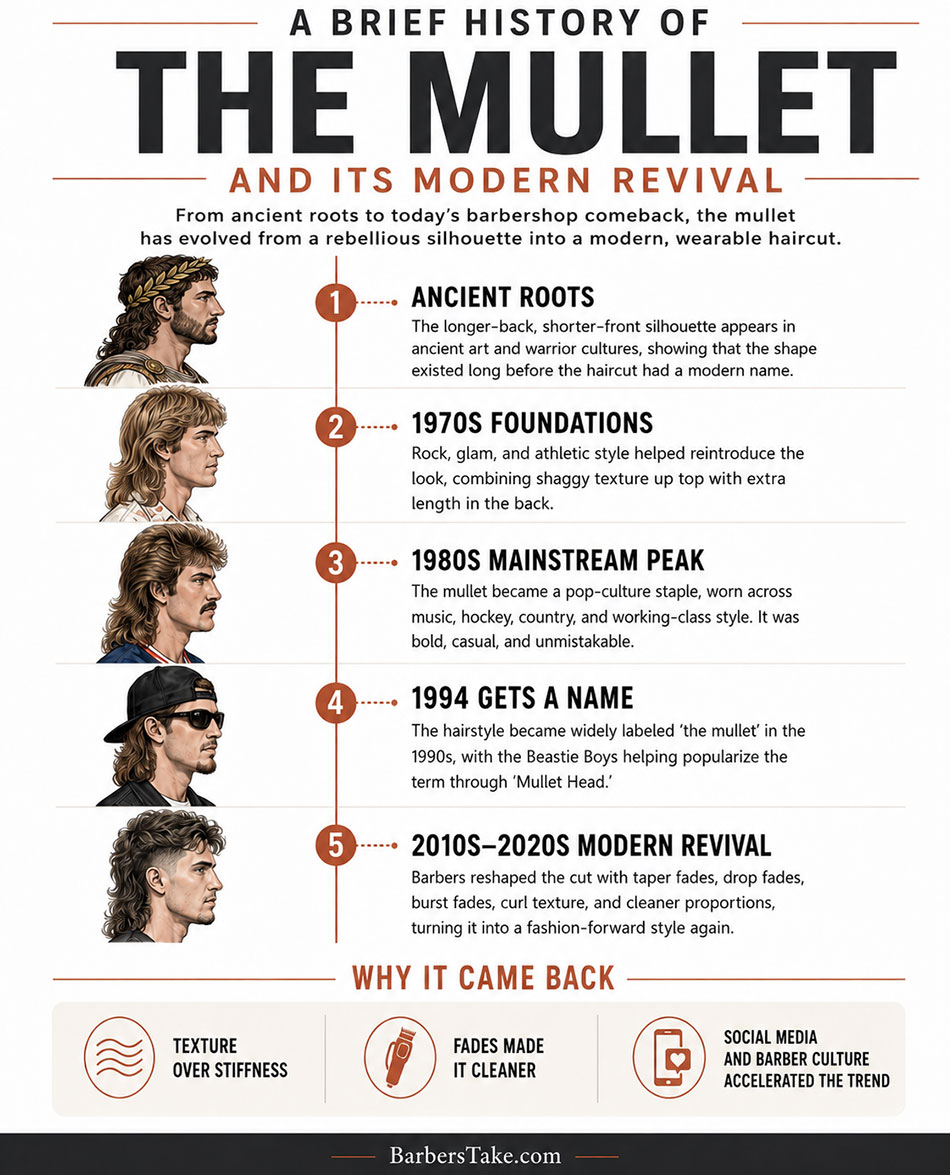
The shorter-in-front, longer-in-back cut is a retro haircut that reached its cultural peak in the 1970s and 1980s, when it became a signature of rock musicians, country singers, athletes and action heroes. For roughly two decades, it was simply a normal, mainstream way for a man to wear his hair.
Then came the fall. Through the 1990s, 2000s and 2010s, the mullet became cultural shorthand for poor taste, the subject of jokes rather than barbershop requests. Few cuts have ever been so thoroughly mocked.
The revival began in earnest around 2021. A combination of nostalgia, the influence of soccer players and other athletes, youth culture, and a broader shift toward textured, expressive haircuts brought the mullet back into the mainstream. It found particularly strong footing among younger men and within specific communities, including a notable presence in Mexican-American youth culture, where the mullet has become a recognizable signature.
What was once a punchline is now, genuinely, one of the most requested cuts in the barbershop.
Common Mullet Mistakes to Avoid
In my experience as a barber, the most common mistake when cutting a mullet comes down to poor balance: too much bulk behind the ears, disconnected sides that don’t work, or a back section that doesn’t fit the texture or style. Before committing to the cut, it’s worth understanding what can make a mullet look cool, wearable, and well-executed instead of messy or unfinished.
Going Too Extreme on the First Cut
The most common mistake. A client asks for the boldest possible version straight away, then realizes it is more than they wanted. Start with a tempered mullet and build toward the dramatic version over a couple of visits. You can always go bolder. You cannot un-cut.
Mismatching the Fade to the Face Shape
A high fade on a long face, or a wide, bulky side on a round face, works against you. The fade height should flatter your proportions. Use the face shape guidance above, and let your barber steer you if you are unsure.
Skipping Texture on Top
An edgy, handsome mullet without texture looks flat and dated, closer to the 1980s version than the contemporary one. Ask for point-cutting and layering, and use a product that builds texture rather than weighing the hair down.
Getting the Wrong Variation for Your Texture
A mullet built for straight hair will not behave the same way on curls, and the reverse is just as true. Match the variation to your natural texture rather than to a photo of someone whose hair is nothing like yours.
Letting the Fade Outgrow the Back
When the fade grows out but the back stays sharp, the whole cut loses its balance. Keep the fade on schedule with touch-ups, even between full cuts.
Trying to Cut It Yourself
Contrast and layering are harder to execute than they look. A home attempt almost always ends in an uneven back or a botched fade. Leave this cut to a barber.
Treating It as a No-Effort Cut
The mullet looks relaxed, but it is not a cut you can entirely ignore. It needs a short styling routine and regular maintenance to look clean. Budget a few minutes each morning and a standing barber appointment.
Frequently Asked Questions
What is a modern mullet?
A modern mullet is a trending haircut characterized by short to medium-length layered hair on the top, a deliberately longer back and shorter, often faded or tapered sides, creating a stylish look for men who want natural movement and volume. The difference between the classic and modern mullet is the contemporary variation features more contrast and texture for an intentional, updated finish.
Are mullets still in style?
Yes. The mullet has been a popular men’s haircut in barbershops since its revival around 2021.
How do I ask my barber for a modern mullet?
Specify a “modern” mullet, not just a “mullet.” Cover these four elements: top length, side treatment (fade or taper), back length, and texture level. Bring a reference photo of someone with similar hair.
How long does it take to grow a mullet?
Hair grows about half an inch per month, so growing into a mullet from a short crew cut takes roughly 3 to 6 months, depending on your starting length and how dramatic you want the back. Keep trimming the sides during the grow-out so it looks intentional.
How often should I get a mullet trimmed?
The fade determines the schedule. Skin-faded mullets need a touch-up every 10 to 14 days. Burst and mid fade styles last two to three weeks. Tapered ones stretch to 5 weeks weeks. The top and back can usually go 6 to 8 weeks.
Can I wear a mullet to a professional job?
It depends on the workplace. An understated mullet with a low taper can work well in creative and casual professional settings. Conservative industries like law and finance are less likely to accept it.
What’s the difference between a mullet and a wolf cut?
A mullet focuses on the short-front, long-back contrast. A wolf cut is shaggy and more uniformly layered, blending the mullet with a shag and emphasizing heavy face-framing layers throughout. The wolf cut has less defined contrast and a rougher, more all-over texture.
Do mullets work with curly hair?
Yes, a curly mullet is a popular men’s hairstyle that uses natural texture and volume to create stylish shape and movement. The sides are usually tapered, faded, or kept tighter to control the silhouette while letting the curls flow around the crown and neckline. It works best when the back has enough length to show off the curl pattern without looking bulky or unbalanced.
How do I style a modern mullet?
Towel dry your hair until damp, apply a product suited to your texture (matte clay for straight or wavy hair, curl cream for curls), work it through the top and fringe to achieve a textured look, then shape the back to complement the look. Most styling takes only a few minutes.
Can I cut a mullet at home?
It is not recommended. The mullet’s fade, layering and length contrast are difficult to execute well, and home attempts usually result in an uneven back or a poor fade. This is a cut worth seeing a professional barber for.