
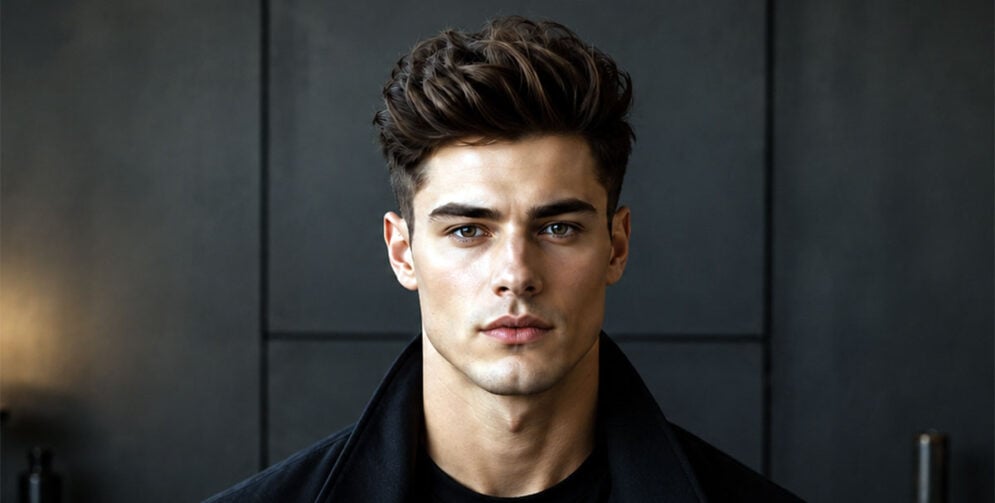
The quiff is a timeless men’s haircut that pairs short sides with a longer, voluminous top lifted up and swept back at the front, creating height, structure and a confident silhouette. This style is balanced and sits in rare territory: looser and more textured than a pompadour, more deliberate than a casual brush-up, and flexible enough to look classic or modern based on your preference.
Few haircuts scale the way the quiff does. When cut short on top with tapered sides, it passes quietly in conservative offices. Pushed taller over a skin fade, it becomes a statement. This explains why the style has outlasted nearly every trend since the 1950s, and why it remains a weekly request in barbershops, worn by athletes, actors and some of the best-dressed guys you know.
In this guide, I’ll show you 43 stylish examples of modern quiff haircuts for men that balance volume, texture and shape, proving how versatile and attractive this style will look when finished. After that, I’ll discuss how to choose, from a barber’s perspective, the right variation for your features, the exact language to use in the chair, a styling routine that actually holds past lunchtime, and the mistakes I see most often when this cut goes wrong.
What Is a Quiff Haircut?
The quiff is a men’s hairstyle that combines shorter sides and back with a longer top, typically 3 to 5 inches, styled upward and swept back at the front to create height and volume. The lifted front section is the signature of the cut and what separates it from neighboring styles: a pompadour sweeps the entire top back in a uniform shape, while a quiff concentrates its volume and texture at the front hairline. “A quiff is really about where the volume lives. The front should lift up and back with some air and texture, while a pompadour usually carries a smoother, more continuous shape across the whole top,” explains professional barber, Sebastian Mondragon.

When it comes to choosing length, a short quiff can look clean, athletic and low-maintenance, while a longer textured style feels more expressive and fashion-forward. The same basic structure can be refined for a professional setting, loosened for a casual finish or sharpened with a skin fade for stronger contrast.
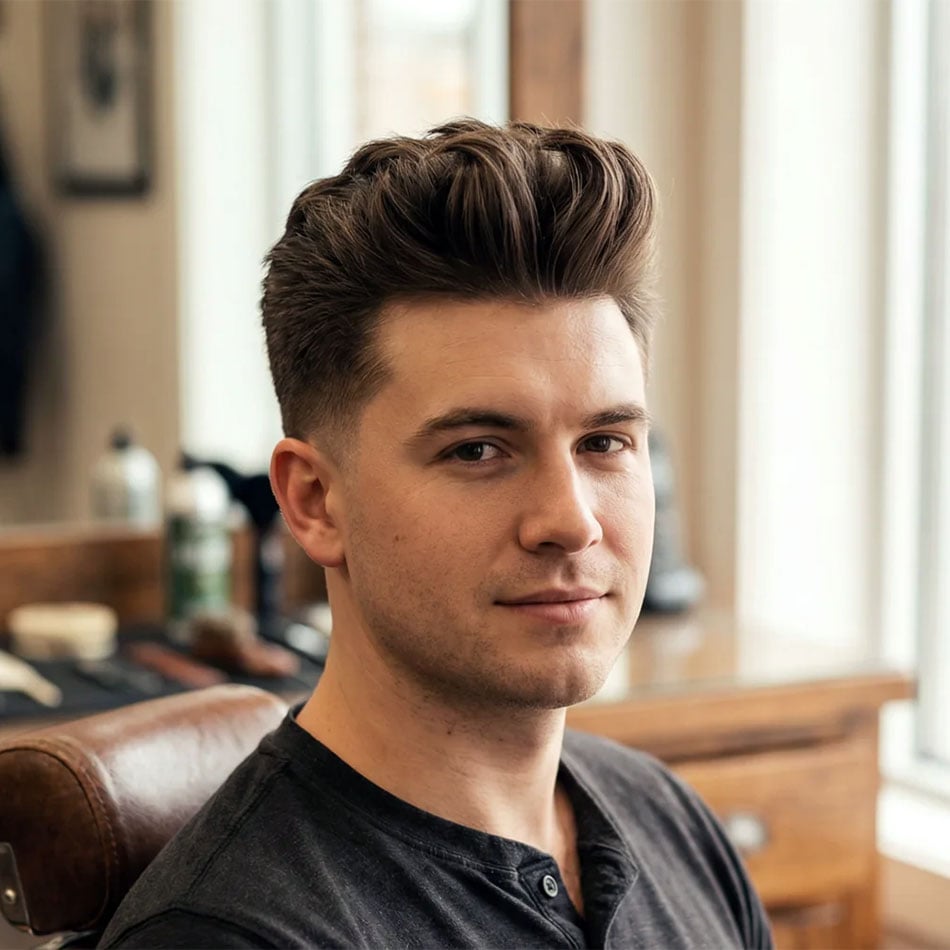
The key is proportion. The front needs enough length to lift, but the sides must be controlled enough to keep the shape balanced. Too much weight on the sides can make the haircut look bulky, while too little length in front can turn the style into a crew cut or brush up instead of a true quiff. A good barber will adjust the layering, fade height and finish based on your hair density, growth pattern and how much time you realistically want to spend styling it each morning.
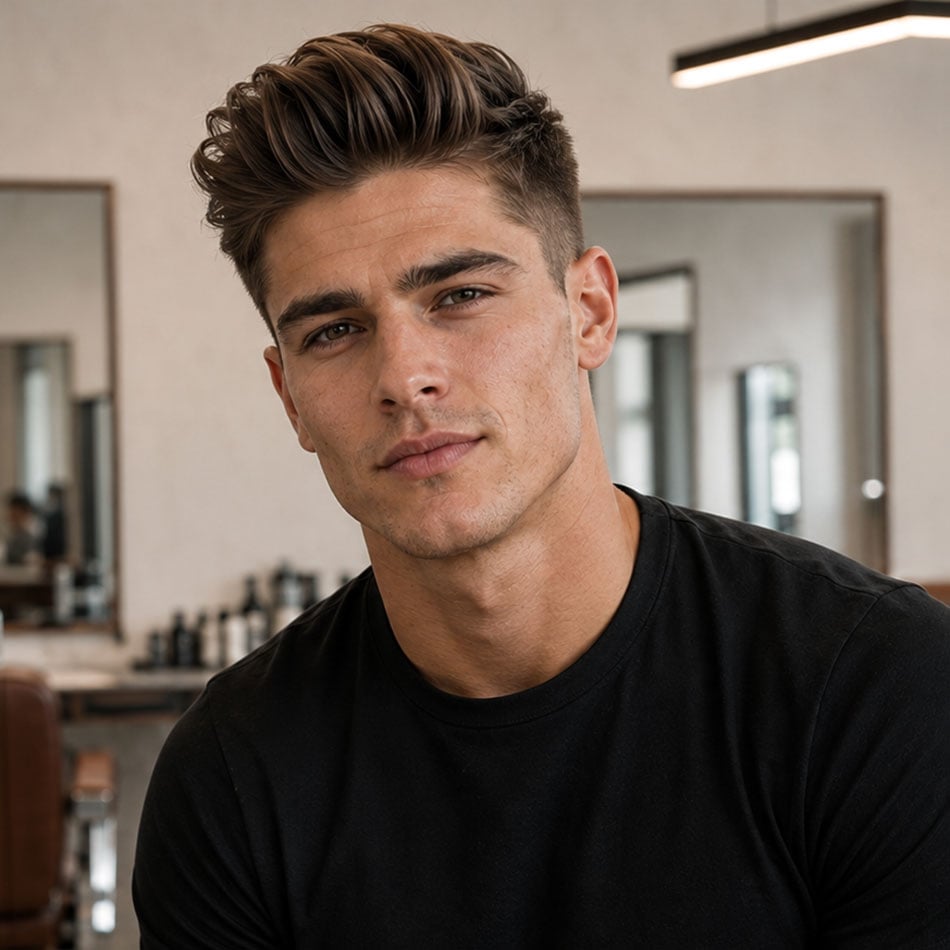
Styling usually involves blow-drying the front up and back, then finishing with a matte clay, paste or styling cream based on your desired hold and shine. Matte products create a more modern, textured quiff, while lighter creams produce a softer, natural look. For most, the best quiff is not the tallest one; it is the version that gives the front shape and presence while still looking effortless.
A Brief History of the Quiff
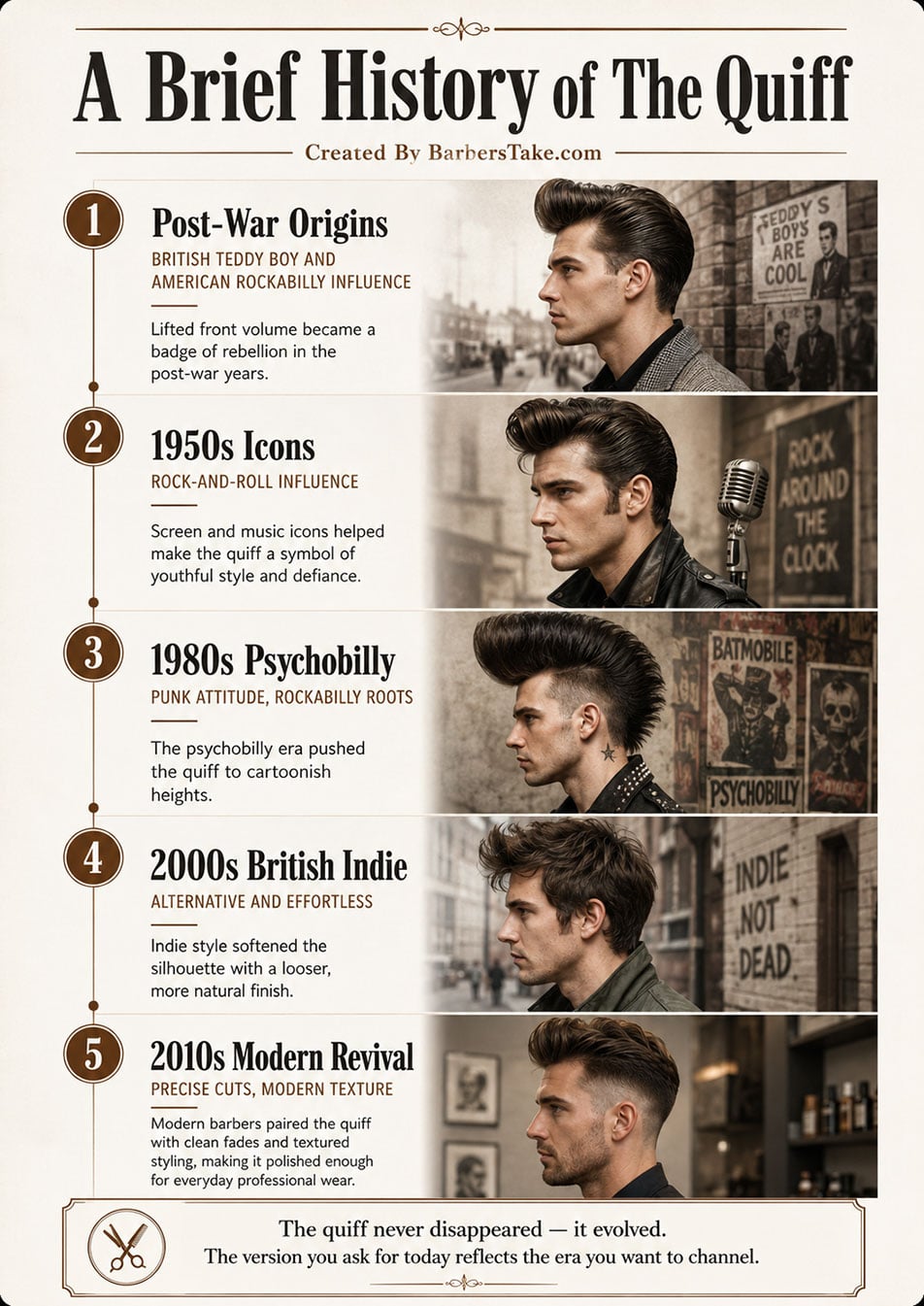
The quiff earned its reputation in the post-war years, when British Teddy Boys and American rockabilly culture turned lifted front volume into a badge of rebellion. Elvis Presley and James Dean carried the look onto screens and record sleeves, and for a generation of young men, the rolled front and slicked sides signaled that you were paying attention to something other than your father’s barber.
The style never fully disappeared, it just changed registers. The 1980s psychobilly scene exaggerated it to cartoonish heights, British indie acts softened it in the 2000s, and the modern barbershop revival of the 2010s paired it with precise fade work and matte texture, turning a rebel’s haircut into something you can wear to a board meeting. I find that history useful when clients sit in my chair, because the quiff you ask for today is really a choice about which era of the cut you want to channel.
Best Quiff Hairstyles For Men
High Fade Quiff
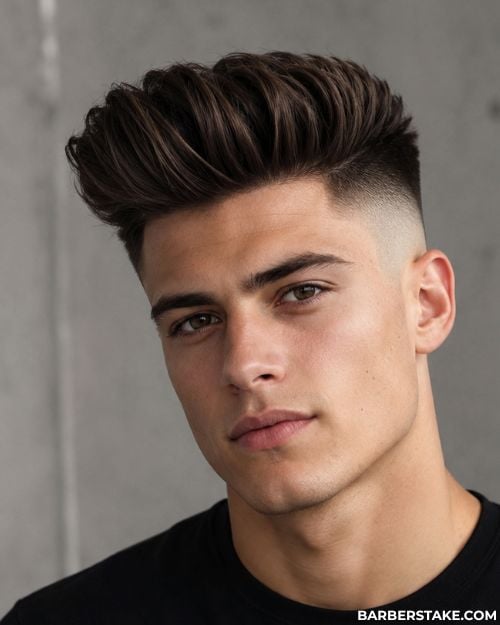
The High Fade Quiff starts the fade up near the parietal ridge, leaving a strong band of contrast between bare sides and thick, textured volume on top. The placement makes the top look taller by comparison and gives the whole cut a bold, youthful edge. Blow-dry with a vent brush, lifting the front up and slightly back, then work molding paste through the top for flexible hold and a natural, touchable finish. The high placement shows growth quickly, so expect to keep a tighter trim schedule than the lower fade versions require.

Our Favorite Product For The Look
- Strong hold offers powerful control and shape for short and medium styles
- Adds dry texture and definition for a modern, matte finish
- Non-greasy formula creates lasting definition and a clean look
- Use on dry hair to shape and separate before blow-drying for added structure
We may earn a commission from links on this page.
Textured Quiff
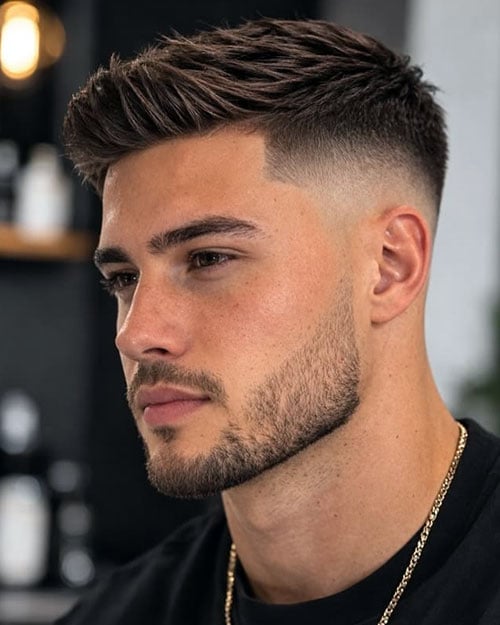
The Textured Quiff uses choppy, point-cut layers through the top to create separation and airy movement instead of a smooth, solid shape. The layering removes weight so the hair lifts easily and holds its height without heavy product. The sides stay short with a soft fade to keep the focus on the broken-up top. Blow-dry upward while lifting at the roots with your fingers, then work in a small amount of matte clay to define the strands and keep a natural, touchable finish. This is the version most barbers suggest for first-timers because the texture forgives imperfect styling.
Modern Quiff
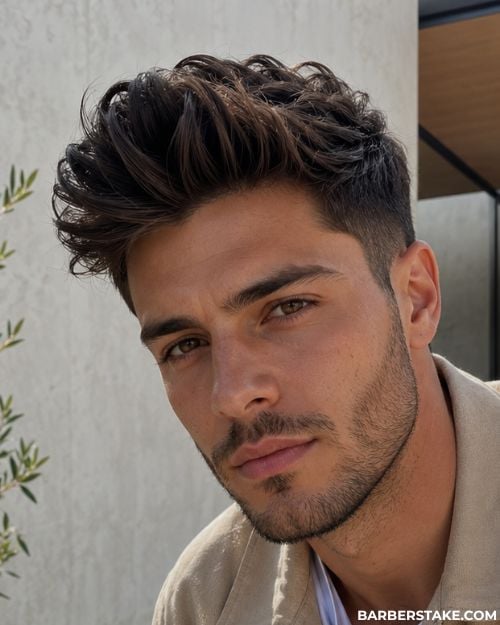
The Modern Quiff is an attractive hairstyle that sharpens the classic formula with taper faded sides and a thick, brushed-up top, styled slightly back for bold contrast. The clean fade exaggerates the volume above it, giving the cut a structured, intentional look from every angle. Blow-dry the top upward and back with a vent brush, building height at the front hairline. Finish with texture clay for a matte hold that keeps definition without stiffness. The high contrast means the sides grow out visibly fast, so plan on more frequent visits to keep it crisp.

Our Favorite Product For The Look
- Firm hold gives reliable control and shape without the hardness
- Creates natural texture, volume and grip with a matte finish
- Works well with messy styles, textured crops and thicker hair
- Clean, natural scent that smells good without being overpowering
We may earn a commission from links on this page.
Messy Quiff

The Messy Quiff is a trendy, relaxed haircut that trades polish for a tousled, finger-shaped finish that looks effortless even though it’s built deliberately. Layered length on top gives the hair natural lift and movement, while faded sides keep the overall shape clean enough to stay intentional. Spray sea salt spray onto damp hair, blow-dry while lifting and roughing up the roots with your fingers, then work in a small amount of clay to set the separation. The four minutes this takes is the style’s best-kept secret, because the result reads like you woke up with it.
Quiff Fade
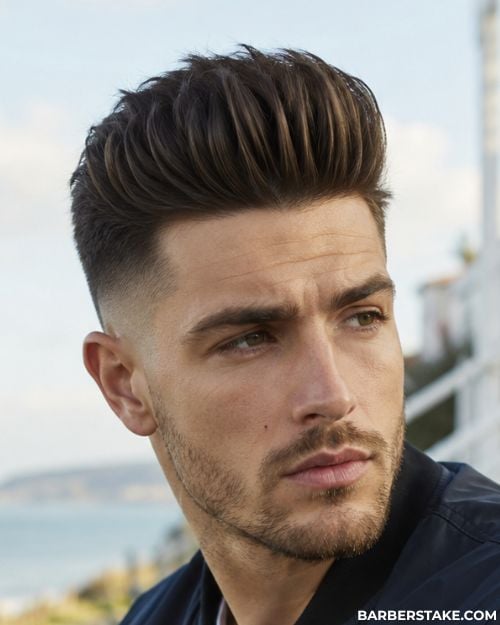
The Quiff Fade is the umbrella pairing that defines most modern versions of this cut: a voluminous, lifted top set against sides that blend gradually down to short. The fade sharpens the contrast and frames the volume, making the top look fuller than the same length would over untouched sides. Blow-dry for lift, then shape with molding paste for definition and flexible hold. The fade height is the main decision from here, and the next few entries break down how low, mid, high and skin placements each change the character of the cut.
Short Quiff
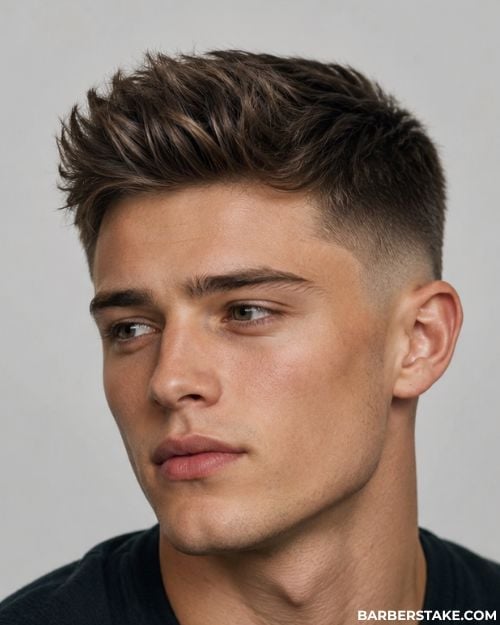
The short quiff is a clean, low-commitment version of the classic style, giving you just enough height at the front without requiring a long, dramatic top. The hair is kept shorter through the crown and sides, while the front is left slightly longer so it can be lifted up and back for shape. It’s also the most office-safe version of the cut, pairing well with the conservative grooming standards covered in our guide to professional haircuts for men. Blow-dry the front upward for a quick lift, then finger-shape with a small amount of light clay or paste for flexible, all-day control.
Parted Quiff with Low Taper Fade
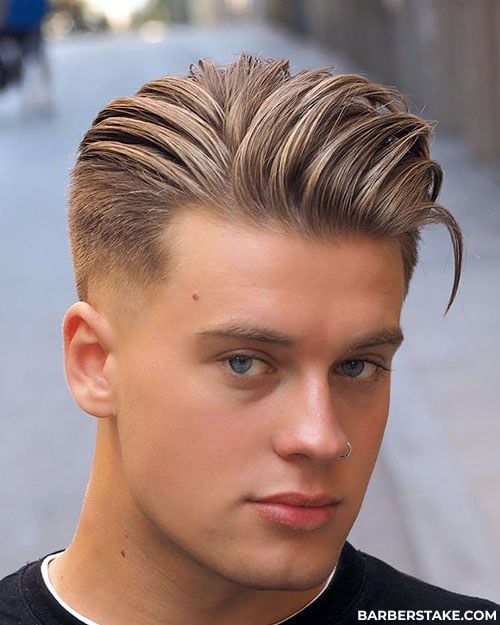
A parted quiff with a low taper fade pairs the lifted front of the modern look with a clean side parting and a soft blend on the sides. The part can be natural or shaved in for sharper definition, and the low taper keeps the silhouette polished without going dramatic. It works well in professional environments where a full skin fade might feel too aggressive. Apply a medium-hold pomade or styling cream to damp hair, blow dry the front upward with a round brush, then comb the part in clean before letting the rest of the top fall into shape.

Our Favorite Product For The Look
- Medium hold delivers control with volume, flow and movement
- Some shine gives your style a healthy, natural finish
- Spreads easily and works with straight, wavy or curly hair
- Water-based formula washes out without leaving residue
We may earn a commission from links on this page.
Messy Textured Quiff with Tapered Sides

This messy textured quiff is a youthful style that trades polish and structured lift for something more casual and lived-in. Choppy layers on top create natural separation and movement, while tapered sides keep the overall shape intentional without competing with the messy finish on top. Particularly flattering on guys with naturally wavy or thick hair. Work a small amount of matte clay or texture paste through damp hair with your fingers, lifting the front and pushing sections in different directions rather than combing into a uniform sweep.
Edgy Quiff with Mid Skin Fade and Beard
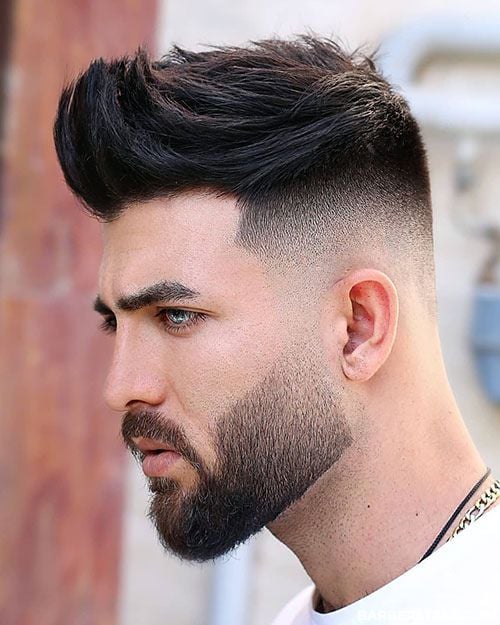
This edgy quiff with a mid skin fade brings sharper contrast and stronger structure to the cut. The mid skin fade exposes more of the side and frames the lifted top with maximum definition, while a well-groomed beard adds visual weight at the jawline to balance the height up top. The combination looks considered, particularly on strong, angular features. Style the top with a strong-hold matte paste, blow drying the front up and slightly back for maximum lift, and keep the beard line tight against the fade for a clean transition.
Spiky Quiff with Low Fade and Hair Design
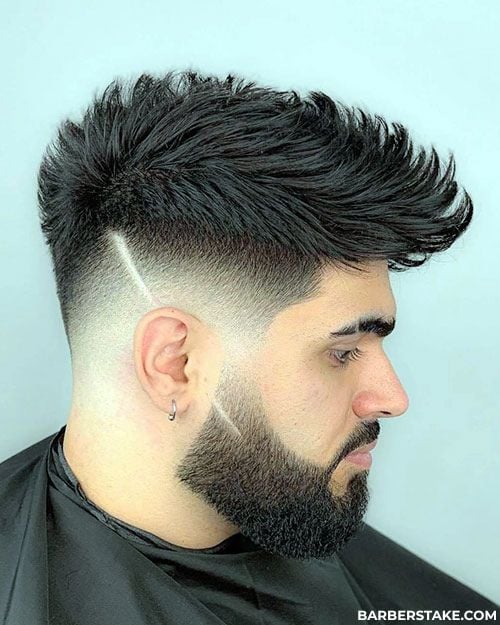
This spiky quiff with a low fade and hair design layers visual elements together: the lifted, spiky front, the soft blended sides, and a shaved design that brings personality and individuality. Showcased here is a shaved line that connects to the beard, but designs range to more elaborate geometric work, and the low fade keeps the focus on the design and the spiked top without overwhelming the overall shape. Use a strong-hold gel or matte clay to spike the front upward, and ask your barber to refresh the design every two to three weeks alongside the fade maintenance.

Our Favorite Product For The Look
- Medium-high hold keeps your style controlled without stiffness
- Semi-matte finish creates some texture and separation
- Stays workable, allowing you to reshape your hair during the day
- Works well on straight, wavy and thick hair that needs conditioning
We may earn a commission from links on this page.
Long Textured Quiff

In this example, a long textured quiff keeps significantly more length on top, with the front section swept upward and back into a fuller, taller silhouette. The texture comes from choppy, irregular layers that prevent the additional length from sitting flat or feeling heavy, and the sides can range from tapered to faded depending on how dramatic you want the contrast. Suits guys with thick or wavy hair who want a bolder, more expressive version of the cut. Style with volumizing mousse on damp hair, blow dry the front section upward with a round brush, then finish with a medium-hold pomade or matte cream for definition without stiffness.
Long Flowing Quiff with Tapered Sides
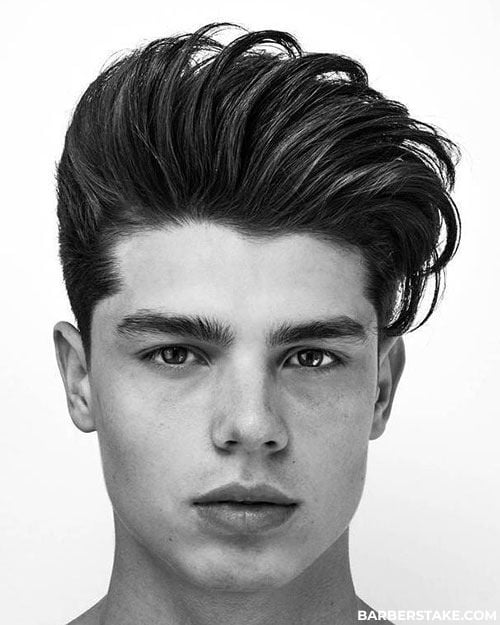
Here, a long flowing quiff softens the structure with longer top length and a more relaxed front. Instead of a sharp upward lift, the hair sweeps up and back with natural movement, falling slightly to one side or settling into a looser shape. Tapered sides keep the proportions balanced without forcing the dramatic contrast of a fade. My recommendation is to apply a high-hold styling clay and then blow dry the front up and back with your fingers for a softer, more natural finish.
Short Quiff with Low Skin Fade
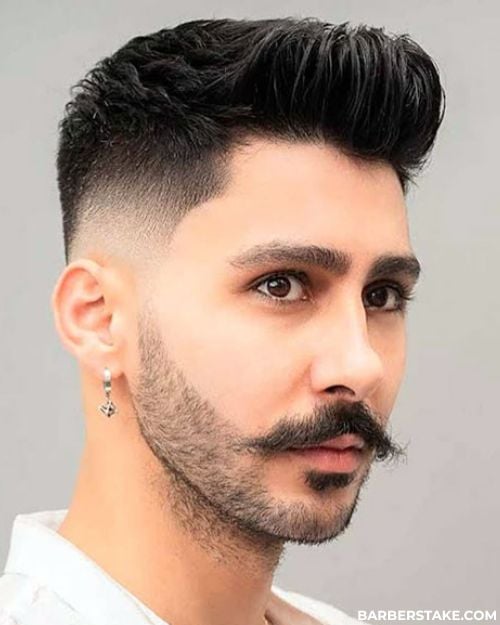
This short quiff with a low skin fade is the most understated version of this iconic cut. In the pictured style, the top is kept shorter than our other examples, with just enough length for a subtle forward and upward lift at the front, while a low skin fade brings clean contrast on the sides without dominating the overall silhouette. It works well in conservative professional environments where a full pompadour or high fade would feel too pronounced. I suggest styling with a small amount of matte clay or wax, finger-lifting the front upward and back for definition without major volume.
Textured Quiff with Mid Fade and Line Up
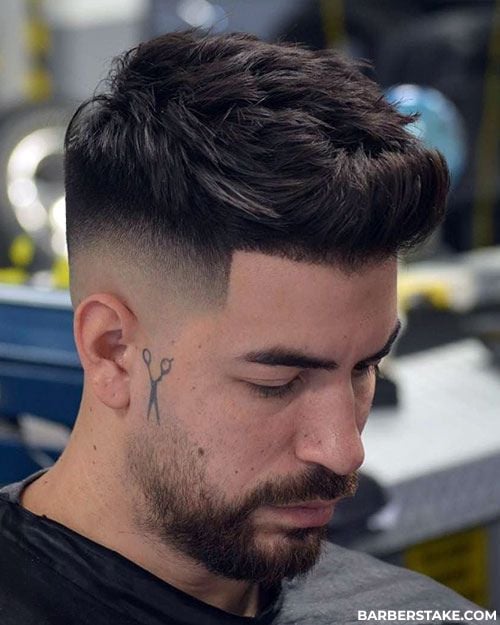
The textured quiff with a mid fade and line up combines a lifted front with the technical sharpness of a line up at the forehead and temples. The line up frames the cut with clean, defined edges, the mid fade balances the proportions on the sides, and the textured top brings movement and tactile finish to the overall shape. Works best on straight to wavy hair with enough density to hold the textured layering on top. Apply matte paste to damp hair and finger-style the front upward and forward, then return every two weeks to keep the line up crisp.
Medium Quiff
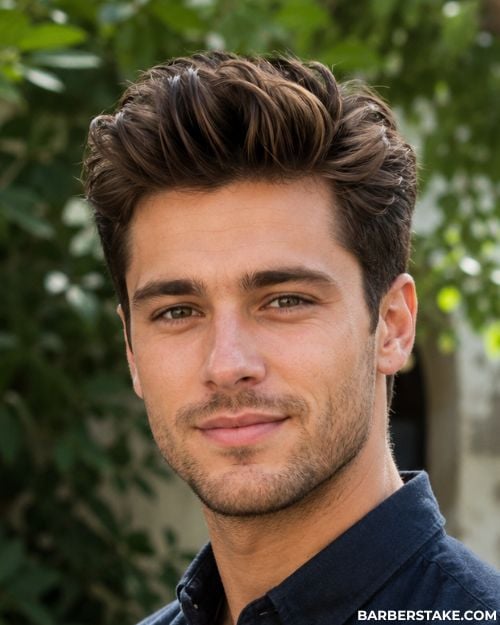
A medium quiff is a popular style characterized by more volume, movement and personality while still keeping the look clean and wearable. The front is left long enough to lift up and back, and the hair through the crown gradually shortens to maintain the shape without collapsing or feeling heavy. For daily styling, blow-dry while lifting the roots, guiding the front up and slightly back, then work styling cream through the top for flexible control and a natural finish.

Our Favorite Product For The Look
- Medium, pliable hold provides flexible structure and definition
- Clean matte finish adds texture without looking dry or flat
- Lightweight cream spreads easily and does not weigh down hair
- Tames frizz, keeps hair soft, and works well with waves or curls
We may earn a commission from links on this page.
Long Quiff
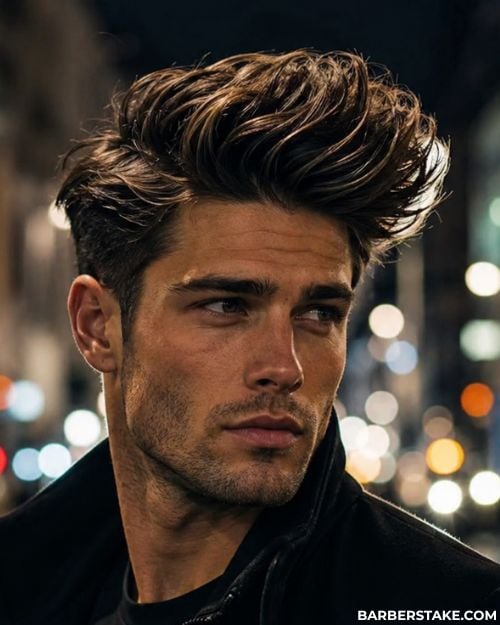
A long quiff is an edgy men’s hairstyle featuring dramatic height and flow with the sides tapered low to anchor the shape. This version demands commitment: the length needs a blow dryer to build structure, and skipping that step leaves the hair falling forward instead of standing tall. Blow-dry upward and back with a round brush, working section by section at the front. Apply styling cream for hold and movement, then add a pinch of texture powder at the roots if your hair needs extra lift to support the height.
Soft Quiff
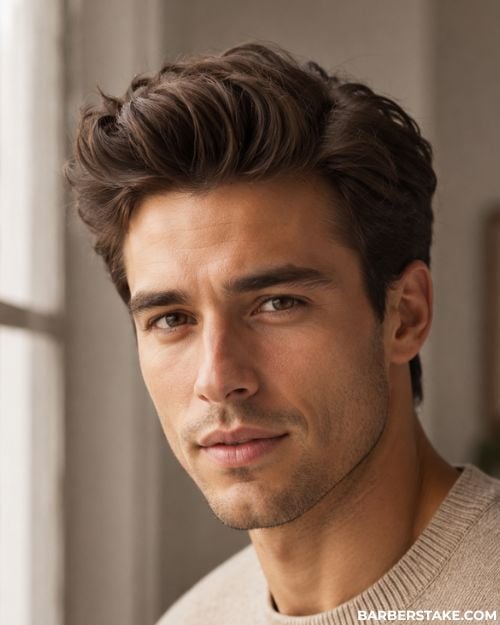
This soft quiff keeps the sides short and cleanly blended while the top lifts gently and bends back in a smooth wave rather than a sharp peak. Light layering keeps the shape full without bulk, and the relaxed front makes it the most understated version of the style. Blow-dry while lifting the front with your fingers, then smooth a small amount of styling cream through the top to control flyaways and hold the bend. It’s a strong recommendation for conservative workplaces or anyone who wants the quiff’s shape without its volume announcing itself.
Classic Quiff
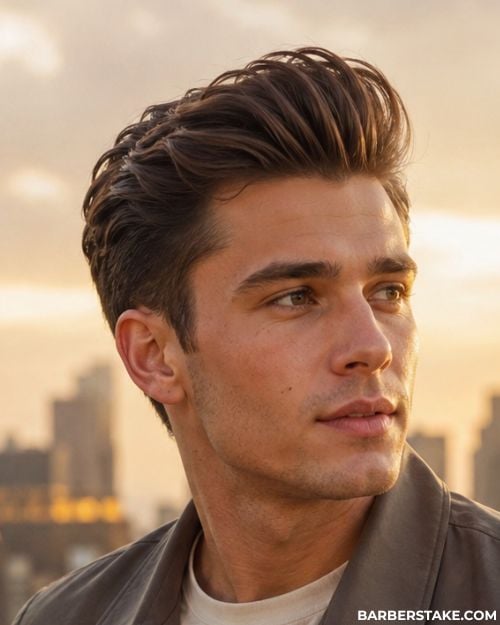
The classic quiff is a timeless men’s hairstyle that builds height at the front while keeping the rest of the cut clean, balanced and easy to wear. The hair is left longer through the fringe and gradually shorter toward the crown, allowing the front to sweep up and back with controlled volume. It has the polish of a traditional gentleman’s cut but enough texture and lift to feel current. Ask your barber for tapered or scissor-cut sides if you want a softer, more refined finish, or pair it with a fade for a sharper modern edge. Blow-dry the front upward with a round brush, then finish with pomade for a sleek look or matte paste for a more natural, textured finish.
Loose Quiff
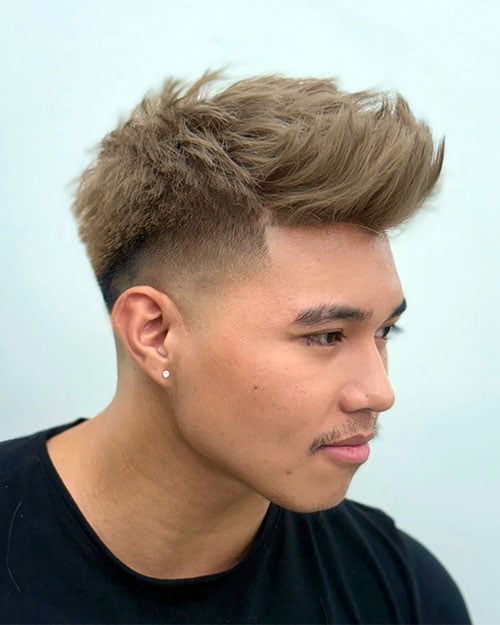
This loose quiff pairs a relaxed, high-volume front with tight faded sides, keeping the top long and textured so it moves naturally instead of sitting sculpted in place. The airy finish is the goal here: height with softness rather than structure. Spray sea salt spray onto damp hair for grip, blow-dry upward with a vented brush, then work a small amount of styling cream through the top for smooth control that doesn’t weigh the hair down. The combination holds the lift while letting individual strands shift through the day.
Curly Quiff
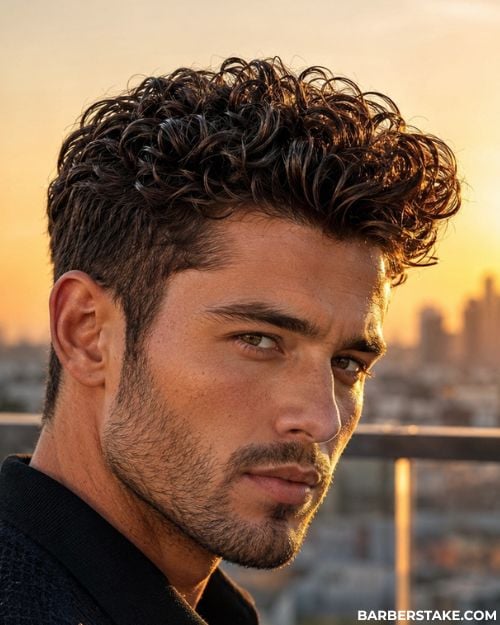
The Curly Quiff shapes natural curl into lifted front volume, letting the texture do work that straight hair needs a blow dryer to fake. The sides stay short with a fade or taper so the curls on top read as intentional shape rather than length left alone. Dry with a diffuser on low heat, lifting at the roots, then work a curl cream through the top to define the pattern and control frizz. Curls add free volume, so this version needs less product and less heat than its straight-hair counterparts. Resist the urge to brush it out; the curl is the style.

Our Favorite Product For The Look
- Defines waves, curls and coils while taming frizz for a clean finish
- Rich cream keeps your hair structured, soft and easy to manage
- Argan oil and plant waxes condition and protect your hair
- Blow-dry for softer texture or air-dry for extra definition
We may earn a commission from links on this page.
Forward Quiff
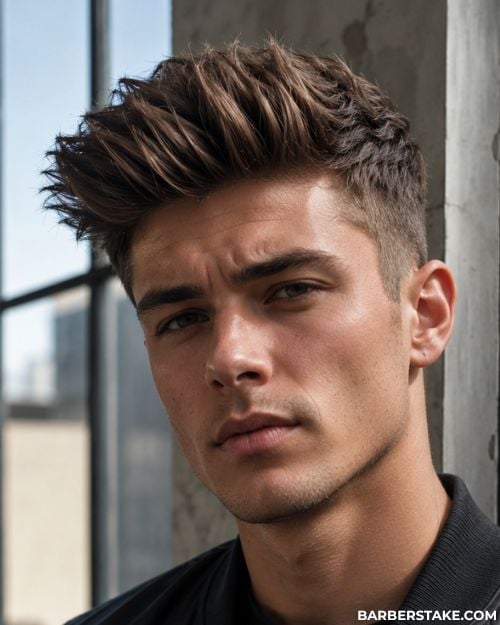
This forward quiff is a modern variation that pushes the hair toward the front before lifting the fringe upward, creating controlled volume with a slightly more casual, textured finish. Unlike the classic quiff, which sweeps cleanly up and back, this style keeps more movement over the forehead and works especially well for straight, thick or slightly wavy hair. Ask your barber for layered length through the front and crown so the hair has enough structure to lift without sitting too heavy. Apply sea salt spray or volumizing mousse to damp hair, blow-dry the front forward and up with your fingers, then finish with matte clay or paste for separation, hold and a natural-looking shape.
Side Swept Quiff
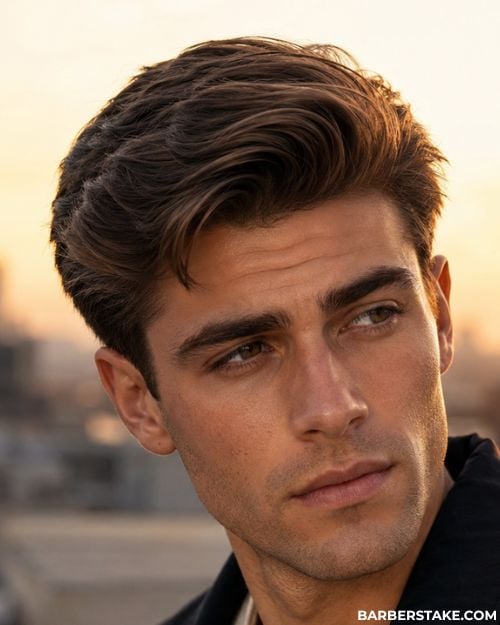
A side-swept quiff combs the top volume smoothly to one side for a cleaner, more diplomatic shape than the standard upward lift. The diagonal sweep softens the height while keeping the fullness, creating a look that works as well at a wedding as it does on a weekday. Blow-dry with a vent brush, directing the hair up and across in your chosen direction, then finish with styling cream for control and a light natural shine. The sweep also flatters guys whose hair grows with a strong natural lean, working with the growth pattern instead of against it.
Slick Back Quiff
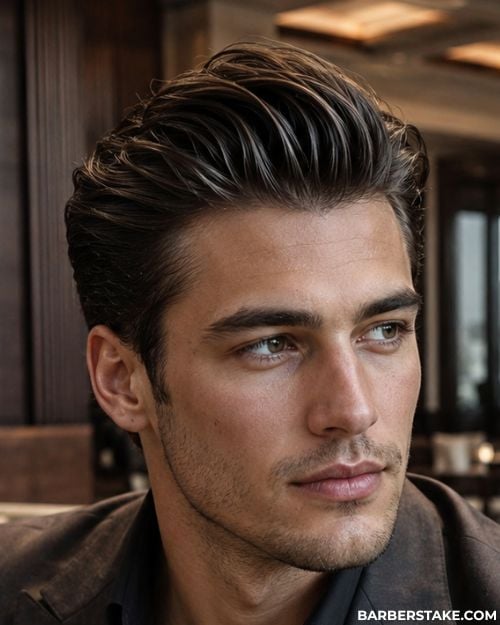
A slick back quiff blends vintage polish with modern volume, sweeping the hair back with defined lift at the front and a subtle wave through the length. It sits between two styles: more height than a true slick back, more control than a textured quiff. Blow-dry backward with a vent brush, keeping lift at the front hairline, then work a medium-hold paste with a touch of shine through the top for a refined, settled finish. The light sheen is part of the look here, so this is the rare quiff where a fully matte product undersells the style.
Spiky Quiff
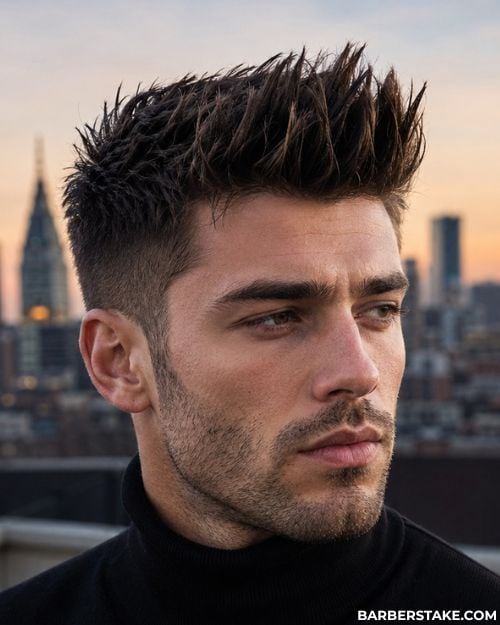
A spiky quiff lifts the top into separated, defined spikes concentrated at the front for sharp, high-energy texture. Faded sides keep the outline clean while the broken-up top does the talking. The separation is the technical point here: the hair is shaped into distinct pieces rather than a single rolled form. Blow-dry upward while lifting with your fingers, then work strong-hold clay through the top, pinching small sections to define each piece. Used sparingly, the clay keeps the spikes flexible and natural rather than stiff, which is what separates this from the gelled versions of the past.
Mid Taper Quiff
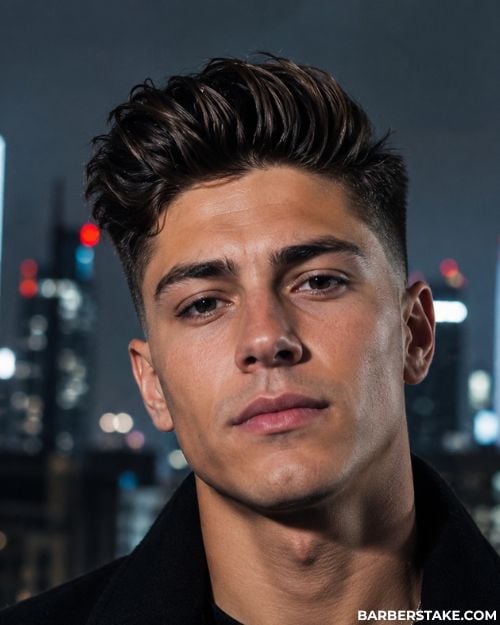
The Mid Taper Quiff blends the sides down starting near the midpoint of the ear, sitting between the subtlety of a low taper and the contrast of a fade. The top stays thick and lifts into a full quiff shape, while the taper keeps the profile balanced and easy to manage from every angle. Blow-dry the front while lifting with your fingers, then work styling cream through the top to keep the shape soft and controlled. It’s a dependable middle path for anyone who finds fades too sharp and low tapers too quiet.
Layered Quiff
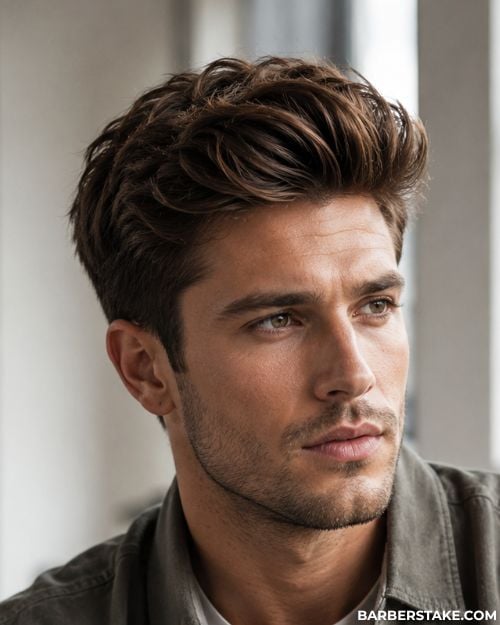
The layered quiff is a stylish, textured variation that uses strategic cutting through the top to create lift, movement and a lighter overall shape. The front is left long enough to sweep upward, while the layers through the crown remove excess weight so the style does not fall flat or look too bulky. For this one, ask your barber for point-cut texture through the top and a clean taper or fade on the sides for balance. Blow-dry the front up and back, then finish with matte clay or paste for controlled volume, definition and a touchable finish.
Our Favorite Product For The Look
- Strong hold offers powerful control and shape for short and medium styles
- Adds dry texture and definition for a modern, matte finish
- Non-greasy formula creates lasting definition and a clean look
- Use on dry hair to shape and separate before blow-drying for added structure
We may earn a commission from links on this page.
Low Fade Quiff
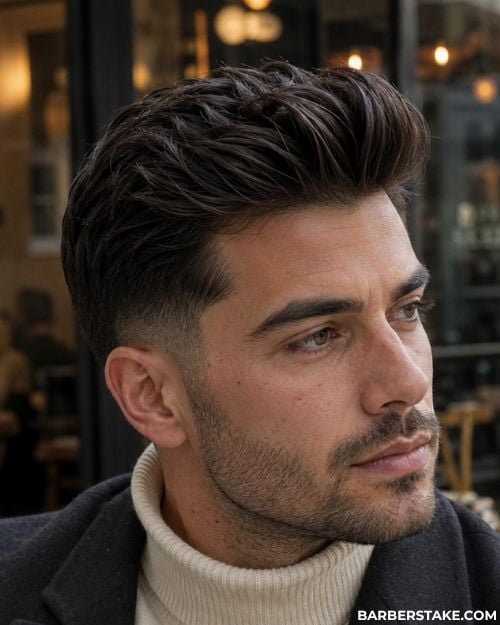
The Low Fade Quiff keeps the fade just above the ears and along the neckline, creating subtle contrast that frames the lifted top without drawing attention to the sides. It’s the most conservative fade pairing and the strongest professional option, because the transition stays hidden under most viewing angles. Blow-dry the top up and back, then finish with styling cream for flexible control and a natural look. The low placement also grows out more gracefully than higher fades, buying you an extra week between barber visits without the cut losing its shape.
Mid Fade Quiff
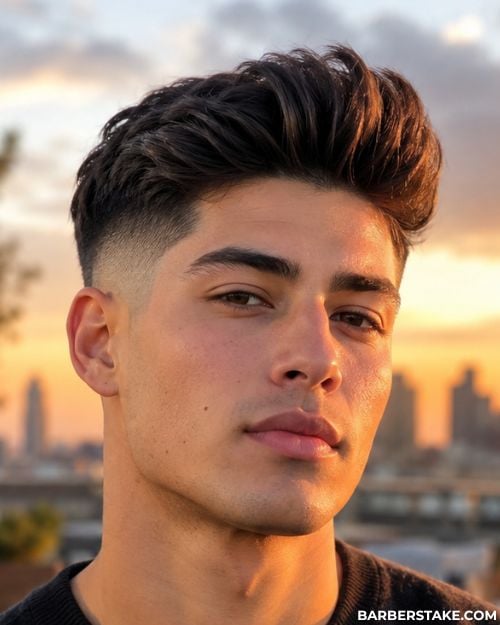
The Mid Fade Quiff starts the fade around the temples, balancing visible contrast with everyday wearability. The placement sharpens the profile more than a low fade while avoiding the boldness of a high one, which is exactly why the mid fade has become the default request in so many shops. We cover that versatility in full in our guide to the mid fade haircut. Blow-dry the top upward with a vent brush, then work in styling cream or a light paste for hold that keeps the volume moving naturally.
Drop Fade Quiff
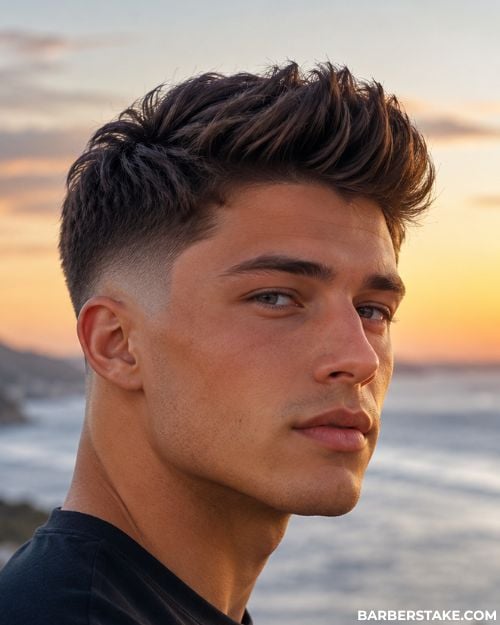
The Drop Fade Quiff follows the head’s natural curve, with the fade line dipping lower behind the ear before blending into the neckline. The dropped arc keeps the cut looking clean from the side and back, where straight fade lines can sit awkwardly against the skull’s shape. The top stays full and lifted at the front in standard quiff form. Blow-dry while lifting with your fingers, then smooth styling cream through the top for light control and a natural finish. It’s a smart pick for guys whose head shape makes standard fades look uneven.
Pompadour Quiff
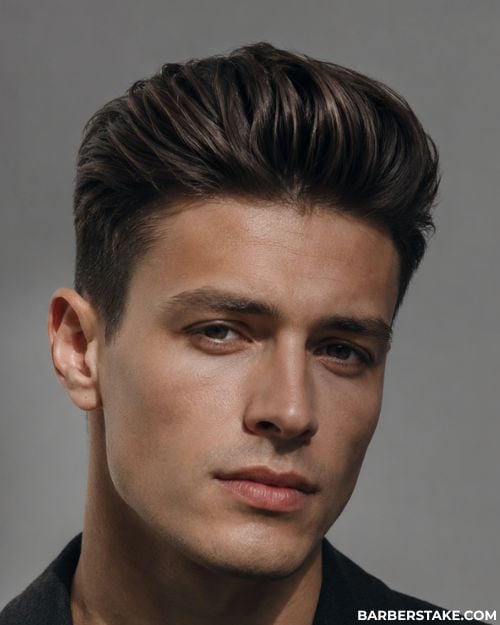
The Pompadour Quiff is a hybrid that borrows the pompadour’s height and the quiff’s texture, with the sides faded smoothly into a tall, voluminous top styled up and back. The front rises higher than a standard quiff but keeps visible separation instead of a solid, lacquered surface. Blow-dry with a round brush, rolling the front section up and back to lock in the height, then apply styling cream for soft hold followed by a small amount of pomade at the front for structure. It’s the right choice when you can’t decide between the two parent styles.
Skin Fade Quiff
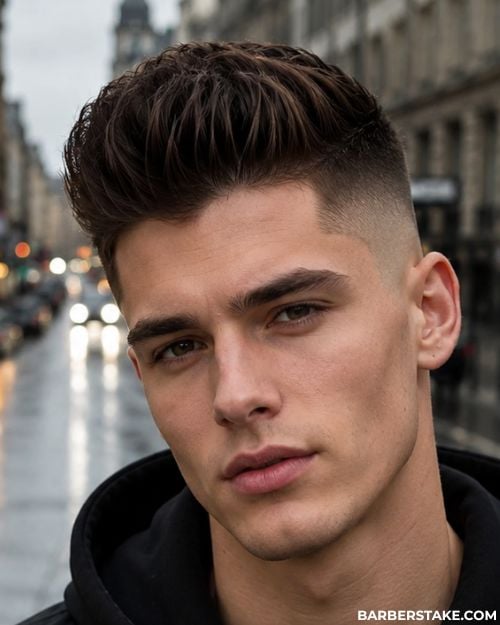
The Skin Fade Quiff takes the sides all the way down to bare skin for the sharpest transition this haircut offers. The clean drop makes the top volume the entire story, and freshly cut, it’s the crispest version of the style. The honest trade-off is maintenance: skin fades blur within 2 to 3 weeks, so this is a cut you commit to keeping up. Spray sea salt spray onto damp hair, blow-dry upward for height, then finish with styling cream for soft control. The lighter product pairing keeps the top natural against the precision below it.
Burst Fade Quiff
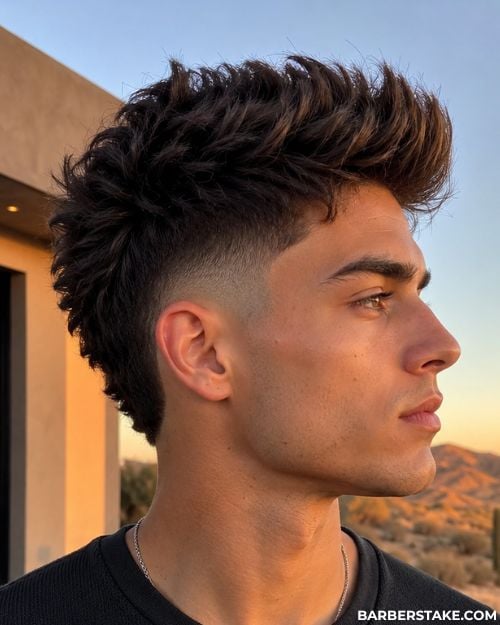
A Burst Fade Quiff curves the fade around the ear in a semicircular arc, leaving the neckline fuller while the area above the ear drops to skin. The rounded fade adds a trend-forward detail that standard fade placements don’t offer, borrowing energy from the same burst technique driving the styles in our mohawk fade guide. Blow-dry the top upward for lift, apply sea salt spray for airy volume, then define the front with a small amount of molding paste. The arc demands a barber comfortable with the technique, so ask before assuming.

Our Favorite Product For The Look
- Adds gritty texture, volume and lift without making hair feel crunchy
- Light hold keeps loose textured styles natural and easy to reshape
- Use on damp hair, then blow-dry for more definition and body
- Castor oil moisturizes and softens while sea salt
We may earn a commission from links on this page.
Taper Quiff
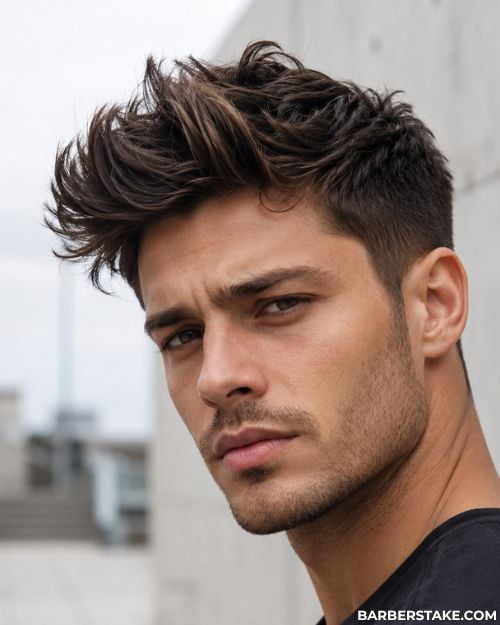
The Taper Quiff is a timeless hairstyle that swaps fade work for a neat scissor-and-clipper taper around the ears and neckline, keeping the sides fuller than any fade allows. The gentler transition gives the cut a softer, more traditional finish and makes it the lowest-maintenance side treatment in this list, holding its shape for 4 to 6 weeks between visits. Blow-dry the top up and back, then work in styling cream and finish with a pinch of texture powder at the roots if you want extra lift. It’s the version I steer clients toward when they admit they won’t keep a fade schedule.
Low Taper Quiff
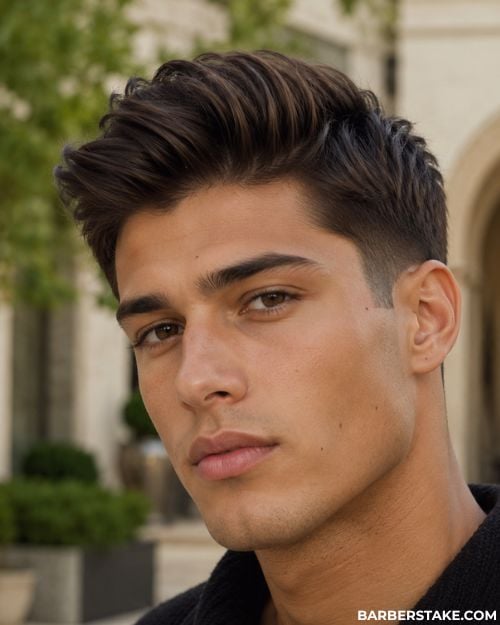
A low taper quiff is a clean, versatile style that combines a soft transition around the ears and neckline with controlled volume at the front. Unlike a fade, the low tapered cut keeps more length on the sides, giving the cut a more natural, professional and forgiving finish as it grows out. The quiff adds height and shape without making the haircut feel too bold, making it a strong choice for guys who want a polished look that still has some personality. Ask your barber to leave enough length in the fringe for lift while gradually tapering the sideburns and neckline. Blow-dry the front up and back, then finish with matte paste or styling cream for flexible hold, natural texture and a smooth, balanced shape.
Quiff Undercut
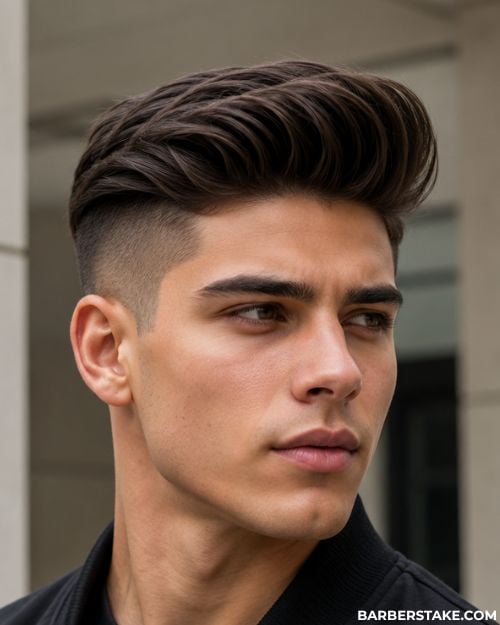
The quiff undercut is a high-contrast hairstyle that pairs a lifted, voluminous front with short, disconnected sides. Unlike tapered finishes, the undercut does not gradually blend into the top, which makes the height at the front look sharper and more intentional. This cut works best on straight, wavy or thick hair that can support volume without collapsing, and it suits guys who want a confident style with more edge than a classic quiff. Ask your barber to clip the sides short while leaving enough length through the fringe and crown to build shape. Blow-dry the front up and slightly back, then finish with a strong matte clay or paste for separation, hold and a clean, structured finish.
Hard Part Quiff
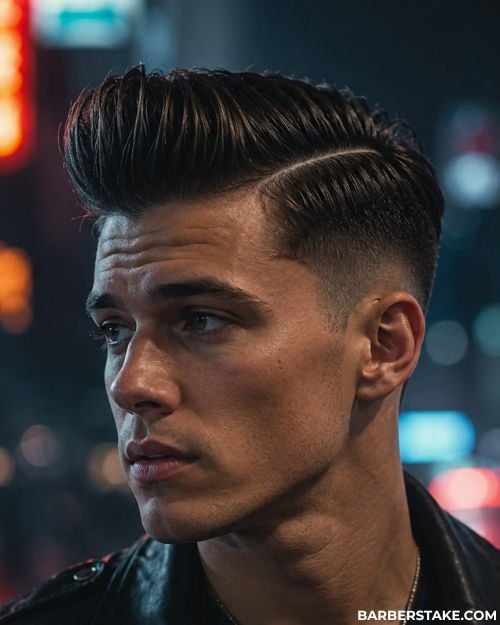
The Hard Part Quiff takes the side part version further with a razor-shaved line carved into the scalp, creating sharp definition against the volume above it. The shaved line makes the styling direction unmistakable and gives the cut a deliberate, high-finish look. Blow-dry up and over from the line, then set with pomade or paste depending on whether you want shine or matte. One honest note on upkeep: the shaved line blurs as the hair grows, so it needs refreshing every 2 to 3 weeks to stay clean. Skip the maintenance and it reads like a mistake rather than a feature.
Wavy Quiff
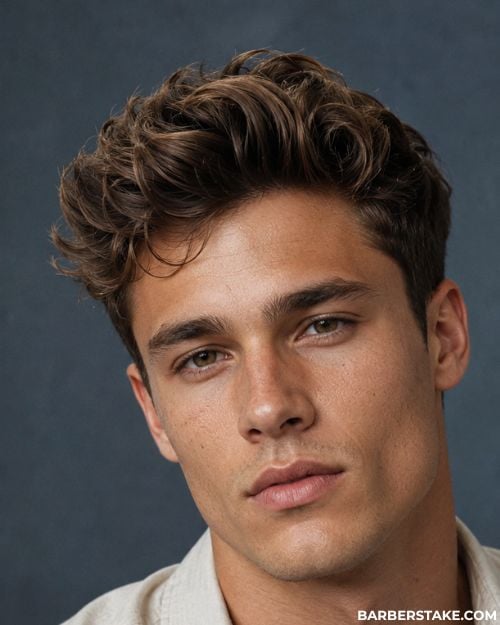
The Wavy Quiff lets soft, tousled waves carry the texture through the top while clean faded sides keep the outline sharp. The natural bend in wavy hair builds body that holds a quiff shape with minimal coaxing, making this an efficient style for guys with the texture for it. Blow-dry with a vent brush, lifting up and back without flattening the wave pattern, then work in molding paste for pliable definition and all-day hold. Keep the product light; overloading wavy hair drags the wave out and costs you the volume it provides for free.
Thick Hair Quiff
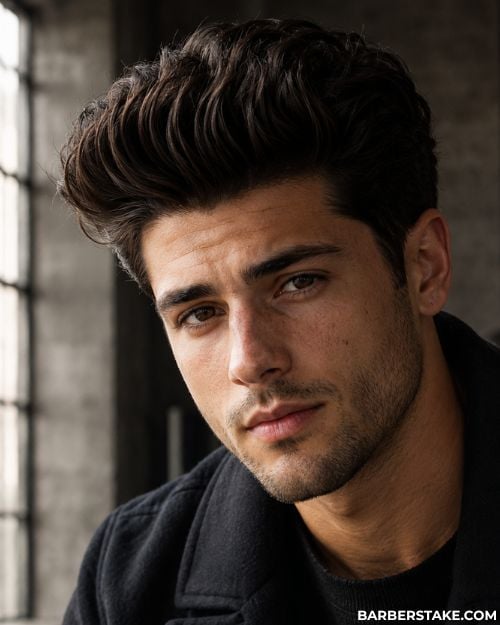
A thick-haired quiff is a versatile, modern style that relies on weight removal through internal layering so the density lifts into shape instead of flopping under its own mass. Thick hair has the raw material for an excellent quiff, but uncut bulk fights the height at every step. Ask your barber to debulk with thinning shears through the interior of the top, keeping the surface length intact. Blow-dry upward in sections, then finish with matte clay, which grips dense hair better than creams. Done right, thick hair holds a quiff longer and taller than any other type.
Our Favorite Product For The Look
- Firm hold gives reliable control and shape without the hardness
- Creates natural texture, volume and grip with a matte finish
- Works well with messy styles, textured crops and thicker hair
- Clean, natural scent that smells good without being overpowering
We may earn a commission from links on this page.
Quiff For Fine Hair
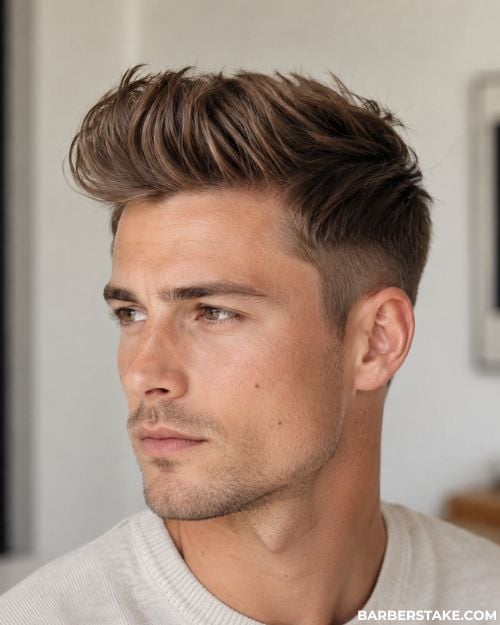
This quiff for finer hair runs shorter and denser, using a textured and cropped top where the reduced length supports itself instead of collapsing. Texture powder at the roots and a volumizing blow-dry create the appearance of fullness that fine strands don’t deliver on their own. Avoid heavy pomades entirely: the weight and shine separate fine hair into strings and expose the scalp, undoing everything the cut is built to achieve. Blow-dry upward at the roots, dust in texture powder, then finger-shape with the smallest amount of light paste. Fine hair can absolutely wear this style; it just needs the right supporting cast.
Quiff With Beard
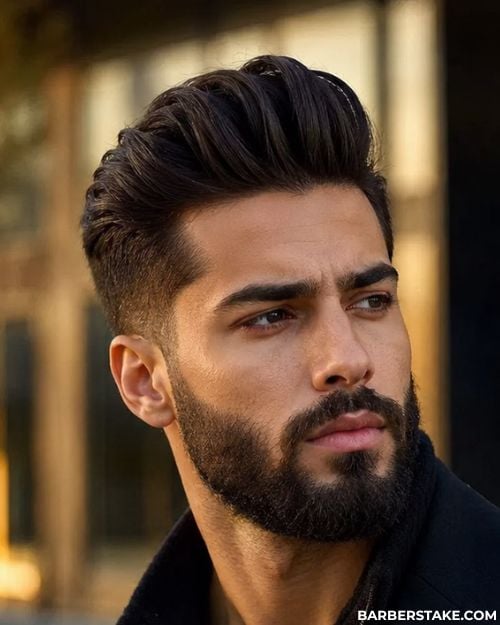
The Quiff With Beard is a masculine, attractive haircut that balances top volume against a full, shaped beard, framing the face from both directions for a complete, structured look. Proportion is the technical point: the beard’s density should roughly match the volume up top, since a tall quiff over patchy stubble or a heavy beard under a modest quiff throws the face off balance. Blow-dry the top up and back, then apply styling cream for smooth control, and keep the beard conditioned with a few drops of beard oil. Ask your barber to shape both in the same visit so the two halves are cut to work together.
Quiff Mullet
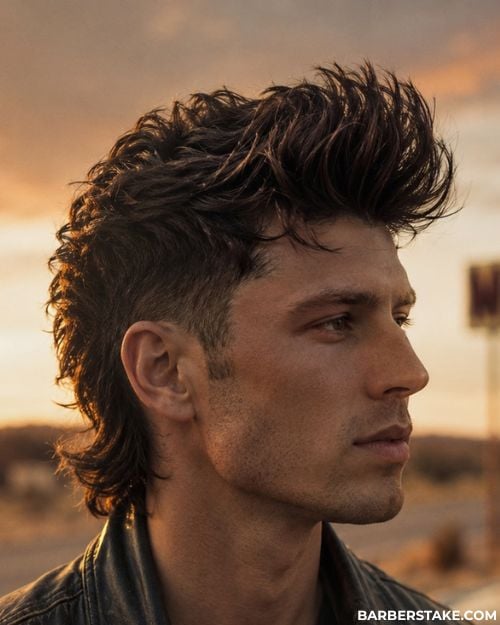
The Quiff Mullet runs lifted volume at the front into textured length at the back, merging two styles that share more attitude than most pairings. The front styles like a standard quiff while the back flows past the collar, and the sides stay tapered to keep the silhouette deliberate. Blow-dry the front upward for lift, then work styling cream through the whole shape for movement and soft hold. The back half follows the same rules as the styles in our modern mullet guide, so read that before committing to the party in the back.
Rockabilly Quiff
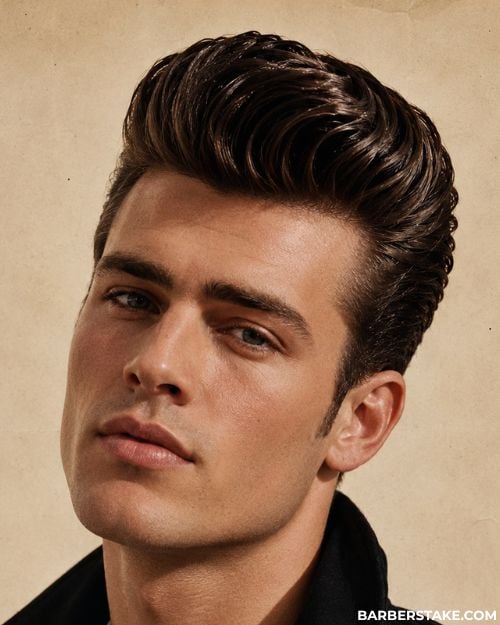
This rockabilly quiff is the heritage version, featuring a high, rolled front with slicked sides and an unapologetic shine that traces straight back to the 1950s. Where modern quiffs chase matte texture, this one embraces gloss and sculpture, rolled into a single smooth form that holds like architecture. Work a traditional pomade through towel-dried hair, then comb the front up and back, rolling it over itself to build the signature wave. The sides comb flat and tight. It’s a commitment to a specific era, and it rewards anyone willing to carry it with the confidence the original wearers made famous.
Side Part Quiff
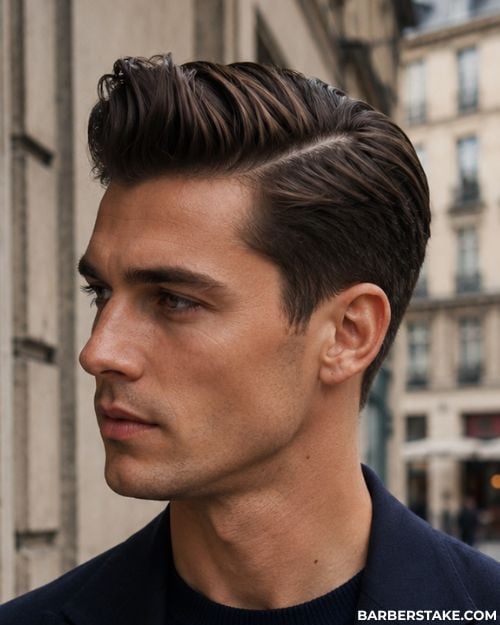
The Side Part Quiff adds a defined parting line to the lifted top, giving the volume a clear architecture and a smart-casual edge. The part anchors the shape, so the quiff rises from one side rather than the center, and the faded or tapered sides keep the line crisp. Blow-dry along the part, lifting the heavier side up and over, then apply pomade for a polished hold that keeps the line sharp through the day. It’s a natural pick for guys who want the quiff’s height with a more traditional, groomed finish.
How to Choose the Perfect Quiff
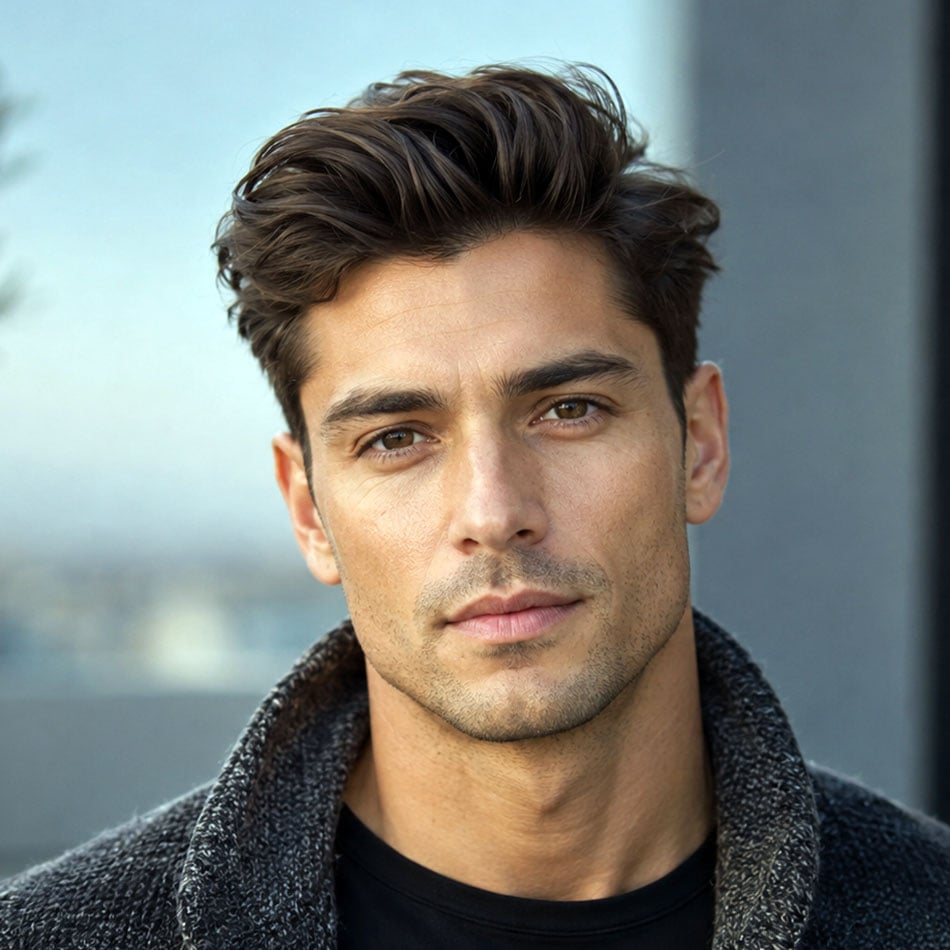
By Hair Type
Straight hair holds defined quiff shapes well but needs a blow-dry and product to create lift it doesn’t have naturally. Wavy hair is the easiest canvas for this cut, since the natural bend builds body with minimal effort. Curly hair suits shorter, shaped versions styled with curl cream and a diffuser rather than fighting the pattern. Thick hair needs internal debulking so the volume lifts instead of flopping, and fine hair performs best at shorter lengths with texture powder and matte products doing the supporting work.
“Fine hair usually loses a quiff because of weight before it loses it because of hold. Keeping the front a little shorter can give you more visible height than growing another inch and trying to hold that extra weight up with stronger product,” explains Eric Garibay, professional barber at BLVD Barbershop.
By Face Shape
Round faces benefit from the added height, which lengthens the profile. Oval faces wear nearly every version of the cut without adjustment. Square faces suit softer, textured tops that ease strong angles, and longer faces should cap the height and keep some width through the sides to avoid stretching the proportions further.
Check Your Front Growth Pattern Before Chasing Height
Before settling on a shape, your barber should examine how the front hairline grows, including any cowlicks, changes in density or natural movement toward one side.
When hair grows strongly forward, leaving enough length behind the hairline creates leverage for lifting it back. A strong cowlick may suit an off-center or loosely swept quiff better than a perfectly symmetrical style. If the hairline is maturing or thinner at the temples, excessive height can reveal more scalp and make the front look narrower. A shorter, textured quiff with a softer outline will usually provide more flattering coverage.
This is something I evaluate with the hair dry whenever possible. Wet hair can conceal growth patterns and make fine areas appear denser than they will after styling. Tell your barber how the front behaves without product and whether it falls during the day.
“I don’t force a quiff straight up against a strong cowlick. I use that growth pattern to choose the direction, then build height where the hair naturally supports it. Working with the hairline produces a quiff that looks balanced from the front and remains achievable after you leave the shop.” — Sebastian Mondragon, Licensed Barber
How to Ask Your Barber for a Quiff
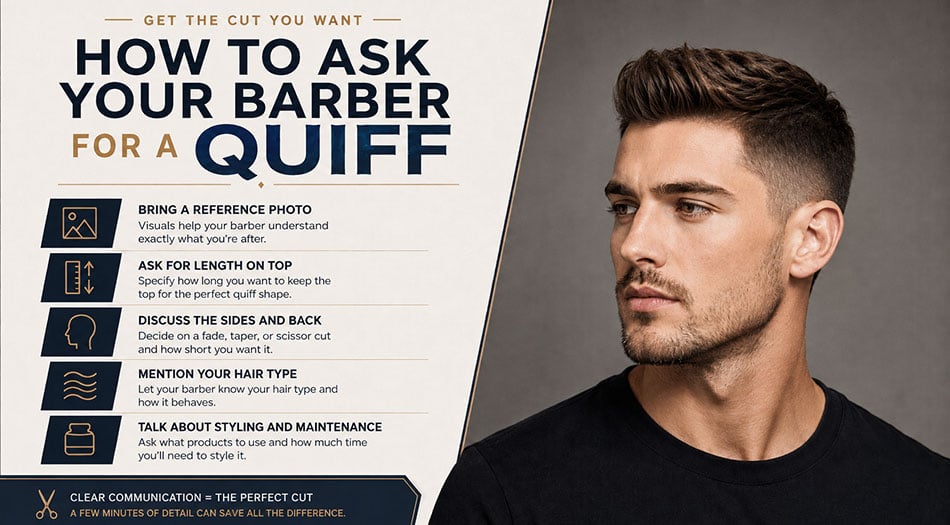
Start With the Exact Phrasing
Say this: “Longer on top, shorter on the sides, with enough length at the front to push up and back.” Then specify the three variables that define every quiff: top length in inches, side treatment, and finish. “Three inches on top, a mid fade, textured finish” gives your barber a complete picture in nine words. Vague requests like “kind of voluminous” leave them guessing, and guessing is where haircuts go wrong.
Use the Right Terminology
Terms like textured quiff, short quiff and quiff with a mid fade are universal barbershop language, so use them. Specify low, mid, high or skin if you want a fade, and taper if you don’t. Tell them whether you’ll style with a matte or shine product, because a good barber cuts differently for each: matte texture wants choppier layering, shine wants smoother surfaces.
Bring a Side-Angle Reference Photo
Bring two or three photos, and make sure at least one shows the side profile. The quiff’s shape lives in its silhouette, and I’ve watched some consultations stall because the client only had front-facing photos that hide the fade height and the angle of the lift. A side angle answers half your barber’s questions before they ask. “A front-facing photo shows the finish, but the side view shows the haircut. That’s where your barber can read the angle of the lift, the fade height and how much length needs to remain at the front,” adds Mondragon.
Have the Growth Conversation
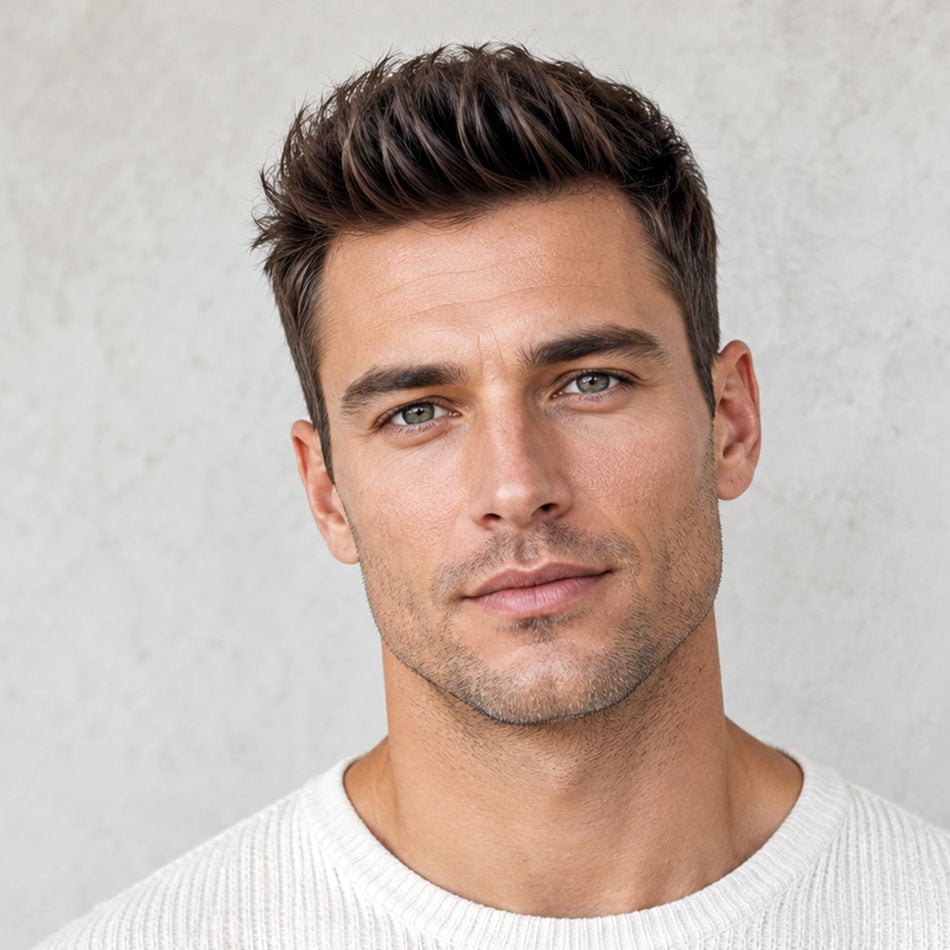
If your hair is currently short, tell your barber you’re working toward a quiff rather than expecting one today. A proper version often takes two appointments: the first shapes the sides and sets the structure while the top grows, the second completes the cut once the front reaches 3 inches or more. Most guys don’t realize this, and the ones who do end up with better results because the cut was planned instead of forced.
How to Style a Quiff
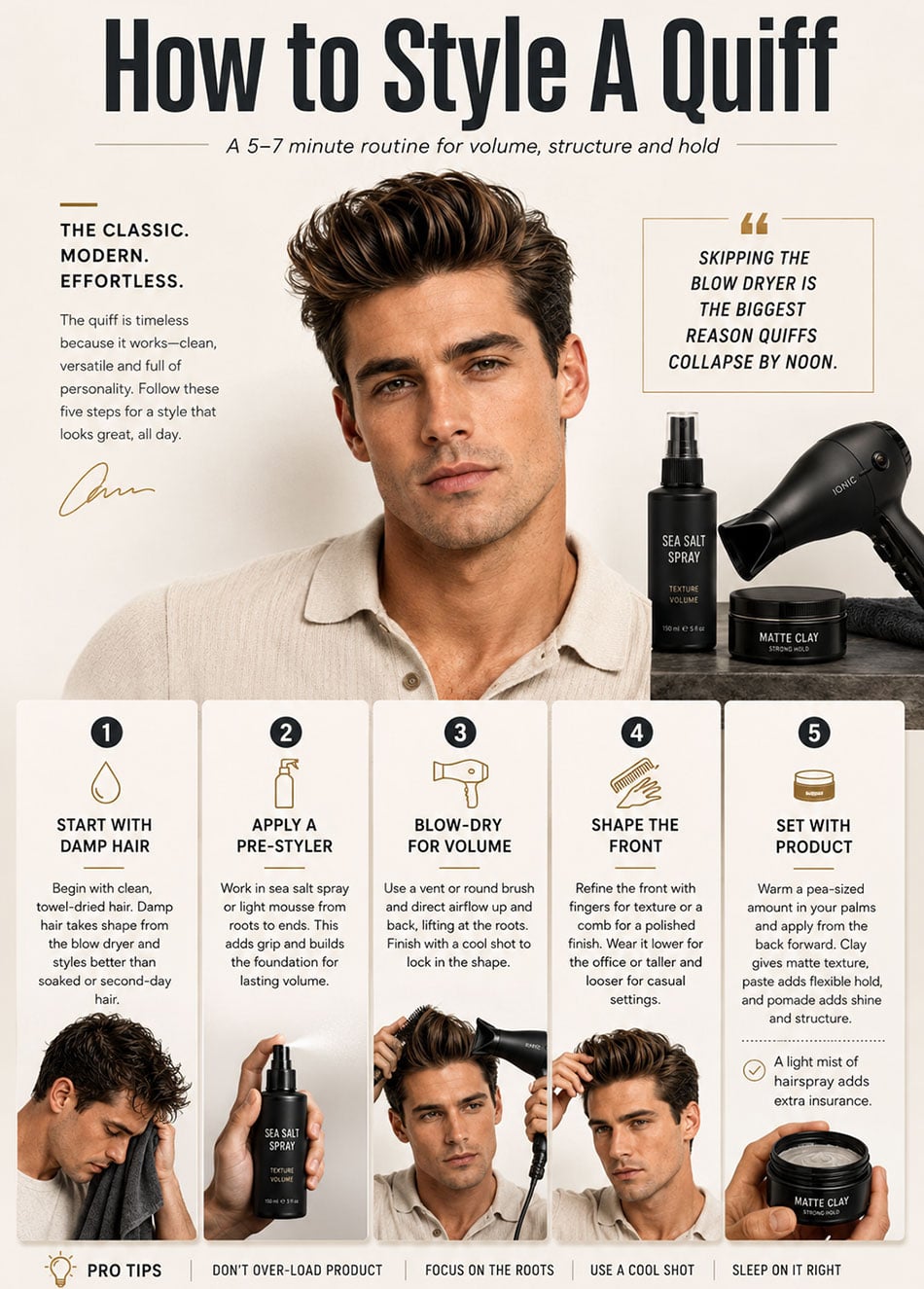
The quiff is a built style, not a product style. The routine below takes 5 to 7 minutes once you’ve done it a few times, and every step earns its place.
Start With Damp Hair
Wash with a volumizing shampoo if your hair runs fine or flat, then towel-dry until damp rather than dripping. Damp hair takes direction from the blow dryer and holds it; soaked hair just gets pushed around. This is your foundation, and a clean, lightweight base styles better than second-day hair carrying yesterday’s product.

Our Favorite Product For The Look
Native Shampoo and Conditioner Set
- Offers a simple two-step hair care routine for better everyday styling
- Shampoo removes excess oil and buildup for a clean base, enhancing volume and texture during styling
- Conditioner softens hair, reduces frizz and makes it easier to shape and control your desired look
- Both formulas are free of sulfates, silicones, parabens and dyes
We may earn a commission from links on this page.
Apply a Pre-Styler
Work sea salt spray or a light mousse evenly from roots to ends. The pre-styler adds grip and builds a scaffold for the volume you’re about to create, and it’s the difference between a quiff that survives until evening and a quiff that’s gone by ten.
Blow-Dry for Volume
This is the step that makes the haircut. Using a vent or round brush, lift the hair at the roots while directing airflow up and back, working the front section last and highest. Hit the shape with the cool setting for a few seconds to lock it in. I’ll say it plainly because I repeat it in the shop weekly: skipping the blow dryer is the single biggest reason home-styled quiffs collapse by noon. Product holds a shape; it cannot create one.
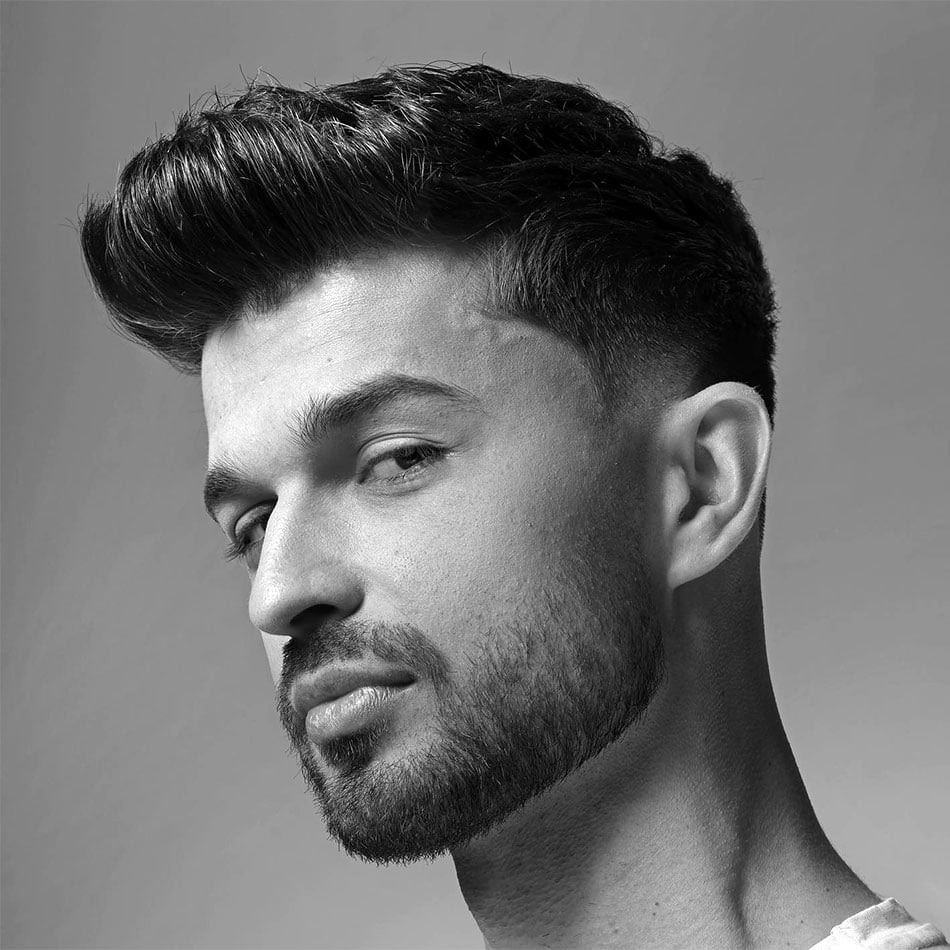
Shape the Front
With the structure set, refine the front with your fingers for a textured finish or a comb for a polished one. Adjust the height to the occasion: lower and swept for the office, taller and looser for everything else. This is also the moment to settle the direction, whether straight up and back, swept to a side, or pushed slightly forward.
Set With Product
Finish with a pea-sized amount of product warmed between your palms and worked from the back of the head forward, so the front gets the lightest touch. Clay gives matte texture, paste gives flexible hold, and pomade gives shine and structure. If your day runs long, a light pass of hairspray adds insurance without freezing the shape solid.
“The front is the last place I want overloaded because it’s carrying the most height. Work the product through the rest of the top first, then use what’s left on your hands to define the quiff without dragging it down,” Garibay recommends.
Common Mistakes I See With the Quiff
The quiff is forgiving as a haircut and unforgiving as a routine. These are the errors I correct most often, and every single client who fixes them gets a better result within a week.
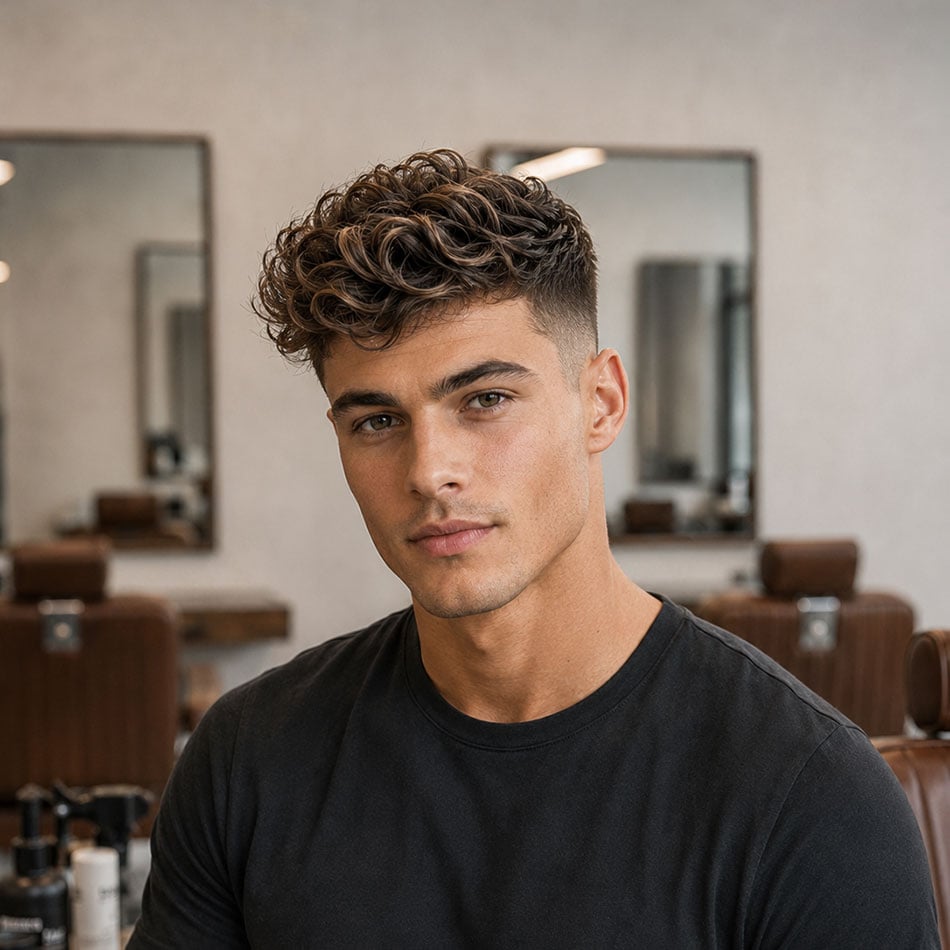
Skipping the Blow-Dry
Product alone cannot create lift, and no clay on the market rescues hair that was never trained upward. The dryer builds the shape; the product only keeps it. If you take nothing else from this guide, take that sentence, because it solves the most common complaint I hear about this haircut.
Using Too Much Product
Heavy application collapses the volume you just spent five minutes building. Product adds weight, and weight is the enemy of height. Start with less than you think you need, work it through evenly, and add a second small amount only if the hold genuinely falls short. You can always add; you can never subtract.
“When a quiff keeps falling, adding more clay is usually the wrong fix. Heavy product pulls the front down, so I would first look at the drying technique, the amount of weight left in the cut and whether the product is being worked too heavily into the roots,” suggests Mondragon.
Letting the Sides Outgrow the Shape
The quiff’s silhouette depends on contrast between the lifted top and the tight sides, and three weeks of unchecked growth blurs that contrast into a generic, shapeless cut. The top can usually wait; the sides set the clock. Watch where your fade or taper sits in the mirror, and book the appointment when the line starts to soften.
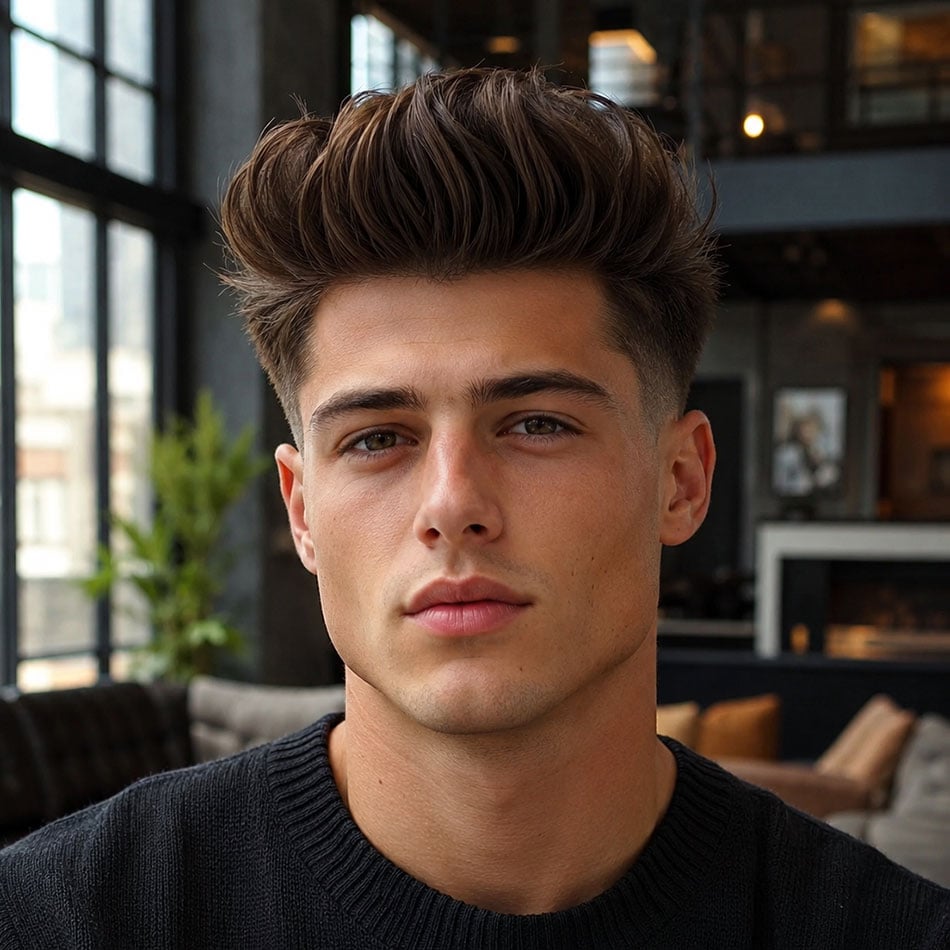
Matching the Wrong Product to Your Hair Type
Heavy shine pomades on fine hair separate the strands and expose the scalp. Light creams on thick, coarse hair surrender by lunchtime. Match the product’s weight and hold to your hair’s density: powders and light pastes for fine hair, clays and stronger pastes for thick. The right cut with the wrong product still looks like the wrong cut.
Asking for Too Much Length Too Soon
The front of a quiff needs graduated length, longer at the front hairline and progressively shorter toward the crown, not a uniform mop grown out evenly. Clients who grow everything to 5 inches and then ask for a quiff usually need more taken off than they expect, because uniform length doesn’t lift into this shape. Plan the cut with your barber early in the grow-out, and the scissors will work with you instead of against you.
How to Maintain a Quiff
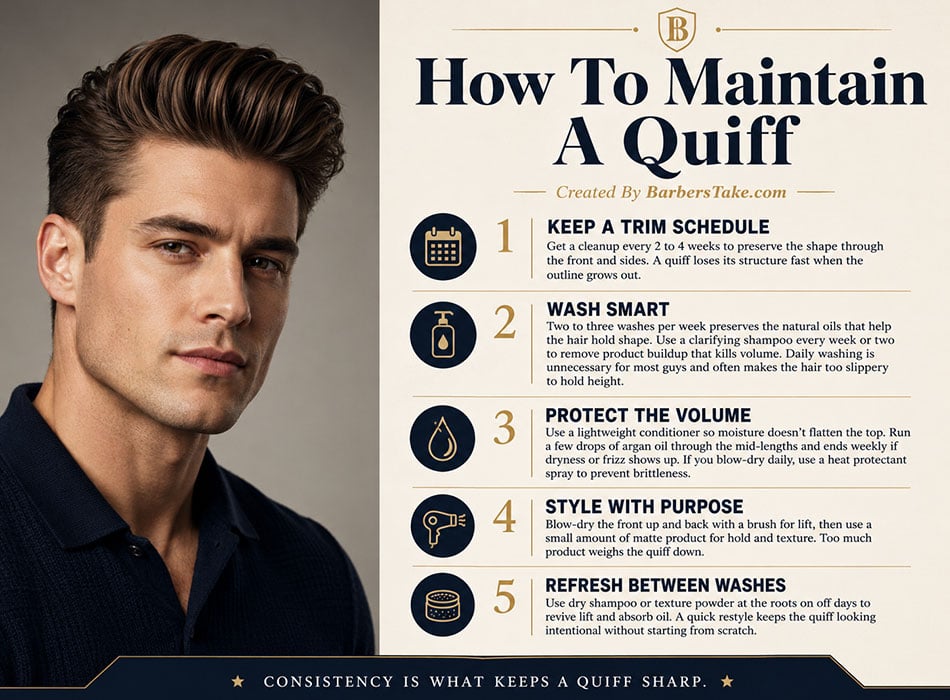
Keep a Trim Schedule
Faded versions need a visit every 3 to 4 weeks; tapered versions stretch to 4 to 6. The sides drive the schedule, not the top, since the contrast they create is the haircut’s structural backbone. Skipping a cycle doesn’t ruin the cut, but it does downgrade it to something vaguer until the next appointment.
Wash Smart
Two to three washes per week preserves the natural oils that help the hair hold shape, with a clarifying shampoo every week or two to strip the product buildup that deadens volume. Daily washing is unnecessary for most guys and works against you here, since freshly stripped hair is slippery and resists holding height.
Protect the Volume
Use a lightweight conditioner so the moisture doesn’t flatten the top, and run a few drops of argan oil through the mid-lengths and ends weekly if dryness or frizz creeps in. If you blow-dry daily, a heat protectant spray is cheap insurance against the brittleness that eventually makes hair refuse to cooperate.
FAQs About Quiff Haircuts
What is a quiff haircut?
A quiff is a men’s haircut with shorter sides and a longer top, typically 3 to 5 inches, styled upward and swept back at the front for height and volume. The lifted, textured front section is its defining feature and what separates it from the pompadour and slick back.
How long does my hair need to be for a quiff?
Aim for 3 to 5 inches on top for the standard version, with 2 to 3 inches as the working minimum for a short quiff. The front section matters most, since that’s where the lift happens. Sides can be any length from skin to a light taper.
What’s the difference between a quiff and a pompadour?
A quiff concentrates textured volume at the front with a casual, relaxed finish, while a pompadour sweeps the entire top back in a sleeker, more uniform and polished shape. The quiff reads modern and effortless; the pompadour reads formal and composed.
Is a quiff good for thin or fine hair?
Yes, with adjustments. Keep the top shorter, around 2 to 3 inches, use texture powder at the roots for lift, and stick to matte products. Avoid heavy shine pomades, which separate fine strands and make the hair look thinner than it is.
Is a quiff professional enough for the office?
Yes, in its short, tapered and soft versions. A short quiff over a low taper sits comfortably in conservative workplaces, and the style scales down gracefully. Our guide to professional haircuts for men covers how to keep any cut office-appropriate.
Is a quiff high maintenance?
Moderately. Plan on a daily blow-dry of 3 to 5 minutes and trims every 3 to 6 weeks depending on whether you wear a fade or a taper. The styling routine is short once learned, but the cut does reward consistency more than most short styles.
How do I ask my barber for a quiff?
Specify three things: top length in inches, side treatment (taper, low, mid, high or skin fade), and finish (textured or clean). Bring a reference photo that includes a side angle, since the quiff’s shape is easiest to read in profile.
Can I get a quiff with curly hair?
Yes. Curly hair suits shorter, shaped versions where the natural texture provides the volume. Dry with a diffuser on low heat, define with curl cream, and skip the heavy brushing. The curl pattern replaces much of the blow-dry work straight hair requires.
What products work best for a quiff?
A pre-styler such as sea salt spray and a blow-dry builds the foundation, then finish with clay for matte texture, paste for flexible hold, or pomade for shine. Fine hair benefits from texture powder at the roots; thick hair holds best with stronger matte clays.
How do I add more volume to a quiff?
Blow-dry with the airflow directed at the roots while lifting the hair with a brush or your fingers, add a pinch of texture powder at the front, and use less product overall. A volumizing shampoo helps fine or flat hair start with more body.
What’s the difference between a quiff and a faux hawk?
A quiff lifts its volume at the front hairline and sweeps it back, while a faux hawk concentrates lift along a center strip running from forehead to crown. The quiff peaks at the front; the faux hawk carries its ridge across the whole head.
