A professional men’s haircut is a powerful choice that should symbolize your character, competence and ambition, whether you’re a lawyer, engineer, marketing manager or investment banker. The perfect corporate hairstyle can distinguish a businessperson in the workplace, elevate his attire, exude confidence, complement his facial features and demonstrate strength, making a great first impression within seconds. The wrong cut undermines an otherwise sharp suit and a confident handshake.
When talking to your barber, most guys will choose a conservative, short business cut like the traditional side part, slick back, textured quiff, Ivy League or tousled curly hair taper, but trendy medium to longer styles can be work-appropriate with a polished approach to styling.
From classic to modern, I’ll show you 27 popular examples of professional hairstyles for men that work across modern office, project smart sophistication and elevate how others perceive you. Learn decision frameworks, get industry-specific guidance, discover how to ask for the cut you want in the chair and explore the simplest way to get these formal and casual business-oriented styles without looking too stuffy.
Attractive Business Professional Hairstyles For Men
Classy Comb Over with Taper Fade
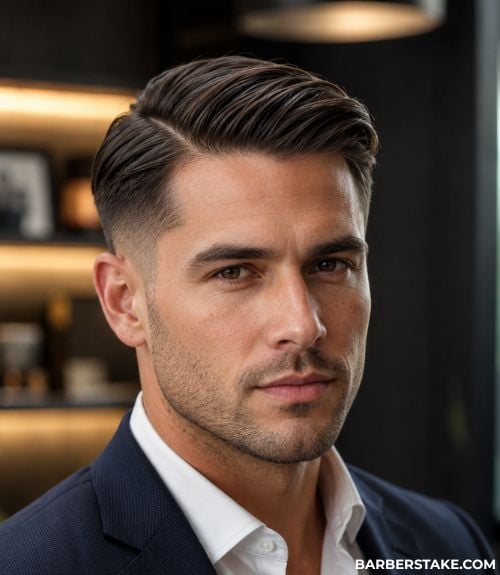
A classy comb over with a taper fade balances style and sophistication, offering a polished look for the office. This timeless look brings subtle structure, while the neat taper fade keeps the cut refined. Use a lightweight pomade or wax on damp hair to give the hair a matte, professional finish. Lift the hair lightly at the roots for extra volume and lock in your style with a light hairspray for longer days.
Natural Flow
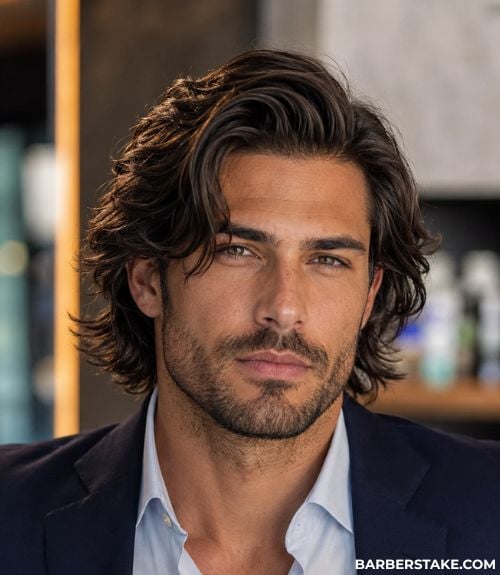
This natural flow allows men with naturally textured hair to showcase their fun-loving, approachable side without looking overly casual at work. Lift the hair back with your fingers for a loosely structured appearance that looks effortless yet defined. Let the hair air dry for a natural finish or use a diffuser and a light pomade to add volume and texture to your waves.
Mature Spiky Hair
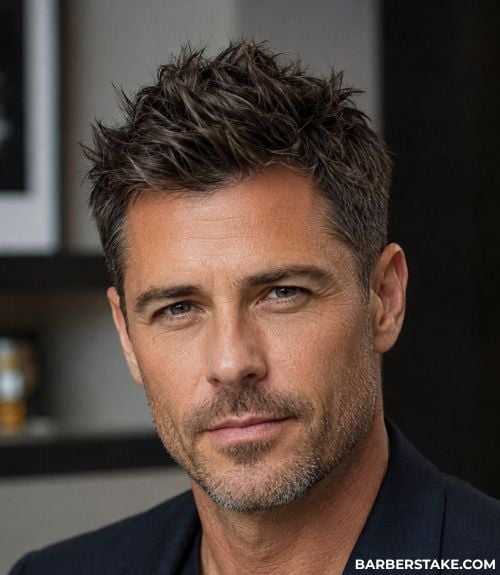
Mature spiky hair is versatile and contemporary, giving silver foxes the confidence they need to tackle the boardroom. The lifted spikes create the illusion of volume and fullness, framing the face and projecting a sense of youthfulness. Spikes complement straight and wavy tresses, holding particularly well in thicker hair. Gel or pomade will lock in these spikes all day, helping busy professionals reduce styling time in front of the mirror.
Short Tousled Hair with Cropped Sides
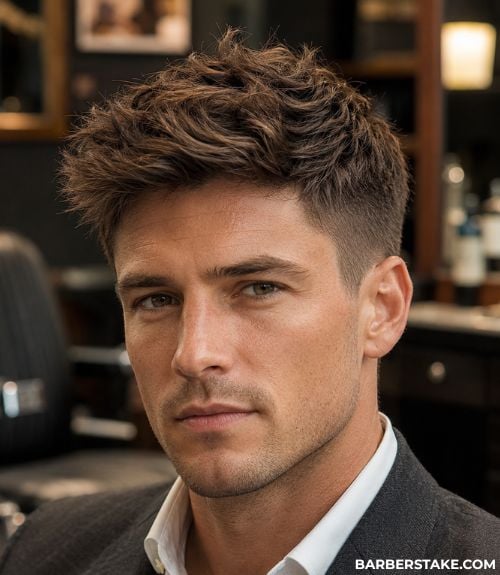
With cropped sides, a short, tousled men’s hairstyle is a trendy choice for younger corporate guys seeking a playful yet well-groomed aesthetic. The taper maintains a low-maintenance vibe, with the tousled top bringing personality and flair that can be enhanced with a volumizing mousse and a blow dryer. Point-cutting the top into subtle layers prevents this boyish style from looking one-note. A well-kept stubble beard pulls it all together.
Short Curly Hair
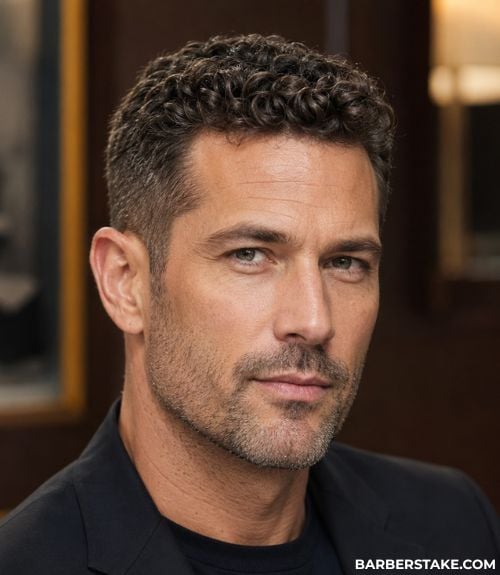
A short, simple hairstyle is a trendy favorite for guys with curls who want a look that’s easy to manage and effortlessly stylish. Keeping the hair short maintains a clean appearance, and you can pair the curly top with closely cropped sides for greater contrast across the head. Apply a small amount of curl cream or light-hold gel to define your curls before pulling out your diffuser to minimize frizz. A short but thick beard balances the look and incorporates dimension around the jawline.
Long Fringe with Taper Fade
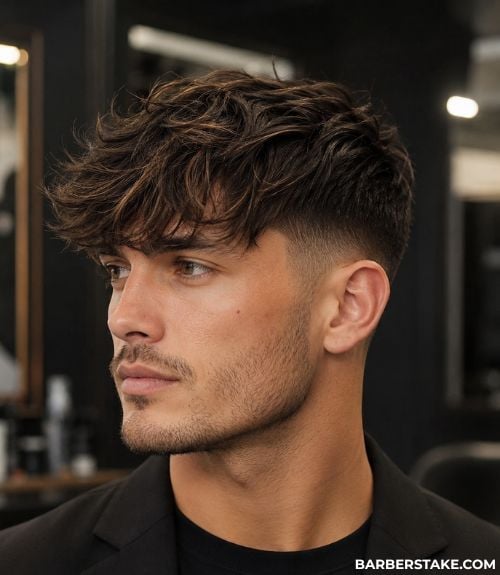
Pairing a long fringe with a taper fade offers fresh graduates a modern, youthful look. The hair at the front is styled forward and pulled to one side, while the sides are tapered to keep this dynamic style professional. Scissor-cut or buzz the sides regularly to keep the style balanced and well-groomed. A lightweight styling cream helps define the fringe, but you can leave it to air dry on Casual Fridays.
Side Swept Ivy League
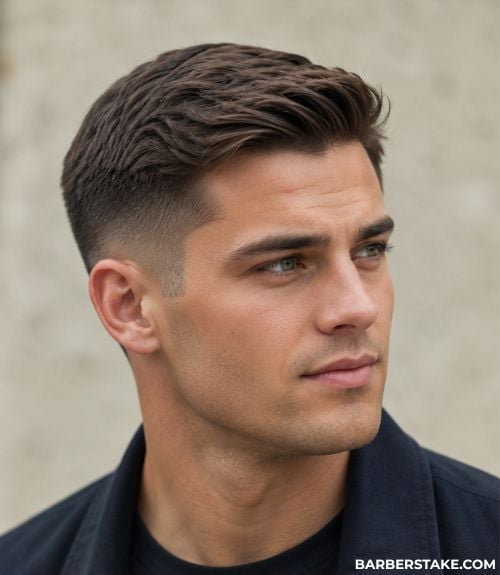
This side-swept Ivy League is a professional haircut with timeless appeal and versatility. The style exudes polish and requires minimal maintenance, making it perfect for corporate guys who want a clean but understated style. Keep the hair on top long enough to sweep to the side and trim the sides short for a structured finish. Practical and flattering, the Ivy League transitions seamlessly from the boardroom to the bar.
Short Brush Up with Low Taper Fade
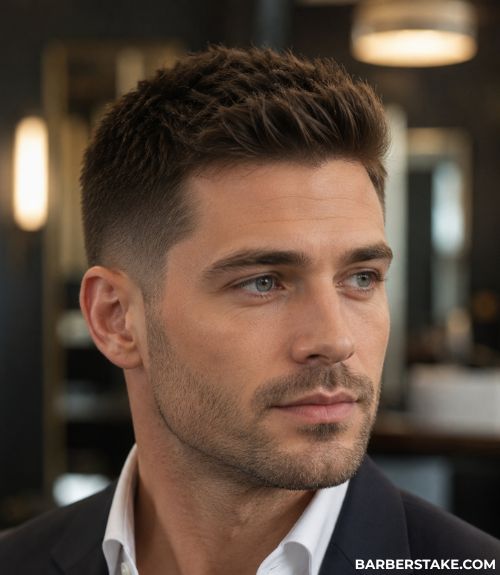
A short brush with a low taper fade is a fresh cut that combines controlled volume on top with clean-cut sides. The cut requires little daily styling, making it ideal for men who enjoy a sharp look with minimal upkeep. Create the signature brush-up using a comb for more definition or your fingers for a soft, casual feel that oozes approachability. Add movement with texturing shears and use a matte pomade, wax or styling cream to lock in volume.
Man Bun
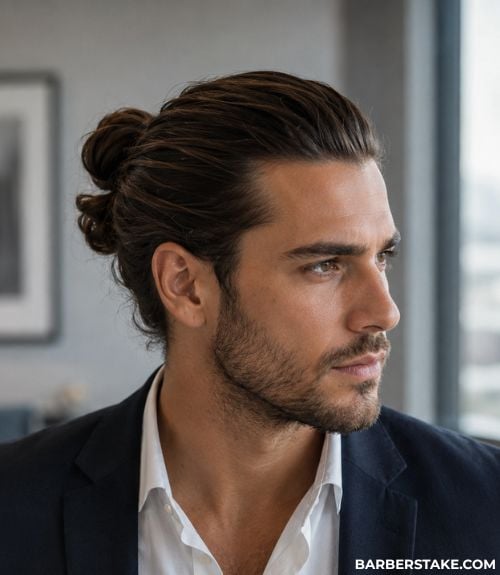
This work-appropriate man bun blends professional sophistication with a hipster edge, creating the simplest way to style long hair in a formal workplace. A higher bun exudes a modern, artistic vibe, while a lower bun secured at the nape of the neck has a more conservative charm. A leave-in conditioner, anti-frizz serum and matte styling cream will tame flyaways for an understated, professional finish. Rock your bun with anything from a full beard to a taper fade for a creative touch.
Textured Modern Quiff

The modern textured quiff is a gentlemanly style that exudes confidence and charm when working up the career ladder. This cut combines volume at the front with a textured, tousled look across the crown. Use a volumizing mousse and heat the front with a blow dryer for next-level lift. Separate the strands with wax for definition or let the hair hang naturally for a relaxed feel that’s ideal for after-work drinks. It looks handsome with a full beard or a clean shave.
Brushed Forward Waves with Tapered Sides
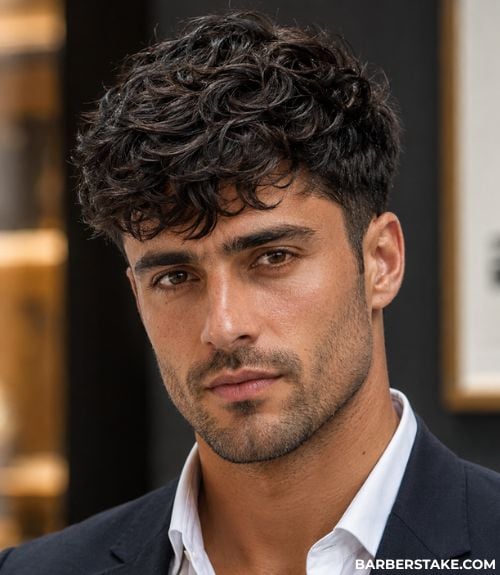
Brushed forward waves with tapered sides are a playful style that highlights natural texture while looking polished. The longer bangs flow forward at the front and complement the neat, shorter sides to create contrast, volume and lift. A connected beard and trimmed mustache bring clean lines to the style, offering a cohesive, professional feel for any office environment.
Messy Medium Hair with Undercut
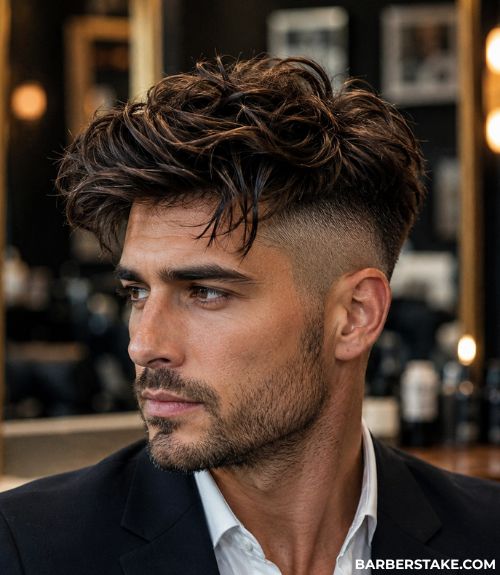
Messy medium hair looks daring with an undercut, allowing young, adventurous professionals to make a strong statement at the office. The longer top flops across the forehead and is complemented by long layers for light structure. An undercut adds sharp lines and a clean appearance for a distinguished style. Use a round brush and heat to lift the roots or lightly scrunch with medium-hold styling products to create loose texture. Light stubble and a subtle soul patch round off this relaxed style beautifully.
Mod Cut
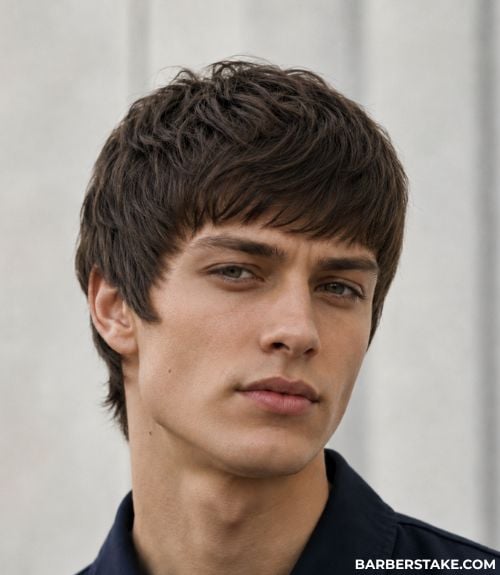
This understated and refined mod cut gives any guy’s look a youthful energy while retaining a professional edge. The hairstyle features a short back and sides with a longer top, creating a 1960s-inspired look with modern flair. Work a lightweight pomade through the front sections with your fingers to give the hair flexibility. Maintain the scissor-cut sides with regular trims to help retain your cut’s approachable, business-savvy appeal.
Buzz Cut
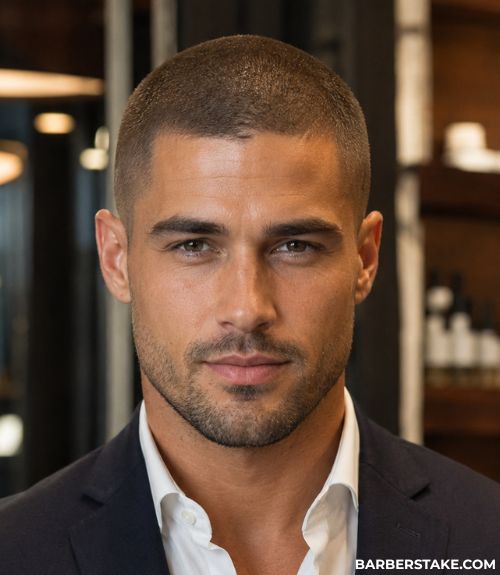
This buzz cut is built for men with a packed calendar, offering a clean appearance that takes little effort. The military-inspired look of the buzz cut looks polished on strong face shapes, and the cut’s sharp lines hint at a no-nonsense approach to business. A pair of clippers is all you need to retain this uniform cut, allowing men in high-intensity roles to skip the barbershop visits. Bring subtle dimension to your fresh style with a fade or keep it at a uniform length.
Faux Hawk

The chic faux hawk is brimming with upscale personality and combines a longer, central strip of hair with a shorter back and sides. The cut is subtle enough to look professional in business settings, striking a perfect balance between edgy and polished. Use heat to control the height and texture of the center, and use a comb to smooth down the sides for a sleek finish. Subtle layers can help texturize the cut while keeping the height minimal.
Textured Crew Cut
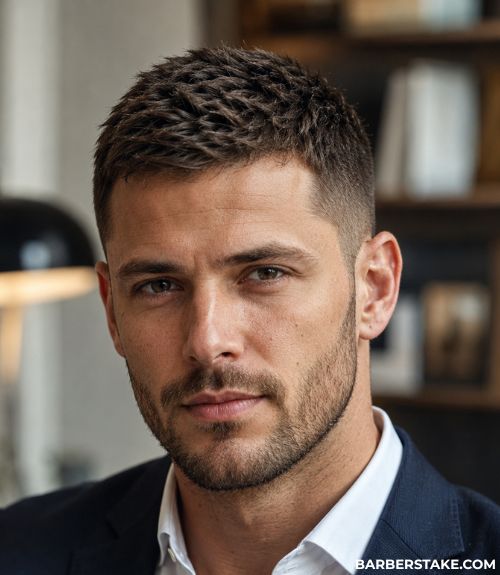
This textured crew cut is neat but approachable, perfectly blending classic elegance with a touch of modern flair. Point-cut layers enhance the hair’s natural movement, creating fullness without any extra length. Style it with matte clay or pomade for a structured look, or tousle the hair with your fingers for an effortlessly sexy style after hours. Adding a low fade or neatly scissor-cutting the sides creates an old-school feel ideal for white-collar jobs.
Brushed Back Waves
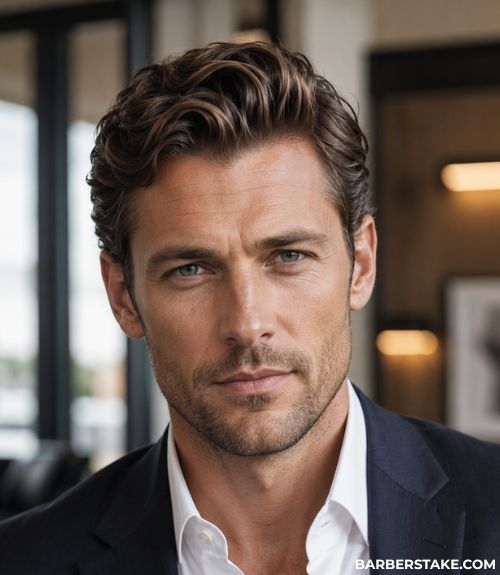
Brushed-back waves let your natural texture shine, achieving a sophisticated but relaxed look for working professionals. Brushing the hair up and back adds lift and lends structure and volume to unkempt waves. Use a comb for more definition at board meetings or finger-style with a lightweight styling cream before casual work drinks. You can go clean-shaven, but a full stubble beard effortlessly balances this look.
Loose Messy Curls
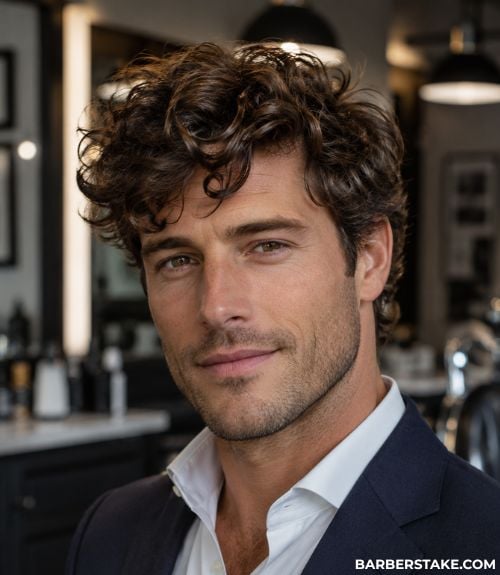
These loose, messy curls highlight your wild side, making them a striking choice for entrepreneurs who think outside the box. Let the curls flop over the forehead or push them back with a curl cream and mousse to add definition and control frizz. Throw in a defined part and scissor-cut sides for a formal feel or a sharp fade for an office-appropriate modern aesthetic.
Low-Maintenance Short Hair with Beard
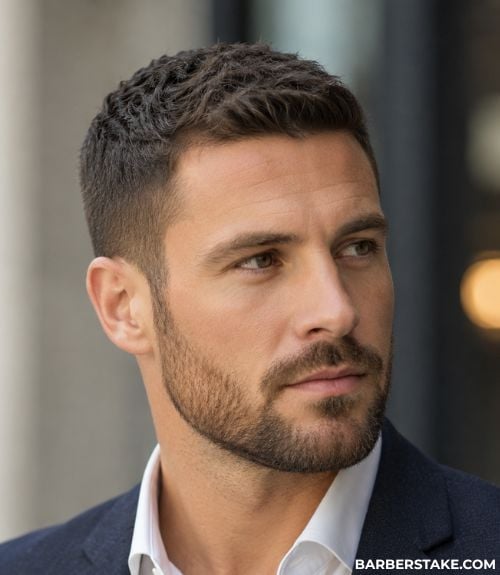
Combining low-maintenance short hair with a beard is a classic hairstyle that works well for established businessmen who want to look instantly put-together. The scissor-cut top and sides offer a clean look that you can sharpen with a trimmed beard that hugs the jawline. Drop the sides around the ears and blend them into buzzed sideburns for a cohesive feel that will turn heads in meetings.
Tousled Long Crew Cut

A tousled, long crew cut transforms the traditional preppy style into a quirky, casual cut that oozes sex appeal. A taper along the back and sides keeps the cut low-maintenance and visually attractive. The messier top adds a laid-back feel without compromising professionalism. The neat sides pair perfectly with a patchy or full beard, creating structure around the jawline and chin.
Long Comb Over
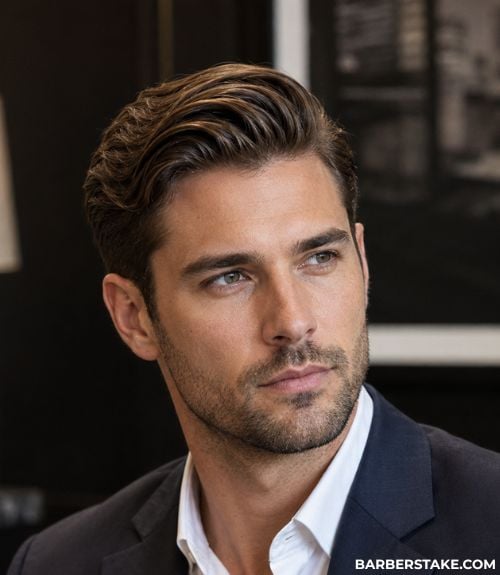
This fancy long comb over blends a sleek and timeless appearance with impressive volume for an eye-catching look that means business. A high-hold, matte styling product will secure your locks, allowing minimal movement throughout the day. Modernize the look with a fade if you’re in a more relaxed corporate environment. Otherwise, stick with classic scissor-cut sides for a gentlemanly, work-appropriate feel.
French Crop Fade
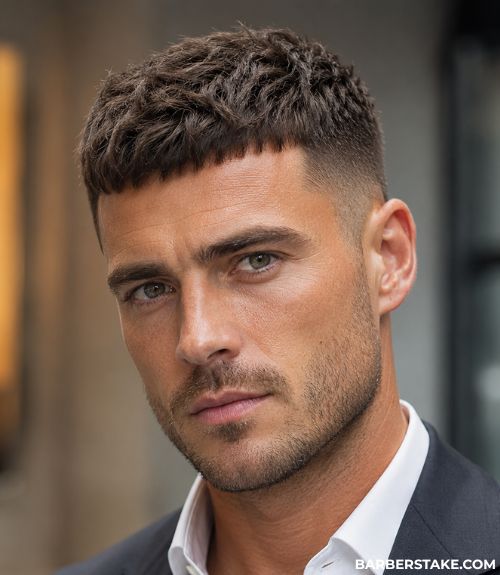
Trendy and versatile, the French crop fade pairs a short back and sides with a longer fringe for enhanced visual interest. The choppy, blunt appearance of the top is balanced with sleek, faded sides to keep the cut characterful but professional. Blend the fade into a sharp, razored full beard or neat stubble to give your elegant suit and tie a bad-boy edge.
Thick Curly Fringe with Mid Taper Fade
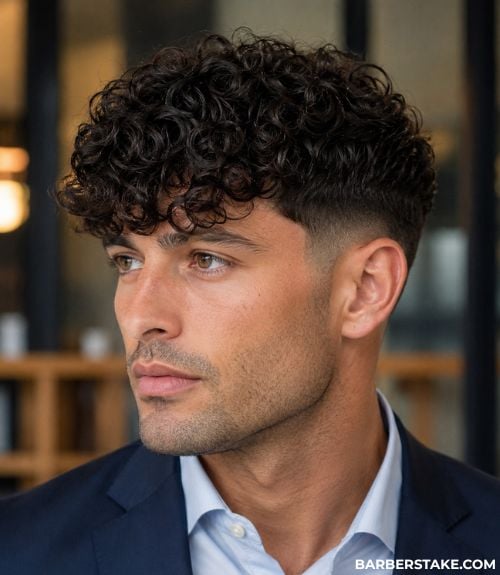
A thick, curly fringe with a mid taper fade is a youthful style that brings structure and dimension to textured locks. The front portion of the hair is left to grow longer, with the hair gradually shortening as it goes down the back and sides. This creates a smooth, blended transition across the head that showcases your personality while obeying stricter corporate dress codes. An excellent conditioning routine and styling cream will define your curls without the crunch.
Posh Shaggy Haircut
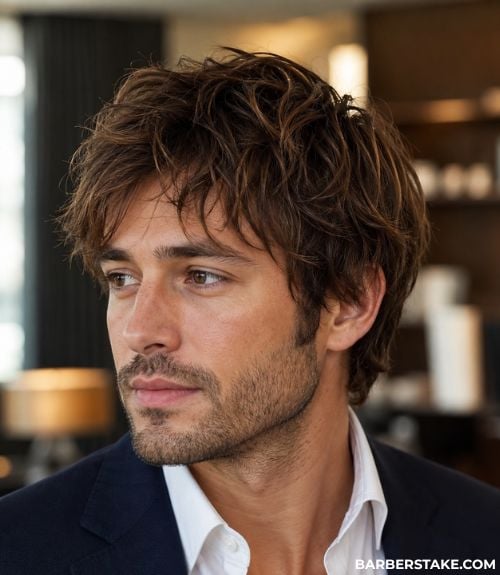
A posh shaggy haircut suits confident go-getters with its heavy layers and messy styling. The layers are brushed forward to create volume at the crown, but the ends are turned outward for a deliberately undone look. Feather the layers at the top and sides for movement and dimension that frames the face. A side sweep softens the style for approachability at networking events, but trying a center part makes a strong statement on thicker strands. A groomed full beard delivers a rugged finish touch.
Slick Back
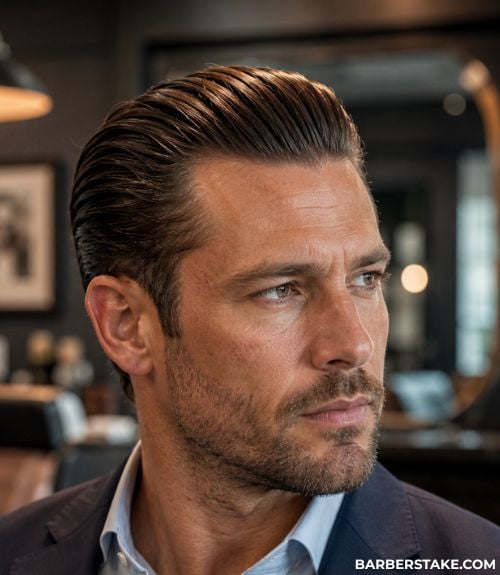
This modern example of an elegant slick back creates a strong, poised image for high-profile events. The hairstyle pairs a longer top with short sides to create effortless contrast that slims the face. Comb the hair back with a wide or fine-toothed comb and a strong-hold matte pomade to achieve a sleek appearance. Once you have enough length to play with, the slick back is incredibly low-maintenance and will have you out the door in minutes for those early morning meetings.
Short Side Swept Crew Cut with High Taper Fade
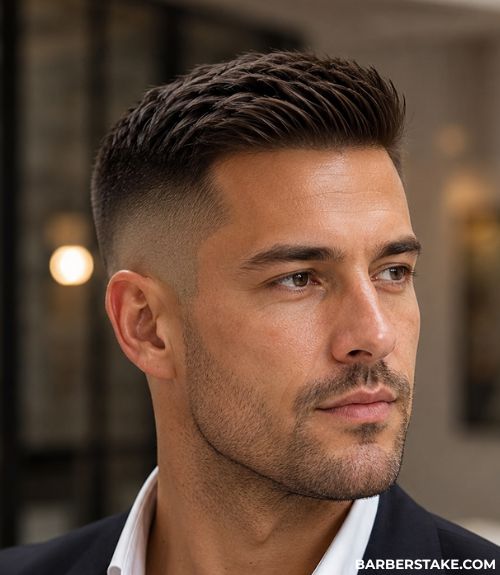
This short, side-swept crew cut is a modern variation of the Ivy League men’s style, showcasing sharp lines and a high taper fade for a stylish business professional look. Use a matte pomade for light control and lift while brushing the front to the side and back. The tapered sides gradually blend into a clean, short beard for a dominant, masculine appearance. The parted fringe creates more volume, but a light tousle is all you need to add striking dimension to this simple style.
Hard Side Part with Low Taper Fade
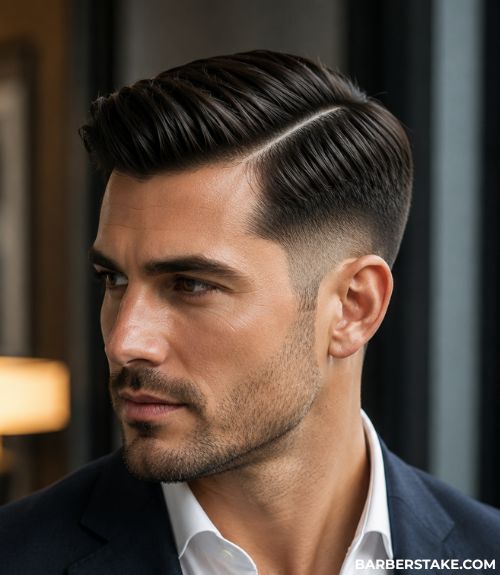
This sexy hard side part will keep corporate men looking dapper with a low taper fade and sharp lines. The meticulous clipper work tapers down to the skin at the base of the neck, removing weight and highlighting the voluminous top. Adding a defined hard part brings clear definition that balances the softer tapering work. Texturize the front with styling cream or pomade before locking in your look with a spritz of hairspray.
What Makes A Haircut “Professional” Looking?
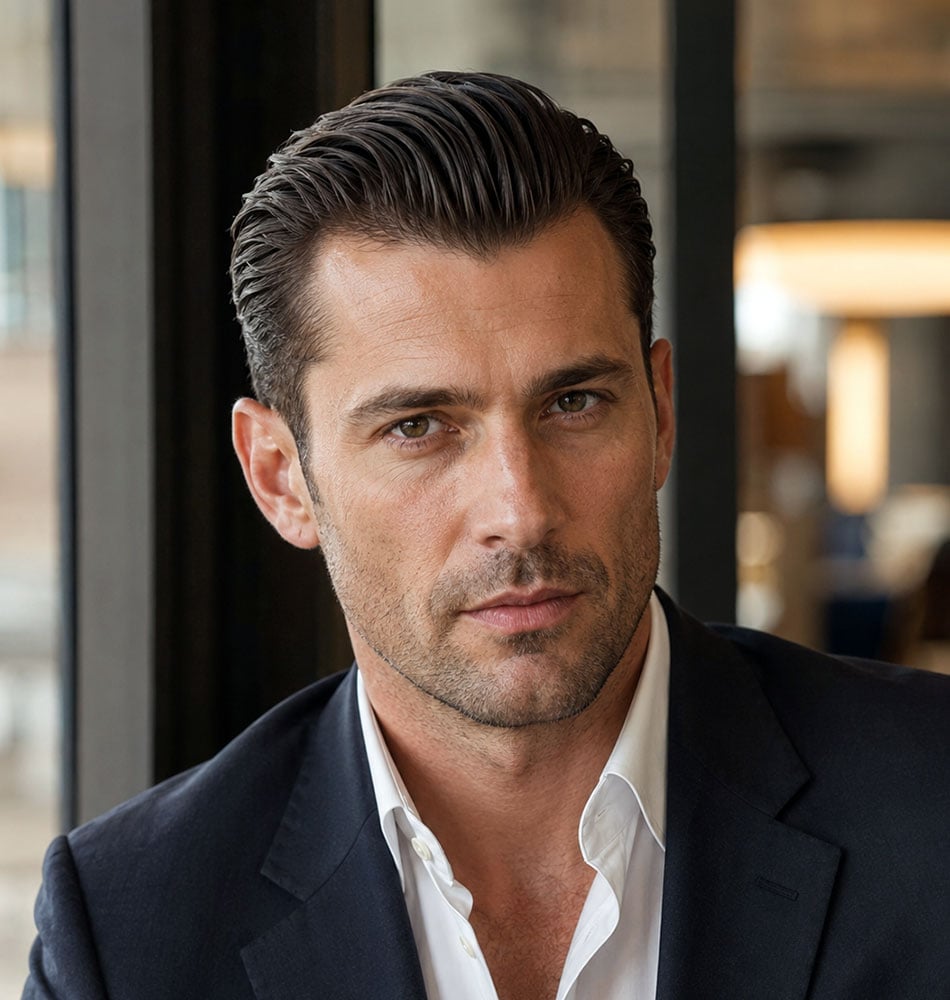
A professional men’s haircut is an intentional look that signals attention to detail, competence and self-awareness. It’s clean and polished enough to hold up in a client meeting, structured enough to read as deliberate, and low-maintenance enough to look stylish without disrupting your morning routine. Studies have shown that people form opinions about leadership ability within 7 seconds of meeting someone, and your hair is one of the first signals they read. The ideal style shapes that impression in your favor before you say a word.
“A professional haircut should support the rest of your presentation, not become the only thing people notice. It doesn’t necessarily have to be short; it needs a controlled shape, a clean perimeter and a finish that still looks intentional at the end of the workday,” explains Eric Garibay, professional barber at BLVD Barbershop.

The Criteria of a Professional Haircut
The label gets thrown around loosely, but in practice, it comes down to a few measurable criteria that work across industries, age groups, and hair types.
- It reads as intentional, not just cut. Clean lines at the hairline, a defined neckline, and visible structure. A “just left the chair” finish, not a “haven’t been to the barber in 6 weeks” finish.
- It looks sophisticated without heavy product or daily blow-drying. A professional cut shouldn’t require 15 minutes of styling each morning; it does most of the work itself.
- It wouldn’t draw attention in a conservative meeting. The cut supports the impression of competence rather than competing with it.
- It holds its shape for at least 3 weeks between visits. Professional hairstyles should never look like they’re growing out during important meetings.
The Conservative-to-Creative Spectrum
Not every professional environment expects the same look. A federal courtroom and a San Francisco tech office are both professional contexts, but the cuts that work in each are very different. Think of professional haircuts as living on a spectrum:
- Most conservative: Federal law, traditional finance, private banking, defense. The cut should be virtually invisible as a style choice.
- Moderately conservative: Corporate law, consulting, accounting, healthcare. Conservative classics with slight modern updates work.
- Modern professional: Tech, marketing, sales, education. Most contemporary cuts work as long as they look intentional.
- Creative professional: Advertising, design, entertainment, media. Personality is welcome. Beards, longer styles, and modest fades all work.
“I’d choose your work haircut around the most conservative room you regularly need to walk into. You can loosen a side part or textured top after hours, but you can’t make an aggressive skin fade disappear when an important meeting starts,” advises James Goodman, licensed barber and men’s grooming expert at BarberGoodman.

What Makes A Cut NOT Professional
The cuts and styles to avoid in most professional environments include visible hair colors outside natural ranges, shaved designs in the hair, mohawks, mullets in conservative settings, top knots in most offices, and hair past the collar in traditional industries. These choices read as expressive rather than corporate and career-oriented.
The “Would A Client Notice?” Test
A reliable shortcut: if your hair is the first thing a new client or colleague would notice about you, it’s probably not professional enough for the setting. A professional haircut blends into the overall impression of polished competence you’re projecting. Save the standout styles for environments where standing out is the goal.
Choose A Cut That Still Looks Professional Three Weeks Later
A professional haircut should work beyond the first few days after your appointment. Skin fades provide exceptional contrast, but they reveal growth quickly. If your calendar includes frequent meetings, presentations or travel, a low taper or softly scissored side may grow out more discreetly.
Natural necklines and conservative edges can also remain presentable longer than extremely sharp outlines that become obvious as soon as stubble returns.
“A business haircut should still look intentional the week before your next appointment. I design the grow-out around the client’s actual schedule, not an ideal maintenance routine. Tell your barber about upcoming interviews, travel or formal events. The right appointment timing and grow-out plan can be just as important as the style itself.” — Eric Garibay, Licensed Barber
The Best Haircut For A Job Interview
A job interview is a high-stakes haircut decision. You get one impression, and a timeless style can make the difference between being immediately written off once you step through the door and being taken seriously through the process.
The Safest Interview Hairstyles For Men
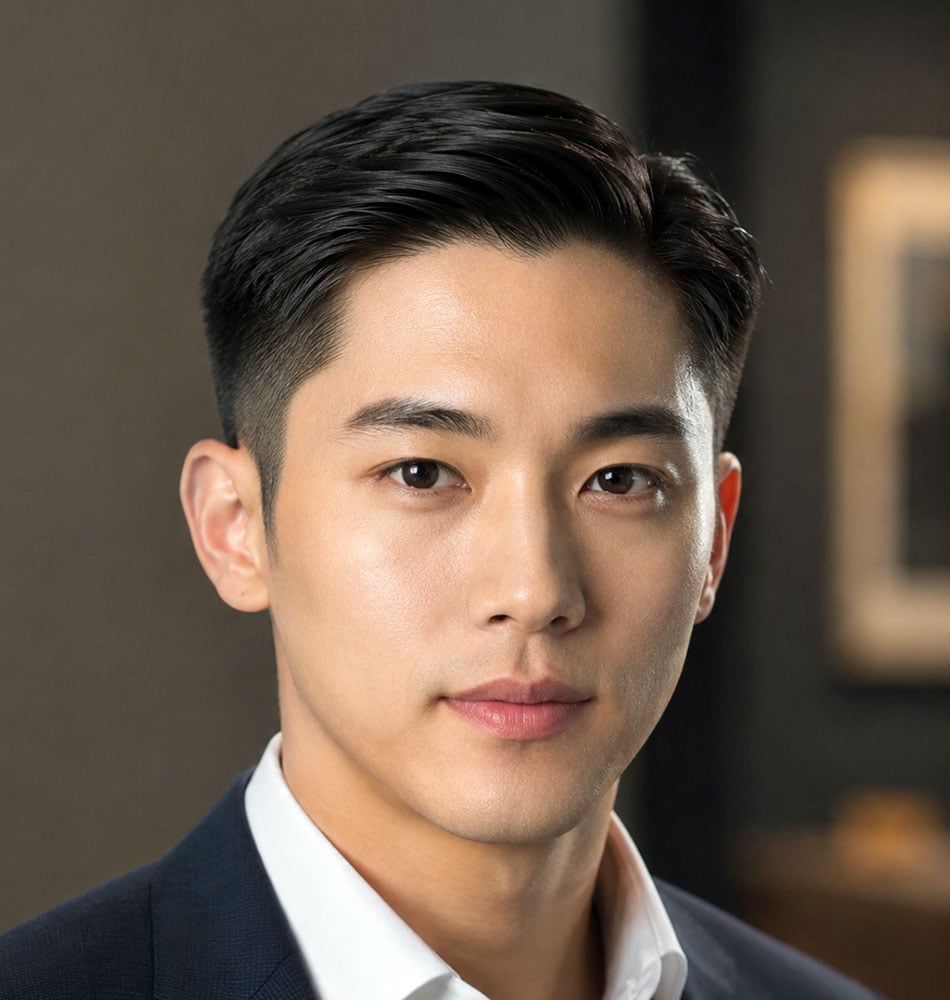
- Side part with taper fade: The most universally corporate cut. Works in finance, law, consulting, healthcare, sales, and almost every modern office. Conservative without being boring.
- Ivy League (aka Princeton cut): Slightly longer than a crew cut, with the front swept or combed to the side. Has been the default interview cut for over 70 years for good reason.
- Classic crew cut with low taper: Clean, simple, masculine without being overly edgy. Reads as no-nonsense and prepared.
- Short comb over: Adds a modern touch while staying conservative. Best for younger candidates who want to signal contemporary awareness.
When To Schedule The Cut
Schedule your interview haircut 5 to 7 days before the appointment, not the day before. Hair looks its best a few days into the grow-out, when the lines have softened slightly and the cut has settled into your natural texture. Same-day visits often look stiff or freshly shorn, which are often seen as overly groomed rather than naturally polished. “A little settling usually helps a professional haircut. The hardest clipper lines soften, the hair starts sitting in its natural direction again and you have a few mornings to make sure you know exactly how to style it,” Goodman explains.
Interview-Specific Considerations
- Skip skin fades for most interviews. The hard line looks too trendy in conservative environments. A low or mid taper accomplishes the same clean look without the edge.
- No visible shaved designs. Lines, parts, or designs are disqualifiers in finance, law, and most corporate interviews regardless of how subtle they are.
- Stubble is fine, full beards need work. Light, groomed stubble reads as intentional. A full beard is acceptable in most modern interviews but only if it’s neatly trimmed with defined lines.
- Match the cut’s formality to your attire. A casual textured crop with a sharp suit creates a visual mismatch. The cut should match the level of formality of your outfit.
The First-Day-at-New-Job Question
Once you’ve landed the job, resist the urge to dramatically change your cut for your first day. You have a 2- to 3-week window to learn the office culture before making any visible style decisions. The colleagues who hired you formed an impression based on your interview look. Showing up to day one with a completely different style sends a confusing signal. Match your original aesthetic for the first few weeks, then adjust as you learn what the office culture allows.
How To Ask Your Barber For A Professional-Looking Cut
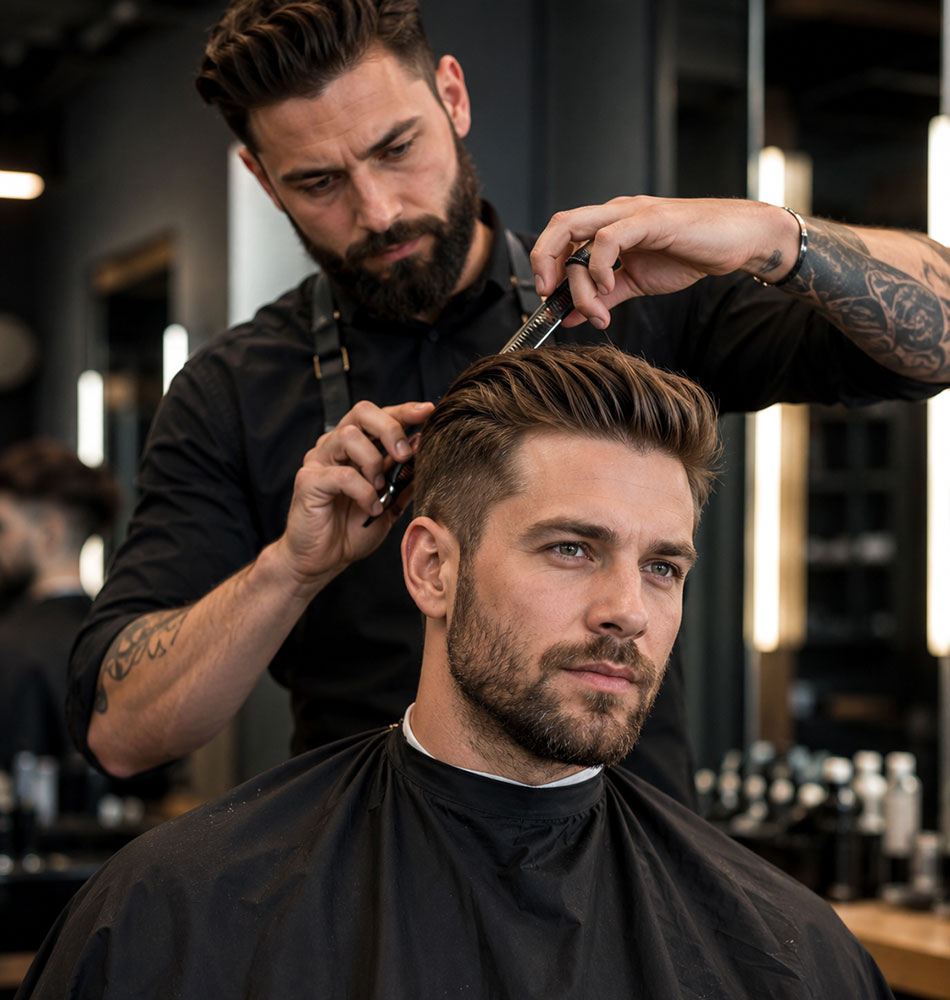
I’ve cut for a wide range of professional clients over the years, from entertainment executives to law firm partners to engineers at major tech companies. The conversations that lead to the best cuts share a few specific habits. The conversations that lead to disappointment share predictable mistakes. Here’s how to get the sharp, stylish professional haircut you want when you sit in the chair.
The Four Details That Matter Most
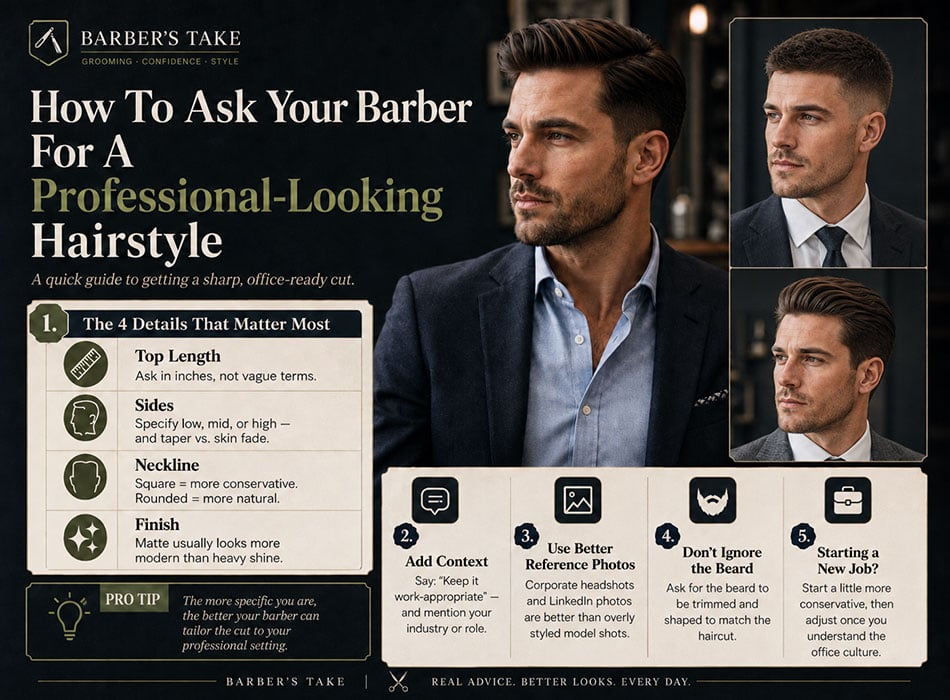
- Top length: In inches, not vague terms. “Leave about an inch and a half on top” beats “take a little off.” Precision matters more here because the margin of error is narrower.
- Sides treatment: Specify low, mid or high, and specify taper versus skin fade. Most corporate-friendly cuts call for low or mid tapers rather than skin fades.
- Hairline shape: Square for conservative industries, rounded for natural-looking finishes. This is a small detail that your colleagues and superiors may notice.
- Product finish: Matte versus shine. Most modern styles present better with matte finishes. Heavy shine looks dated or overdone in current office contexts.
“For most modern professional cuts, I like enough product to keep the style together without making every strand look fixed in place. A little natural movement looks more current than a hard, glossy finish that looks like it can’t move,” Garibay notes.
The Conservative Qualifier
If you want a modern, trendy cut but need to keep it work-appropriate, tell your barber and he might advise you to dial back the fade height, soften the hard part, shorten the top, or adjust the layering. Telling your stylist what you do for a living can be practical information and offers context.
Reference Photos for Professional Contexts
The biggest mistake clients make with reference photos is picking images of models or actors. Editorial photography is lit, styled, and post-produced. This doesn’t translate to daily office wear. Pick reference photos of working professionals in your specific industry. LinkedIn headshots and corporate bio photos are often better references than men’s magazines for this category.
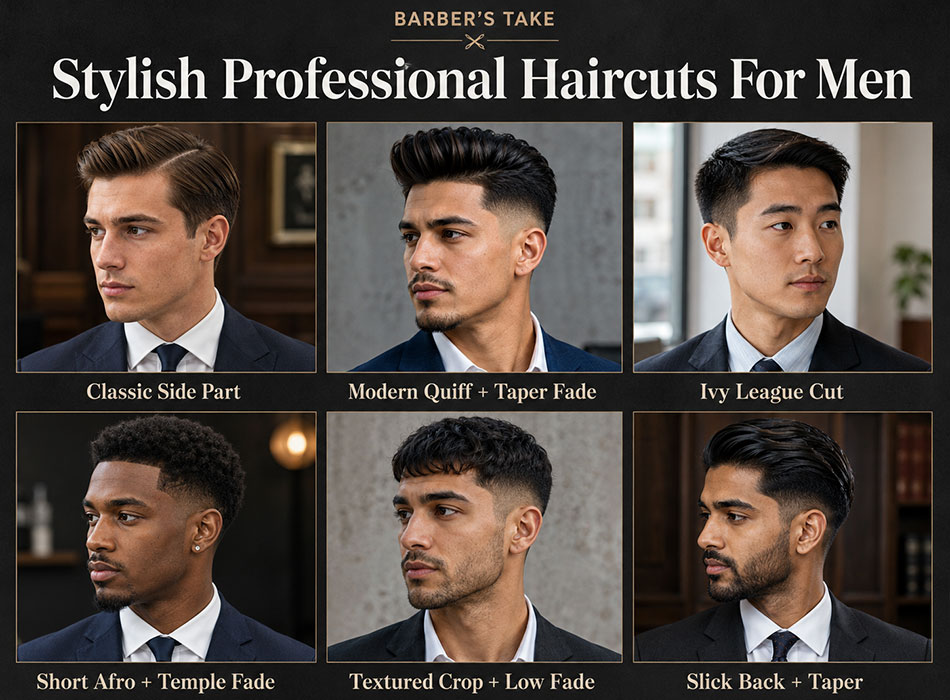
The Beard Conversation
If your beard is part of the look, ask your barber to trim it as part of the same visit. A sharp style paired with a scruffy beard reads inconsistent. Beard work is its own skill, and many barbers prefer to handle it as part of the haircut rather than as an afterthought. Tell them you want the beard trimmed and shaped to match the cut, not just touched up.
Starting a New Job or Career Transition
Tell your barber if you’re starting a new role or transitioning industries. The first cut after a job change should usually be conservative and refined so you can adjust over future visits as you learn the office culture. A barber who knows you’re starting at a law firm will suggest different styles and elements than one who thinks you’re heading to a casual office.
Professional Haircuts by Career Stage
A successful man’s haircut shifts as his career progresses. The look that establishes credibility as a new graduate isn’t the same one that signals authority as a senior executive. Match the cut to where you are in your career arc.
The guide below distills the haircut choices I’ve seen work best across real professional settings, from first jobs and client-facing roles to executive leadership. Use it as a practical starting point for getting a cut that fits your career stage, workplace culture and the way you want to be perceived.
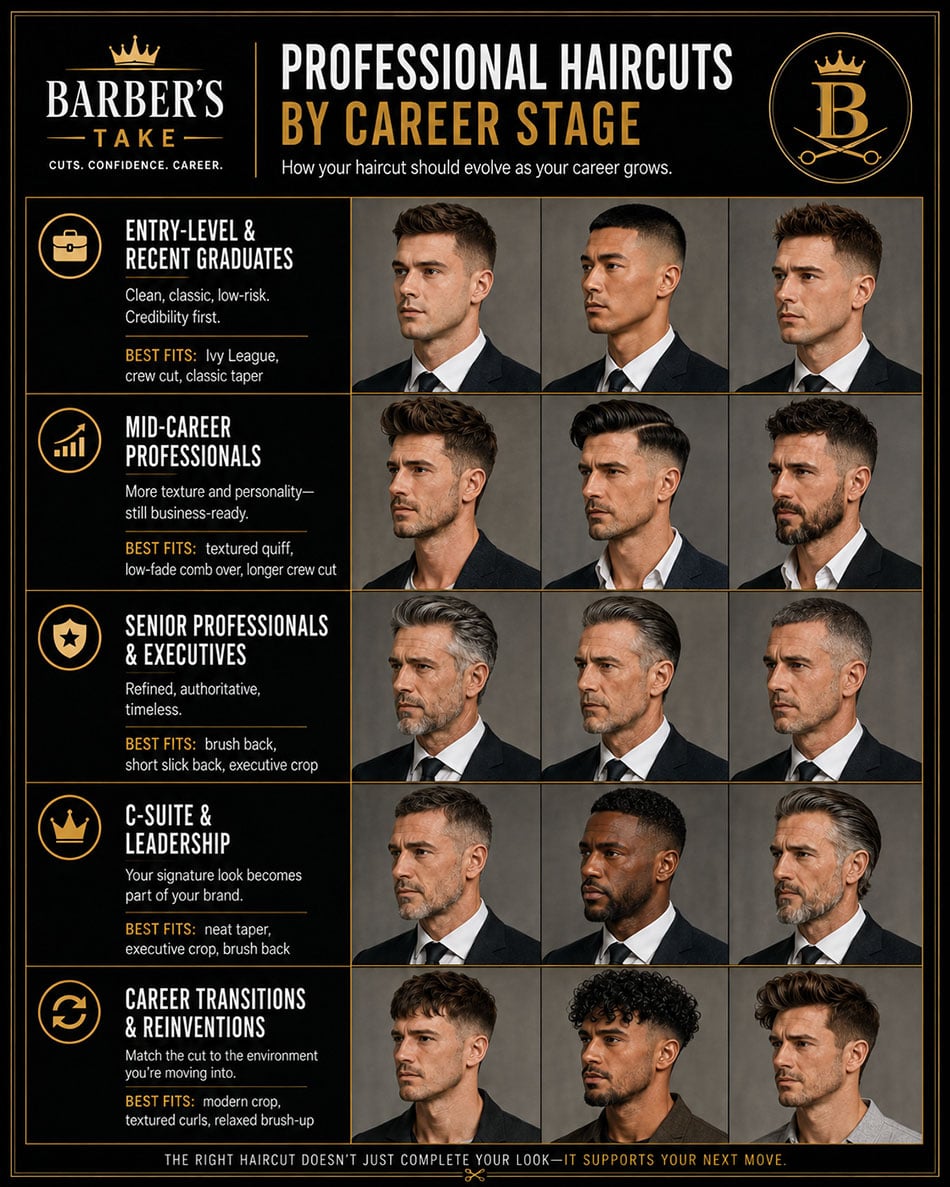
Entry-Level and Recent Graduates
Lean conservative initially. The cut should blend in and establish seriousness and competence before you start expressing personality through grooming choices. You haven’t yet earned any latitude that comes with experience , and an unusual approach can communicate immaturity in a first job.
Mid-Career Professionals
More flexibility once you’ve established credibility. Textured cuts and modest fades become available. Personality through grooming is increasingly acceptable as long as your overall look remains business-oriented. The textured modern quiff, comb over with low skin fade, longer crew cut, and side part with mid fade all fit this career window well. This is also the stage where many men start incorporating beards into their professional look.
Senior Professionals and Executives
The style should convey authority and self-assurance, not trend-following. Conservative classics work best because they exhibit confidence in your established style rather than reaching for relevance. Many executives find one that works and stick with it for years.
C-Suite and Leadership Roles
At the highest levels, your hair can become part of your personal brand. Consistency over months and years matters more than trend awareness. Executives are often recognizable in part because they consistently look the same in every meeting and photograph. Find a cut that works, find a barber who reliably executes it, and protect that consistency.
Career Transitions and Reinventions
A new cut can mark a new chapter. If you’re pivoting industries (corporate to startup, agency to in-house, finance to creative), use the haircut as a deliberate signal of the change. Update it to fit the new environment, not the old one. Showing up to your startup job with your former investment-banking haircut sends a confusing signal about which version of yourself you’re bringing.