
It was a Tuesday afternoon when I first understood what Marco was up against.
He had sent me a photo, not to make a point, just in passing during a text conversation about his business. Three barber chairs. All empty. Good natural light coming through the window, a clean and well-kept shop, and a hand-lettered sign on the wall with a logo a designer clearly put real thought into.
The shop looked great. The problem was that it wasn’t living up to its potential.
Marco owns and operates a barbershop in Culver City, one of the more competitive and image-conscious pockets of West Los Angeles, where the clientele is professional, brand-aware, and willing to spend money on a service they trust. He had been open for six years. He had a loyal core of regulars. His barbers were talented. And yet, on that Thursday, three chairs sat empty through most of the afternoon.
To protect our client’s privacy, we will be referring to the shop owner throughout this case study as “Marco”, but everything you are about to read is real.
The Conversation That Started Everything
Marco found Barber’s Take through an organic Google search, which, given what we do, felt like a good sign. He reached out through our contact form and within a few days, we were on a call.
I have had a version of this call dozens of times with shop owners across the country. What made Marco’s situation stand out was how clearly he understood his own problem. He was not looking for someone to explain digital marketing to him from scratch. He knew his shop had real value. He just could not figure out why that value was not translating into a consistently full book.
“I know we do good work,” he told me. “My guys are talented. We have clients who have been coming to us for years. But we rely almost entirely on word-of-mouth, and that only goes so far. My guys are on Instagram, they have followers and post clean content, but those followers are not booking appointments. And honestly, I do not even know what my website is doing at this point.”
That last line stayed with me. I do not even know what my website is doing.
Most shop owners in Marco’s position feel exactly that way, a vague and nagging sense that their digital presence exists but is not working. They are not wrong. They just do not know where to start fixing it.
So before we pitched a single strategy, we did what we always do first. We listened. We asked questions. We dug into the specifics of his business, how clients were finding him, how bookings were coming in, what his barbers’ online presence looked like, and whether he had any direct line of communication with past clients.
Then we audited everything before we advised on anything.
What We Found Before We Did Anything
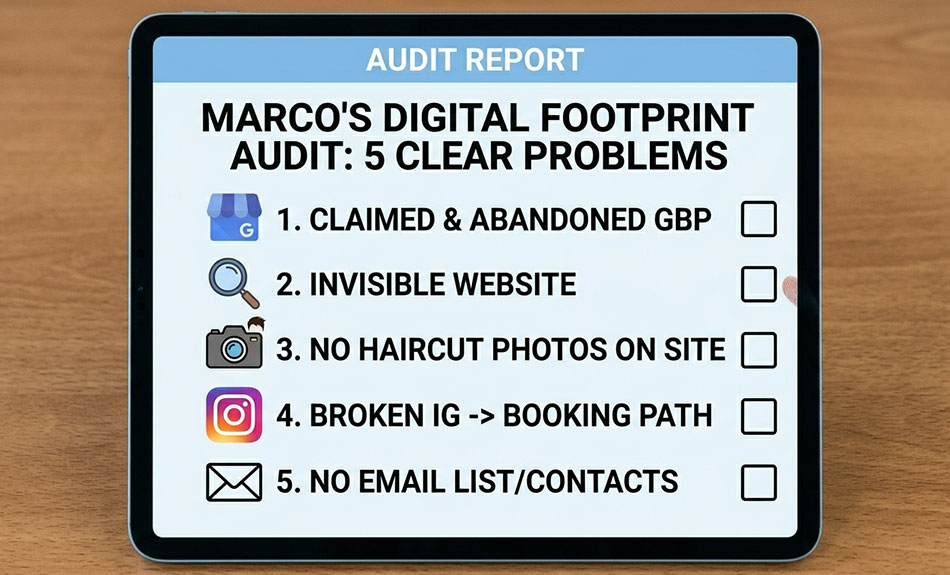
The audit told us most of what we needed to know. Marco’s digital footprint had five clear problems.
A Google Business Profile that was claimed but essentially abandoned. A website that looked decent on the surface but was completely invisible to search engines. No photos of actual haircuts anywhere on the site. Barbers with real Instagram followings and zero pathway from those followers to a booking. And no email list, no direct line to past or potential clients whatsoever.
Each of these was fixable. None of them required a massive budget. They required attention, strategy, and consistent execution, which is exactly what we mapped out together.
The Strategy: Four Pillars, One Goal
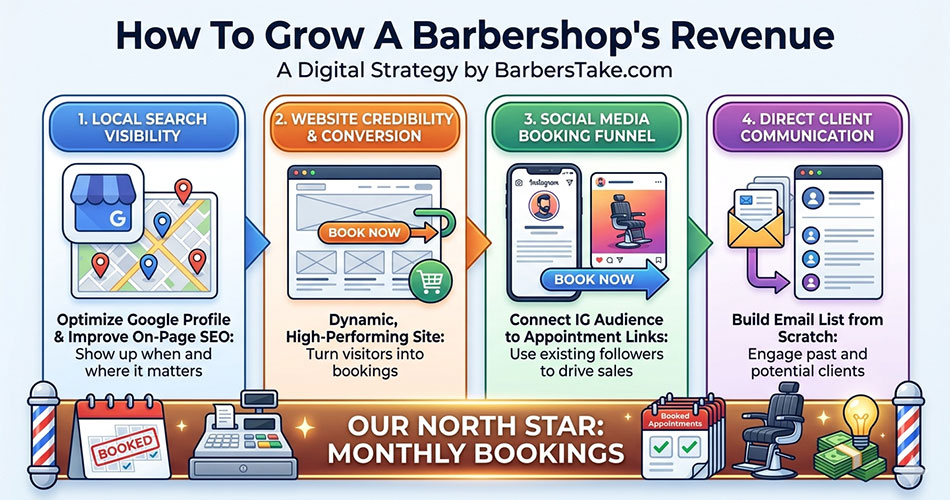
We organized Marco’s entire turnaround around four core areas.
Local Search Visibility meant optimizing the Google Business Profile and improving on-page SEO to make sure the shop was showing up when and where it mattered most.
Website Credibility and Conversion meant turning a static and underperforming site into something that actively moved people toward booking.
Social Media as a Booking Funnel meant connecting the barbers’ existing Instagram audiences to real appointment links.
Direct Client Communication meant building an email list from scratch and using it to stay in front of past and potential clients.
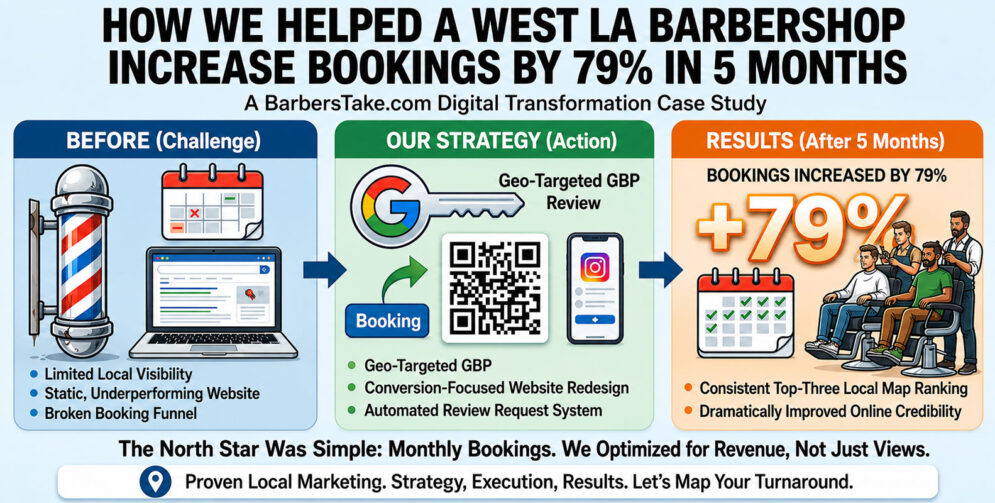
The north star throughout all of it was simple: monthly bookings. Not impressions, not follower counts, not page views. Bookings, because that is what keeps the lights on and the chairs full.
Google Business Profile Optimization: The Fastest Win We Had
When we pulled up Marco’s Google Business Profile on day one, it was the digital equivalent of a closed door with no sign out front. Technically it existed. Practically, it was doing almost nothing.
The profile had been claimed years ago and then forgotten. The hours were listed incorrectly. The business description was two generic sentences with no mention of Culver City or West LA. There were eleven photos, most of them blurry and none of them recent. There were 40-something reviews with zero responses, not a single one. And the services section was completely blank.
What We Fixed on the Profile
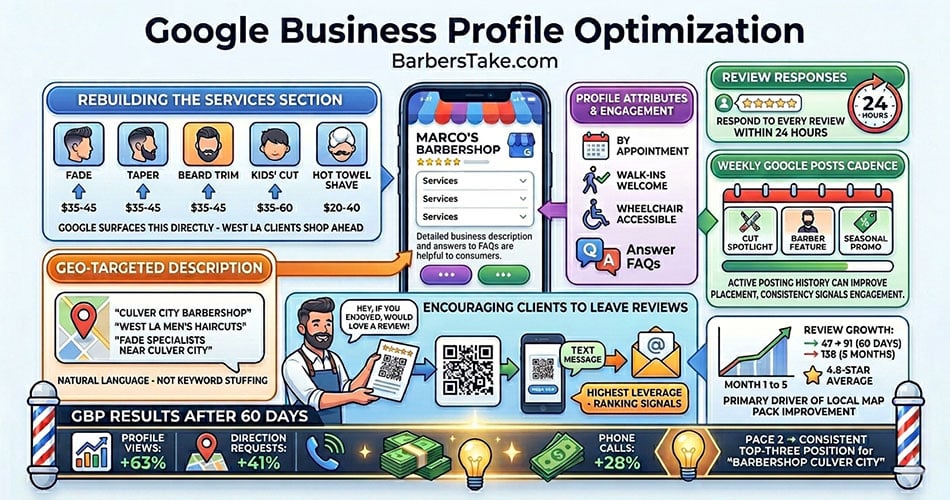
We rebuilt the services section from the ground up. Fades, tapers, line-ups, beard trims, hot towel shaves, and kids’ cuts all received their own descriptions and price ranges. This matters because Google surfaces this information directly in search results, and clients in West LA are comparison shopping before they ever click a link.
We rewrote the business description entirely. The new version incorporated geo-targeted phrases naturally, including “Culver City barbershop,” “West LA men’s haircuts,” and “fade specialists near Culver City,” without reading like a keyword list. It read like a shop that knew exactly who it was and who it served.
We added every relevant profile attribute: by appointment, walk-ins welcome, and wheelchair accessible. We seeded the Q&A section with eight common questions and answered each one. We set up a weekly Google Posts cadence featuring cuts, barber spotlights, and seasonal promotions. Google Posts expire after seven days, which means an inactive posting history signals to Google that a business is not engaged. Consistency here is underrated.
And we responded to every review, five stars or two, within 24 hours. This is not just good customer service. Google factors review activity into local rankings, and an engaged profile consistently outperforms an ignored one.
Encouraging Clients to Leave Reviews and Why It Matters More Than Most Shops Realize
The highest-leverage tactic we employed for Marco’s shop had nothing to do with technology. We built a simple and repeatable system for encouraging clients to leave Google reviews, and the impact on his local search rankings was significant.
Google’s local algorithm places enormous weight on review quantity, recency, and quality. A shop with 180 reviews and a steady stream of new ones will outrank a shop with 40 stale reviews almost every time, even if the older shop has been around longer. For a business competing in a market like Culver City, where multiple well-established barbershops are fighting for the same “barber near me” search results, this becomes a real differentiator.
Here is what we set up for Marco.
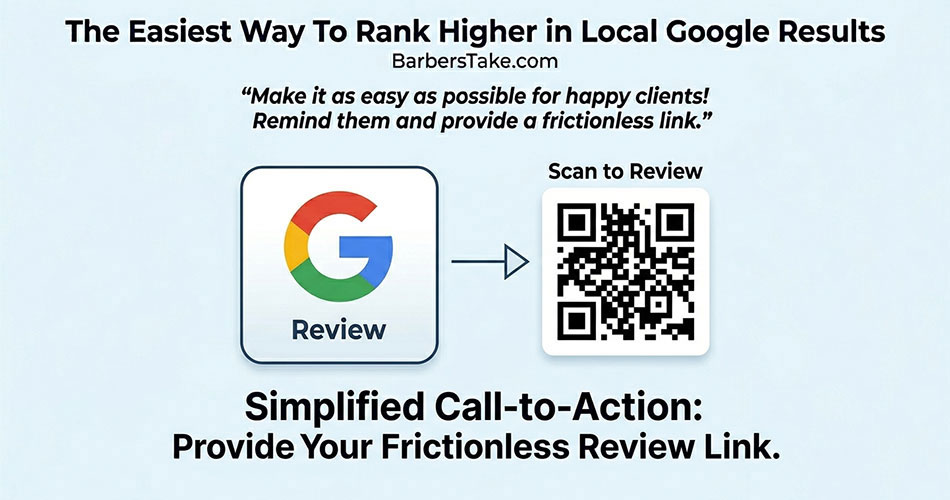
We created a printed card with a QR code that linked directly to the shop’s Google review page. Barbers handed it to clients after every service, not in a pushy way, just a genuine ask. Something like: “Hey, if you enjoyed your experience, we would love a review. It really helps us out.” We also added a review link to the automated appointment confirmation and follow-up text messages. And we included a soft review request in the monthly email newsletter.
Within the first 60 days, the shop went from 47 reviews to 91. By month five, they were at 138 with a 4.8-star average. That growth in review activity was one of the primary drivers of the improvement in local map pack rankings, which is where the majority of new client discovery was happening.
Actionable Tip: Make it as easy as possible for happy clients to leave a review. Generate a direct Google review link for your profile and put it everywhere, printed cards, text follow-ups, email, and even your Instagram bio. A client who had a great experience is usually willing to say so. They just need to be reminded and given a frictionless way to do it.
GBP Results After 60 Days
Profile views increased by 63%. Direction requests, meaning people actively navigating to the shop, were up 41%. Phone calls initiated directly from the profile were up 28%. And the shop moved from page two of local map results to a consistent top-five position for “barbershop Culver City” and several related searches.
All of that happened before we had even finished the website work.
On-Page SEO: Fixing a Website That Looked Fine but Was Not Working
Marco’s website was the classic case we see all the time. Built on a template a few years prior, it looked clean enough on a desktop screen, but under the hood, it was nearly invisible to search engines and was not converting the visitors it did get.
Here are the five most common issues we found and exactly how we fixed each one.
Issue 1: No Location-Based Keywords on Any Key Pages
The homepage said “welcome to our barbershop” and talked about the shop’s philosophy in warm and friendly language. It never mentioned Culver City. It never mentioned West Los Angeles. It never mentioned any of the surrounding neighborhoods, Mar Vista, Palms, or Playa Vista, where potential clients might be searching from.
The Fix: We rewrote the title tags, H1 headings, and core body copy on every key page to naturally incorporate geo-targeted language. The homepage headline became something like “Culver City’s Premier Barbershop for Fades, Tapers and Precision Haircuts.” The language read naturally without feeling like keyword stuffing, but it gave Google exactly what it needed to understand where this business was and who it served.
Issue 2: Missing and Duplicate Meta Descriptions
Every page on the site either had no meta description at all or was using the same boilerplate sentence copy-pasted across all pages. Meta descriptions do not directly affect rankings, but they are the first thing a potential client reads in a search result. A generic or missing meta description is a missed opportunity to earn the click.
The Fix: We wrote a unique and compelling meta description for every page, each one tailored to the content on that page with a soft call to action. For the homepage it read something like: West LA’s go-to barbershop for clean fades, line-ups and haircuts. Serving Culver City since 2018. Book your appointment online today. Short, specific, and designed to earn the click.
Issue 3: A Single Services Page That Was Just a Price List
This was one of the biggest missed opportunities on the entire site. Marco had one services page, a simple bulleted list of services with prices. No descriptions, no context, no imagery, and no content for Google to index against specific search queries.
The Fix: We expanded the services section into individual pages for each core service. A dedicated page for men’s fades. A page for tapers. A page for beard trims and hot towel shaves. A page for kids’ haircuts.
Each page included a real description of the service, an explanation of what makes that cut distinctive, and definitions of related terminology. We answered questions like what is the difference between a skin fade and a mid fade, or how a drop fade differs from a traditional taper. We added photos of real clients getting the service and examples of the finished result on different hair types and face shapes. We included the kind of detailed and visual information that a first-time client who does not know the terminology would actually find useful.
This accomplished two things simultaneously. It gave Google rich and indexable content to rank against specific search queries like “drop fade haircut Culver City” or “beard trim West LA,” and it gave potential clients the kind of information that actually helps them decide to book. Pages like this convert. A price list does not.
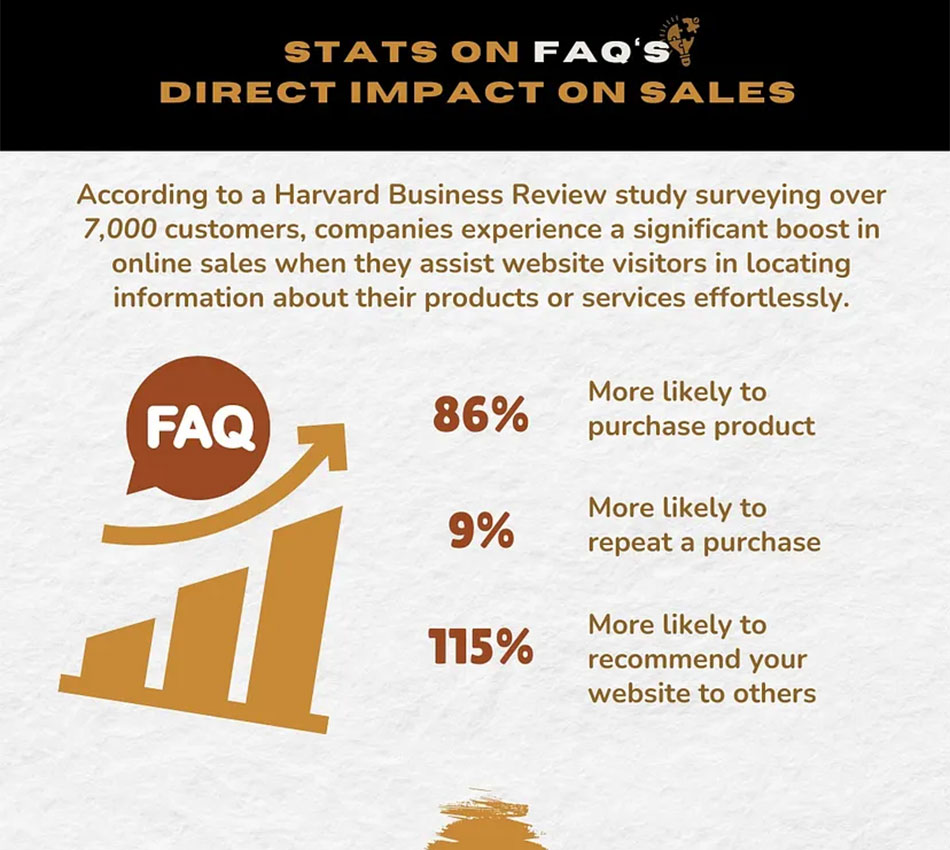
Issue 4: Slow Load Times and a Broken Mobile Experience
The images on the site were large, uncompressed files. There was no lazy loading. And on several Android device screen sizes, the mobile layout was genuinely broken, with text overlapping images, buttons that were difficult to tap, and a booking link that required scrolling through most of the page to find.
This matters because the vast majority of people searching for a local barbershop are doing it on their phones. A slow and broken mobile experience does not just frustrate visitors. It tanks the site’s performance in Google’s Core Web Vitals assessment, which directly affects rankings.
The Fix: We redesigned the websites, compressed every image on the site, implemented lazy loading, and ran a full mobile UX audit across multiple device types. The page load time dropped significantly, and the mobile experience went from actively discouraging to genuinely smooth.
Issue 5: No Internal Linking Structure
The pages on Marco’s site existed in complete isolation. The homepage did not link to service pages. Service pages did not link to the booking page or the blog. The blog linked to nothing. Google could not crawl a coherent site architecture, which meant it could not understand what the most important pages were or how they related to each other.
The Fix: We built a logical internal linking map, connecting service pages to each other where relevant, linking every service page to the booking page, and connecting blog content to the services it referenced. This is not glamorous work, but it is foundational. It tells Google what matters most on your site and helps distribute ranking authority to the pages you actually want people to land on.
Actionable Tip: Run your website through Google Search Console and look at which pages have zero internal links pointing to them. These are your orphaned pages, and Google may not even be indexing them properly. Fix the linking structure and watch those pages start to contribute.
Making the Website Do More Work
Getting people to the site was only half the equation. Once they arrived, the site needed to earn their trust and move them toward booking. We made three additions that had a measurable impact on both.
Adding Real Haircut Photography
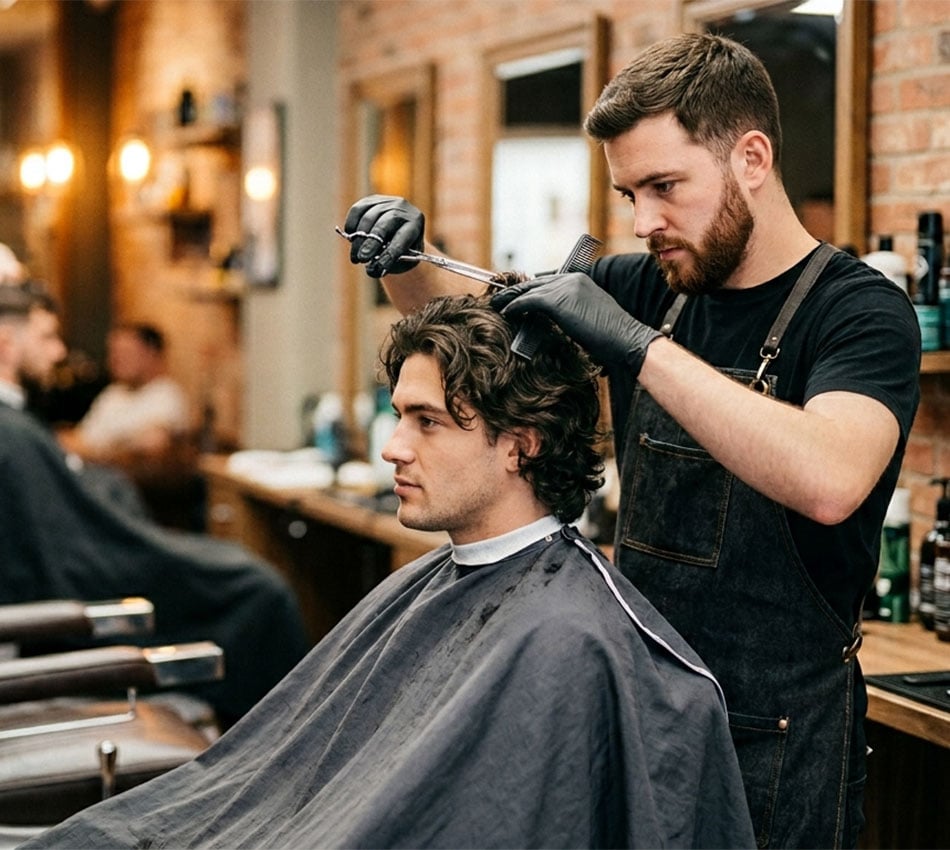
When we first audited the site, there was not a single photo of an actual haircut. Not one. The gallery page had four photos of the shop interior and one exterior shot of the front door.
Marco’s barbers were doing genuinely impressive work every single day. None of it was on the website.
We organized a simple content day using phones with good cameras, a ring light, and a few hours on a slow Tuesday morning. We walked out with over 70 usable images: finished cuts from multiple angles, close-ups of fade lines and edge work, before-and-after sequences, and candid moments of barbers at work. Those images went onto the gallery page, throughout the service pages, and into the Google Business Profile.
The impact on time-on-site was immediate. Visitors stayed longer. The bounce rate, meaning people landing on the site and leaving right away, dropped noticeably. People were lingering, looking at the work, and making decisions based on what they saw. That is exactly what good photography is supposed to do.
Embedding Google Reviews Directly on the Site
We added a live reviews widget to the homepage that pulled Marco’s Google reviews in real time. Visitors landing on the site for the first time could immediately see a 4.8-star rating backed by more than a hundred real client reviews, right there before they had scrolled a single pixel.
This is social proof at the point of decision. Someone who finds the shop through Google, clicks the website link, and immediately sees 130 verified five-star reviews is a fundamentally different kind of visitor than someone who lands on a site with no trust signals at all. The conversion rate on the booking page reflected that difference.
Barber Profile Pages with Instagram Links
We created individual profile pages for each barber on the team: name, specialty, years of experience, a short personal bio, their signature style, and a direct link to their Instagram portfolio.
This was one of the most strategically important things we did on the entire site, and it is something most barbershop websites do not do at all. The reality is that clients do not just book barbershops. They book barbers. They find someone whose work they like on Instagram, they want to confirm that person works at a shop they can get to, and then they book. By giving each barber their own page with a live link to their Instagram, we created a natural bridge between social discovery and appointment booking.
Actionable Tip: Give your barbers their own pages on your website and link directly to their Instagram. Barbers with strong personal followings are an underutilized marketing asset. Their existing audiences are already warm. Make it easy for those audiences to become clients.
Turning Instagram Into a Booking Engine
Between the three barbers on Marco’s team, there were roughly 8,200 combined Instagram followers. Those followers were watching the content, engaging with posts, and commenting on cuts they liked. And then nothing. No link to book, no clear next step, and just “DMs open” in every bio. That is the digital equivalent of handing someone your business card with no phone number on it.
What We Set Up
We set each barber up on Booksy with their own booking profile, individual availability, portfolio photos, and pricing. We then created a link-in-bio page for each of them that linked directly to their booking page, their profile on the shop’s website, and the Google Business Profile.
We also sat down with the team for a 30-minute workshop, nothing complicated, on how to use their own content as a marketing tool. The framework was simple: post the cut, tag the shop, and write a caption that ends with something like “link in bio to book.” No hard sell and no awkward promotion, just connecting work they were already proud of to a clear pathway for someone to act on it.
We also coached each barber to include their appointment booking link in their Instagram bio, a small change with a measurable impact. When a follower sees a cut they like and taps the profile, the booking link is the first thing they see.
The Results
In the second month after implementing the booking links, Instagram-driven booking clicks increased by over 200% month-over-month. The barbers were already creating the content. The audience was already there. All we did was connect the dots.
Email Marketing: Building a Direct Line to Clients
When we started working with Marco, he had no email list. If the shop had a promotion, a new barber, or a schedule change, there was no way to communicate it directly to past clients. Social posts might reach some of them. Most would never see it.
We changed that quickly.
How We Built the List
We used three collection points simultaneously.
In the shop, we placed a small printed sign at the front desk framing the email list as a “VIP Client Club,” offering early access to new barber availability, members-only promotions, and first notice of any schedule changes. The sign included a QR code linked to a simple opt-in form. It felt like an invitation, not a data grab.
On the website, we added a pop-up offering $5 off a first appointment for new subscribers. Simple, clean, and genuinely valuable for a new client who was already considering booking.
In the appointment follow-up text messages, we added a single line inviting clients to join the list. People who had just had a great experience were highly likely to say yes.
Within the first 90 days, the list grew to 347 subscribers.
The Campaign Structure
The welcome email was written by Marco himself, in his own voice, telling the shop’s story and thanking new subscribers for trusting him with their look. It had one of the highest open rates of anything we sent because it was genuinely personal. It did not feel like marketing. It felt like hearing from someone who cared.
From there, we ran a monthly newsletter featuring a cut of the month, a barber spotlight, and any current promotions or new service offerings. We built a re-engagement sequence, a short email sent automatically to any subscriber who had not booked in 60 days, with a subject line that read: We have not seen you in a while. Your chair is waiting. That single automated email brought back lapsed clients on a recurring basis throughout the entire engagement.
We also layered in seasonal campaigns: back-to-school cuts in late August and holiday grooming prep heading into December.
The Numbers
The average open rate across all campaigns was 34%. The industry average for local service businesses sits closer to 21%. The gap came down to voice. The emails did not read like marketing blasts. They read like communication from a real person running a real business that genuinely valued its clients.
Actionable Tip: Email is the only marketing channel you actually own. Social platforms change their algorithms and Google updates its rules, but your email list is yours. A client who opted in to hear from you is a far warmer prospect than anyone you will ever reach through a paid ad. Start building it now, even if you start small.
Additional Initiatives That Supported the Growth
Local Citation Building
We submitted the shop’s information to over 30 local directories, including Yelp, Bing Places, Apple Maps, and YellowPages, along with a range of niche local listings. The goal was consistent NAP data, meaning the Name, Address, and Phone number spelled exactly the same way across every listing. Inconsistent citations are a quiet but meaningful drag on local SEO performance. Cleaning them up and filling the gaps reinforces the shop’s credibility and location signals in Google’s eyes.
A Simple Referral Program
We helped Marco launch a referral program. Bring a friend and get $10 off your next cut. It was promoted through the email list and with small cards at the front desk. Low cost, easy to track, and consistently effective. Referred clients tend to be higher quality than cold-acquired ones because they arrive already trusting the shop.
Content Marketing: Starting Small and Seeing Results
We published four blog posts over the course of the engagement. None were long and deeply researched pieces. They were focused, readable, and locally grounded, and each one targeted a specific search query that potential clients were already typing into Google.
All were ranking and earning traffic for their target terms by the end of month five.
A Small Google Ads Budget to Accelerate Early Momentum
While the organic work was building, and we are always upfront with clients that SEO takes time, we ran a small Google Ads local search campaign during months two and three. The budget was modest at $300 per month, targeted to a tight geographic radius around Culver City. The goal was not to rely on paid traffic long-term. It was to put gas on the fire while the organic engine was warming up. New clients acquired through those ads became email subscribers and repeat clients, meaning the short-term paid spend had a long tail of organic value.
The Results After Five Months
Here is where everything landed.
- Monthly bookings increased by 79%, from a baseline of approximately 186 bookings in month one to 333 in month five.
- Average new clients per month grew from 28 to 51.
- Google Business Profile views were up 63%. Direction requests, meaning people actively navigating to the shop, increased by 41%. Phone calls initiated directly from the profile were up 28%.
- Organic website traffic grew by 91% over the five-month period.
- The shop’s Google review count went from 47 to 138 with a 4.8-star average, and the profile moved into a consistent top-three position in the Culver City local map pack.
- Instagram booking link clicks increased by over 200% in the second month alone and continued to compound from there.
- The email list reached 347 subscribers with a 34% average open rate. The re-engagement campaign alone was responsible for bringing back an estimated 20-plus lapsed clients over the course of the engagement.
What Marco Had To Say
“Honestly, I was skeptical going into this. I had heard the pitch before. We will fix your SEO, we will grow your social media, and nothing ever really moved the needle. What was different with BarbersTake was that they actually understood the barbershop business. They were not just applying some generic marketing formula. They listened to what I was dealing with, they looked at everything we had going on, and they came back with a real plan that made sense.
The Google stuff alone was a game-changer. We went from basically invisible on Maps to showing up at the top for searches in our area. Clients started coming in telling us they found us on Google. That never used to happen. And the email list has been something I wish we had built years ago. Now when we have something to say, we can say it directly to our clients instead of just hoping they see a post.
The bookings numbers speak for themselves. My guys are busy. The chairs are not sitting empty anymore. That is what matters to me.”
Marco, Barbershop Owner, Culver City, CA
What This Means for Your Shop
The tactics in this case study are not unique to Marco’s situation. They apply to any barbershop with talented barbers, a real reputation, and a digital presence that is not doing the work it should be.
At BarbersTake, our process is straightforward. We audit before we advise. We build a strategy around your specific situation. We execute with consistency. And we report on what actually matters, results you can feel in your booking calendar.
If any of this sounds familiar, if your chairs are not as full as your skills deserve, if your website is sitting there doing nothing, and if your barbers’ Instagram followings are not translating into appointments, let’s talk.
