The taper and the fade are the most popular haircuts in modern barber shops, with every skilled professional training extensively to master the cutting technique that achieves each style. At first glance, these versatile cuts seem almost identical in how they seamlessly transition the hair shorter on the sides and back, and some people even use the terms interchangeably, but tapers and fades create distinctly different looks even if they share some similarities.
Understanding the differences between the taper and fade is essential to talking to your barber and asking for the perfect haircut, whether you’re seeking a sophisticated, professional look or a bold vibe with an edgy finish.
In this article, we’ll explain the differences and show you some examples, ensuring mastery of these barber terms.
What Is A Taper?
The taper, also known as a taper fade, is a haircut that gradually blends the hair on the sides and back shorter while leaving some length at the bottom, creating a smooth, subtle transition with a classy, more natural finish. This cut usually involves clippers and guards to transition from one length to another seamlessly.

Taper fades can start low, mid or high, with the level determining the aggressiveness of the blending process. The low taper begins just above the ears and offers a conservative, clean-cut appearance, making it suitable for business professional men and those wanting a classy style. High tapers initiate closer to the top of the head and deliver more contrast, while mid taper fades are balanced, maximally versatile and easier to maintain.

The taper fade is a timeless men’s haircut that blends traditional elegance with modern charm, delivering shorter hair on the sides to complement the longer style on top for a fresh, well-groomed appearance.
Key Features of the Taper Fade
A taper fade offers:
- a soft, longer length on the sides and back
- a clean-cut, polished appearance
- a lower-maintenance look
- a stylish, classy haircut that pairs well with elegant styles like side parts, slick backs, crew cuts and layers
What Is A Fade?
The fade is a modern haircut that involves using clippers to smoothly transition the sides and back shorter, blending the hair at the bottom into the skin for a sleek, bold look. Unlike the classic taper, fades are very short, strongly contrast the longer hair on top and infuse an edgy element into the style, making these cuts popular, trendy choices for younger men. They require more maintenance, but most people appreciate the sharp aesthetic and how a faded cut elevates their hairstyle.

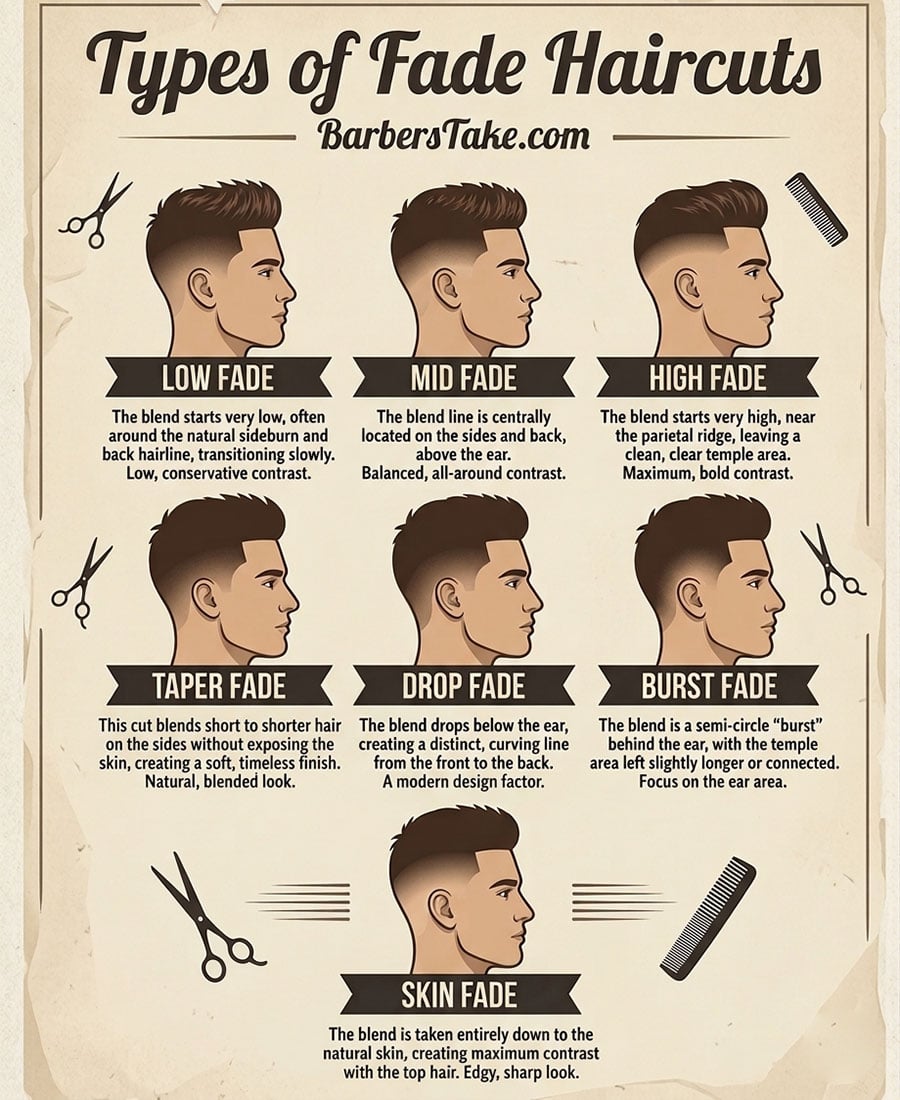
The different types of fade haircuts include the low, mid and high, with each creating distinct levels of contrast. The drop, burst and temp fades are cool customizations that allow men to add a fresh dimension to any style.

Key Features of the Fade
A fade creates:
- a sharp, high-contrast cut that blends into the skin on the sides and back
- a popular, modern look with an alluring vibe
- the need for regular visits to the barber shop for maintenance
- a sleek cut that works well with contemporary variations of traditional styles
What’s The Difference Between A Taper and Fade?
The difference between a taper and a fade is a tapered cut blends gradually into shorter hair, while a faded cut offers a sharper transition into the skin for edgy contrast. Taper haircuts are often associated with more understated, classy styles because they’re less dramatic. Fades are more modern, defined cuts that offer a trendy vibe.

When comparing, a low fade will look similar to a low taper since both start blending above the ears and follow the hairline, but the difference is that the faded variation will end sharply and expose the scalp, and the tapered cut lends a subtle touch.
Types of Tapers and Fades
- Low: This cut starts transitioning the hair shorter just above the ears, providing a classically handsome, lower-contrast look.
- High: In contrast, this cut starts much higher on the sides and back, and offers a more rebellious, fashion-forward style.
- Mid: The medium is a balanced approach that begins fading around the temples and can be the perfect choice between a low and high cut.
- Skin/Bald: This type blends the sides and back into the skin using a shaver for the shortest, cleanest cut possible.
- Drop: This modern variation curves around the ear and down the back, creating a fresh dimension and cool visual interest.
- Burst: This version arches around and ends behind the ear to achieve a unique “burst” or semi-circle shape.
- Temp: Also known as the temple or Brooklyn fade, it focuses on blending near the front of the sides and in the temple area for an innovative look.
How To Choose Between A Taper and Fade Haircut
Choosing between a fade and a taper comes down to three factors: your hair type, desired contrast to complement your hairstyle, and time/money for maintenance at the barbershop.

Factor Your Hair Type and Texture
- Straight hair works well with a fade or taper, enhancing definition and structure while boosting the illusion of fullness.
- Wavy or curly hair can benefit from a faded haircut on the sides and back by minimizing maintenance, but a taper will focus attention on the defined curls.
Contrast and Hairstyle
- A very short men’s haircut pairs beautifully with a fade on the sides and back because it needs extra contrast while ensuring a ruggedly handsome style.
- The most popular short haircuts look attractive with both tapers and fades, but classic gentleman’s styles work better with taper fades, while faded cuts provide high-contrast transitions suitable for modern, edgy hairstyles.
- Medium and longer hairstyles work well with both, each creating a unique effect, but most guys ask their barbers for low or medium variations.
Time and Money For Maintenance
- You’ll need to visit your barber regularly to maintain any cut. Still, tapers require less upkeep because they’re more understated and natural, while fades need to be sharp and become noticeably unkempt as they grow out.
- A taper fade can be the ideal soft touch for a business professional unless you’re willing to schedule an appointment every two to three weeks.