The fade is a stylish Black men’s haircut that combines classic masculinity with modern versatility, making it the most common choice for anyone seeking a sleek, attractive style with powerful contrast. This iconic cut seamlessly transitions the hair on the sides and back shorter and into the skin to create a blended look that complements the longer hair on top.
Fades have been barbershop staples in African-American communities since the 1980s, with barbers customizing the technique with trendy adaptions. The different types of fade styles offer any dashing Black man the ability to get the perfect haircut that balances sharpness and precision with engaging artistry.
In this guide, I’ll show you some cool examples of popular fade haircuts for Black men that blend timeless, masculine charm with versatile, modern edge to illustrate the universal appeal of this fresh look.
Stylish, Trending Black Men’s Fade Haircut Styles
Low Fade

The low fade is a classy haircut for Black men that offers a clean transition with simplicity and sophistication. This understated cut starts above the ears, continuing down to the neckline, and can be an excellent look for business professionals who need a sophisticated style. It easily works with buzz cuts, short curls, sponged styles and waves, adding a contemporary flair to any approach.
Mid Fade

The trending mid fade is a versatile cut combining definition, contrast and rugged charisma to achieve a fresh balance between the low and high variations. Medium fades begin slightly higher on the head and near the temples, and show off some skin to complement the longer hair on top. The cool, contemporary choice pairs well with afros, high tops, thick curls, twists and mohawks, making it an excellent alternative for Black men.
High Fade

The high fade is a daring look characterized by striking contrast and a modern, youthful look, making it a trendy choice for younger Black men willing to experiment with a dramatically shorter cut. This higher faded style starts high, well above the temples, and infuses a bold, rebellious element into your look. Ask your barber for a higher fade to bring focus to a classic hairstyle like the high top, afro or buzz cut.
Taper Fade

The taper fade is a subtle and refined variation, making it ideal for Black men who are career-driven professionals or those seeking a classic, clean-cut look. Charming taper faded haircuts blend short to shorter hair without transitioning into the skin, and can start high, low, or somewhere between to suit your style or preference. It’s textured, effortlessly stylish and can deliver just the right amount of contrast for some.
Drop Fade

The drop fade is a standout haircut that exudes confidence and personality thanks to its rounded effect when viewed from the side. The sharper the curve, the more striking the impact. Wear it with a mohawk, thick curls, long twists or braids for a fresh look. Those preferring a classic, low-maintenance approach can add a dropped fade and a shaved part to a short hairstyle.
Skin Fade

The skin fade is a sharp haircut executed with precision as the hair on the sides and back are blended down to the bare skin, enhancing the level of contrast created. The finish requires extra effort and more frequent trips to the barbershop to maintain, but the trendy bald faded cut can be worth the investment. This look carries a refreshing, cool vibe that works well in the summer months.
Burst Fade

The burst fade is a modern haircut style that commands attention when masterfully achieved, providing a bolder, blended look that arcs around the ear. Unlike the drop, burst fades leave more hair in the back, concentrating much of the tapering in the front and immediately surrounding the ear. In this example, the highly sought-after fade variation is paired with a contemporary afro-textured mohawk.
Temp Fade

The temp fade is a popular Black men’s haircut because its sleek, asymmetrical look incorporates a unique dimension, resulting in a cool, defined finish with sharp lines. This trendy cut, also known as the Brooklyn or temple fade, focuses on tapering the hair on the sides, near the front of the head, while leaving the back and others less faded. This variation is the simplest way to give dreads, afros, mohawks, waves and cropped styles a modern vibe.
Afro Fade

An afro fade is a retro hairstyle for Black men that pairs a voluminous classic afro with a structured, modern fade on the sides and back, emphasizing the style with smooth contrast. The longer the afro and the higher the fade, the more stylish and bold the look. This cut enhances texture, whether you have short, tight curls or a bigger, rounded afro.
High Top Fade

The high-top fade is an iconic hairstyle from the 1980s that blends retro vibes with contemporary barbering techniques. This style involves leaving the hair on top long, structured and shaped, while the sides and back are faded down for contrast. In this example, the top stands 4 to 6 inches high, flaring outward in a rounded, neat shape. Pairing the style with a high skin or temp fade creates the illusion of additional height. For a more mature version, keep the hair on top shorter and more parallel in shape.
Fade with Line Up

A fresh fade with a line up is a trendy cut that combines sharp edges and an angular hairline with the perfect graduation on the sides and back. Also known as an edge or shape up, the crisp lines along the forehead, temples and beard area elevate any style.
Short Afro Curls with Low Skin Fade

A short curly afro hairstyle is a trendy choice for Black men who want to embrace their natural texture with a low fade on the sides to complement the style. The skin fade separates the beard while giving the cut an elegant yet masculine touch and the thick curls are styled to be voluminous and chic. The full, well-groomed beard flatters the look with extra swag.
Twists Fade

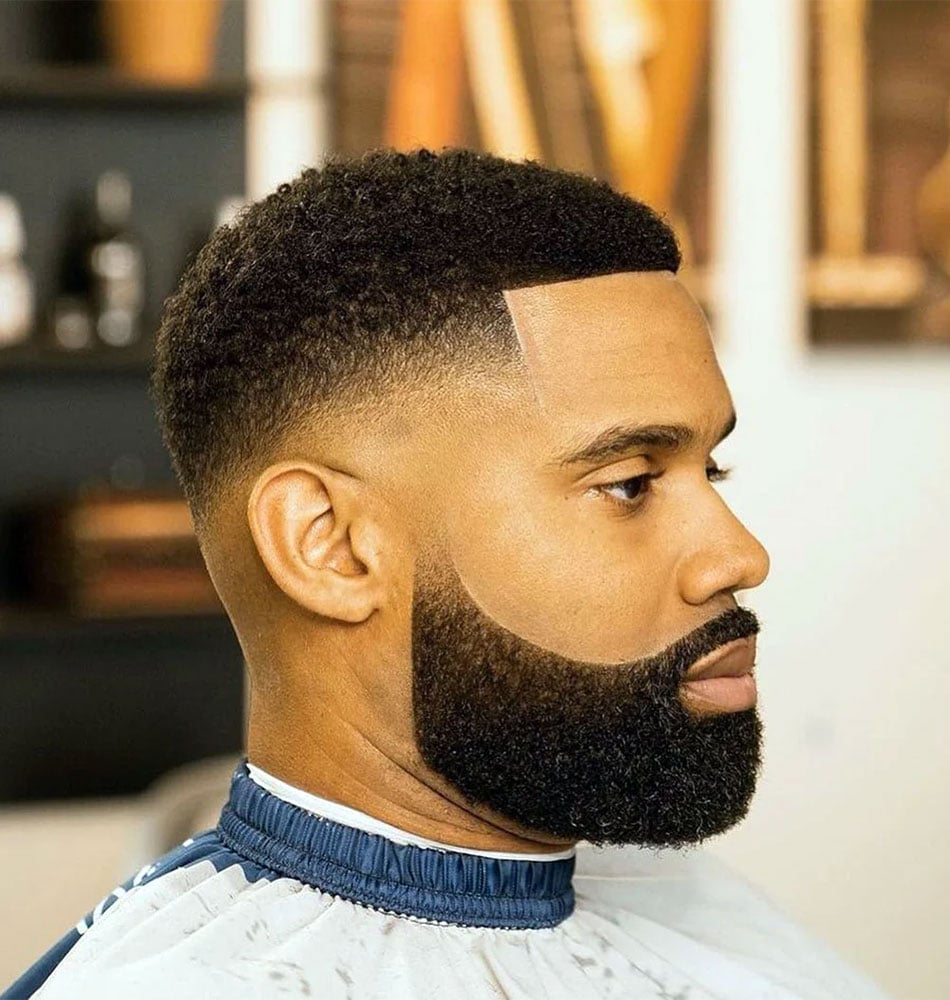
This short twist style with a low burst fade is a striking, natural look for Black men willing to experiment and break boundaries. The sexy, disconnected hairstyle requires a skilled barber to blend with precision while ensuring a textured finish, contrasting hair and skin for the perfect finish.
Dread Fade

A dread fade is an attractive, bohemian updo characterized by long hair twisted into locs and often pulled back to show off a faded cut on the sides. In this example, a burst fade infuses contrast and focuses attention on the style, but a mid drop fade could be an alternative. The cut transitions seamlessly into a blended full beard while a fresh line-up at the forehead, temple, and nape adds flair.
Low Skin Fade

A low skin fade embraces modern elegance and timeless masculinity, providing a polished cut with a shaved finish at the end. The fading starts low on the sides and back, gradually blending down to the skin, making this a great haircut for Black men wanting to exude confidence and sophistication. Here, the hair is thick and short, and while the transition starts high on the head, it shifts to the skin just above the ear, adding a subtle edge.
Temp Taper Fade

A temp taper fade is a brilliant cut that transforms the hair around the temples, offering a unique style with a hint of contrast. Skilled barbers often use a temp tapered variation to accentuate facial features and add texture.
Waves Fade

This waves fade features definition and structure while maintaining its cultural and artistic relevance in a polished, professional manner. The mid skin fade works beautifully with an angular beard for a chiseled, masculine appearance. The shape-up is a nice touch and is worth asking your barber about.
Low Taper Fade

This handsome, traditional low taper fade shows off natural hair and thick waves are introduced for a classy, textured appearance that doesn’t look boring.
Mid Temp Fade with Short Hair and Beard

Here, a perfect mid temp fade concentrates the cut in front of the ears, leaving the hair in the back slightly longer to spotlight the cropped style. The 360 waves and long, angular beard are an ideal blend between bold and casual.
Buzz Cut Fade

A modern buzz cut fade combines a functional, military-inspired style with a high-contrast blend for a clean, low-maintenance aesthetic. This choice is athletic, simple and effortlessly manly, making it perfect for any casual, professional or formal occasion. A soul patch on the chin balances the look.
Sponged Long Afro Fade

This sponged long afro fade embodies creativity and cultural pride with a modern twist, adding sizzling texture and head-turning height to a classic men’s style. When paired with a temp fade, a sponged afro stands out even more against the shorter hair at the sides and nape. Add clean edges along the hairline and a short, patchy goatee to structure the face.
Low Temp Fade with Thick, Medium Curls

This low temp fade highlights the thick, medium-length curls by gradually integrating contrast into the temple area and then dropping lower toward the back, giving the style a new spin. The blend is smooth but still noticeable, perfect for adventurous gentlemen. The low-maintenance, masculine cut pairs well with clean edges and lines.
Burst Fade Mohawk

Despite its name, a burst fade mohawk can be classy and polished in the hands of an experienced barber. Carving a high burst fade into thick curls while leaving most of the hair at the back reduces bulk but still shapes the face, especially with a full beard. An edge up at the hairline and jaw pulls the look together for a rugged, stylish finish.
Faux Hawk Fade

This fashionable faux hawk fade comes with a creative drop fade, instilling the essence of the classic mohawk. The sponged, afro-textured hair on top is longer and more voluminous, while the fuller back gradually gets shorter toward the nape. A fade is more subdued than the traditional shaved sides, giving the style a less dramatic and more casual vibe.
Wavy Buzz Cut Fade with Shape Up
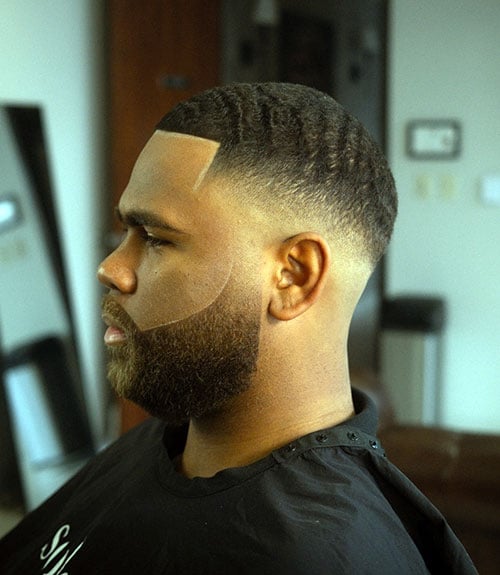
This buzz cut fade pairs textbook 180 waves over a mid skin fade with a razor-sharp line up at the hairline and temple. In my decade behind the chair, I’ve seen those waves earned outside the barbershop, with a wave brush, durag and consistent moisture between cuts doing the heavy lifting. A structured full beard with a clean cheek line completes the look for a polished, masculine finish that works anywhere from the office to the weekend.
Short Curly Hair with Low Fade and Goatee
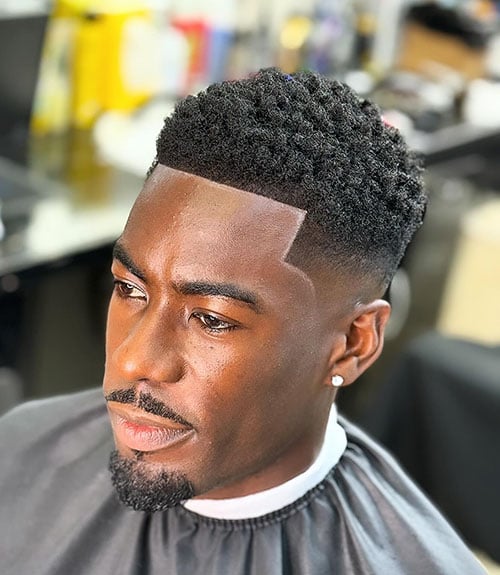
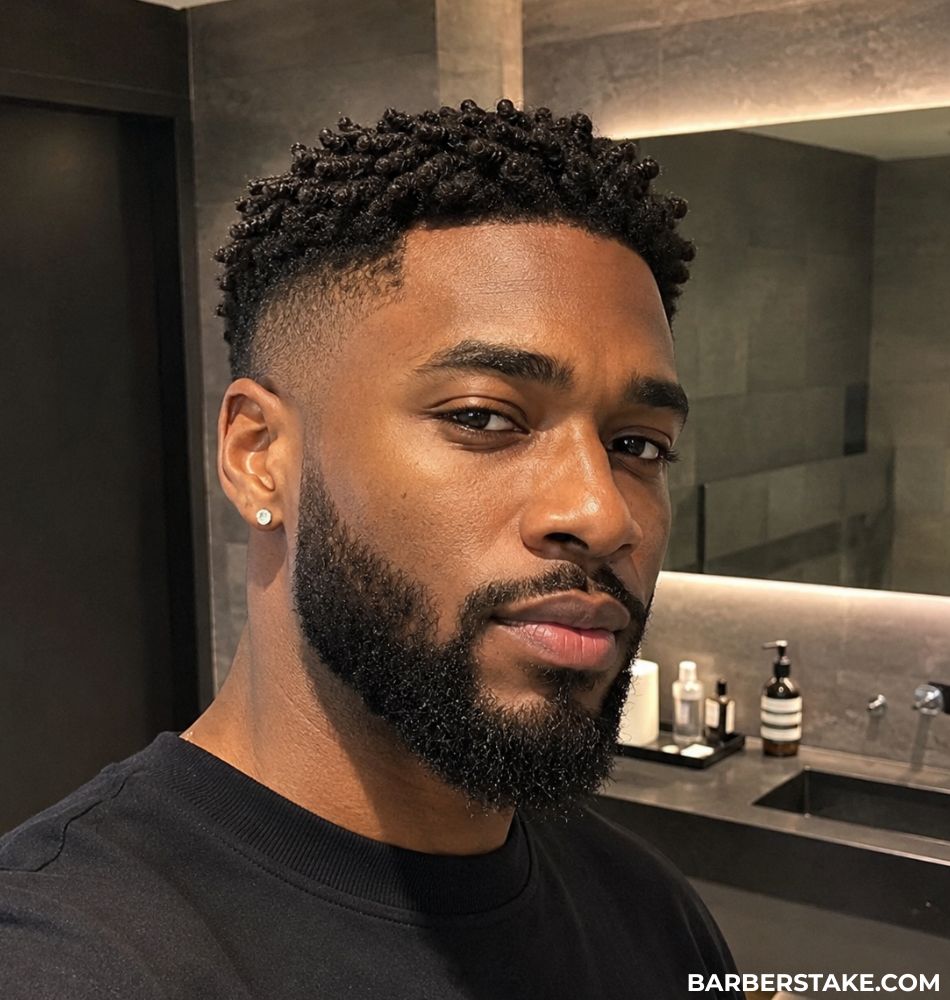
This short, simple style puts natural texture front and center, with dense, kinky curls sitting tall over a clean low fade and a squared-off shape up that frames the forehead with razor precision. In my experience, the corners are what separate a solid faded cut from a great one. Clean edges demand a steady hand and the right trimmer angle. A groomed goatee balances the volume on top while keeping the cheeks clean for a fresh, modern finish.
Afro Temp Fade with Line Up
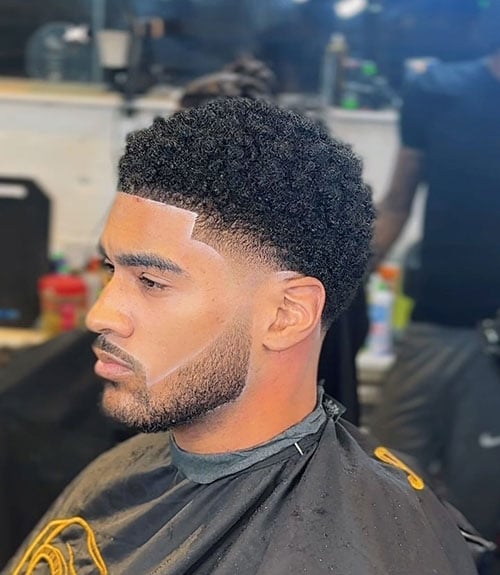
This afro temp fade builds dramatic height and volume on top while concentrating the blending around the temples, finished with a crisp line up that squares the corner for sharp visual contrast. I would recommend asking your barber for a temp fade with a hard line at the corner rather than a generic fade. That specific language saves both of you a back-and-forth at the chair. A connected beard ties the jawline into the cut for a polished, contemporary edge.
Professional Afro Fade with Groomed Beard

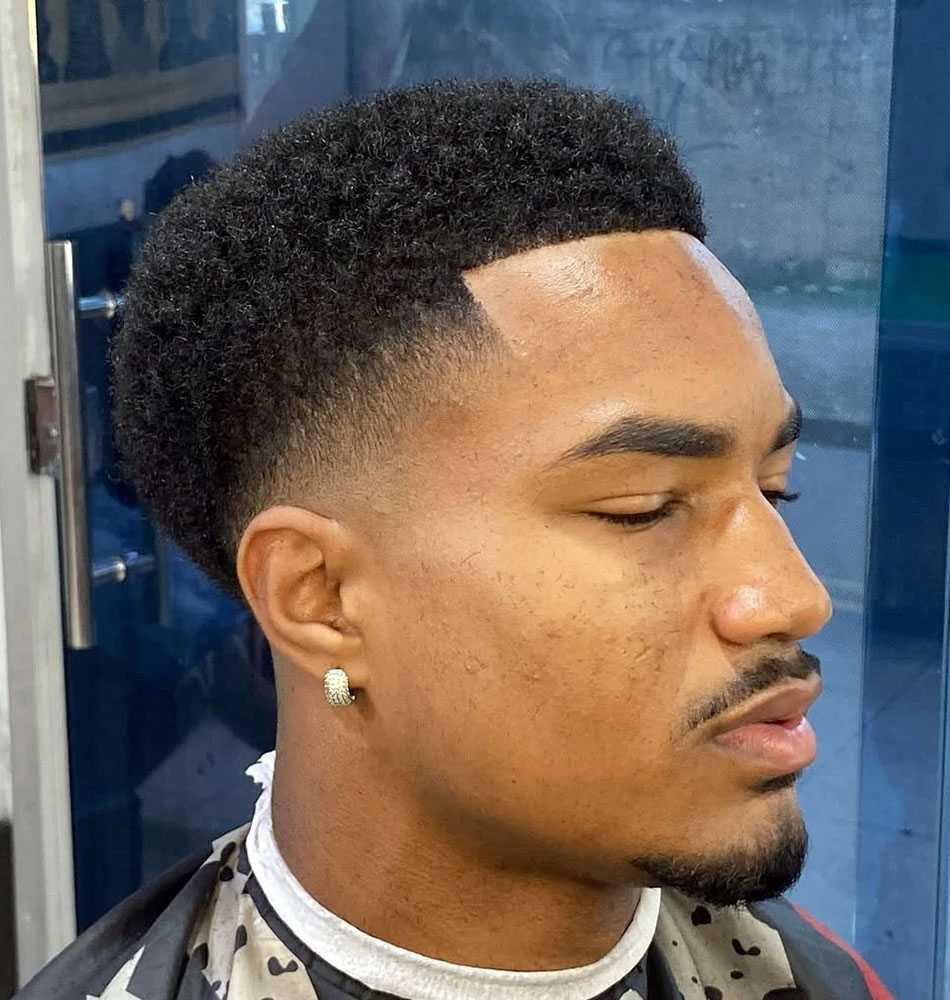
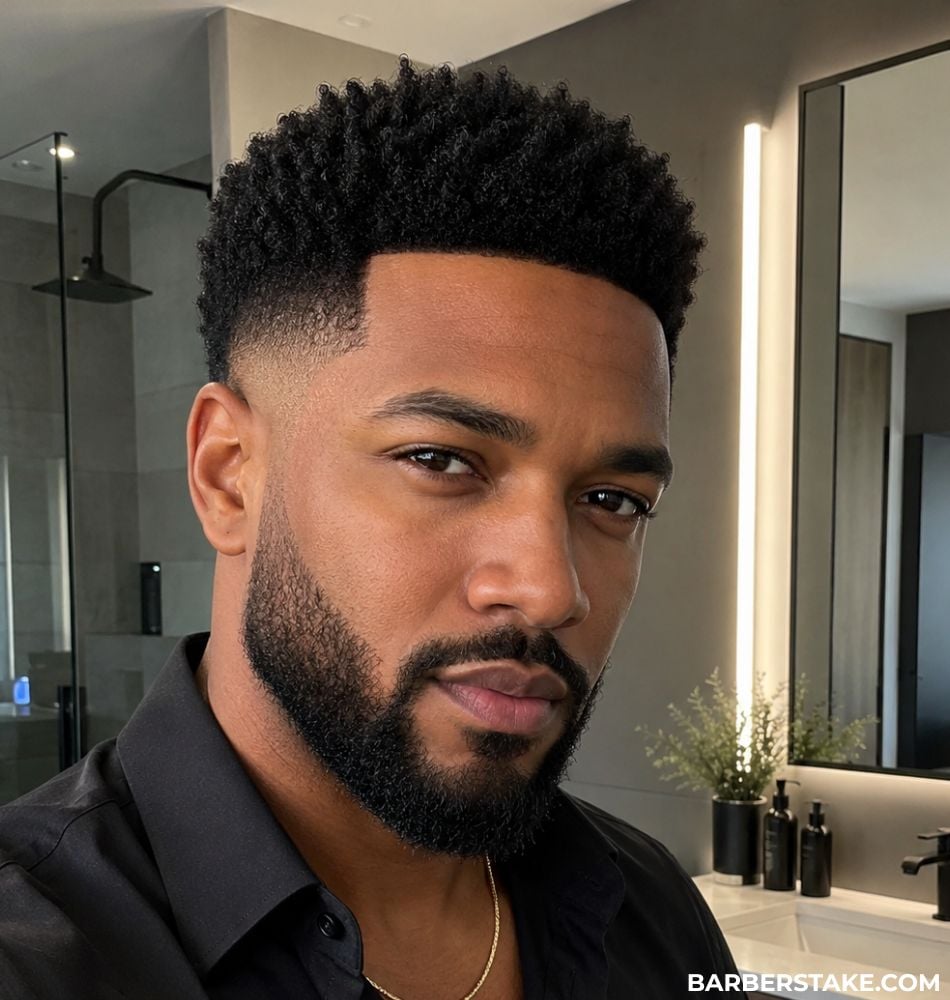
This professional afro fade proves natural volume belongs in the boardroom, with a tall, healthy curl pattern on top, surgical line work at the hairline, and a sculpted beard that connects through a crisp cheek line. The catch with a look this clean is the maintenance window. The shape up and groomed beard hold their edge for about 5 to 10 days, which is why I tell working clients to book a standing biweekly appointment. It’s a sophisticated look for professional men who refuse to compromise their natural texture.
Types of Fade Haircuts For Black Men
The different types of fade haircuts for Black men are stylish, functional variations, each offering a smooth, alluring look with visual appeal that can enhance your style. Here are some common faded cuts to ask your barber for:
- Low Fade: The low fade starts the blending process right above the ear, creating an understated, classy style.
- Mid Fade: The mid fade is balanced and versatile, and begins to taper at the temples, pairing youthful edge with sophisticated maturity.
- High Fade: The high fade is a very short cut, starting near the top of the sides and aggressively transitioning shorter for a bold finish.
- Skin Fade: The skin fade is a sharp, trendy haircut that involves using clippers to blend the hair and then a shaver at the bottom for a clean look.
- Drop Fade: The drop fade is a new variation that curves around the back of the head, adding a dramatic dimension that will attract attention.
- Burst Fade: The burst fade offers a striking aesthetic with a “bursting” effect around the ear.
- Temp Fade: A temp fade focuses on tapering the hair around the temples while leaving the back area less faded.
How To Choose The Right Fade For Your Look
The best fades are the clean ones that complement your style and face, work with your hair texture, and fit the way you actually live. Here’s how to narrow it down before you sit in the chair, from the perspective of a professional barber.
Choose A Fade Based on Your Face Shape
Your face shape determines where the fade should sit to create the most flattering proportions.
- Oval face: Almost every fade works. Lean toward a mid fade for visual balance and the most styling versatility.
- Round face: A high fade or skin fade adds vertical length and slims the appearance of the cheeks. Avoid low fades, which can make a round face read fuller.
- Square or angular face: A low fade or taper fade softens a strong jawline without losing definition. Skip the high fade; it amplifies the angles.
- Oblong (long) face: A low fade with volume on top creates width and breaks up the length of the face.
- Heart-shaped face: A mid fade with a fuller top balances a wider forehead with a narrower chin.

Picking A Fade Based on Your Hair Texture
Black hair textures are unique and not interchangeable, and the ideal level and length of fade depends on how your specific hair grows in. This is where most generic guides fall short.
- 4A (Loose Coils): Drop fades and burst fades show off the curl pattern beautifully because the gradient is visible against the defined coil.
- 4B (Z-Pattern): Mid fades and temple fades work best. The dense top stays distinct from the sides without looking disconnected.
- 4C (Tightly Coiled): Low taper fades and skin fades paired with a sponged or short afro top create the cleanest visual contrast. The texture itself becomes the statement.
- Wavy or 360-Prone Hair: Stick to low or mid fades. Going higher cuts off the area where the wave pattern needs to develop.
- Locs and Twists: Drop fades and burst fades pair better because the curve of the fade supports the vertical line of the loc or twist.
Based on Your Lifestyle
Your daily routine and professional environment matter as much as your facial features and look.
- Corporate or client-facing roles: Low taper fades read as polished and conservative, and the neckline stays clean for two to three weeks.
- Creative industries or casual workplaces: Drop fades, burst fades, and styles with sharp line ups are intentional and stylish without feeling overdone.
- Military, first responder, uniformed roles: A low skin fade or high and tight stays within most regulations and holds its shape under headgear.
- Athletes and gym regulars: Skin fades, buzz cuts and other low-maintenance styles minimize sweat-related upkeep and look clean even when your top is short.
- Frequent travelers: A taper fade has the longest visual lifespan between cuts, since there’s no skin line that needs touching up every two weeks.
How To Ask Your Barber For the Fade You Want
The chair is not the place to figure out what you want and how to ask for it. Walking in with a clear ask saves time, prevents mismatched expectations, and gets you a better cut. Every fade communication comes down to four specs.
- Fade height: Low (just above the ears), mid (at the temples), or high (well above the temples). This is the most important factor in your cut.
- Fade finish: Skin (clippered down to the bare scalp), taper (gradual but not to the skin), or somewhere in between. Skin fades require more frequent visits.
- Top length: Whether you want the top kept long, mid-length, short, or buzzed. Use inches if you can (“about an inch and a half on top”). If you’re not sure, ask your barber to show you how much he’ll be cutting off so you can get a feel for the length and finished look.
- Hairline shape: Square, rounded, or natural. This determines how the line up is finished at your forehead, temples and the back of the neck.
Guard Numbers and What They Mean
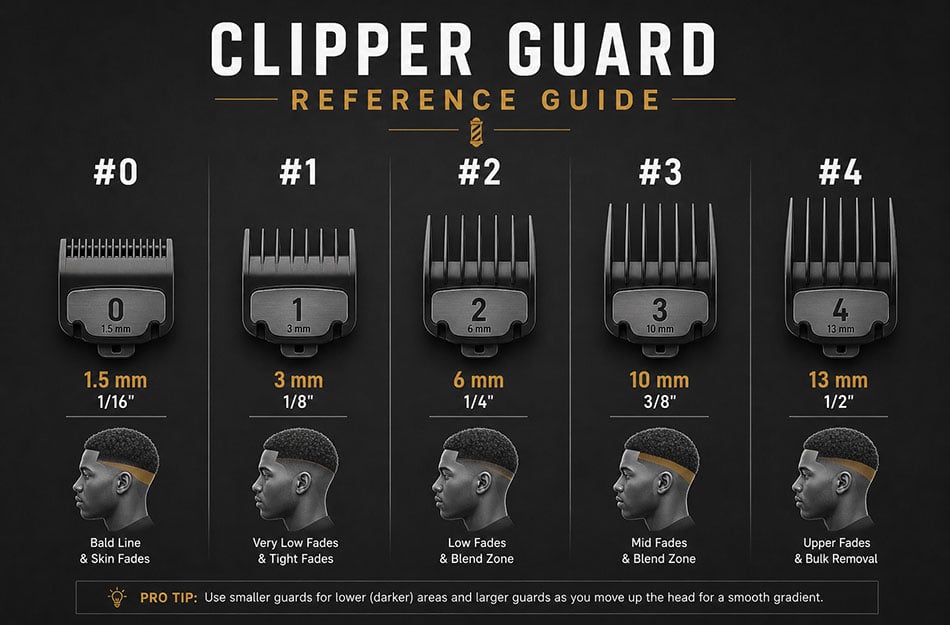
Most barbers use clipper guards numbered 0 through 8. The lower the number, the shorter the cut. Knowing the guard scale lets you communicate exactly what you want.
- #0 (no guard): Cut to the skin or near it. Used for skin/bald fades sections.
- #1 (1/8 inch): The shortest length before skin. Often used at the bottom of a fade.
- #2 (1/4 inch): A common starting guard for the lowest section of a fade.
- #3 (3/8 inch): The most popular guard for the mid-section of a taper fade.
- #4 (1/2 inch): Often used at the top of a taper low fade where it meets the longer hair.
A typical low fade specification might sound like this: “Take it down to a 1 at the neckline, blend up to a 3 at the top of the ear, and leave the rest of the sides at a 4.” If you can describe it that way, your barber knows what you want.
Bring a Reference Photo, But Choose It Right
Photos beat descriptions every time. Bring two to three reference images, but pick them carefully. The model in the photo should have a similar hair texture, face shape, and hairline to yours. A perfect fade on someone with 3C hair won’t translate to 4C without adjustments. Show your barber the photo, then ask: “What needs to change for this to work on me?” That conversation is worth it.
Touch-Up vs. Full Reset
If you’re coming in for a maintenance cut between full appointments, say so. A touch-up means cleaning up the line up, neckline, and edges without re-blending the sides. A full reset means re-fading the sides and back from scratch. The cuts take different amounts of time, and most barbers price them differently.
How To Maintain Your Fade
A fresh fade with a precision blend feels sharp on day one but starts to blur within ten days, and by week, three the cut is functionally gone.

Why Black Hair Needs More Frequent Cuts
Most black hair regrows in tight coils that visually disrupt a fade gradient faster than straight or wavy hair. The line your barber cut at week one is blurred by week two and effectively gone by week three. Skin fades show regrowth fastest because any new growth contrasts immediately against bare scalp. Plan your re-cut cadence around this:
- Skin fade: Every 10 to 14 days for the cleanest look
- Mid or low fade with taper: Every 2 to 3 weeks
- Tapered styles without skin work: Every 3 to 4 weeks
What You Can Touch Up At Home, and What You Shouldn’t
You can clean up the perimeter of your cut without ruining it. You should not try to re-fade the gradient itself. Stick to:
- The neckline at the back of your head
- Sideburns and the edge along your temples
- The hairline at your forehead
- Stray hairs around the ear
Leave the actual fade blend alone. Re-fading at home with the wrong guard or angle is the fastest way to ruin a $50 professional haircut.
Wash and Moisturize Routine
Black hair is structurally drier than other textures and benefits from a different wash routine than what generic grooming guides recommend.
- Co-wash 2 to 3 times a week with a gentle conditioner instead of shampoo. Save shampoo for once-a-week deep cleans.
- Use lukewarm water, not hot. Hot water strips the natural oils your hair needs to stay defined.
- Moisturize daily. A light leave-in conditioner or natural oil keeps the longer top section healthy and frizz-free. Jojoba, argan, and castor oils all work well for Black hair textures.
- Wear a durag or silk wrap at night, especially if you’re maintaining waves or a defined top. Cotton pillowcases dry out the hair and rough up the cuticle.
If You’re Running Waves Under the Fade
360 waves require their own protocol on top of fade maintenance. Brush daily with a medium or hard wave brush, apply a small amount of wave pomade or cream, and wear a durag for at least 30 minutes after each brushing session. Compression is what trains the wave pattern. Skip a few days of brushing and the waves flatten out, even if the fade itself still looks sharp.
Common Mistakes Black Men Make When Getting A Fade
After more than a decade behind the chair, I’ve seen the same handful of mistakes over and over. Most of them come down to overconfidence about what looks good and underestimating how unforgiving a fade can be.
Going Too High Too Fast
You can always ask your barber to go higher next time. You can’t undo a fade that started at the top of your head. If you’re new to fades, start with a low or mid fade and work your way up over a few cycles. The high fade looks dramatic in photos, but it’s not flattering on everyone and will leave you with very few styling options if you change your mind.
Mismatching Fade Level and Face Shape
A round face with a low fade reads fuller. A long face with a high fade reads even longer. Your barber should be guiding this conversation, but if you walk in asking for the wrong fade for your face, a less experienced barber will give you what you asked for. Use the face shape guide above as your starting point.
Asking For A Skin Fade With An Uneven Hairline
A fade that blends down to the skin exposes every bit of your hairline and scalp. If your hairline is receding unevenly, asymmetrical, or has any scarring, a skin fade will spotlight it. A low taper fade or a low fade that stops short of the skin masks these issues much better.
Skipping The Post-Shave Routine
The neckline of a skin fade is a high-friction zone for ingrown hairs and razor bumps. Most clients skip aftercare entirely. Apply a salicylic or glycolic acid toner to the faded area after every cut, and exfoliate the back of your neck two or three times a week. The difference is visible within a month.
Trying To Re-Fade at Home With the Wrong Guard
I see this every week. Someone tries to clean up the gradient between visits using a guard one size shorter than what the barber used, and they end up with a visible step in the blend. If you’re going to maintain at home, stick to the perimeter only. The actual gradient is the barber’s job.
Skipping The Line Up
A perfect fade with a sloppy hairline still looks unfinished. The line up at your forehead, temples, and beard frames the haircut. The 90 seconds it takes to clean up the lines is the difference between looking sharp and looking close to sharp with a visible flaw.