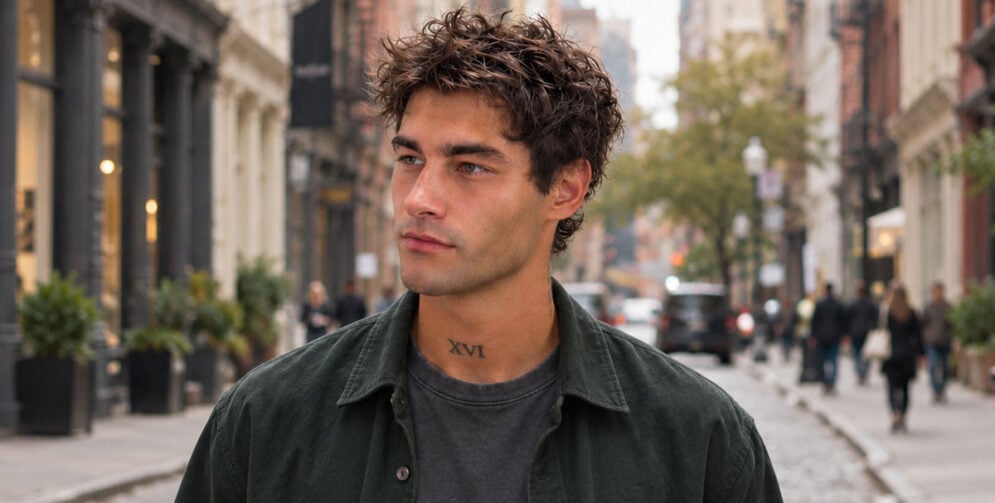
The warrior cut is a rugged, textured men’s haircut characterized by choppy layers, natural volume and a deliberately messy finish. Inspired by rebellious 1990s hairstyles, the modern version generally keeps two to four inches of length on top while using point cutting, layering and shorter sides to create movement, separation and a masculine shape.
Unlike the ultra-clean fades and precisely styled looks that have dominated men’s hair in recent years, the warrior cut should look slightly imperfect. The texture does most of the work, creating a style that feels somewhere between a textured crop, mod and modern mullet without fully becoming any of them.
As a barber, I like this haircut because it can be adapted to different lengths, textures and preferences. The key is maintaining enough weight to create volume while removing just enough bulk to encourage separation and movement.
Below, I’ve compiled the 10 best examples of the warrior hairstyle for men who want a cool, textured aesthetic with masculine attitude and versatility. Choose the variation you like and bring that reference photo to your barber to get the cut tailored to your vibe.
What Is A Warrior Cut?
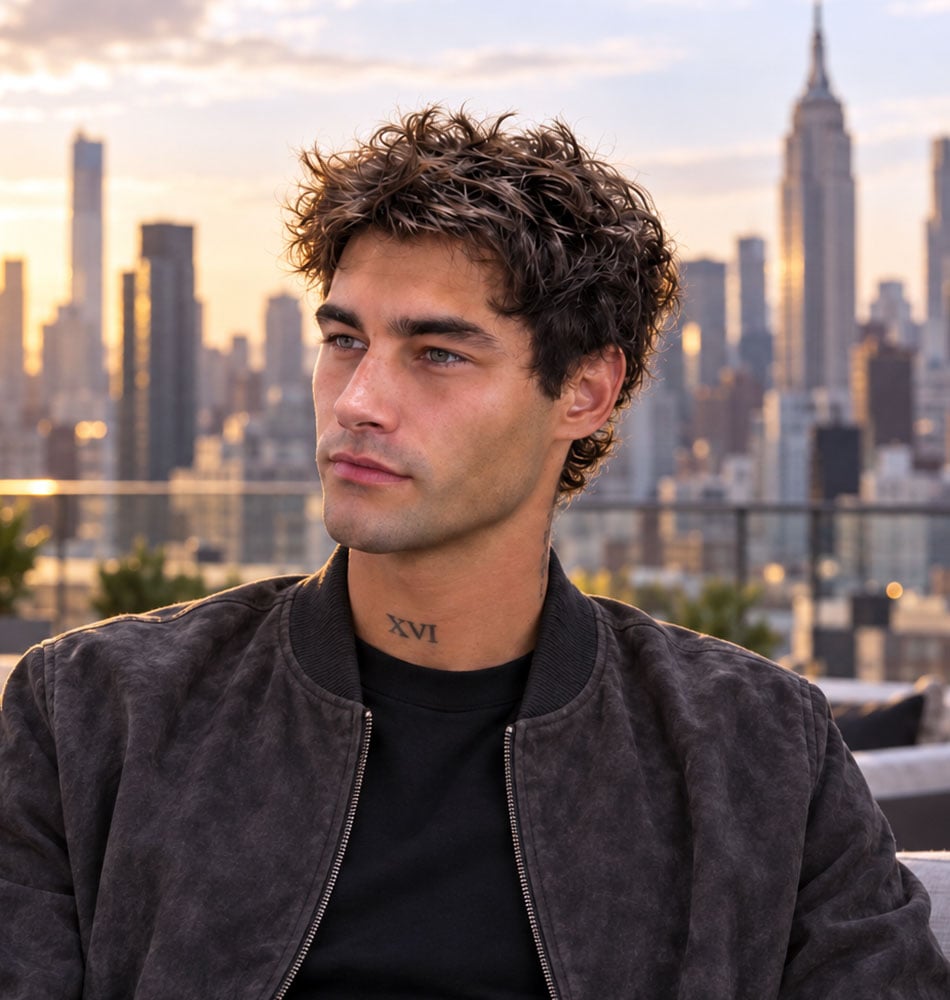
A warrior cut is a modern men’s hairstyle characterized by a heavily textured, layered top with shorter sides and a messy, natural-looking finish. The hair is usually point-cut rather than uniformly trimmed, allowing individual pieces to separate and move in different directions. The sides can be tapered, faded or scissor-cut to achieve a clean or edgy finished style. Most versions maintain roughly two to four inches on top, although shorter crops and longer mullet-inspired styles are trending and stylish.
“The warrior cut is really about controlled texture. You want the hair to look loose and broken up, but the shape underneath still has to be intentional,” says Eric Garibay, professional barber at BLVD Barbershop. “The trend has been softer shapes and more natural movement so the texturized finish is the focal point here rather than an extremely sharp fade.”
Popular Warrior Cut Haircut Styles
Classic Warrior Cut
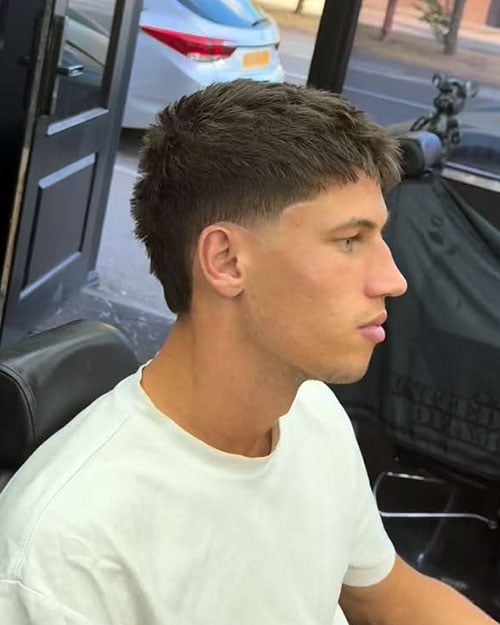
The classic warrior cut features medium-length, heavily textured hair on top with short, naturally blended sides such as a low taper for a rugged, clean look. Around three to four inches of length through the front provides enough hair to create volume, movement and uneven separation, while point-cut layers prevent the style from sitting flat.
I prefer keeping the sides relatively soft with a subtle taper instead of an aggressive skin fade. This preserves the relaxed, slightly rebellious character that defines the haircut. Apply sea salt spray to damp hair, rough-dry it with your fingers and finish with a small amount of matte clay for separation and control.
Short Warrior Cut
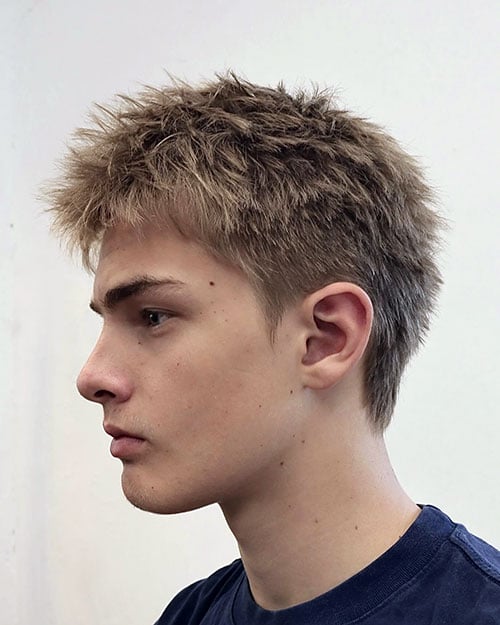
The short warrior cut keeps the textured shape compact, generally leaving around two inches on top with cropped or tapered sides. The shorter length makes the haircut easier to style while maintaining the choppy peaks and irregular texture that distinguish it from a traditional crew cut.
Ask your barber to point-cut the top instead of clipping everything to one uniform length. This creates movement without requiring much product. A small amount of texture powder or matte clay worked through dry hair is usually enough to create a rugged, low-maintenance finish.
Messy Warrior
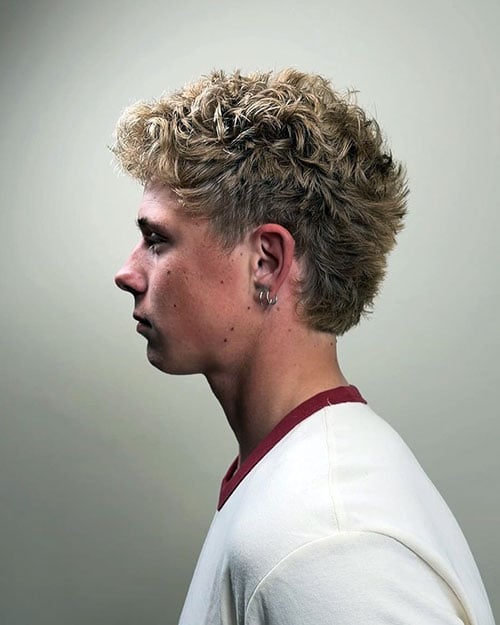
The messy warrior combines rugged texture with a shorter, forward-moving silhouette. Choppy layers sit across the top and the sides are often tapered to complement the messy styling.
This version is the easiest to maintain and works particularly well for straight or slightly wavy hair. I’d recommend asking for point-cut texture without creating a heavy, blunt fringe. Apply matte paste to dry hair and loosely push the top forward with your fingers.
Long Warrior Cut
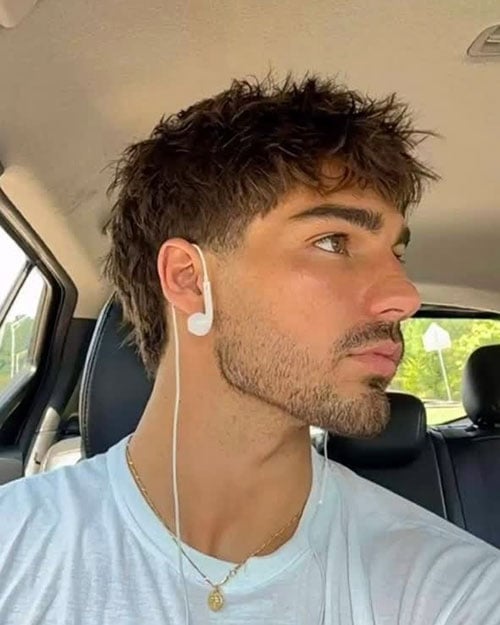
The long warrior cut maintains additional length through the fringe, crown and back, creating a flowing, rebellious style with more movement than the classic variation. Layers remove excess weight and allow the hair to fall naturally instead of becoming bulky.
This version works particularly well with thick or slightly wavy hair. Keep the sides scissor-cut or softly tapered so they transition naturally into the longer top. Use sea salt spray for texture and a lightweight cream or matte paste to control the ends without making the hair stiff.
Textured Fringe Warrior Cut
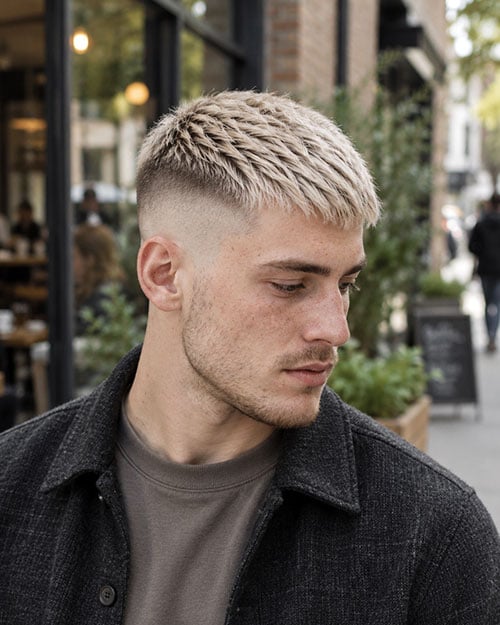
A textured fringe warrior cut leaves extra length through the front, allowing irregular strands to fall toward the forehead while blending into the choppy layers on top. The fringe adds movement, softens the hairline and gives the haircut a youthful, slightly undone appearance.
The front should be heavily point-cut rather than trimmed into the blunt line associated with a Caesar or French crop. Apply texture powder around the roots, then use a small amount of matte clay to pinch and separate individual pieces.
Spiky Warrior Cut
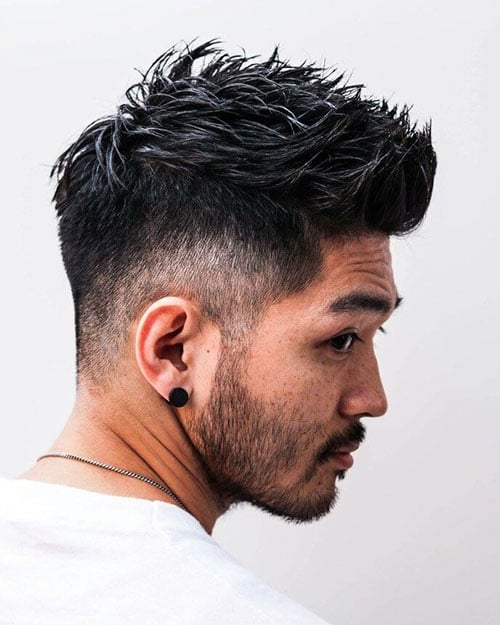
The spiky warrior cut exaggerates the hairstyle’s natural peaks by styling the layered top upward into loose, irregular spikes. Unlike the stiff gelled styles of the early 2000s, modern spikes should vary in direction and height for a natural, textured finish.
Straight and thick hair works especially well because it can support the shape without excessive product. Blow-dry the hair upward with your fingers, then work matte clay through the roots and lightly twist a few sections for definition. Avoid creating perfectly uniform spikes.
Wavy Warrior Cut
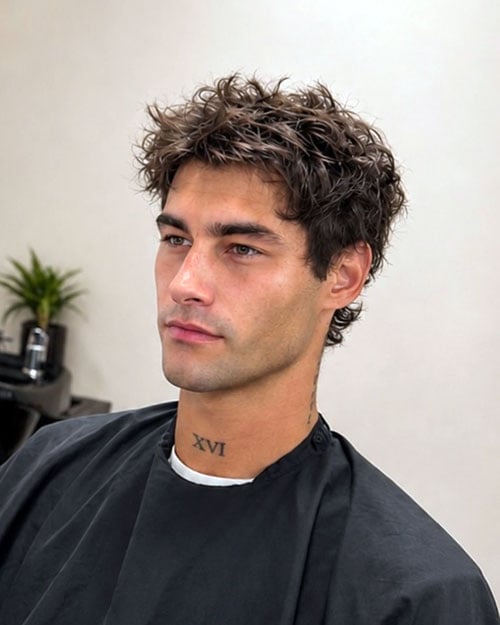
A wavy warrior cut uses natural texture to create movement throughout the top while shorter sides keep the overall shape controlled. Waves soften the haircut’s sharper edges, resulting in a relaxed style that requires less deliberate separation.
Your barber should remove enough weight to encourage movement without over-thinning the ends and creating frizz. Apply a light sea salt spray or styling cream to damp hair, scrunch lightly and air-dry or diffuse for additional volume.
Low Taper Warrior Cut
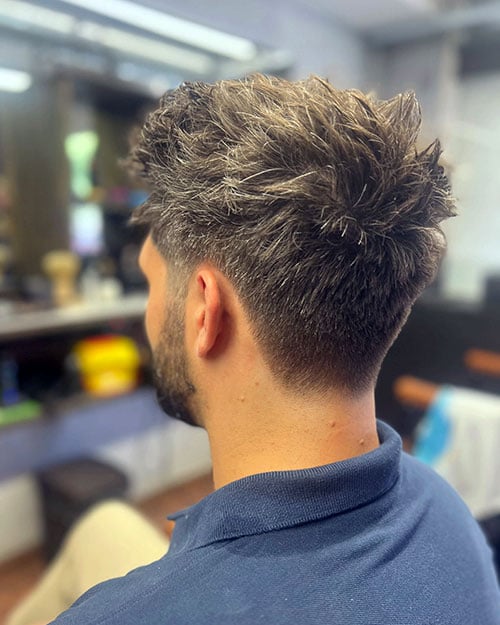
The low taper warrior cut cleans up the sideburns, ears and neckline while preserving additional weight through the sides. The subtle transition creates enough structure to modernize the hairstyle without sacrificing its softer, messy character. “A low taper is probably the easiest way to make this style wearable for most guys. It cleans up the edges without making the haircut look too polished,” advises Garibay.
This is one of the most wearable versions and the variation I would recommend to most guys trying it for the first time. Keep approximately three inches of textured length on top and finish with a small amount of matte clay or paste.
Burst Fade Warrior Cut
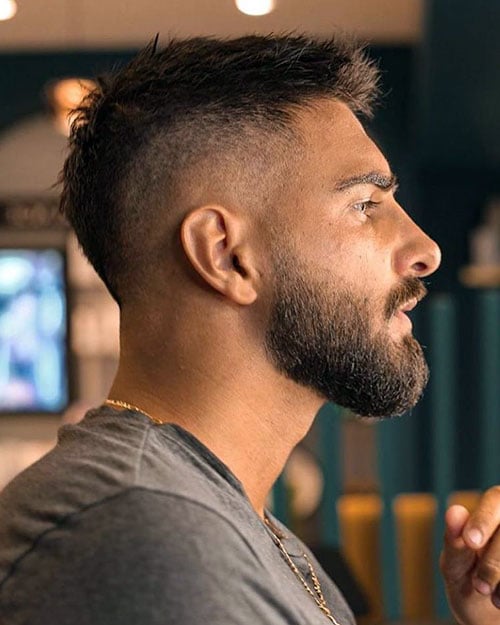
The burst fade warrior cut adds a rounded fade around the ears while maintaining additional length through the crown and back. The curved fade creates stronger contrast and gives the haircut a more contemporary, edgy appearance.
Keep the burst relatively low so the fade supports the textured top rather than dominating the haircut. This variation works particularly well when the crown and back have slightly more length. Use matte clay to create separation through the top while allowing the rear section to fall naturally.
Warrior Cut Mullet
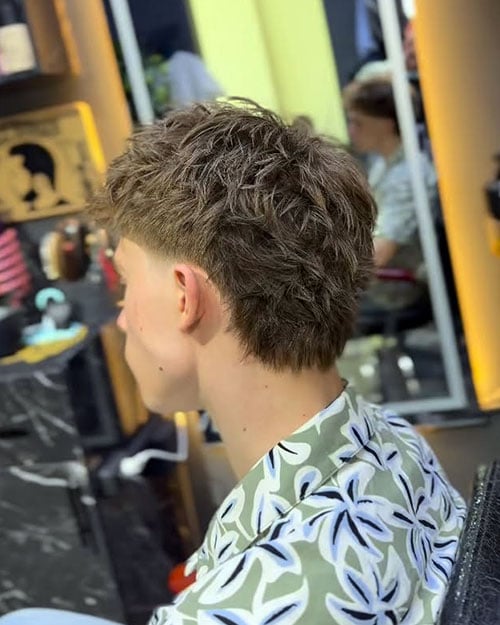
The warrior cut mullet combines choppy, heavily textured layers through the top with deliberate length through the crown and nape. Shorter sides create contrast while the longer back introduces the recognizable shape of a modern mullet.
The combination works because both hairstyles rely on texture and movement. Keep the back relatively controlled if you want an accessible version, or grow it longer for a more noticeable statement. A low taper or burst fade can clean up the area around the ears while preserving the length behind them.
Warrior Blowout
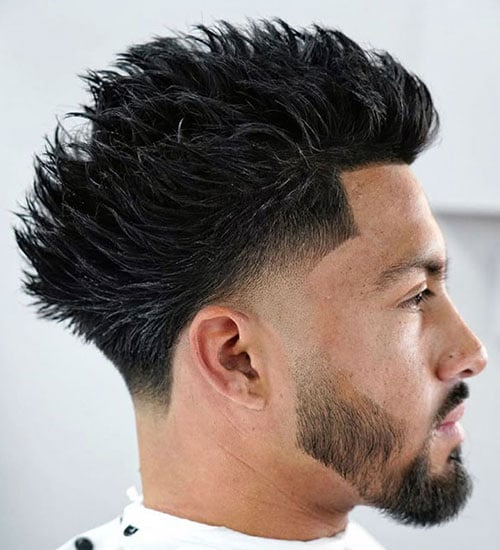
The warrior blowout is a unique take that combines the cut’s choppy, layered texture with extra height and lift through the front and crown, creating a fuller, more dramatic shape. The sides stay tighter to keep the silhouette clean, while the longer top is styled upward and slightly back for a rugged, windswept finish.
This variation works especially well for thick, straight or wavy hair that can hold volume without collapsing. Ask your barber to keep enough length through the top for lift, then use point cutting to create separation and prevent the style from looking too smooth. Apply a volumizing pre-styler to damp hair, blow-dry upward with your fingers or a vented brush, then finish with a small amount of matte clay or paste for texture and control.
Warrior Fade
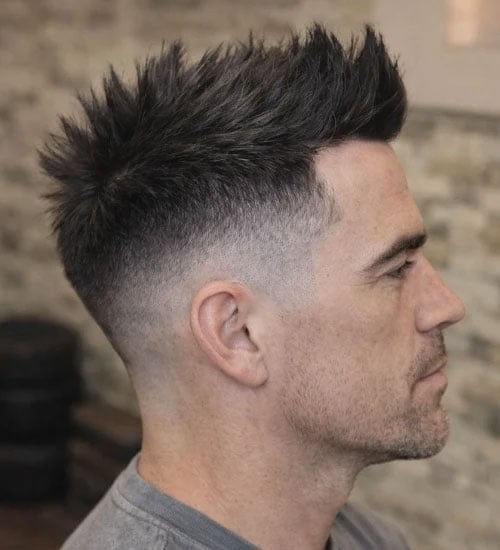
The warrior fade sharpens the haircut by pairing the rough, broken texture on top with cleanly faded sides, creating a more defined, modern look than the classic version with a strong frame that makes the volume and separation above stand out immediately.
Keep the top intentionally irregular, with uneven layers and piecey movement rather than a perfectly uniform shape. A mid or low fade usually gives the best balance, since taking the sides too high can make the style feel disconnected. For styling, rough-dry the hair for lift, then work in a dry clay or paste and use your fingertips to pull apart the texture for a controlled, slightly aggressive finish.
Who Should Get A Warrior Cut?
The warrior cut works best for men who want a textured hairstyle with a natural, slightly messy finish. Straight and thick hair are particularly well suited because the layers create visible separation and volume. Wavy hair provides natural movement, while curly hair can also work when the shape is adapted to the curl pattern.
Men with fine hair should avoid excessive thinning. Maintaining enough density through the top is important for creating the appearance of fullness.
“With fine hair, more texturizing is not always better. A barber needs to preserve enough density on top so the haircut looks fuller rather than thin and overly separated,” explains James Goodman, retired barber and men’s grooming expert behind Barber Goodman.
Best Face Shapes For A Warrior Cut
The warrior cut is particularly flattering on square, oval and round faces. Round faces benefit from tighter sides and additional height on top, while longer faces generally look better with less vertical volume and more weight around the sides. Square faces naturally complement the rugged texture and irregular shape.
Your barber should adjust the height, fringe and side length to suit your proportions rather than copying a reference photo exactly.
How To Ask Your Barber For A Warrior Cut
Bring a reference photo because the warrior cut is still a relatively new term and different barbers may interpret it differently. “I’d definitely bring a picture when asking for this one. It’s still a newer name and trend, and everyone envisions it differently,” Garibay advises.
- Ask for two to four inches of length on top.
- Request heavy point-cut texture and layering.
- Keep plenty of natural movement and separation.
- Choose a soft taper or your preferred fade on the sides.
- Ask for an irregular, textured fringe if desired.
- Maintain extra crown or nape length for a mullet-inspired version.
Explain that you want a messy, textured finish rather than a perfectly sculpted hairstyle.
How To Style A Warrior Cut
- Towel-dry your hair until slightly damp.
- Apply sea salt spray or another lightweight pre-styler.
- Blow-dry using your fingers to create volume and movement.
- Warm a small amount of matte clay or paste between your palms.
- Work the product through the hair from back to front.
- Pinch and separate individual sections with your fingertips.
- Leave the finished style slightly irregular rather than overly polished.
Texture and movement are more important than perfect placement.
“It should never look like every strand was carefully placed. Once the hair becomes too sculpted, you lose the relaxed character that makes the style interesting,” Goodman suggests.
Best Products For Styling The Warrior Hairstyle
A matte clay or paste is the best finishing product for most warrior cuts because it provides grip and separation without excessive shine. Sea salt spray can add volume and texture before blow-drying, while texture powder works well for fine hair that needs additional root lift.
Wavy or longer hair may respond better to a lightweight styling cream. Avoid heavy gels and greasy pomades that make the hair stiff or weigh down the texture.
How Often Should You Get A Cut?
Most warrior cuts should be trimmed every three to five weeks. “The texture can grow out nicely, but once the sides get too heavy, the whole shape starts to disappear. A cleanup every few weeks keeps it looking intentional,” Garibay says. Soft tapers grow out naturally and can usually last longer between appointments, while skin tapers and burst fades may need to be cleaned up every two to three weeks.
For longer versions, your barber may only need to clean the sides and remove excess weight rather than shortening the entire haircut at every visit.
Frequently Asked Questions
What Is A Warrior Cut?
A warrior haircut is a textured men’s style featuring choppy layers, natural volume, shorter sides and a deliberately messy finish. Most versions maintain two to four inches of hair on top with point-cut texture for movement and separation.
Why Is It Called A Warrior Cut?
The name refers to the haircut’s rugged, masculine appearance. Despite the name, the current hairstyle is primarily inspired by rebellious 1990s men’s hair rather than a specific historical warrior haircut.
How Long Does Your Hair Need To Be For A Warrior Cut?
Around two inches is enough for a shorter warrior cut, but three to four inches provides more room for the layered texture and movement associated with the classic style.
Does A Warrior Cut Work With Straight Hair?
Yes. Straight hair is particularly well suited to the warrior cut because point cutting creates visible separation, texture and irregular peaks.
Can You Get A Warrior Cut With Wavy Or Curly Hair?
Yes. Wavy hair naturally creates the movement associated with the cut. Curly hair can also work, but the layering and length should be adjusted to accommodate the curl pattern and shrinkage.
Is A Warrior Cut A Mullet?
No. The warrior cut is primarily defined by choppy texture through the top, while a mullet is defined by additional length at the back. The two styles can be combined, though.
What Product Should I Use For A Warrior Cut?
Use a matte clay or paste for texture, separation and hold. Sea salt spray works well as a pre-styler, while texture powder can add volume to finer hair.
How Often Should I Get A Warrior Cut?
Most men should get the cut reshaped every three to five weeks. Faded variations may need cleanups every two to three weeks to maintain sharp sides.