

Walk into any barbershop, pharmacy, or grooming aisle and you’ll find rows of styling products promising the same things: strong hold, natural finish, all-day control. The labels look different. The prices vary. But unless you already know what you’re looking for, most men grab whatever looks appealing and hope it works.
It usually doesn’t. Not because the product is bad, but because it’s the wrong product for your hair type and the style you’re trying to achieve. A matte clay won’t give you a sleek, polished look. A light cream won’t tame thick, coarse hair. And using a high-shine pomade when you want a natural, textured finish will leave you frustrated every single morning.
This guide breaks down the most popular men’s styling products and explains the differences between clays, pomades, pastes, waxes and creams, so you can stop guessing and start getting the results you want.
The Features of Men’s Hair Products
Before getting into each product category, it helps to know the five characteristics that define how any styling product performs. These are the same things a barber thinks about when recommending a product to a client, and once you understand them, every choice becomes straightforward.
- Hold level is how well the product keeps your style in place throughout the day. It ranges from light and flexible to extra strong and firm. The right hold level depends on your hair type and how structured you want your style to look.
- Finish refers to how much shine your hair has after styling. Some products leave hair looking glossy and polished. Others leave it completely matte. Most fall somewhere in between, which is described as a natural or low-sheen finish.
- Texture effect is what the product does to how your hair looks and feels after it’s applied. Some products separate individual strands to create volume and definition. Others smooth the hair down into a clean, sleek shape. These are opposite results, and choosing the wrong one is one of the most common styling mistakes men make.
- Hair type compatibility is about matching the product’s weight to your hair’s weight. A product that’s too heavy for your hair will flatten it. One that’s too light won’t give you enough hold or structure. Getting this right makes a bigger difference than most men realize.
- Washability is how easily the product comes out in the shower. Products that don’t wash out cleanly will build up on your scalp over time, which can affect both the health of your hair and how well your products perform day to day.
Men’s Hair Styling Products Explained
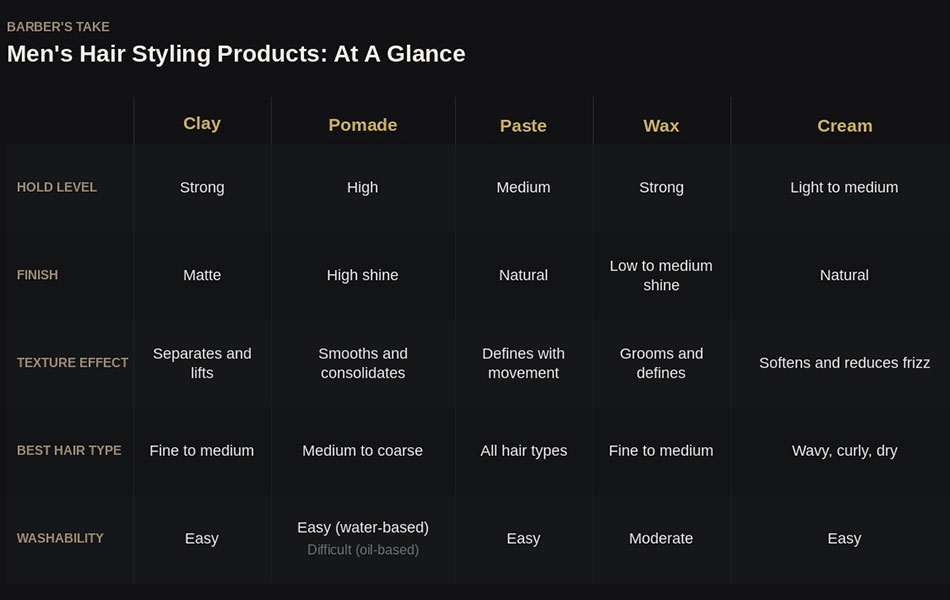
The most popular types of men’s hair products are pomades, pastes, creams, clays, gels, waxes, texture powders and sea salt sprays. Each category has a distinct personality. Understanding that personality is the fastest way to know which one belongs in your bathroom.
When it comes to control and shine, these products sit on very different ends of the spectrum.
- Pomade is the high-hold, high-shine product choice, built for sleek, polished styles where clean lines and a sharp, well-groomed finish are the goal.
- Clay delivers medium-high hold with a fully matte finish, adding volume and texture without any shine, making it the go-to for men who want their hair to look styled but natural.
- Paste offers a versatile medium to high hold with a natural, low-sheen finish that strikes a balance between structure and movement based on how much you use.
- Wax is a pliable styling product with a medium to strong hold and low-to-medium shine, but several formulas on the market offer pliability for styles that need to stay put all day without feeling stiff or overly-done.
- Cream is a lightweight hair product designed to give soft definition and frizz control with a light-to-medium hold and a natural, effortless finish.
Hair Clay
Clay is a popular styling product that delivers real hold with a finish that looks completely natural, which is exactly what most men are after. If you’ve ever left a barbershop wondering how your barber got your hair to look thick, textured, and styled without it looking like you’re wearing product, clay is almost always the answer.

What Makes Clay Different from Everything Else
The active ingredient in most clay products is a natural mineral, usually kaolin clay or bentonite clay. These minerals create friction between individual hair strands when the product is worked through the hair, and that friction is what generates hold.
It’s a different mechanism from wax, which bonds strands together, or gel, which hardens into a film. The result with clay is a style that feels natural to run your hands through but holds its shape throughout the day.
Clay also absorbs light rather than reflecting it. That’s what produces the fully matte finish clay is known for. No other product in this lineup gives you the same combination of meaningful hold and zero shine.
Hold, Finish, and What It Does For Men’s Hair
Clay sits at medium-high hold, strong enough to keep most styles in place without feeling stiff or overly structured. The finish is matte across the board, and the texture effect is all about separation and volume. Clay lifts and defines individual strands rather than smoothing them together, which is what gives hair that fuller, denser appearance after styling. If your hair tends to look flat or fine, clay is one of the few products that actively works against that.
Which Hair Types Get the Most from Clay
Clay performs best on fine, medium, and medium-thick hair. It adds enough structure without overwhelming lighter strands. Men with very coarse or extremely dense hair may find that achieving an even result requires more product than is practical, and a stronger paste or pomade tends to work better for that hair profile.
The Hairstyles That Clay Works Best For
Clay is built for short to medium-length cuts that rely on texture, volume, and a natural finish. It’s the go-to product for the textured crop, French crop, and modern quiff, where defined, separated strands and matte hold are exactly what the style needs.
It also excels with tousled and bedhead looks, adding structure to the messiness without making it look like you tried too hard. For crew cuts and any short style paired with a fade or taper, clay adds enough definition to the top to create contrast against the shorter sides without overwhelming finer hair.
Where clay falls short is equally important to know. Sleek styles like the slick-back, polished side part, or any look that needs the hair to lie smooth and shine are not clay territory. Those styles call for pomade. Very long hair is also a tough fit, as getting even coverage typically requires more product than is practical, leading to a heavy or chalky result. Stick to clay for shorter styles where texture and a matte finish are the point.
How to Use Clay To Get the Best Results
Apply clay to hair that’s slightly damp, not soaking wet and not completely dry. Completely dry hair makes even distribution difficult. Before applying, warm the product between your palms until it becomes pliable and slightly tacky. Then work it through your hair evenly, starting from the roots and working to the ends. Start with a small amount, a pea-sized portion is usually enough. Too much clay leads to a chalky, stiff finish that defeats the purpose of the product entirely.
Pomade
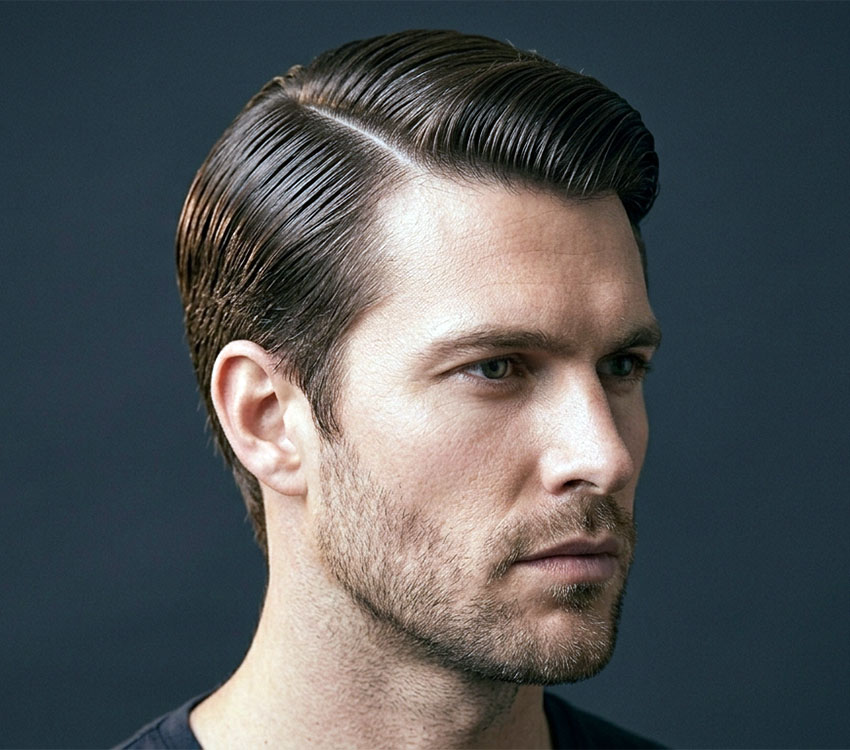
Pomade is the classic barbershop product and the one with the most history behind it. It’s responsible for the sleek, polished looks that defined men’s grooming for much of the twentieth century, and it remains the best product on the market for achieving that high-shine, high-control aesthetic. If you want your hair to look sharp, defined, and intentionally groomed, pomade is built for that.
Oil-Based vs. Water-Based: The Difference That Actually Matters
There are two very different types of pomade, and knowing which one you’re working with changes everything. Oil-based pomade uses a petroleum or lanolin base. It delivers exceptional hold and a deep, glassy shine, but it’s very difficult to wash out. A single application can survive multiple shampoo sessions, which means buildup is a genuine issue with regular use. Oil-based pomade is best suited to special occasions or intentional traditional styling where the depth of hold and shine is worth the tradeoff.
Water-based pomade is the modern version. It replicates the finish and hold of oil-based but washes out cleanly with a single shampoo. Most pomades on the market today are water-based, and they’re the practical choice for everyday use. When you’re shopping, always check the label so you know what you’re working with.
Why Pomade Offers The Most Shine and Control
Pomade is the highest-hold product in this lineup. It also delivers the most shine, produced by emollient ingredients in the formula that coat the hair shaft and reflect light. The texture effect is the opposite of clay: pomade smooths and consolidates hair rather than separating it. It pushes strands together into a uniform, controlled shape. That’s exactly what you want for slick-backs, side parts, and defined pompadours. It’s the wrong call if you’re after volume or a natural, textured finish.
The Hair Types Pomade Works Best On
Pomade works best on medium to coarse hair. It has enough weight to manage thicker, more resistant strands, and its shine complements the natural luster that coarser hair tends to carry. Fine hair is where pomade runs into trouble. Even a light-hold pomade can flatten fine strands and create a limp, greasy appearance. Oil-based formulas are particularly problematic for men with fine hair.
The Hairstyles That Pomade Works Best For
Pomade is the product for sleek, polished, high-control styles where clean lines and a sharp finish are the goal. It’s the defining product for the slick-back, the classic side part, and the pompadour, styles that need the hair to lie smooth, stay controlled, and carry a visible shine. Comb-over fades and the Ivy League also respond well to pomade, particularly water-based formulas that give you the hold and polish those styles require without the washout issues of oil-based alternatives.
Where pomade loses its edge is in styles that rely on texture, separation, or a natural finish. If your goal is a tousled, bedhead, or matte look, pomade will deliver the opposite of what you’re after. It’s also the wrong call for fine hair in most cases, as the weight and shine of even a light-hold pomade tends to flatten finer strands and create a greasy appearance. For those hair types and style goals, clay or paste will serve you significantly better.
How TO Use Pomade: Getting the Most Out of Your Product
Pomade can be applied to damp or dry hair, and the result will be slightly different each way. Applying to damp hair gives a more flexible hold with some movement. Applying to dry hair gives sharper control and a more defined finish. Water-based pomade can be reworked throughout the day by running your fingers through your hair or adding a small amount of water to reactivate the formula. Oil-based sets more firmly as it cools and doesn’t rework easily.
Hair Paste
Hair paste is a medium-hold styling product that delivers a natural, low-sheen finish and works across a wider range of hair types and styles than almost any other product in this lineup. It’s not the highest-hold option available, and it’s not trying to be. What it offers instead is versatility: a reliable, everyday product that performs consistently whether you’re going for something structured or something more relaxed.
Most paste formulas combine a blend of waxes, conditioning agents, and sometimes a small amount of clay. That combination gives paste characteristics from multiple product categories, which is what makes it so adaptable. Depending on how the formula leans, a given paste can be slightly firmer or slightly softer, slightly more defined or slightly more pliable. That variability is part of why paste is hard to describe in a single sentence, but it’s also exactly why it works for so many men.
If clay is the specialist and pomade is the purist, paste is the all-rounder. It won’t deliver the same matte hold as a strong clay or the same high-shine control as a pomade, but for most men on most days, it doesn’t need to. It sits comfortably in the middle, and for a large portion of guys, that’s precisely where they need to be.
Why Paste Is the Most Flexible Product in the Lineup
Most paste formulas combine a blend of waxes, conditioning agents, and often a small amount of clay. That combination gives paste characteristics from multiple product categories, which is what makes it so adaptable. Depending on how much wax or clay the formula leans toward, a given paste can be slightly firmer or slightly softer, slightly more matte or slightly more natural in finish. That variability within the category is part of what makes it hard to describe simply, but also part of why it works for so many men.
What to Expect in Terms of Hold and Finish
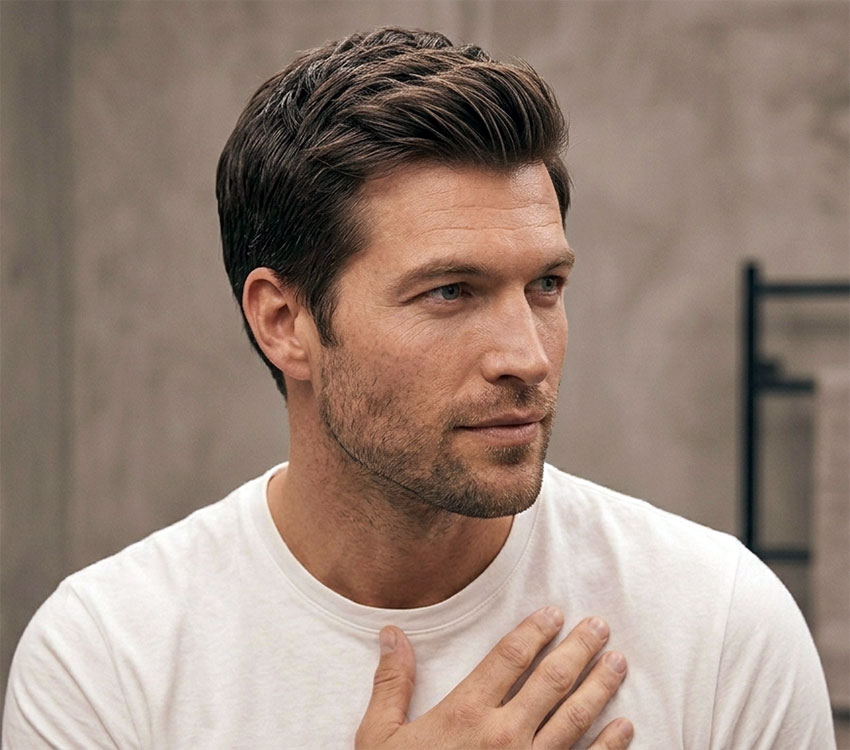
Paste sits at medium hold. It’s not the highest-control option in this group, but it provides more than enough for most everyday styles. The finish is natural, not matte like clay but not shiny like pomade. It’s the finish most men have in mind when they say they want their hair to look “put together but not overdone.” The texture effect is definition with movement: paste separates and shapes strands, but the result has a softness and pliability to it rather than the firmer structure that clay creates.
Who Should Be Reaching for Paste
Paste works well across fine, medium, and coarse hair types, which is genuinely rare for a single product. Fine hair benefits from its lightweight formula that adds shape without weighing strands down. Medium hair gets structure and movement. Coarser hair can use paste effectively when a natural, relaxed finish is the goal rather than strict control. Paste is also a strong option for men who want a product that performs consistently, whether applied to damp or dry hair.
Application Tips for the Best Results
Paste is forgiving with application. It distributes well on damp or dry hair and is reasonably reworkable throughout the day. Emulsify a small amount between your palms before applying, then work it evenly through your hair. On damp hair, it gives a slightly more flexible result. On dry hair, it adds more definition and a cleaner finish. Start with less than you think you need and build from there.
Hair Wax
Wax is defined by strong, all-day hold with a pliable feel that other high-hold products don’t always match. If you want your style to stay put without feeling like your hair is locked in place, wax is worth understanding.

What Sets Wax Apart from the Rest
Hair wax uses natural or synthetic waxes, most commonly beeswax, carnauba wax, or synthetic wax polymers, as its primary base. These ingredients create hold by bonding hair strands together at the points where they make contact, rather than coating every strand in a film or creating friction between them.
The wax softens with the warmth of your hands during application, spreads through the hair, and then sets as it cools. The result is a hold that’s firm and long-lasting but doesn’t sacrifice pliability the way some strong-hold products do.
Strong Hold, Softer Finish, All-Day Wear
Wax delivers strong hold that holds up well throughout the day, which puts it among the more durable products in this group. The finish sits at low to medium shine, giving the hair a groomed, intentional look without the high-gloss result of pomade.
The texture effect is somewhere between paste and pomade: wax adds some definition and shape but leans more toward a polished look than a textured, separated one. It’s a strong pick for styles that need to stay in place through a long day without constant touch-ups.
The Hair Types That Respond Best to Wax
Wax tends to perform best on fine to medium hair. The bonding mechanism works efficiently when managing fewer, finer strands, and the formula doesn’t overwhelm lighter hair the way heavier products can. On very coarse or dense hair, wax can struggle to provide enough control across the full volume of hair, and you may find that paste or pomade serves you better if your hair is on the thicker side.
How to Apply Wax for Maximum Hold
Warm the wax between your fingers or palms until it softens before applying. Working cold wax into your hair leads to uneven distribution and can leave clumped or heavy spots. Apply to dry or slightly damp hair, section by section, and style as you go. One thing worth noting: wax formulas with a high beeswax or carnauba content can be more resistant to water than other products, so a thorough shampoo or an occasional clarifying wash may be needed to prevent buildup over time.
Hair Cream
Cream is a light styling product that gives your hair soft definition and leaves it looking naturally healthy while keeping frizz under control.

What Makes Cream the Most Natural-Looking Option
Hair cream is formulated primarily with moisturizing and conditioning agents, often including ingredients like shea butter, argan oil, or panthenol, alongside lightweight hold polymers. Unlike clay or wax, which build hold through friction or bonding, cream works by coating the hair shaft lightly to smooth the cuticle, reduce frizz, and add soft definition. The hold is a byproduct of that conditioning action rather than the primary mechanism. This is what gives cream-styled hair that effortless, lived-in look that heavier products can’t replicate.
Light Hold, Frizz Control, and a Finish That Looks Like Nothing
Cream delivers light to medium hold. It’s not the product for men who need their style to stay sharply in place through a physically demanding day. But for everyday wear where the goal is natural-looking hair that behaves itself, cream is ideal. The finish is fully natural, no shine, no matte quality, just hair that looks like healthy, well-kept hair. The texture effect is soft definition: cream separates and smooths strands gently, reducing puffiness and frizz while adding a clean, controlled shape without visible weight or product buildup.
The Men Who Get the Most from Hair Cream
Cream is a strong match for several different hair profiles. Men with wavy or curly hair benefit significantly from cream’s frizz-reducing and curl-defining properties. Men with naturally textured or coarser hair find that cream adds manageability without making their hair feel stiff or overworked. Fine-to-medium hair responds well to cream as a daily product when the goal is a natural, low-maintenance look. Cream is also a solid choice for men with color-treated or chemically processed hair, as the conditioning base works with the hair rather than against it. If your hair is healthy but you want it to look it, cream is often the most effective tool.
How to Use Cream for the Best Result
Cream works best applied to damp, towel-dried hair. Working it through damp strands allows it to distribute evenly and gives the conditioning agents the moisture they need to smooth the cuticle effectively. Use a small amount, warm it between your palms, and distribute it from roots to ends. You can let it air dry for maximum natural texture, or blow-dry for more volume and definition. For curly or wavy hair, scrunching the cream in and air drying produces the most defined, frizz-free result. Cream can also be used in small amounts on dry hair to touch up frizz or flyaways throughout the day.
Hair Gel
Hair gel is a high-shine, high-hold product that most men grew up with, and for a majority, it’s also the one they moved away from as soon as they discovered better options. That reputation is partly deserved and partly outdated. Modern gel formulas have improved significantly from the crunchy, flaky versions that defined the 1990s, but the product still has a distinct character that makes it the right call in specific situations and the wrong one in most others.
What Makes Gel Different From Everything Else
Gel is a water-based product that works by coating each hair strand in a flexible or firm polymer film as it dries. That film is what creates hold, and it’s also what produces the wet, glossy look gel is known for. Unlike clay, which holds through friction, or wax, which bonds strands at contact points, gel encases the hair in a hardening layer. The strength of that layer depends on the formula, but the mechanism is consistent across the category. When the film sets, it locks the style in place. That’s gel’s biggest strength and its most significant limitation.
Strong Hold, High Shine, and The Crunch Factor
Gel sits at strong to extra-strong hold, which puts it at the top of the lineup alongside pomade. The finish is high shine, and unlike pomade, that shine comes with a wet or glossy quality that reads as intentional rather than polished. The texture effect is consolidating and defining: gel pushes strands together and locks them in position, which is why it’s been the go-to product for sharp, defined styles like spikes, slick-backs, and structured quiffs for decades.
The trade-off is the crunch. Lower-quality or overused gel dries into a stiff, crunchy film that makes hair feel like it’s been shellacked rather than styled. Better formulas reduce this significantly, but the category never fully escapes it. The key is using the right amount. Too much gel is the most common reason men write the product off entirely.
Which Hair Types Get The Most from Gel
Gel performs best on medium to thick or coarse hair. Dense hair can handle the weight of the product without being flattened, and the firm hold is most useful on hair that has natural resistance to styling. Fine hair is where gel becomes problematic. The film-forming hold flattens fine strands, the shine emphasizes how thin the hair is, and buildup accumulates faster on lighter hair. Men with fine hair are almost always better served by clay or paste.
Curly and wavy hair is one area where gel still has a genuine use case. When scrunched into damp curls and left to air dry without touching, gel defines the curl pattern and holds it in place without frizz. This technique, sometimes called the “cast and crunch” method, produces defined, bouncy curls that other products struggle to replicate at the same hold level.
The Hairstyles That Gel Works Best For
Gel is the right product for styles that need maximum hold and don’t require a natural or matte finish. Defined spikes, structured pompadours, slick-backs, and sharp side parts all benefit from what gel does best. It’s also the most effective product for taming and defining curly hair when used correctly. Where gel falls short is anywhere a natural, touchable, or matte result is the goal. Clay, paste, and cream all do a better job in that territory, and for most everyday styles, one of those three will serve you better than gel.
How To Use Gel To Get the Best Results
Apply gel to damp hair, not dripping wet and not dry. Wet hair dilutes the product before it can set. Dry hair doesn’t allow the formula to distribute evenly. Work a modest amount through the hair section by section, comb or style into position, and leave it alone while it dries. Touching or ruffling gel while it’s setting is what causes frizz and breaks the film before it can do its job.
Once dry, the hold is firm and not reworkable the way paste or water-based pomade is. If you need to restyle, you either add a small amount of water to reactivate the film or start fresh. Most gel formulas wash out cleanly with a single shampoo, which is one of the category’s genuine advantages over oil-based pomade and some waxes.
How to Choose the Right Product for Your Hair
With all five products covered, the decision comes down to matching your hair type and your desired outcome to the product that fits both. Here’s how those decisions play out in practice.
If you have fine hair that tends to fall flat, clay is your best bet. Its volume-building, matte-finish properties are specifically suited to adding density and hold without weighing your hair down. Avoid heavy waxes and pomades, which will flatten fine strands further.
If you have coarse or thick hair that resists control, pomade is the strongest option for a sleek, polished result. If you want a natural look with decent hold, a heavier paste or a firm wax will give you more manageability without the shine.
If you want a textured, natural style with no shine, clay and paste are the right territory. Clay gives you firmer hold and a fully matte result. Paste gives you more movement and a natural finish. Your preference between the two comes down to how structured you want the style to look.
If you want a classic, sleek, polished style, pomade is the only product in this group designed for that outcome. Water-based pomade is the practical everyday choice. Oil-based delivers a deeper result for occasions where you want maximum impact.
If you want all-day hold that still feels natural and pliable, wax is the call. It’s strong enough to last without locking your hair into a rigid position, and the low-to-medium shine keeps it looking groomed rather than done-up.
If you want effortless, natural-looking hair with frizz control and minimal effort, cream is the product you’ve been missing. It won’t hold a structured style in place, but for men who want their hair to look clean, healthy, and naturally well-behaved, it delivers a result that no other product in this group can match.
If you want to experiment with layering, applying a light cream or paste to damp hair as a base gives body and conditioning through the drying process. Follow up with a small amount of clay or wax on dry hair to add definition and finish on top. This two-step method separates the functions of conditioning and styling, giving you more control over the final result than either product can achieve alone.
The Right Product Is the One That Works for Your Hair
Most men don’t struggle with styling because they lack effort. They struggle because they’re using a product that was never designed for their hair type or their desired look. That mismatch is almost always the problem, not the product itself.
Now that you understand what separates clay from pomade, paste from wax, and where cream fits into the picture, choosing the right product is a matter of matching what you want to what each product actually delivers. That’s a much simpler decision than standing in an aisle reading marketing copy and hoping for the best.
Try a product consistently for a week or two before switching. Small adjustments in technique and application amount will get you most of the way there once you’re working with the right product.
