Pomade and hair clay are two of the most popular men’s styling products on the market, but they produce completely different results, work best on different hair types, and suit entirely different looks. Despite that, most guys pick one based on habit or whatever was on the shelf, without fully understanding what each product actually does or when to switch between them.
Understanding the difference between pomade and hair clay is essential for getting the most out of your hairstyle, whether you’re trying to nail a polished slick back, build natural texture in a messy crop, or simply stop fighting your hair every morning.
In this article, we’ll define each product, break down their key features, compare them head-to-head across the characteristics that matter most, and offer expert recommendations to help you figure out exactly which one belongs in your routine.
What Is Pomade?
Pomade is a styling product designed to offer a strong hold and add shine, creating structure and gloss to your hair. It has one of the longest histories in men’s grooming, dating back to a time when petroleum-based formulas like Brylcreem and Murray’s were the standard for creating the slick, high-shine styles that defined the 1950s and 60s. Since then, the formula has evolved significantly, and modern pomades are available in both water-based and oil-based versions that suit a much wider range of styles and preferences.
At its core, pomade is defined by its ability to smooth the hair and deliver a polished finish, from a subtle natural sheen to a full wet-look gloss. It’s the product of choice for classic men’s hairstyles that rely on clean lines, sleek surfaces, and controlled movement.

Water-based pomade is the more modern and versatile of the two formulas. It applies easily to damp or dry hair, rinses out with regular shampoo, and offers a finish range that spans from low sheen to high shine depending on the product. Most guys gravitate toward water-based pomade because it doesn’t build up over time and can be reworked throughout the day.
Oil-based pomade is the traditional formula rooted in classic barbering. It delivers a stronger, longer-lasting hold with an unmistakably high-shine finish, making it the go-to for authentic grease-era styles like the pompadour and ducktail. The trade-off is that oil-based pomade is significantly harder to wash out, often requiring multiple shampoo passes or a clarifying shampoo to fully remove.
Key Features of Pomade
Pomade offers:
- medium-to-firm hold that keeps classic styles smooth and controlled
- a finish range spanning from subtle sheen to full high-gloss, depending on the formula
- excellent reworkability throughout the day, especially in water-based formulas
- a smoothing effect that tames frizz and flyaways for a polished, intentional look
- versatility across water-based and oil-based options to suit different preferences
- easy washout with water-based versions; clarifying shampoo required for oil-based
What Is Hair Clay?
Hair clay is a thick, matte-finish styling product that uses natural clay minerals, most commonly bentonite or kaolin clay, as its base ingredient. This clay composition is what makes this product unique: the mineral particles bond to the hair shaft, providing grip and texture that most other styling products simply can’t replicate. The result is a natural, skin-like finish with strong hold and real body, without any of the greasiness or shine associated with traditional styling products.
Hair clay is the modern man’s everyday styling product. It gained serious momentum in the early 2010s as men moved away from the shiny, overly groomed looks and toward more natural, textured styles. It’s a staple in most professional barbershops and especially popular with younger guys who want a solid hold that doesn’t look like they’re trying too hard.
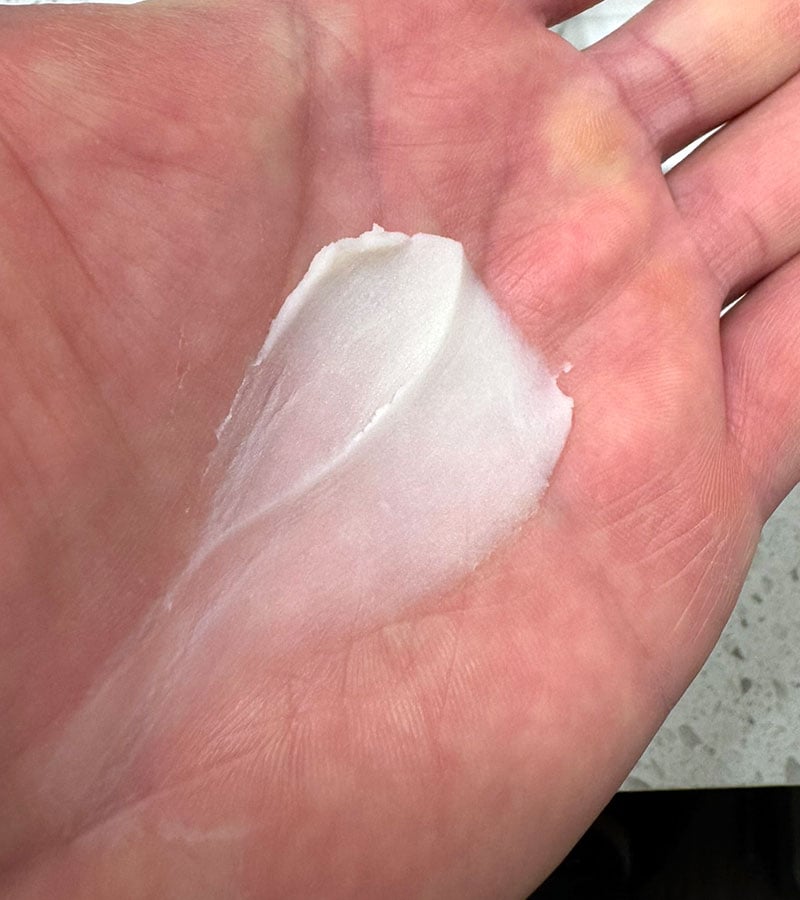
I reach for clay more than any other product in my kit. It’s the most honest styling product I know. Whatever finish you see is what the hair actually looks like, not a layer of shine masking the real texture underneath.
Key Features of Hair Clay
Styling clay offers:
- medium-to-strong hold with serious grip on individual strands for definition and separation
- a matte to low-sheen finish that looks natural and effortless
- added body and the illusion of thickness, making it ideal for fine or thin hair
- texture and separation that creates that lived-in, intentional messiness modern styles require
- versatility across all hair types, with particularly strong results on fine, straight, and wavy hair
- easy washout with regular shampoo, since most clay formulas rinse cleanly
Pomade vs Hair Clay: Head-to-Head Comparison
Pomade and hair clay aren’t competing products so much as they’re tools for two different outcomes. Here’s how they stack up across the characteristics that matter most when choosing a styling product.

Finish
This is the most obvious difference between the two, and usually the one that determines which product a guy should reach for first.
Hair clay delivers a matte finish. The clay minerals absorb light rather than reflect it, so your hair looks natural and dimensional rather than coated. If you style your hair with clay and someone looks at you across the room, they shouldn’t be able to tell you have product in your hair at all. That’s the goal.
Pomade delivers shine, from a subtle, healthy-looking gloss in lighter water-based formulas to a full wet look in oil-based versions. That shine is the signature of classic men’s styles and is part of what gives a slick back or pompadour its polished, intentional character.
The verdict: Clay for natural and modern. Pomade for polished and classic.
Hold Strength
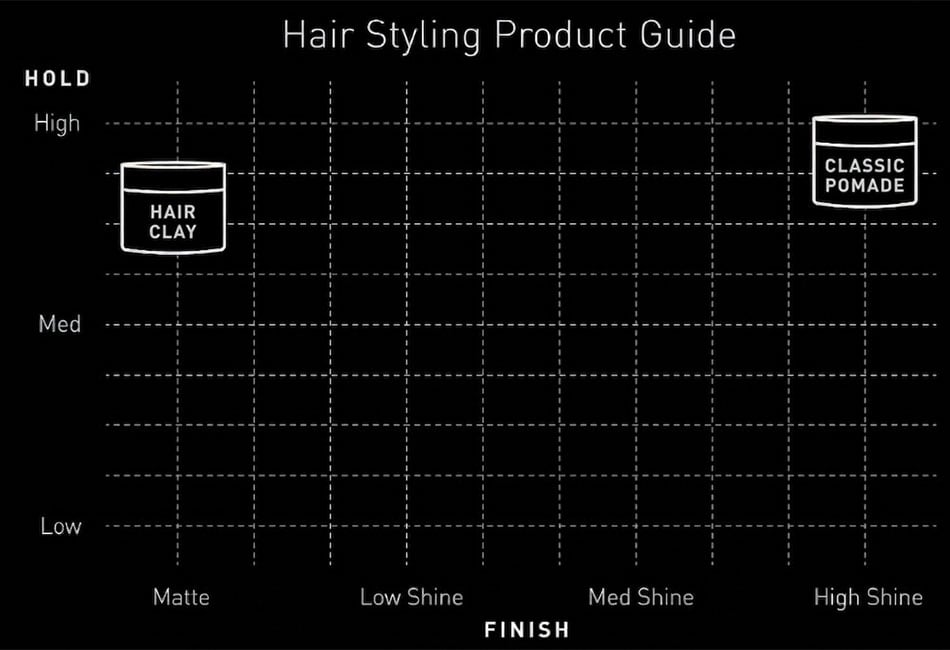
Both products deliver real hold, but they grip the hair differently.
Hair clay wraps around individual strands and bonds to them through the clay minerals, providing a firm, tactile hold that keeps texture defined throughout the day without turning stiff or crunchy. It holds the hair in place without plastering it down, so styles retain movement and separation.
Pomade works by coating the hair and allowing it to move together as a unit. The hold feels smoother and more flexible than clay, making it excellent for controlled styles like side parts and comb overs. Water-based pomades tend to offer lighter hold that’s easily reworked, while stronger oil-based formulas lock styles in place for much longer.
The verdict: Pomade offers a stronger hold, but clay generally wins on raw grip and texture hold. Pomade is better for smooth, directional hold on sleeker styles.
Texture and Volume
Hair clay is the clear winner here. The thickness of the product, combined with the way clay minerals add friction to the hair shaft, makes the hair feel thicker, fuller, and more dimensional. This is particularly noticeable in fine or thin hair, where clay can create the illusion of real density that no other product replicates as well.
Pomade doesn’t add texture or volume. It smooths and controls the hair, which is exactly what classic styles need. Applying pomade to fine hair will generally make it look thinner and flatter, since the product weighs the hair down rather than lifting it.
The verdict: Clay for volume, texture, and separation. Pomade for smooth control.
Workability
Both products are reworkable, but with different mechanics.
Water-based pomade is among the most reworkable products in men’s grooming. Because it reactivates with moisture, you can run damp fingers through your hair and reshape it throughout the day without adding more product. This makes it ideal for guys who commute, work in active environments, or simply want flexibility from morning to evening.
Hair clay is also reworkable, but it behaves differently. As it dries, the clay sets more firmly, and while you can still run your fingers through the hair to adjust the style, it won’t reshape as fluidly as a water-based pomade mid-afternoon.
The verdict: Water-based pomade edges ahead on reworkability. Clay sets more firmly over time.
Washability
Hair clay wins this one decisively. Most clay formulas rinse out cleanly with a single pass of regular shampoo, leaving no residue. Because clay doesn’t contain petroleum derivatives or heavy waxes, it doesn’t bind to the scalp or hair in a way that requires multiple washes to remove.
Oil-based pomade is at the opposite end of the spectrum. Its petroleum or wax base clings to the hair and scalp, which is what makes it last so long but also what makes it so stubborn to remove. Most guys on a traditional oil-based pomade need a clarifying shampoo every few washes to prevent buildup, and even then it can take two or three rounds of lathering to fully strip the product.
Water-based pomade falls in the middle. It rinses out more easily than its oil-based counterpart but may require slightly more effort than clay, particularly in heavier formulas.
The verdict: Clay is the easiest to wash out. Oil-based pomade requires the most effort.
Best Hairstyles
Hair clay: textured crops, modern quiffs, messy and undone styles, crew cuts, faux hawks, French crops, brush backs, and any style that relies on visible texture and natural movement.
Pomade: slick backs, pompadours, side parts, comb overs, Ivy League cuts, hard parts, and any style built around smooth surfaces, clean lines, and shine.

Hair Type Suitability
Fine or thin hair: Clay is almost always the better choice. Its texture-building properties add body and create the illusion of density, while pomade can weigh fine hair down and make it appear thinner.
Thick hair: Both products work well. Oil-based pomade provides excellent control for thick hair that tends to resist styling, while clay adds separation and keeps the hair from looking too heavy or dense.
Straight hair: Either product works, depending on the desired style. Pomade is ideal for sleek, directional looks, while clay adds dimension and texture to otherwise flat, featureless strands.
Wavy hair: Clay enhances the hair’s natural wave pattern and holds it in place without crunch. Pomade smooths and controls waves for a more refined finish.
Curly hair: Clay defines and separates curls without the greasiness of pomade. It holds curl shape throughout the day while keeping the hair looking natural and uncoated.
When To Use Hair Clay
Choose hair clay when:
- you want a natural, matte finish with no visible product or shine
- you have fine, thin, or flat hair and need a product that adds body and texture
- you’re styling modern, textured cuts, including the French crop, messy quiff, textured crew cut, or brush back
- you want strong hold that looks effortless rather than overdone
- you prefer a product that washes out easily without leaving residue
- you’re wearing a shorter style with choppy layers that need definition and separation
I had a client a couple of years back, a guy in his early 30s with fine, straight hair who had been using pomade since high school. He came in frustrated because his hair always looked flat and stringy by midday regardless of how much product he used. We switched him to a medium-hold clay and the difference was immediate. His hair had body from the roots, the texture looked intentional, and he was using half the amount of product he’d been using before. He texted me a photo a week later. His words were along the lines of “I feel like I actually have hair now.” That’s what clay does for the right hair type.
When To Use Pomade
Choose pomade when:
- you want a polished, shiny, or high-gloss finish
- you’re styling classic men’s looks, such as the slick back, pompadour, side part, comb over, or Ivy League
- you have straight to slightly wavy hair that responds well to smooth, directional styling
- you want a product you can rework and reshape throughout the day
- you’re dressing formally or professionally and need a clean, refined finish
- you want full control over the hair’s direction without textural disruption
Pomade is the product that built barbering culture. Every classic hairstyle from the 1950s forward was built with it, and for good reason. When a guy comes in and asks for a sleek side part or a proper slick back, clay is never the answer. The smoothness, the surface quality, the way the hair moves as one unit, that all comes from pomade.
How To Apply These Popular Men’s Hair Products
Applying Hair Clay
- Start with towel-dried or fully dry hair. Clay performs better without excess moisture.
- Scoop a small amount, roughly the size of a pea to a dime, and warm it between your palms until it becomes pliable and slightly tacky.
- Work the product through the hair from the back to the front, distributing it evenly from roots to ends.
- Style using your fingers or a comb, depending on how defined you want the finish.
- Build gradually if you need more hold. It’s always easier to add than to remove.
One mistake I see constantly is guys applying clay to wet hair. You lose almost all the texture and hold when you do that. The clay needs something to grip, and soaking wet strands don’t give it anything to work with. Towel dry first, always.
Applying Pomade
- Water-based pomade can be applied to damp or dry hair depending on the desired finish. Damp hair produces a more natural, lighter finish; dry hair tends to give more definition and shine.
- Oil-based pomade performs best on dry hair.
- Warm a small amount between your palms and emulsify it evenly.
- Work through the hair in the direction of your desired style, using a comb for more precision or your fingers for a softer look.
- Use a fine-toothed comb to smooth the surface and define the part or shape.
Can You Mix Pomade and Hair Clay?
Yes, it’s a legitimate technique worth knowing. Combining the two products lets you capture the best qualities of each: the texture and grip of clay with a subtle hint of the shine and workability that pomade brings.
The most common approach is to apply clay first as your base for hold and body, then finish with a small amount of lightweight pomade on the surface to add a controlled sheen and smooth out any rough texture. This works particularly well for styles that sit between a textured modern look and a more refined classic finish, such as a brushed back quiff or a textured comb over.
The reverse approach, pomade as a base with clay on top, is less effective because the pomade’s smoothing effect tends to cancel out the texture the clay is meant to create.
Start with a light hand on both products. The goal is enhancement, not layering. If your hair feels heavy or looks coated, you’ve used too much of one or both.
Choosing The Right Product For Your Hair Type
Your hair type should always inform your product choice before anything else, even before style preference. The right product works with your hair’s natural properties rather than against them.
Thin or fine hair: Clay is almost always the better choice. It builds texture and adds the illusion of volume without the weight that pomade introduces. Look for a medium-hold clay with a dry, matte finish.
Thick hair: Both products work well. If your goal is control and sleekness, reach for a strong-hold pomade. If you want separation and modern texture, clay will give you that without making thick hair look dense or heavy.
Straight hair: You have the most flexibility here. Straight hair takes both products cleanly. Pomade enhances the natural slickness of straight strands for polished styles. Clay breaks up that smoothness and creates the texture straight hair naturally lacks.
Wavy hair: Clay is your ally for enhancing and holding natural movement. Pomade works well if you want to smooth out the wave and wear a sleeker style, though it can make wavy hair look somewhat flat.
Curly hair: Clay is the stronger choice. It holds the curl pattern, defines individual coils, and keeps everything looking natural. Pomade can make curly hair look greasy and weighed down, particularly oil-based formulas.
Recommended Products
For hair clay, look for a formula built around natural clay minerals with a true matte finish and medium-to-strong hold. A quality clay should feel pliable in the hand, distribute evenly without dragging, and dry to a finish that looks like your actual hair, not a product.
For pomade, match the formula to your finish goal. Water-based pomades are the more practical choice for most men, offering reworkability and easy washout alongside a versatile finish range. If you’re styling authentic classic looks and don’t mind the extra effort to remove it, a traditional oil-based pomade delivers a finish that water-based versions rarely fully replicate.
FAQs About Pomade and Hair Clay
Is pomade or clay better for thin hair?
Hair clay is better for thinner hair. The clay minerals add texture and body to fine strands, creating the illusion of density that pomade cannot. Pomade typically smooths and weighs thin hair down, making it appear flatter and less voluminous.
Does hair clay damage your hair?
No, hair clay does not damage hair. Most formulas are made with natural ingredients and rinse out cleanly, putting minimal stress on the hair shaft. The key is to avoid over-applying, which can lead to buildup, and to wash it out thoroughly after each use.
Is pomade better than clay for curly hair?
No. Hair clay is generally the better choice for curly hair. It holds the natural curl pattern, adds definition, and leaves a clean, natural-looking finish. Pomade, especially oil-based versions, can make curls appear greasy and weighed down.
Does hair clay wash out easily?
Yes. Most hair clay formulas wash out with a single regular shampoo. Unlike oil-based pomade, clay does not contain petroleum derivatives that cling to the hair and require multiple washes or clarifying shampoo to remove.
What’s the difference between hair clay and hair wax?
Hair wax and hair clay are similar in texture and hold level, but differ in finish and composition. Wax typically delivers a slightly higher shine due to its wax base, while clay provides a true matte finish. Clay also tends to add more texture and body due to the mineral composition.
Can I use pomade every day?
Water-based pomade is safe for daily use and washes out easily, making it a practical everyday option. Oil-based pomade used daily can lead to product buildup on the scalp and hair, so incorporating a clarifying shampoo into your weekly routine is essential if you rely on it regularly.
Which gives stronger hold, clay or pomade?
It depends on the formula, but hair clay generally provides a stronger, more textural grip than most mid-range pomades. Strong-hold oil-based pomades are competitive in terms of raw hold strength, but clay delivers that hold with more texture and separation rather than a smooth, uniform lock.