A medium-length hairstyle is an adaptable, attractive look for men that strikes the perfect balance between style and versatility, offering the ideal length for natural flow, layering and volume without the maintenance of longer hair. Its appeal lies in its range; it can be slicked back for a refined finish, parted loosely to the side for a messy edge or left naturally flowing for effortless, modern charm. This versatile approach gives you the freedom to experiment with texture and movement while maintaining a wearable structure that transitions seamlessly from casual to professional.
From layered brush backs to man buns, the best types of medium men’s haircuts are simple, timeless and require little styling effort, adding dimension that flatters, exuding masculine vibes with relative ease and letting you wear your style with confidence. These styles enhance your features – allowing you to frame your face or hide perceived flaws – and give your barber more creative room to build fullness through subtle tapering or layering.
What makes this length especially flattering is how personal it can feel. It moves with you, adjusting to your daily rhythm rather than working against it, providing the flexibility to look put-together or effortlessly handsome even on days when you’re barely trying.
Below, I’ll share some great examples of medium-length hairstyles for men that highlight texture, movement and versatility, creating stylish, timeless looks with natural flow and lasting appeal.
Popular Medium Hairstyles For Men
Middle Part

The middle part is a relaxed yet classy longer hairstyle defined by flattering symmetry, featuring a soft center parting that neatly frames the face, while the top and sides are kept relatively neat to create a balanced silhouette. Blow-dry from front to back, gently separate the center with a wide-toothed comb to make the parting, then secure with a lightweight styling cream for a cool, natural finish.
Layered Brush Back

This layered brush back is an effortlessly handsome and polished style that delivers movement and volume. The long, thick top is cut into soft layers that add texture and body, then pushed back from the forehead to create a sense of dynamic front-to-back movement. Use a round brush while blow-drying to create the iconic brushed-back shape, then lock it in with a medium-hold mousse for a smooth, dynamic finish that’ll hold all day without any stiffness.
Medium Flow

The medium flow is a trendy, modern men’s hairstyle that blends gentle charm with movie-star masculinity, serving up a distinctly Prince Charming vibe. The hair is cut to a uniformly medium length all over, then pushed back and left to fall smoothly around the sides and back, maximizing your hair’s natural volume and movement. Use a leave-in conditioner, then apply sea salt spray to towel-dry hair to maintain control and accentuate texture. Tuck the sides behind the ears for an elegant finish, or wear them loose for a more casual, undone look.
Combed Over Pompadour

This combed-over pompadour is a classy, modern take on the traditional style, using finely sculpted volume to create a flattering, coiffed finish that works in both formal and casual settings. Here, the long top is blow-dried upwards for lift, then set backwards and to one side with a comb and a water-based pomade for a shiny, structured quiff. Neatly tapered sides provide contrast and an element of sleek refinement, completing this versatile look that pairs brilliantly with a sharply trimmed beard.
Messy Fringe

A messy fringe delivers a youthful, free-spirited energy with a contemporary, lived-in style that’s perfect for men with naturally thick or wavy hair. In this example, the top, back and sides are layered for movement and texture, while the fringe is cut longer and styled forward to rest just above the eyebrows. Use matte paste for that piece-y, separated look or use a water-based pomade for a glossier finish.
Messy Textured Mod

This messy, textured mod channels the vintage ’60s look and updates it with a rugged, contemporary edge that’s perfect for thick, medium-length hair. Here, the signature rounded shape is distorted and modernized with choppy layers throughout the crown and sides, while the slightly longer top allows for an intentionally disheveled, unrefined finish. Loosely style with a light clay or cream to create separation and let some strands fall freely to drive home the artsy vibe.
Modern Mullet

This modern mullet is a streamlined, wearable twist on the iconic rebellious hairstyle, keeping the punky energy of the original while introducing contemporary styling elements. The lengthy top flows from the front to the back and extends down the neck, while the sides are neatly trimmed to provide contrast and to flatter the face. Subtle layers give a sense of flow and movement, creating an effortlessly flowing hairstyle that radiates individuality.
Wolf Cut

This wolf cut combines the texture and volume of a shag with the retro attitude of a mullet, resulting in an untamed, free-spirited hairstyle that positively oozes character. Here, the crown is cut into heavy layers to create a tousled, unkempt texture and the longer back completes the undone, lived-in vibe. Blow-dry and set with some texturizing spray for that bold, separated look.
Long Side Part

This long side part is a sophisticated gentleman’s hairstyle that combines an old-school aesthetic with modern refinement. This defined hard parting starts at the temple and adds definition and balance, while the longer top allows for smooth, flowing movement as it sweeps over to one side. Lift the roots with a round brush while blow-drying for some lift and shape, then comb through with styling cream for a subtle sheen.
Medium Curls

A medium-length, messy curly hairstyle is a stylish look that signals individuality, confidence and a laid-back energy by celebrating your hair’s natural movement and texture without much effort. In this example, the medium length allows curls to form naturally without weighing them down, creating a bouncy silhouette that’s carefree yet easy to control. Scrunch in some curl cream to minimize frizz and maximize definition and this low-maintenance style is good to go.
Man Bun

This man bun is a trendy, longer men’s hairstyle that pulls the length into the back, near the crown, to create a clean, modern look that doesn’t compromise on versatility or flair. It’s the perfect choice for anyone wanting to grow their hair out. Use a light styling oil to keep the hair sleek and frizz-free and leave a few loose strands for a soft, slightly undone finish.
Textured Middle Part with Curtains
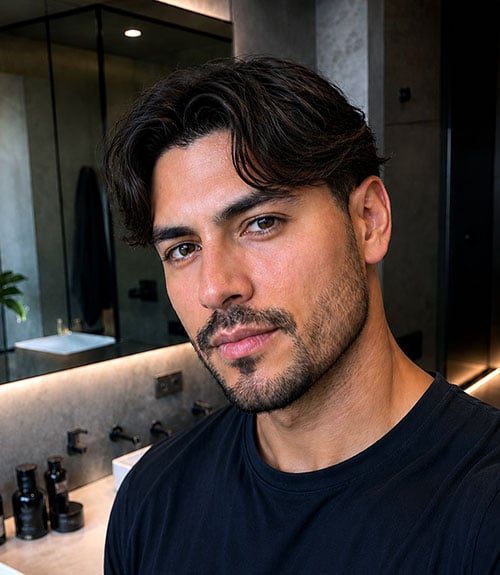
This textured middle part with waved curtains is a trendy, relaxed style that gives medium-length hair natural shape without looking overly polished. The hair is parted near the center, then left to fall loosely around the forehead and sides for a soft, face-framing look. The key is movement. Light layering keeps the look from sitting flat, while a matte cream or texture spray adds separation without stiffness. It works well when the hair looks slightly undone, giving the cut an effortless finish that still feels clean and intentional.
Mohawk with High Burst Fade

A mohawk with a high burst fade offers a hardcore, attitude-filled statement hairstyle that’s clean and structured yet wild and individual. Here, the sides are tightly faded down to the skin, in a rounded, burst-like shape around the ears, contrasting with the long and narrow central section. This top hair is brushed upwards and secured with a strong-hold pomade or wax for height and intensity, giving off a confident energy that’s further enhanced with some bleached or colored highlights.
Textured Slick Back

The textured slick back is equal parts distinguished and edgy, with a high-class, precise silhouette and elements of rugged texture. The medium-length, layered top is brushed straight back from the forehead, then given separation and lift with a matte paste, while the sides are tapered down to the skin to narrow the face and draw attention to the movement on top.
Shoulder Length and Loose

A loose, shoulder-length men’s hairstyle is timeless and fashionable, exuding a sexy, rockstar vibe without trying too hard. Soft layers work with the hair’s excess weight and length to create subtle waves and a front-to-back flow, while the tucked-back sides and free-falling back create a dashing silhouette. Keep the hair healthy and shiny with a leave-in conditioner or some argan oil, then let this style’s easy confidence speak for itself.
Long Spiky Hair

This long spiky hairstyle is a modern look for those who want to make an impact without totally sacrificing wearability. Here, the top is layered and spiked upwards for maximum height and texture, while the short, tapered sides are cropped and low-maintenance to accentuate the upper sections. Work a strong-hold mousse into damp hair, then blow dry and sculpt the spikes, completing the controlled chaos of this impactful yet versatile take.
Messy and Layered
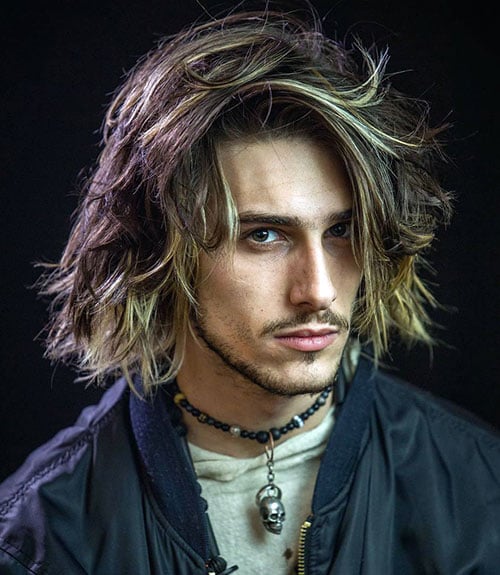
Messy layered hair highlights natural movement and volume with a deliberately unpolished finish. A skilled barber will use point-cutting or a razor to create texture and reduce bulk, allowing hair to fall naturally and effortlessly. This versatile cut works well with wavy or straight hair, offering a relaxed, modern style.
Loose Mid Part

This loosely-parted medium men’s hairstyle achieves a tailored, put-together look for both compact waves and straight tresses. The textured hair on top flows outward in all directions, with a few pieces of fringe grazing the brow. The combed back sides pair well with a neat undercut, and a clean-shaven face adds conventional charm.
High Bun with Beard
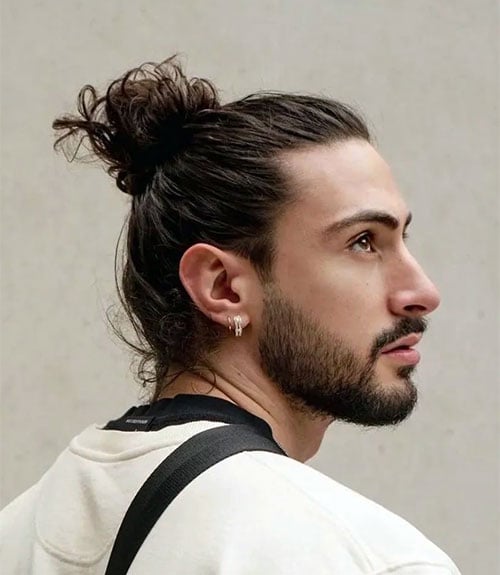
This high man bun with a groomed beard balances style and confidence, featuring a length long enough to tie back for practical styling but short enough to manage. Ask your barber to thin excess bulk with thinning shears so hair sits neat without feeling heavy. Whether you wear it high, low or off-center, pair it with a beard or stubble for a rugged yet effortless look that oozes masculine energy.
Textured Shag

A textured shag brings attitude with choppy layers and feathered edges for movement. Use razor or scissor texturing to keep the crown airy and prevent flatness. This low-maintenance cut looks its best when styled loosely or tousled for a lived-in, rock-inspired vibe with plenty of personality.
Thick, Feathered Wings

Thick, feathered wings lean into your hair’s natural density, tapering from crown to ends for a shape that looks full but feels light. By layering through the sides, your barber can help the hair flip naturally outward and frame the face without weighing it down. The result is a soft, flowing style that nods to vintage surf culture with its youthful, quietly confident look.
Casual Flow
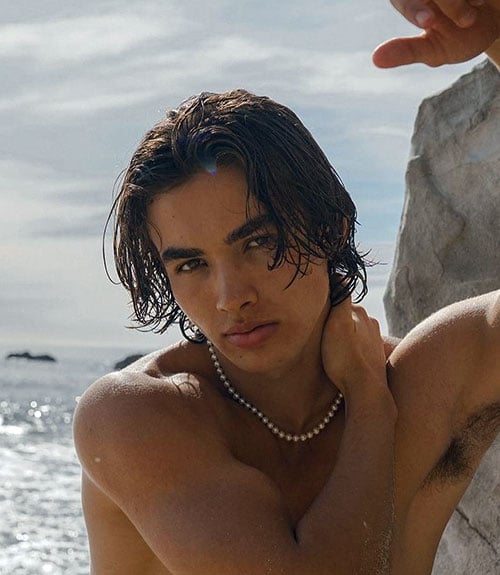
This casual flow emphasizes length and natural texture, featuring long layers that encourage effortless movement and volume. Light thinning at the ends gives strands a weightless, feathery look, while soft structure keeps this style simple. The flow looks particularly attractive on medium waves, offering a laid-back look that looks equally striking when brushed back or left loose.
Long Brush Back

In this example, the long brush back focuses on volume and control, letting the hair stay long enough to push back while keeping the sides tidy. This style typically uses a taper or a subtle undercut to create contrast between the sleek top and clean edges. A touch of light pomade or cream manages flyaways and creates a refined finish that’ll feel appropriate at the boardroom or the bar.
Textured Mullet Fade with Beard

The textured mullet fade stands out with its defined shape and impressive length at the back. Textured layers at the crown provide lift to this 70s-inspired style, and the faded sides keep things neat enough for daily wear. Pairing the cut with facial hair also frames the jaw and balances your facial proportions. Keep styling products to a minimum; a simple slick of pomade or cream will enhance texture while keeping the look approachable.
Messy Brush Forward

A messy brush forward uses careful layering to move hair across the forehead for an effortless, devil-may-care look. Razor or scissor texturing adds light separation through the length and controls volume to keep the style from leaning unkempt. This look suits straight or slightly wavy hair and works for guys wanting a relaxed look with a subtle edge. Finger-styling or a light wax is all you need for light texture that keeps your hair flexible.
Faux Hawk Fade

The faux hawk fade balances boldness with practicality by keeping the hair longer through the center for lift and texture. The faded sides add structure and clean lines, with a clipper-over-comb technique creating a flattering, smooth transition that draws the eye upward. It’s an edgy, confident look that adds personality without the full commitment of a mohawk.
Long Parted Flow
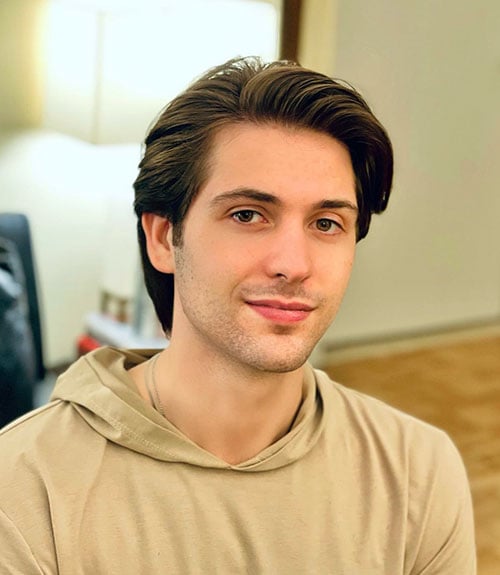
A long side-parted flow creates structure in medium-length hair with a longer top and tapered sides that let your hair sweep naturally across the face. Use texturizing scissors at the crown to avoid a blocky effect, and use a blow dryer to achieve subtle lift at the part line. This extra height gives the look polish and lengthens rounder face shapes.
Long Shaggy Hair
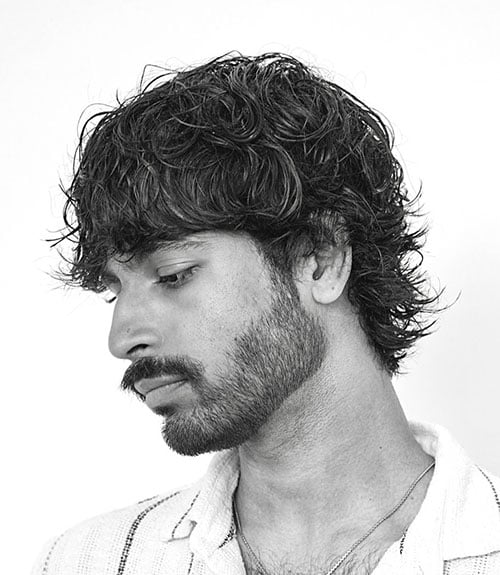
Long, shaggy hair relies on layers and feathered edges to keep your locks looking rebellious and carefree without feeling bulky. Razor-cut ends or point-cutting are perfect for creating a lived-in texture that moves with every step. Wear this style relaxed for a nonchalant energy or with light paste to emphasize separation and define your strands.
Longer Spiked Hair Fade

Longer, spiked hair gets an attractive contrast from a controlled fade, giving your hair a lightly defined, natural look that suits any occasion. The fade frames the face while keeping your sides clipped, and the length on top lets you experiment with upward spikes or gentle finger tousling on relaxed days. Slicing techniques are perfect for adding lift without heaviness and letting those attention-grabbing spikes shine.
Flowing Mullet

The flowing mullet features length at the back with shorter layers at the crown for smooth movement. Barbers blend the top into the back using point-cut layers to create dimension and let the hair fall naturally. This modern take on a retro style only needs a touch of light cream to tame the ends before you head out.
Long Quiff

The long quiff adds height at the front and gradually tapers toward the crown for a clean, standout look. Barbers often fade or undercut the sides to enhance the style and create a confident, classic profile. A small amount of medium-hold pomade offers hold and shine, but book regular trims to keep the length from getting unruly.
Comb Over

This comb over is a classic men’s hairstyle known for its neat but subtle parting and structured, classy finish, making it a popular look for business professionals and preppy teens. Here, the hair stays longer on top to achieve that signature sweep, while the sides are tapered for contrast. Part your hair naturally or sharply based on whether you want an off-duty or office look.
Curly Curtains

A curly curtains hairstyle embraces natural texture with playful flair, offering a stylish look for trendy men wanting to show off their charming curls. Here, a masterful side part enhances the hair’s natural bounce and body, while a few carefully placed highlights further define individual waves and curls. A full beard adds a touch of the “tall, dark and handsome” aesthetic wrapped in svelte mystery.
Medium, Flowing Waves
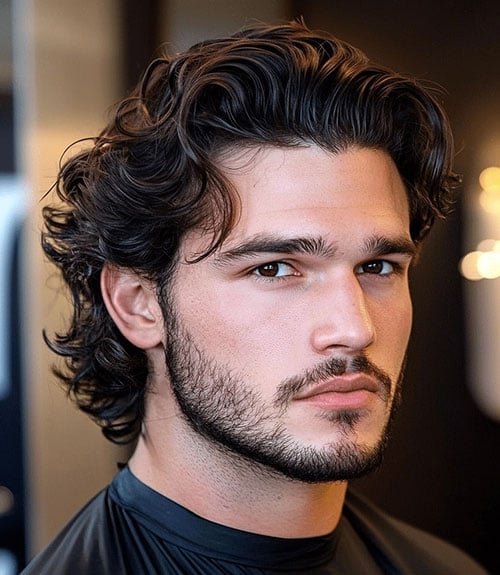
Medium-length, flowing waves look handsome and classy, with texture and layered dimension. The hair flows upward from the forehead, cascading over the sides before blending into thick, luxurious layers. The cut skillfully blends rugged masculinity with voluminous softness for a well-rounded style.
Two Block
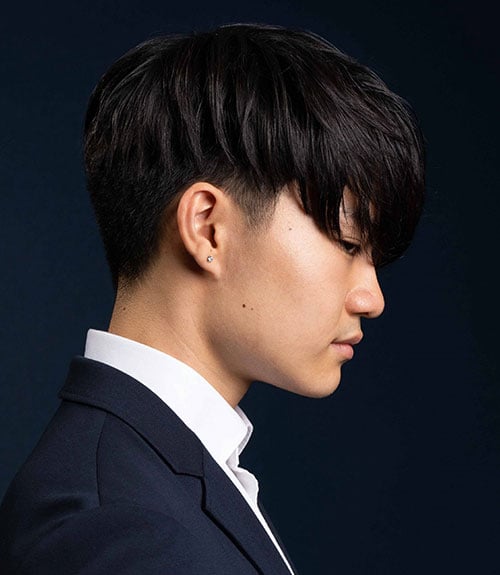
This classic two block style combines an undercut or fade on the sides and back with significantly longer hair on top for an edgy, somewhat preppy finish. Use a wide-tooth comb and texturizing product to create the textured, downward “spikes” along the sides, adding a youthful touch to this typically structured style. Pair the cut with a long, textured fringe for modern flair.
Mohawk Fade
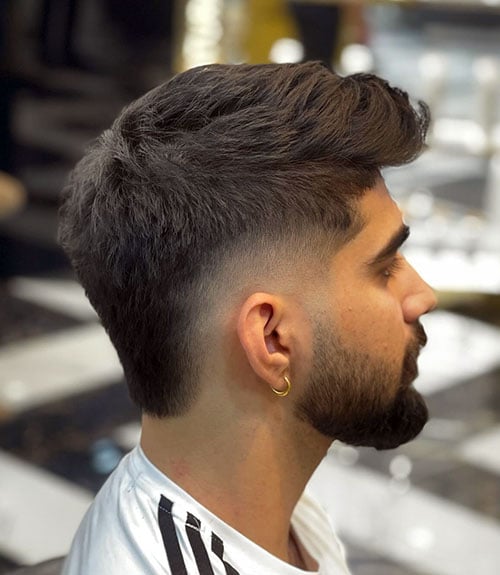
A contemporary mohawk fade is a trendy style that may whisper rebellion, but reserves enough class for casual and formal functions. The cut features a thick, side-swept fringe that gradually transforms into soft, textured spikes along the crown, and the tapered burst fade at the sides exemplifies the classic mohawk shape.
Pulled Waves
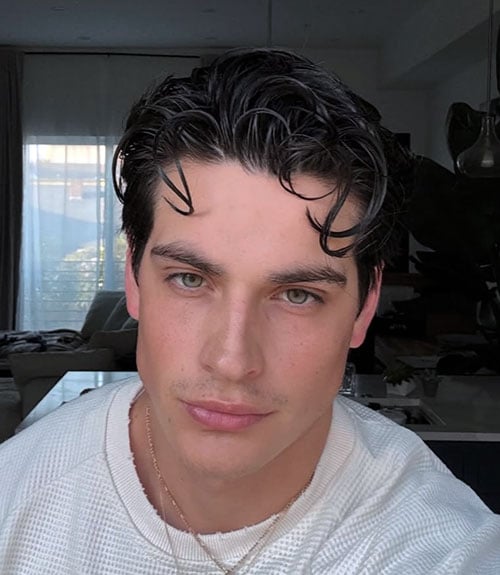
These pulled waves feature more flow and softness than their flatter counterparts, resulting in a relaxed, romantic vibe with a touch of 1950s inspiration. A loose side part allows a few tendrils to cascade over the forehead, while brushing the hair straight back creates a more formal appearance. Wear the cut with a clean-shaven face or a five o’clock shadow for a refreshing take on a vintage look.
Mod Shag
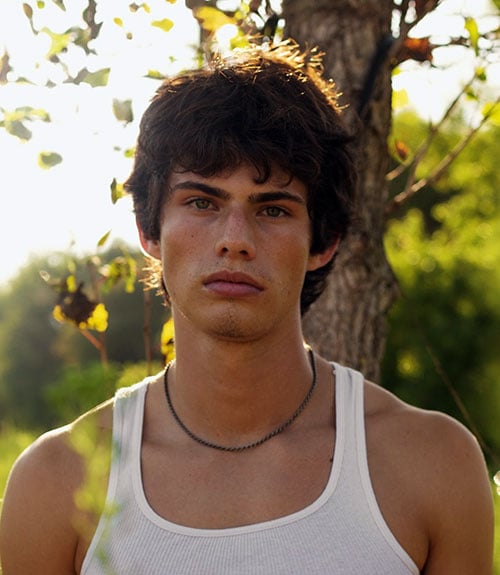
This slightly disheveled mod shag brings out angular masculine features with its face-framing layers. Boasting a thick, voluminous fringe tapering into mid-length sides and somewhat shorter hair at the back, the reimagined take on a 1960s retro cut adds volume and body to virtually any hair type.
Classic Push Back

This elegant push back borrows stylistic elements from the classic variation, reimagining it with defined fullness and lift. The front section of hair flows back from a loose side part, blending artfully into thick, tapered layers at the sides and back. A hair product with a hint of moderate shine locks the style in place while adding sophistication and polish.
Wavy Middle Part

This wavy middle parted style is loose and slightly tousled, providing a beachy, relaxed vibe for younger guys. In this example, a long, side-parted fringe falls over each side of the face, grazing and emphasizing the cheekbones. At the sides and back, long, soft layers blend into another, culminating in collar-kissing waves that give the cut its intentional yet natural-looking shape.
Textured Comb Over Fade
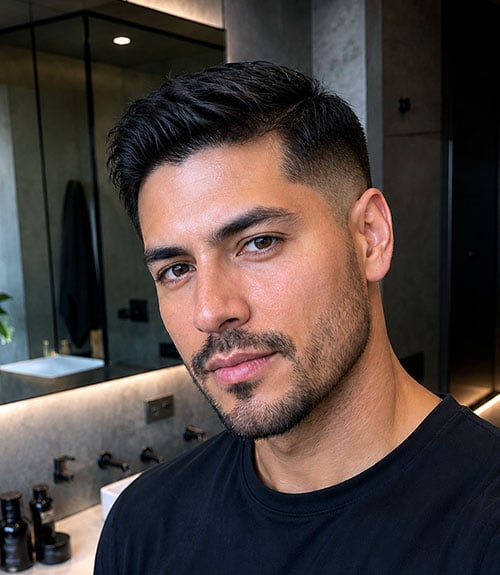
This textured brush over fade is a modern style where the sides are kept tight with a clean fade and the top is left long enough to comb over across with natural separation. The difference is the finish. Instead of a slick, shiny look, the hair has movement, texture, and a more relaxed shape. It still looks sharp, but not overly polished, making it ideal for professionals and teenage guys alike. Use a matte clay, texture paste, or lightweight cream to style it. The goal is control without making the hair look stiff.
Textured Flow Back
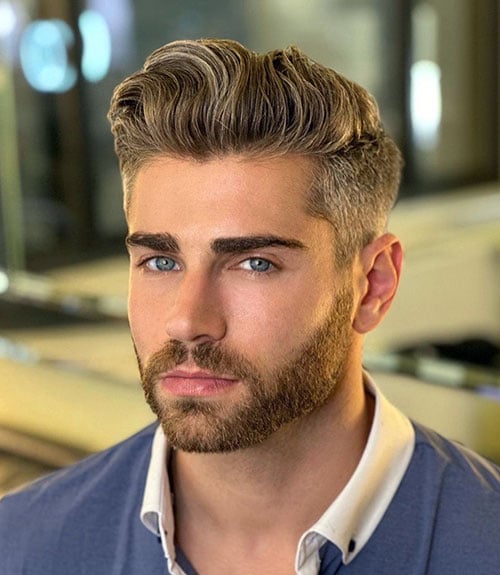
A textured flow back combines the modern appeal of a gentleman’s cut with the relaxed feel of a flow. Here, thick hair moves upward from the forehead, forming a surf-like wave that flows off to the side. When paired with a tapered undercut, it creates a stylish, relatively low-maintenance look that can be as polished or as undone as preferred.
Medium Curtains
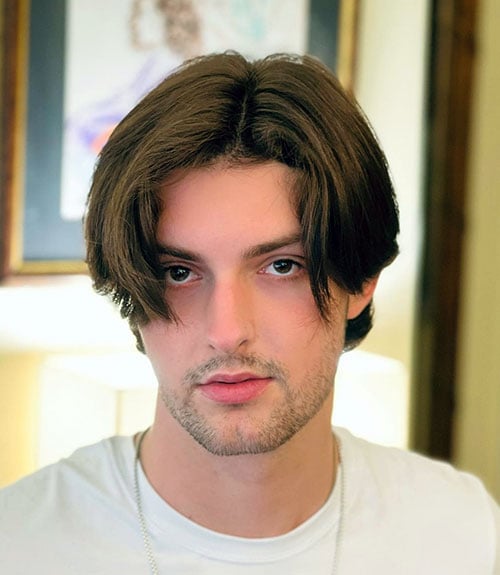
Effortless and relaxed, medium curtains offer a carefree aesthetic with a hint of bohemian flair. In this example, a long, face-framing fringe separated by a bold center part provides symmetry and balance to the face while drawing attention to the eyes. Leaving some thickness and length at the sides and back pulls the cut together, offering a hint of structure in an otherwise loose and carefree style.
Messy Two Block

Especially popular in Korean culture, this messy two-block style tousles and teases the layered waves on top using a texturizing pomade, creating incredible volume, which contrasts sharply with the shorter sides. Swapping the pomade for a styling cream and slicking the hair back easily transforms the look for formal events.
Ponytail
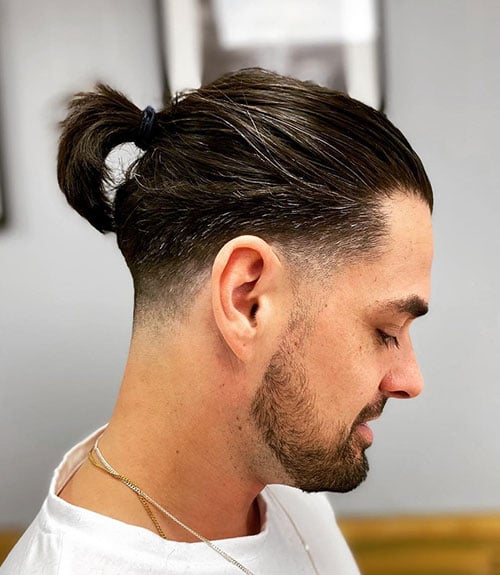
A masculine ponytail is a trendy, versatile look, but requires patience and time to achieve. When styling, simply pull the hair straight back and away from the face, then secure it with an elastic in the back, typically between the crown and nape. An undercut fade reduces bulk and visually changes the style, whether the hair is worn up or down.
Textured Quiff
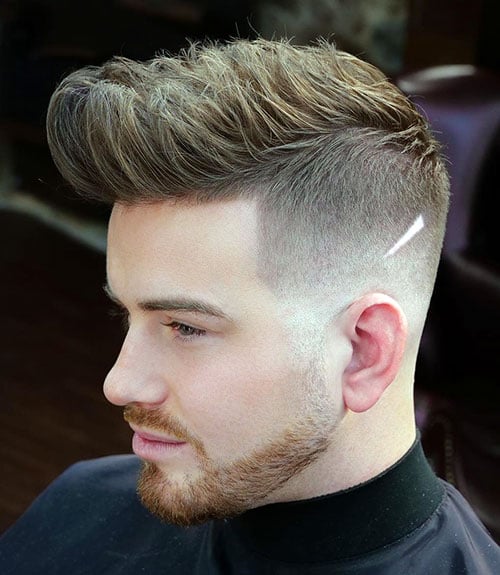
Gravity-defying, this textured quiff champions volume and height, featuring choppy, separated layers blended into a trendsetting silhouette. The front section of hair flows upward and slightly out from the forehead before meeting the shorter layers along the top and crown. The sides and back boast a very short undercut, taper, or fade for impeccable structure and balance.
Afro Fade
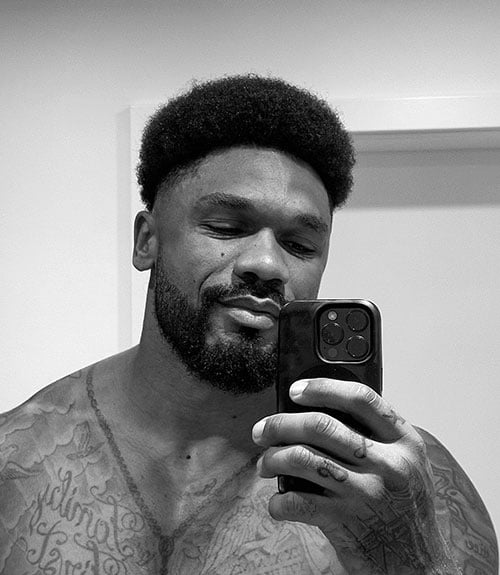
This afro fade is a popular, stylish hairstyle for Black men that combines the rugged, voluminous texture of the classic look with the sharp, clean sides offered by a taper fade. Polished and expressive, personalize the style by adjusting the length or shape on top, experimenting with facial hair or requesting shaved designs on the sides and back.
What Is Medium-Length Hair?
Medium-length men’s hair is generally 3 to 8 inches on top and includes styles like the flow, mullet, shag, middle part, slick back, mod and wolf. The lower end of the range (3 inches) covers cuts like the comb over, side part, quiff, and shorter brush back. The middle of the range (3 to 6 inches) covers most flow styles, mullets, curtains, shags, and the longer slick back. A medium-long hairstyle (6 to 8 inches) includes shoulder-length styles like the man bun, loose flow and ponytail.
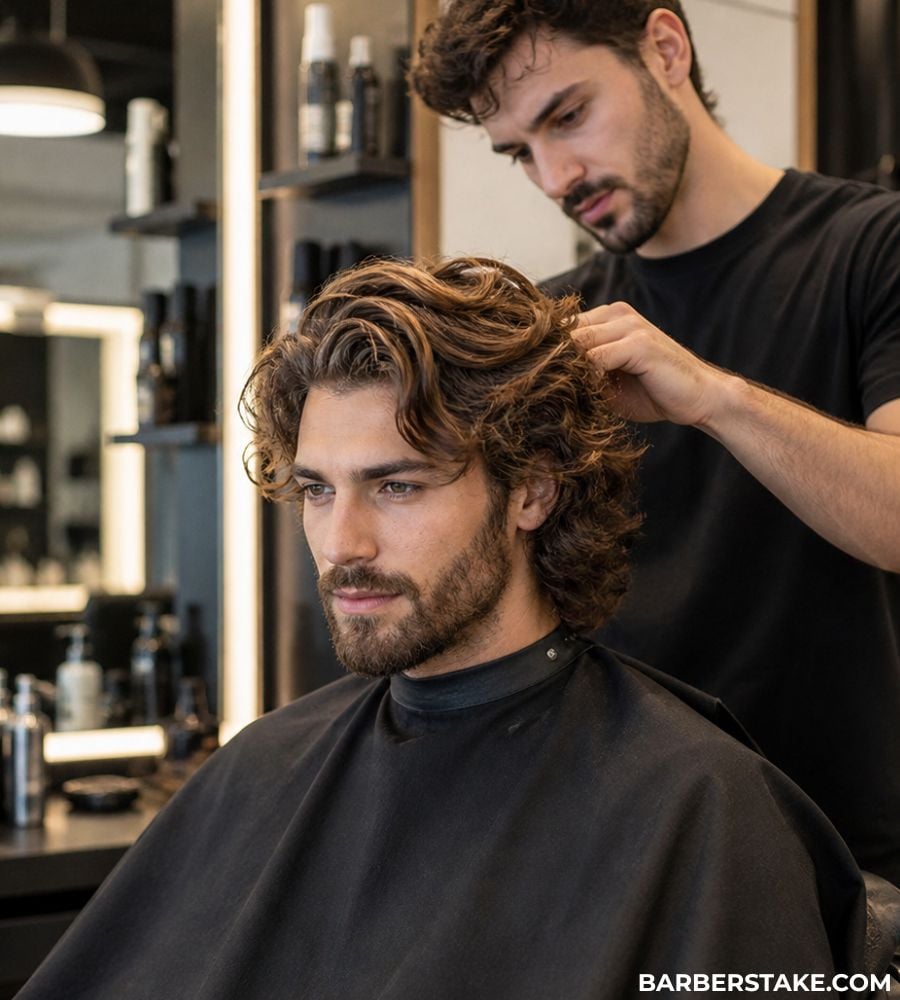
Medium-length hairstyles are trendy, versatile looks that offer enough length for movement, volume and texture without requiring the daily maintenance of a longer style. The appeal of this length is balance: it gives you more styling flexibility than a short cut while still looking clean, masculine and manageable. Wear it polished for work, tousled for a casual finish or pushed back for a more confident, laid-back look.
“Medium length is where the haircut starts depending more on shape than guard numbers. You have enough hair for layering, movement and direction, so where the barber leaves or removes weight becomes much more important than simply taking the same amount off everywhere,” shares Eric Garibay, professional barber at BLVD Barbershop.
A simple way to picture medium-length hair is this: it usually has enough length to cover part of the ears or create visible flow, but it does not fall far past the collar. It can be shaped with product, layered for texture and styled in different directions, but it is not so long that you need to tie it back every day.
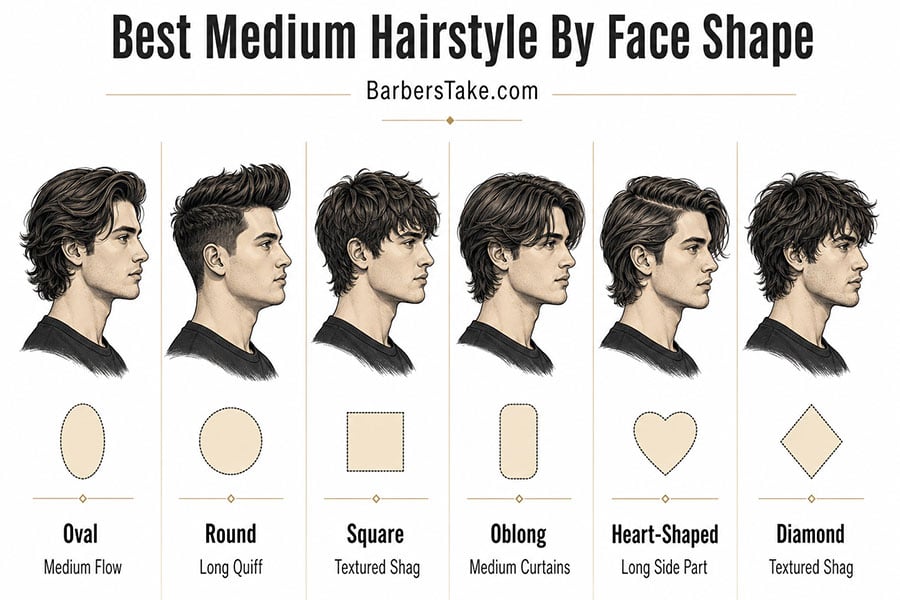
Medium Length Vs Short & Long
- Short hair: Anything under 3 inches. Buzz cuts, crew cuts and French crops. Limited styling flexibility, but the lowest maintenance.
- Medium hair: 3 to 8 inches. Maximum styling flexibility. Works best with styling clay and texturizing spray or powder for a balance of hold and pliability, but you’ll want to experiment with different hair products and techniques to suit your desired look.
- Long hair: Anything past shoulder-length that consistently requires tying back during the day. Styling involves more conditioning and care than medium length.
Medium length is the most popular men’s hair length right now because it’s on-trend and works across hair textures and lifestyles. It also represents the cultural shift toward natural movement and texture, away from the heavily styled or aggressively short cuts that dominated the 2010s. Most current trends, including the middle part, modern flow, mullet revival, and broccoli cut, all live in the medium range.
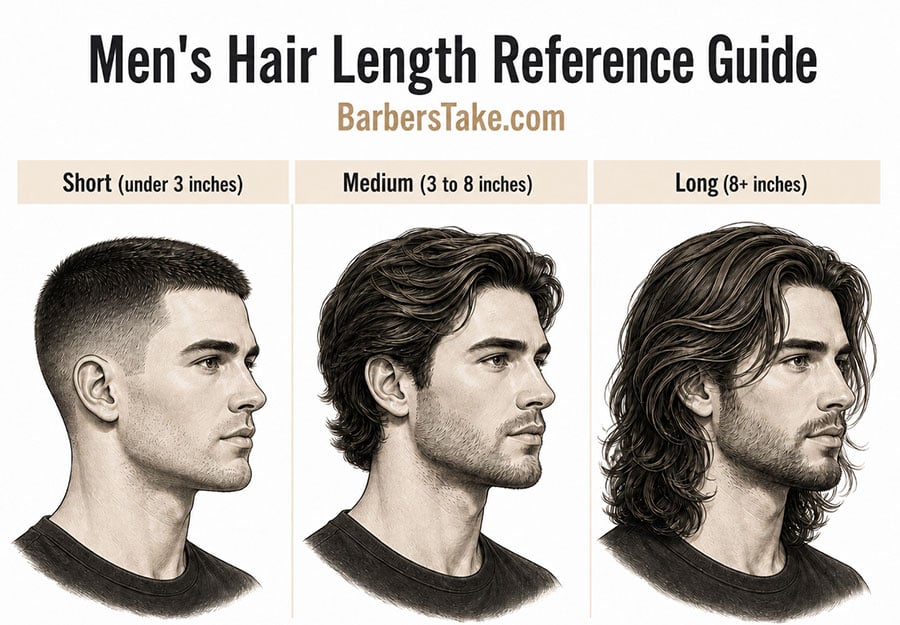
Low-Maintenance Men’s Medium Hairstyles
Low-maintenance medium-length men’s hairstyles are all about embracing natural texture and movement while keeping styling easy, making charming looks like the flow, middle part and brush back perfect for those who prefer stylish simplicity without the need to commit to an elaborate morning routine. These simple styles are designed to fall into place on their own, offering a lived-in, relaxed aesthetic that still feels put-together and cool.

Some popular examples of trending medium hairstyles include layered waves, messy flows, modern mullets, heavy fringes, textured middle parts, matted brush backs, man buns, combed over pompadours, longer curls, mohawk fades, disheveled mods and effortless wolfs, each offering a distinct approach that complements an individual’s aesthetic and stylistic personality.
In these cases, the goal is to let the cut do most of the work, keeping styling minimal and results consistent. A quick blow-dry, a spritz of sea salt spray and a small amount of matte styling clay are often all it takes to add volume and definition with clean, masculine edge that never feels overdone.

When talking to your barber, ask for soft layering through the top and light tapering around the sides to keep the shape balanced, letting your hair grow out evenly and with natural rhythm.
How To Style Medium Length Men’s Hair
Follow this step-by-step guide to styling medium hair into a stylish men’s style.
- Start with clean hair, washed with a gentle shampoo and conditioner.
- After towel-drying your hair, apply a lightweight pre-styler such as sea salt spray, focusing on the roots and mid-lengths to achieve texture and separation.
- Set the natural direction of your hair, then use a vented or round brush to create the shape you want, lifting at the roots for volume and smoothing out the lengths for a sleeker finish.
- Apply a small amount of matte clay, pomade, paste or cream for varying levels of hold and a texturizing effect. A clay, paste or pomade is ideal for control and structure, while a light cream offers softness and understated sheen for looser, more flowing looks. Add more only if needed to avoid weighing your hair down.
- Warm the product between your palms, then distribute it evenly, from root to end, using your fingers to define pieces and create movement.
- Shape the style with your hands; push back for a brushed look, sweep to the side for a parted style or scrunch and separate for messy waves.
- Finish with a light mist of hairspray for extra hold or blow-dry on low heat with a diffuser to enhance volume and movement without stiffness.
- Refresh between washes with dry shampoo or texture powder at the roots to revive lift and absorb oil.
The simplest way to wear medium men’s hair is to get a natural, controlled look that highlights texture and flow, feels classy yet effortless and doesn’t lose ease.
“At medium length, the product should control the hair without taking away the reason you grew it. If the whole style starts moving as one solid piece, you’ve probably used too much and lost the separation and flow you were trying to create,” suggests James Goodman, men’s grooming expert and founder of Barber Goodman.

The Best Styling Products That Work Well With Men’s Medium Hair
A medium men’s hairstyle is often the perfect versatile length, offering enough to move, bend and flow, but not so much that it should feel overworked or rigid. Texturizing clays, light creams and sea salt sprays are some of the best styling products that work to control, shape and volumize this length.
A matte hair clay is the strongest starting point.
A medium- or high-hold hair clay provides the ideal balance of control, texture and flexibility. It adds subtle grip to layered cuts, enhances separation in flows and brush backs, guiding the hair without flattening its natural volume.
The best-rated clays keep the finish clean and understated, allowing movement through the lengths while maintaining a wearable structure that lasts throughout the day. Used sparingly, it sharpens the shape without making hair feel stiff, greasy, or overworked.
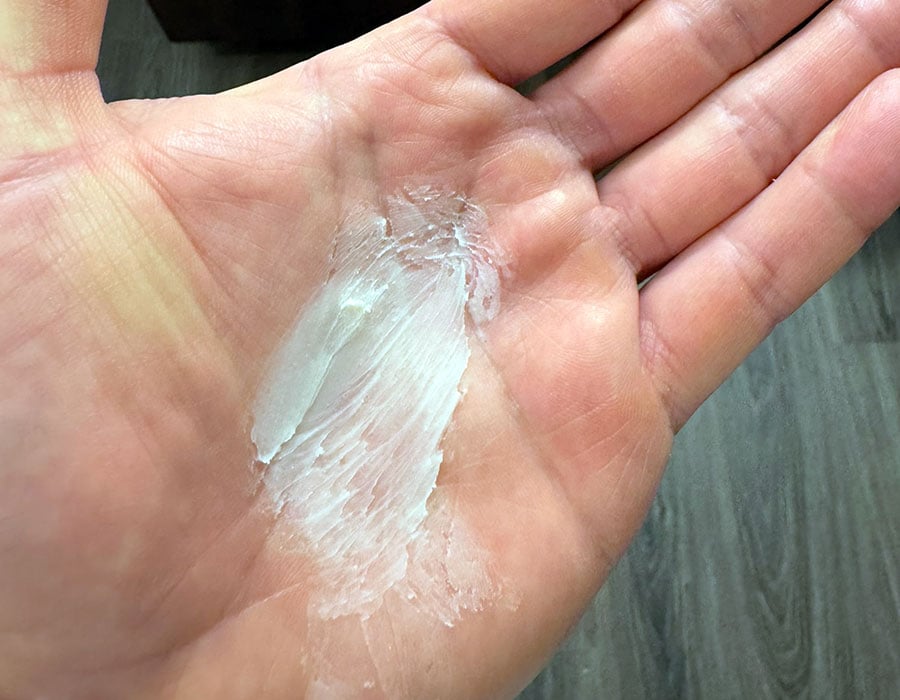
Beyond that, additional products should serve a clear purpose rather than complicate the routine.
A Light Styling Cream Is Perfect For Loose Looks That Need Movement
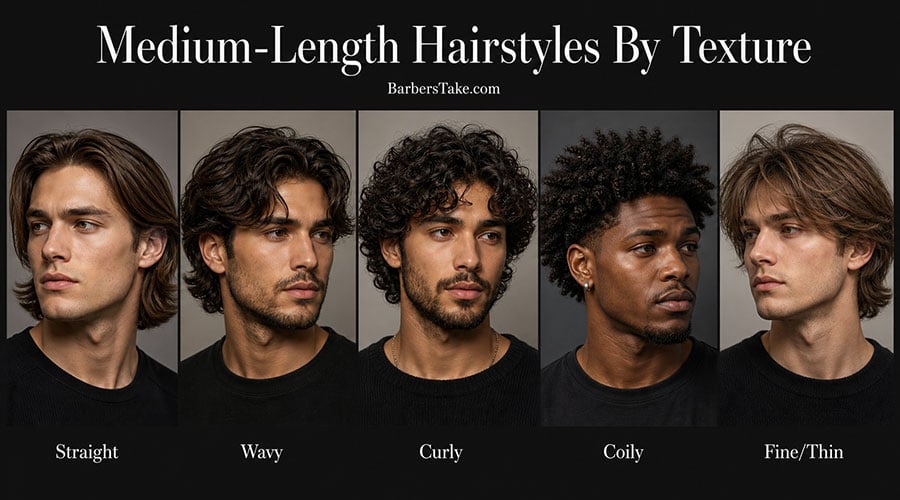
Guys with naturally dry, coarse or thick hair often benefit from a light styling cream to soften the texture, letting the hair fall naturally before introducing any hold. Those with waves or curls may prefer a curl-enhancing cream or lotion that defines shape while keeping frizz in check, preserving the relaxed, lived-in appeal that medium-length styles wear well. For finer hair or cuts that rely on lift, a sea salt spray or lightweight pre-styler can add volume and separation while keeping the overall look effortless.
What To Avoid: Heavy Pomades and Sticky Gels
What’s rarely necessary is excessive shine or extreme hold. Heavy pomades, sticky gels, or layered products tend to weigh medium-length hair down, dull texture, and strip the style of its natural flow. This length works best when it can bend, shift, and settle as you move through the day. Garibay advises: “Medium hair should still respond when you run your hands through it. If the product has frozen the shape or glued the layers together, I’d reduce the hold before assuming the haircut itself needs more texture.”
Medium-length hair thrives on simplicity. An effective foundational product, applied with restraint, is often all it takes to let the cut, texture, and movement do the talking.
How To Ask Your Barber For A Medium-Length Cut
Medium men’s haircuts are, in my experience, often and easily miscommunicated in the chair. Shorter styles have guard numbers that take the guesswork out. Long hair has a clear length goal. Medium lives in a vague middle ground where words like “trim,” “a little off,” and “leave it longer” mean very different things to different barbers. The conversation matters more here than at any other length.
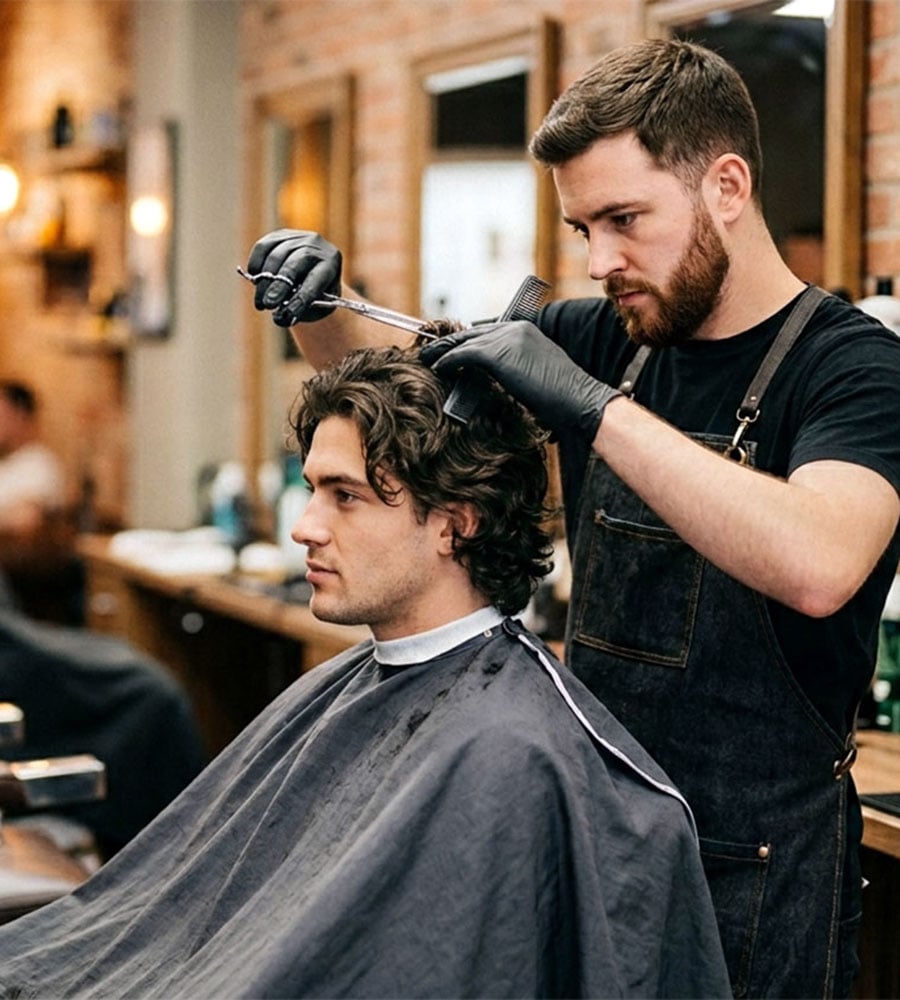
What Every Barber Needs From You
Every medium-length cut comes down to these details:
- Top length: In inches, not vague terms. “Take half an inch off the top” or “leave about three inches on top” gives your barber a precise target.
- Sides treatment: Whether you want the sides faded, tapered, scissor cut, or kept at a similar length to the top. This single decision changes the entire feel of the cut.
- Layering depth: Heavy layering creates dramatic texture and movement. Light layering preserves more length and a fuller silhouette. Tell your barber which direction you want.
- Fringe direction: Forward, side-swept, brushed back, or center-parted. This shapes how the cut frames your face.
Stop Saying “A Trim”
“A trim” is the worst possible way to ask for a medium-length cut. To one barber it means a half inch off. To another it means cleaning up the existing shape with no real length removed. To a third it means a full reshape. I’ve seen clients walk out unhappy because they meant one thing and the barber heard another. Always specify in inches: “Take half an inch off the top, blend the sides to about a number 3, and clean up the neckline.”s
Talk About Layering Specifically
Medium-length cuts live or die by layering. Without layering, medium hair sits flat and looks helmet-like. With good layering, the same cut looks textured, intentional, and full of movement.
Ask your barber to use point-cutting or razor-cutting on the top to remove weight and add texture. If your hair is fine, ask for lighter layering so you don’t lose visual fullness. If your hair is thick, ask for more aggressive layering with thinning shears to remove bulk. Saying “give me some layers” without specifying depth gives the barber too much room for interpretation.
Bring Two Reference Photos, Not One
Most clients bring one photo showing the front of a medium-length cut. The problem is that medium cuts rely on the back shape as much as the front. Bring two photos: one showing the front and one showing the side or back. Match the model’s hair texture and face shape to your own as closely as possible. A perfect cut on someone with thick wavy hair won’t translate to fine straight hair without major adjustments.
Tell Your Barber If You’re Growing It Out
A grow-out cut is different from a target cut. If you’re between lengths, your barber should shape the cut to reach a specific target style at the next visit, not just trim for evenness. Show your target style photo at every appointment. Each cut should move you closer to the goal rather than just trimming length off.
The Conversation About Face-Framing Layers
Layered medium cuts can frame your face in flattering or unflattering ways depending on where the layering hits. Longer layers at the cheekbone level can slim a wider face. Longer layers at the jawline level can soften a narrow face. Tell your barber what feature you want to emphasize or downplay, and they’ll adjust the layering placement.
How To Grow Your Hair From Short To Medium Length
Most men who want a medium-length style are growing into it from a shorter cut. The path takes patience and a clear plan. Hair grows about half an inch per month, or roughly six inches per year, which means going from a short cut to a styleable medium length usually takes 8 to 12 months depending on starting length and target style.
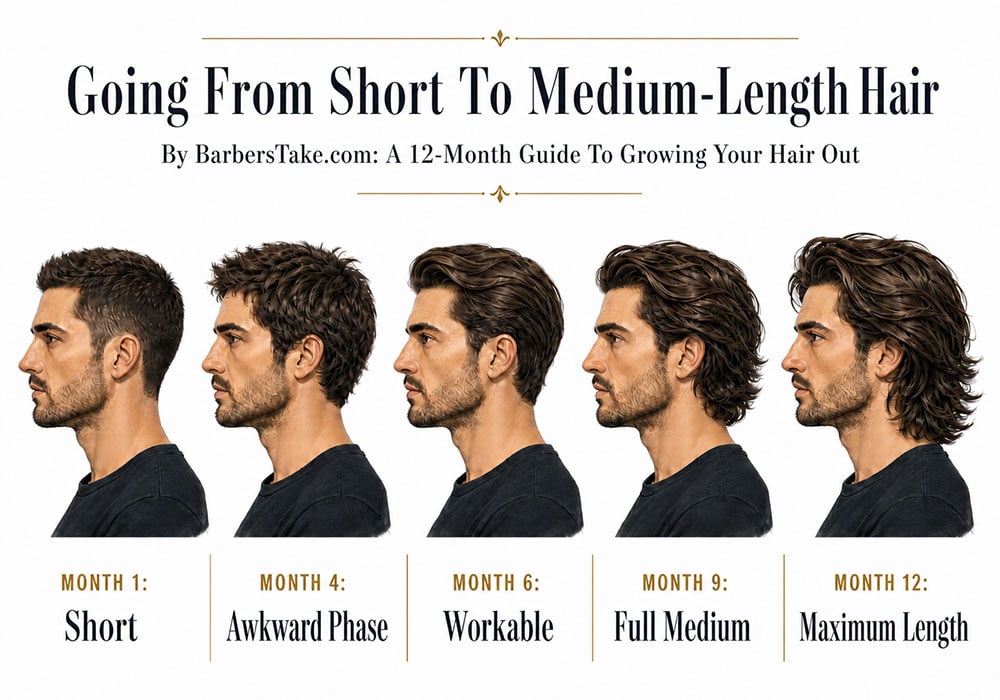
The Realistic Month-by-Month Timeline
For someone starting at a 1 to 2 inch top:
- Months 1 to 2: Hair grows about an inch. The cut still looks like a longer short style. Easy to manage with no styling.
- Months 3 to 4: Hair crosses into “short medium” range. The awkward phase begins as the hair starts to lay flat instead of standing up.
- Months 5 to 6: The peak awkward phase. Hair is too long to style as short and too short to flow naturally. This is where most men quit.
- Months 7 to 9: Hair reaches a workable medium length. Most medium styles become available, including the comb over, side part, flow, and quiff.
- Months 9 to 12: Full medium length. Maximum styling flexibility. The wolf cut, mullet fade, and longer flow styles all become reachable.
How to Manage the Awkward Phase
The awkward phase between months 3 and 6 is the biggest reason men give up on growing their hair to medium length. Three tactics make it manageable:
- Keep the sides shorter than the top. Have your barber maintain a low taper or fade on the sides while the top grows. The contrast gives the cut visual structure even when the top is in transition.
- Visit the barber every 4 to 6 weeks for grow-out shaping. This is counterintuitive because you’re trying to grow length, not cut it. But a skilled barber can shape the grow-out at every stage so it reads as an intentional style rather than a transitional one.
- Use a matte clay or paste starting around month 3. Styling product gives the hair some control once it’s too long to stand up but too short to flow. Without product, the awkward phase looks worse than it actually is.
Styling Tricks During the Transition
A few specific tactics make the awkward months easier:
- Hat-friendly side-swept styles hide unevenness on bad hair days
- Sea salt spray adds the texture that transitional hair lacks naturally
- A round brush and blow dryer become essential around month 4 to direct the hair where you want it to fall
- A center part or hard side part gives the hair structural direction even at awkward lengths
Common Grow-Out Target Styles by Month
Match your end goal to a realistic timeline:
- Comb over (target month 6 to 8): The earliest medium-length style most men can achieve.
- Flow or middle part (target month 8 to 10): Needs full medium length to fall naturally.
- Textured slick back (target month 8 to 10): Requires enough length to brush back without standing up.
- Wolf cut or mullet fade (target month 10 to 12): Needs significant length at the back.
- Man bun (target month 12-plus): Requires enough length to gather and tie. For specific guidance on longer styles, see our guide on long hairstyles for men.
Pick a Target Style Before You Start
Most men start growing without a target style and quit at month 5 because the cut “doesn’t look like anything.” Pick a specific target style on day one. Bring the reference photo to every grow-out appointment so each cut moves you toward the goal. The photo itself is enough to keep your barber on the same page about where the cut is heading.
How Often To Get A Haircut
Medium hairstyles need more frequent maintenance than most men expect. Letting a cut grow too long doesn’t make it look longer; it makes it lose the structure that gave the cut its shape in the first place. Match your visit cadence to your specific style.
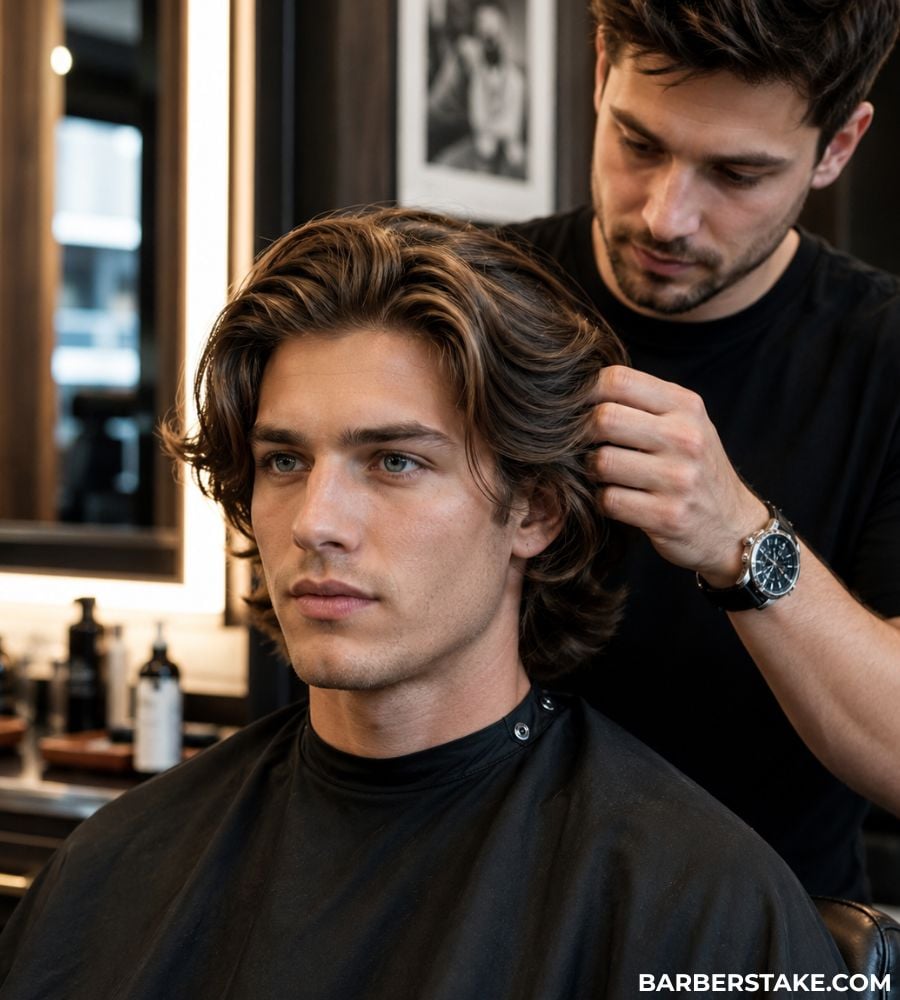
Cut Cadence by Style
- Faded sides with medium top (textured slick back, two block, mohawk fade, faux hawk fade): Every 2 to 3 weeks for the fade, every 6 to 8 weeks for full top trim.
- Tapered sides with medium top (long side part, comb over, brush back, layered brush back): Every 4 to 5 weeks.
- Uniform medium length (flow, middle part, medium curls, textured shag, casual flow): Every 6 to 8 weeks.
- Long-medium and shoulder-grazing styles (long flow, shoulder length and loose, long shaggy hair): Every 8 to 12 weeks for shape trims.
- Man bun and ponytail styles: Every 10 to 14 weeks for ends-only trims.
Touch-Up Versus Full Reset
Touch-ups (cleaning the perimeter, neckline, line up, fade work) can be done at the higher-frequency intervals. Full resets (length removal, re-layering, reshaping) come at the lower-frequency intervals. Tell your barber which kind of visit you’re booking. For typical pricing on each, see our guide on men’s haircut prices.
Caring For Medium-Length Hair In The Long-Term
Medium-length hair is the length where damage starts to accumulate visibly. Heat styling, sleep friction, sweat, and product buildup all compound at this length in ways they don’t at shorter cuts. The cuticle on each strand has more surface area exposed and more chances to roughen up. A care routine that prevents damage takes maybe five extra minutes per day and pays off in how the hair looks at month 4 and beyond.
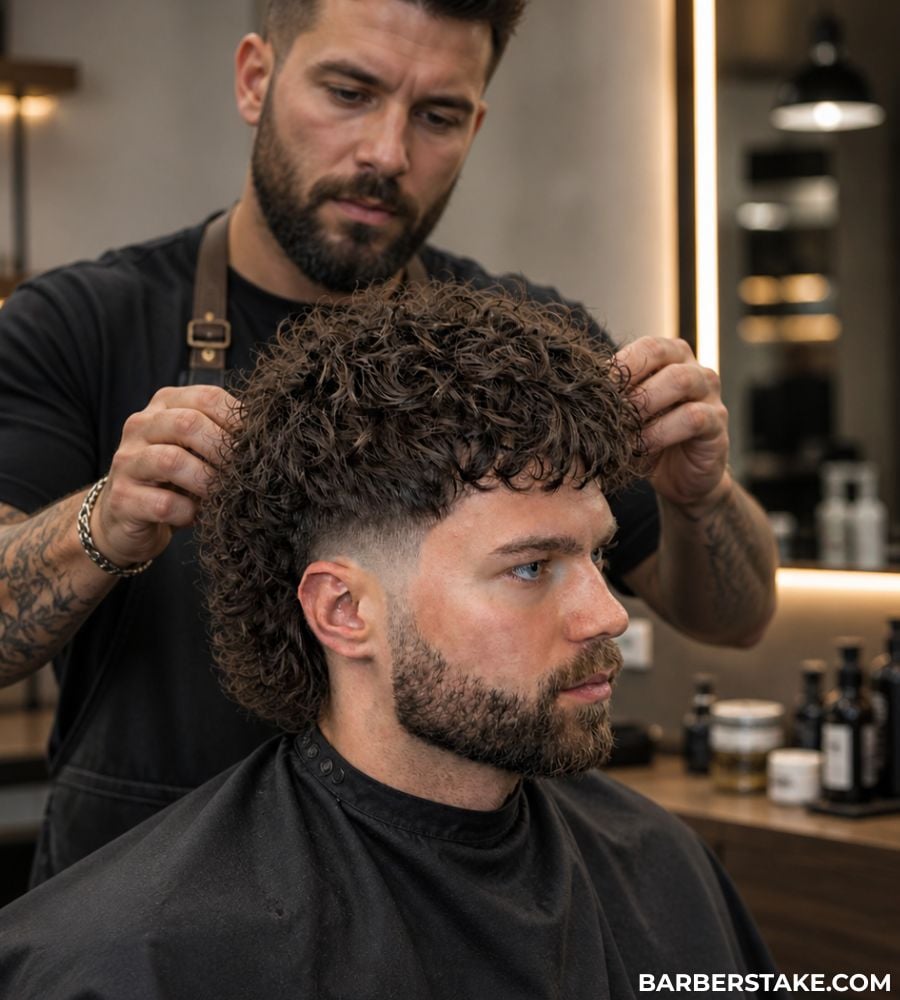
Heat Protection Is Non-Negotiable
If you’re using a blow dryer, round brush, or any heat styling tool on your medium-length hair, apply a heat protectant spray to damp hair before drying. Most men skip this step. The damage shows up at month 4 or 5 of growing the cut, when the ends start looking dry, brittle, and stop holding shape.
The Pillowcase Question
Cotton pillowcases create friction that roughens the cuticle on medium-length hair. The roughened cuticle shows up as frizz and dullness during the day, and no styling product fully fixes it. A satin or silk pillowcase reduces the friction. This is a small change with disproportionate results at medium length and is the single highest-leverage care upgrade most men can make.
Sweat Management for Active Guys
Medium hair holds onto sweat differently than short hair. After workouts:
- Rinse with water (not full shampoo) and let air dry, or condition only
- Skip daily shampooing, which strips the natural oils medium hair needs to look healthy
- Use a leave-in conditioner if your hair feels dry after rinsing
- Tie longer medium hair back during heavy cardio to reduce sweat exposure on the lengths
Product Buildup
Medium-length hair holds onto styling products more than short hair does. Use a clarifying shampoo once a week to break down buildup. Without this step, hair looks dull and feels weighed down even after washing. Daily styling products plus regular shampoo aren’t enough to fully clean medium hair on their own.
Trim Cadence Is Part of Care, Not Just Style
Medium hair without regular trims develops split ends that travel up the hair shaft and create damage that requires cutting back to short to fix. The 6-to-8-week trim cadence isn’t just about style. It’s preventive maintenance that keeps the hair healthy.
Conditioning Routine
Condition the ends after every wash. Skip the roots, which produce their own oil. Use a weekly deep conditioner or hair mask for medium-length hair specifically. Ten minutes once a week makes a visible difference in how the hair looks at the end of week two.
Sun Protection
Hair takes UV damage like skin does. The visible signs are color fade, dryness, and brittleness at the ends. A leave-in conditioner with SPF or simply wearing a hat during prolonged outdoor exposure protects the cuticle. The American Academy of Dermatology recommends sun protection for hair just as for skin during high-exposure days.
Common Mistakes Men Make With Medium-Length Hair
After more than a decade behind the chair, the same medium-length mistakes come through every week. Most of them aren’t about the cut itself but about what happens between cuts. Here’s what to avoid.
Skipping Layers When Getting Cut
The single most common reason a medium cut doesn’t sit right is missing or insufficient layering. Medium hair without layering looks helmet-like. It sits in one solid block instead of moving with you. Always ask for layering and specify the depth you want based on your hair type.
Using Too Much Product
A pea-sized amount of clay, paste, or cream covers most medium-length cuts. More than that flattens the texture, leaves residue, and weighs the hair down. The most common mistake at this length is over-applying. Start with less than you think you need.
Letting the Cut Grow Too Long Between Visits
Medium hair past its trim window doesn’t look longer. It looks shapeless. Stick to the cadence: every 4 to 6 weeks for most styles, every 6 to 8 weeks for uniform cuts. Going longer than that means coming back to a shaggy cut that needs a full reset rather than a quick trim.
Wrong Product for the Texture
Heavy pomade on fine hair flattens it against the scalp. Sea salt spray on already-dry coarse hair makes it feel like straw. Match the product to the texture, not just to the style alone. If you’re not sure, ask your barber to recommend products specifically for your hair type.
Skipping Heat Protectant
Daily blow drying without protection is the fastest way to damage medium hair. The damage compounds invisibly until month 4 or 5, then it’s everywhere at once. The fix is one extra step: spray a heat protectant on damp hair before you reach for the dryer.
Cotton Pillowcase Friction
This sounds minor but isn’t. Cotton fibers roughen the cuticle and create daily frizz that no styling product fully fixes. Switching to a satin or silk pillowcase is the single highest-leverage care change most men can make at this length.
Not Adjusting the Part as the Hair Grows
A part placement that worked at 3 inches looks wrong at 5 inches. Your barber should adjust the part placement at every grow-out visit. If they don’t bring it up, ask. The right part placement changes how the entire cut frames your face.
Trying to Fix a Bad Cut at Home
Almost every home fix on medium hair makes it worse. The layering on medium cuts is precise, and once you start cutting into it without the right tools or technique, you create unevenness that takes months to grow out. Wait for the next barber visit or go to a different barber to reset the cut professionally.
Frequently Asked Questions About Medium-Length Men’s Hairstyles
How long is medium-length hair for men?
Medium-length hair for men is generally 3 to 8 inches on top, depending on the style. The lower end (about 2 to 3 inches) covers comb overs and side parts. The middle (3 to 6 inches) covers flows and quiffs. The upper end (6 to 8 inches) covers shoulder-grazing styles and styles long enough to tie back.
How long does it take to grow medium-length hair?
Hair grows about half an inch per month, so growing from a short cut to medium length usually takes 8 to 12 months. The awkward phase typically hits around months 4 to 6, when the hair is too long to style as short and too short to flow naturally. Pick a target style on day one to stay motivated through it.
How often should men get a medium-length haircut?
Every 4 to 6 weeks for most styles. Faded variations need re-cuts every 2 to 3 weeks for the fade, with full top trims every 6 to 8 weeks. Uniform medium-length cuts can stretch to 6 to 8 weeks. Letting medium cuts grow too long causes them to lose shape rather than gain length.
What’s the best medium-length hairstyle for thick hair?
Layered cuts with weight removed underneath work best. The textured slick back, casual flow, layered brush back, and textured shag all work for thick hair. Ask your barber to use thinning shears to remove bulk so the cut sits cleanly. For more thick-hair options, see our guide to hairstyles for men with thick hair.
What products work best for medium-length men’s hair?
A matte hair clay is the strongest starting product for most men. Add sea salt spray for lift on fine hair, a light styling cream for control on coarse or wavy hair, and a curl cream for naturally curly hair. Avoid heavy pomades and sticky gels, which weigh medium hair down and flatten the texture.
Can men with thinning hair pull off medium length?
Yes, but specific styles work better than others. Layered cuts with texture (textured shag, medium curls, casual flow) create the appearance of fullness. Avoid slick-back styles that expose the scalp at the part. For early to moderate thinning, medium length can actually camouflage thinning better than shorter hair can.