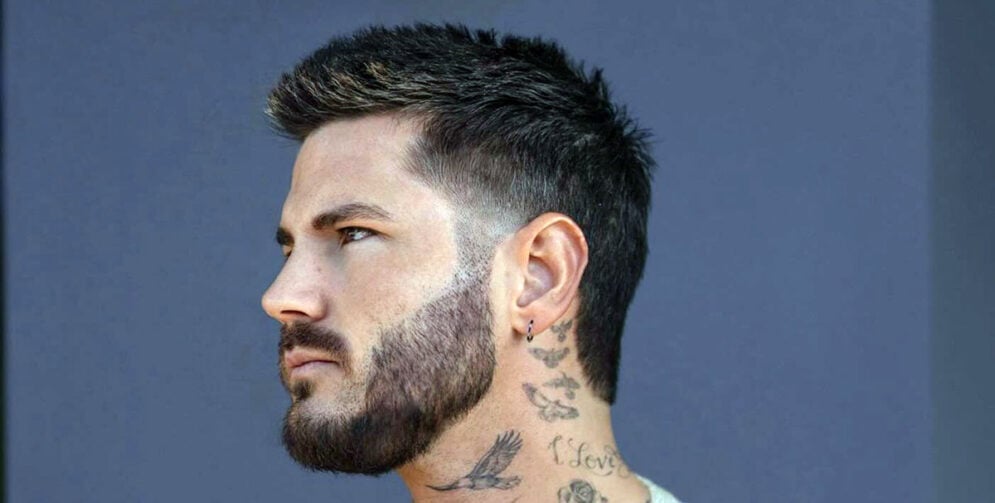
A cool men’s hairstyle should do more than look good in a photograph. The right cut works with your natural texture, suits the way you dress and still makes sense when you have five minutes to get ready on a Tuesday morning. That can mean a cropped fringe and low taper, a loose middle part, a grown-out mullet or something as simple as a well-shaped buzz cut.
The more interesting shift is that there is no single silhouette defining men’s hair anymore. Short cuts are becoming softer and more tailored, while medium and longer styles are leaning into layers, natural movement and shapes that do not need to look freshly barbered every week. Even familiar cuts like the side part and crew cut feel different when the edges are less severe and the styling is less rigid.
The best one is not necessarily the newest. It is the one your hair can actually support. “A good haircut should make your natural hair easier to work with, not force you into a styling routine just to make the cut look right. I’d rather adapt a great style to the hair in front of me than chase a trend that fights it every morning,” says James Goodman, licensed barber and men’s grooming expert.
The 30 styles here earn their place because they offer a genuinely different choice in length, texture, shape or commitment. The best one is not necessarily the newest. It is the one your hair can actually support.
Cool Haircuts For Men
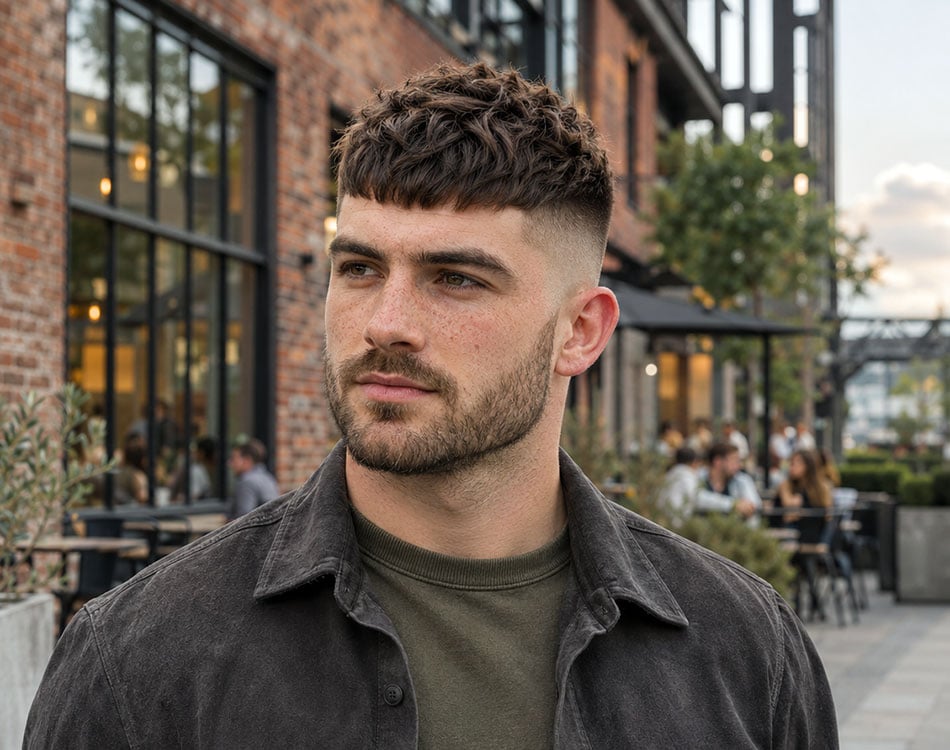
French Crop
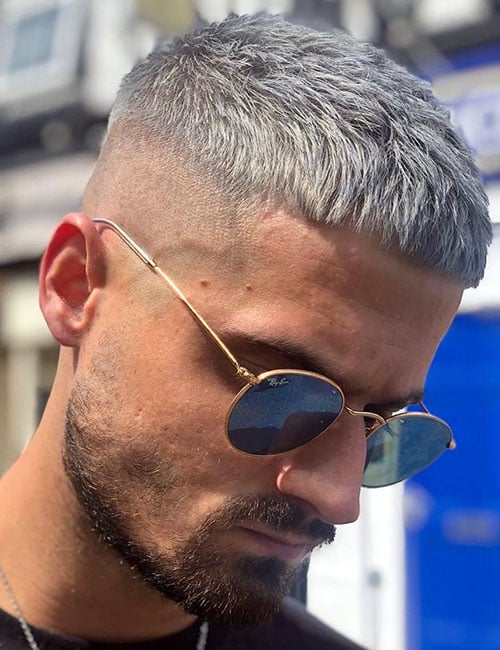
The French crop, defined by its fringe, is a modern men’s haircut where hair moves forward and finishes in a more substantial line across the forehead, giving the front greater weight than the texture behind it. That makes the style useful for men who like a defined shape or want to reduce how much of the hairline is exposed. A fade can make the outline sharper, but it is secondary to the fringe. If the barber shreds the front into too many pieces, the haircut loses the characteristic that made it French in the first place.
Flow
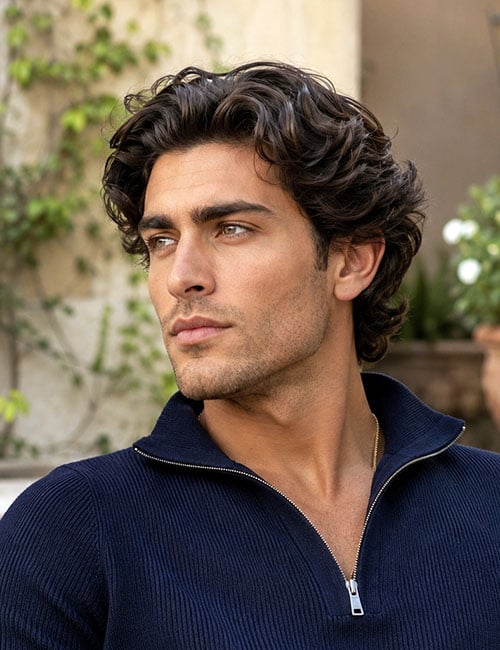
The flow starts to make sense once the hair is long enough to move backward without being forced there. Instead of creating a hard slick back, the hair leaves the forehead, bends around the temples and settles naturally around the ears and neck. That makes the growth pattern important. If your hair insists on falling straight forward, reaching the necessary length is only half the battle. Waves are particularly forgiving because they create volume without much product. A light cream is usually more useful than a strong clay, since stiffness works against the style.
Messy Looks
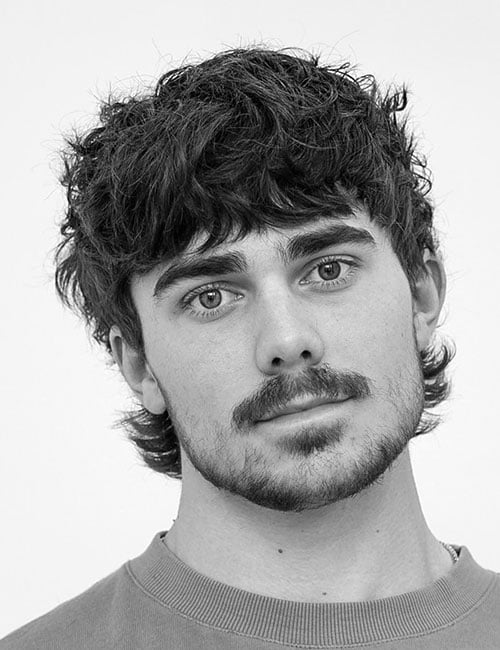
A messy hairstyle works when the disorder has structure underneath it. The cut should create uneven lengths, separation and enough internal shape that the hair can fall naturally without looking neglected. To style it, start with towel-dried hair, apply a few sprays of sea salt spray or a light pre-styler, then rough-dry with your fingers while lifting at the roots and pushing sections in different directions. Once the hair is fully dry, rub a small amount of matte paste or clay between your palms and work it through the mid-lengths and ends rather than coating the roots. Finish by pinching a few sections apart with your fingertips, then stop before the style starts looking deliberately arranged.
“For messy styles, product should give the hair grip without telling every strand where to sit. Start with less than you think you need, work it through the mid-lengths and ends, and only add more if the hair is still collapsing. That keeps the finish separated instead of stiff,” says Gary Dekmezian, men’s grooming expert and founder of Relentless Grooming.
Mod Cut
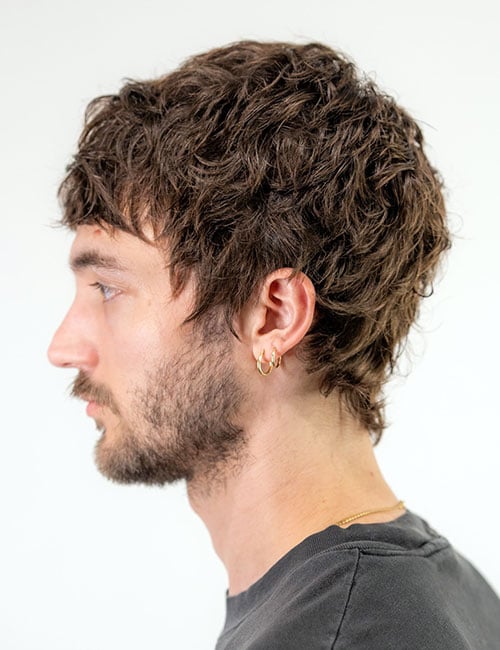
The mod cut brings the fringe lower and lets more hair collect around the sides, sideburns and back than a conventional crop. That extra weight is the entire point. A good version frames the face rather than sitting like a mushroom around it, which means the barber has to control the outline without cleaning it up so much that the mod character disappears. Straight and lightly wavy textures are especially suited to the layered fringe. The current approach is softer than the heavy Britpop versions people usually picture, with less rigid sideburns and more movement through the ends.
Modern Mullet
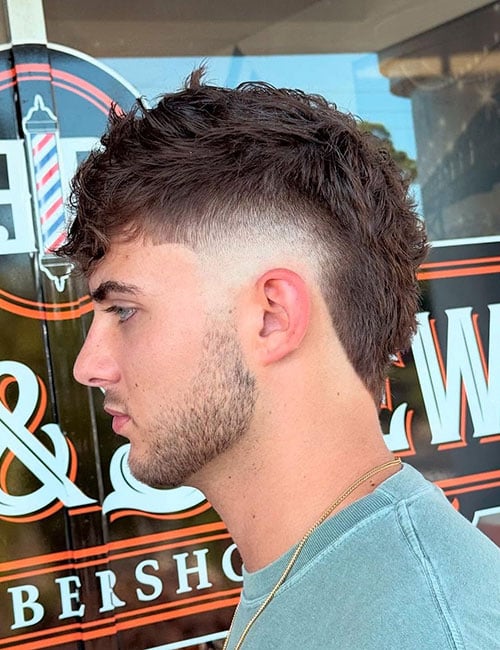
A modern mullet makes the length difference more deliberate. The top and sides are controlled while the crown moves into a visibly longer back, sometimes with a taper, burst fade or cleaner section around the ears. The most important area is the middle of the haircut. Remove too much there and the long back becomes an attachment rather than part of the shape. Thick, wavy and curly hair can make the transition look substantial, while straight hair shows the layering more clearly. Decide how obvious you want the back to be before deciding how tight to take the sides.
“The crown is where a mullet either connects or falls apart. If you take too much weight out between the top and the back, you end up with short hair in front and long hair hanging off the neck instead of one continuous shape,” says Eric Garibay, professional barber in Anaheim at BLVD Barbershop.
Two Block

The two block haircut separates the longer top from shorter hair underneath, allowing the fringe and crown to retain considerable length without carrying the same bulk around the ears and lower sides. The contrast can be subtle or obvious. What matters is that the upper section has enough hair to fall, part or sweep rather than standing upright. It is especially effective on dense straight hair because the hidden reduction underneath removes weight while preserving a fuller silhouette from the front. A middle part or loose fringe can change the mood without changing the underlying cut.
Modern Quiff
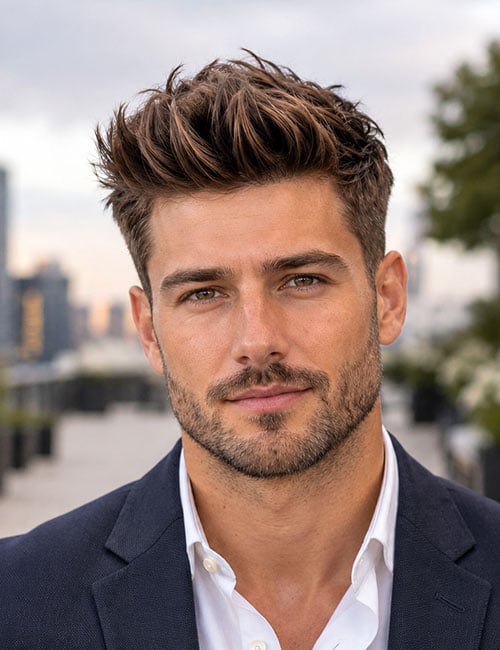
The quiff is more convincing when it stops trying to be enormous. A modern version keeps enough length at the front to lift and move backward but allows the rest of the top to remain textured and relatively compact. That creates height without the stiff, inflated silhouette associated with older versions. Hair that already grows upward at the front has an obvious advantage. Use heat to establish the direction, then a small amount of matte paste or clay for support. The front should bend, not stand at attention.
“The mistake with a quiff is assuming more height automatically makes it better. I want enough lift to open up the face, but the front still needs to bend and connect with the rest of the haircut. Otherwise it starts looking like a separate piece sitting on top,” says Goodman.
Middle Part
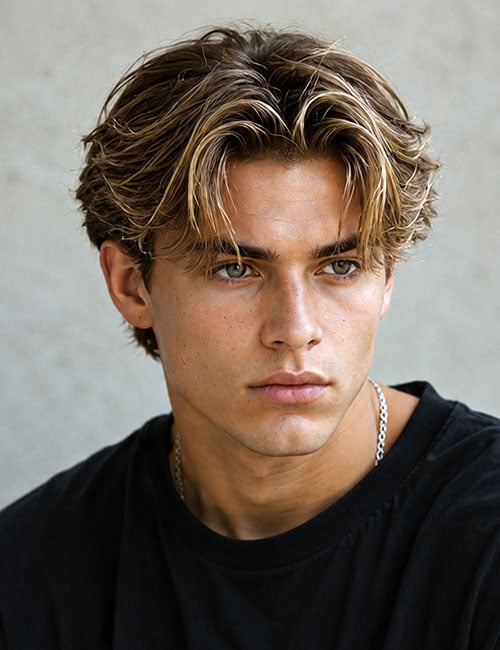
The middle part is a popular men’s hairstyle that gives medium-length hair a direction without making it look overstyled. The part can be exact or almost accidental, but the hair needs enough length at the front to move away from the center and settle on both sides. Layers keep the shape from becoming triangular as it grows. Straight hair produces a cleaner curtain, while waves make the part feel looser. Men with recession at the temples may also find that the front sections soften the corners rather than exposing the entire hairline.
Textured Fringe
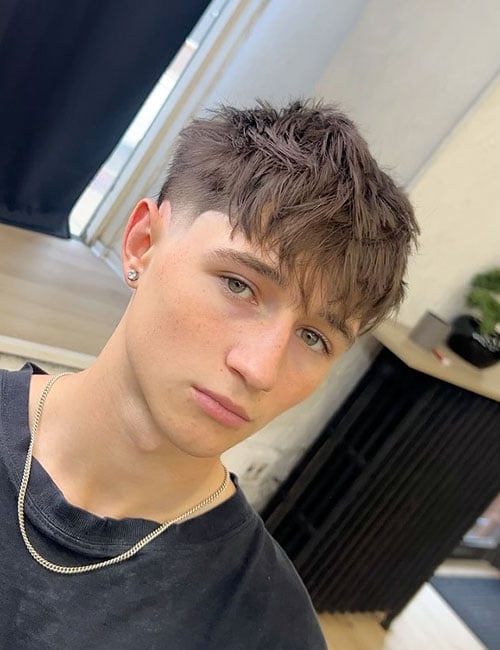
The textured fringe brings the focus down rather than up. Broken sections fall across the forehead with visible gaps between them, which can make dense hair feel lighter and give a short haircut more personality without adding height. The separation should come largely from point cutting and controlled product rather than wet strands glued into pieces. Keeping a little weight at the base of the fringe prevents it from becoming wispy. This is also an easy direction for men growing out a shorter crop because the added front length becomes part of the style instead of an awkward stage.
“The best texture is already there when the client gets out of the chair. Product should bring out the separation, not create it from scratch. If you have to use so much clay just to see the pieces in the fringe, the cut probably needed more work,” says Garibay.
Wolf Cut
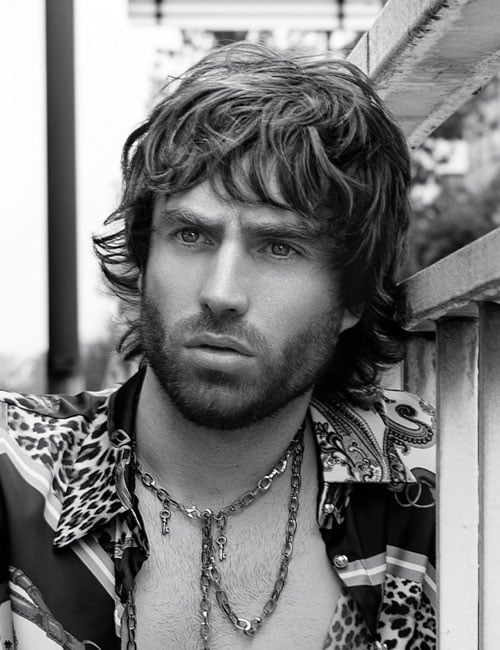
The wolf cut uses layers to create width and movement through the crown before narrowing into longer pieces around the back. It sits somewhere between a shag and a mullet, but the stronger layering gives it a more deliberately untamed outline. Hair with natural wave or curl does much of the styling on its own. Straight hair usually needs more thoughtful layering and some texture product to avoid hanging flat. This is also a haircut that benefits from length. Cut it too short everywhere and the layered silhouette has no room to develop.
Warrior Cut
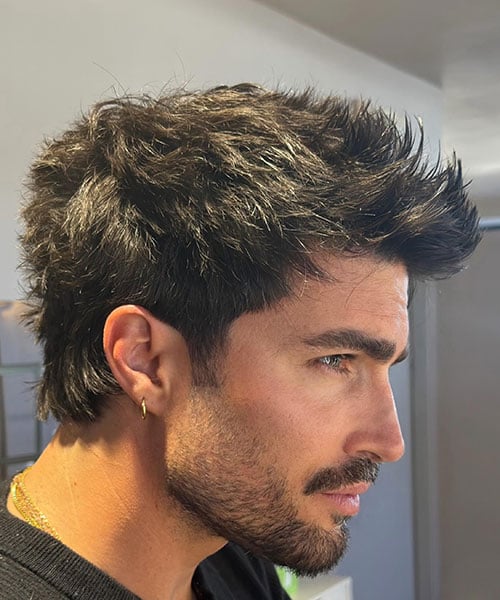
The warrior cut takes the rougher side of ’90s hair and cleans up the engineering underneath it. Choppy layers create irregular peaks and separation through the top, while the sides stay shorter without necessarily being faded to skin. It should feel slightly unruly. Once every piece is carefully placed, the attitude disappears. Straight, dense hair tends to hold the broken shape easily, although a subtle wave can give the cut more movement. A matte product helps with grip, but the haircut needs enough layering to look convincing before styling.
Shaggy Hair
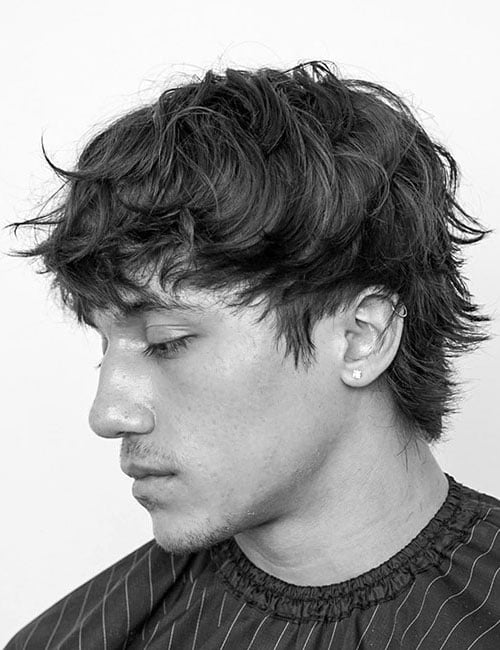
A shag is less about a precise perimeter than the way multiple layers fall into one another. The fringe can be full or parted, the sides can cover the ears and the back usually carries enough length to move. Unlike a mullet, there does not need to be a dramatic difference between front and back. The appeal is the softness of the whole shape. Wavy and curly hair handle it naturally, but thick straight hair can also work once enough weight is removed internally. The barber should be careful not to thin the ends until the hairstyle looks stringy.
Curtains
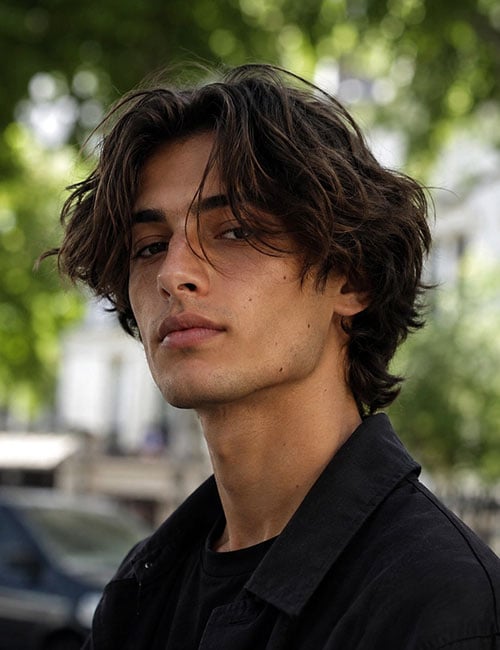
Curtains exaggerate the front pieces of a middle part, allowing them to drop toward the cheekbones or sweep away from the forehead before blending into the sides. The effect depends on length at the front. If those pieces are cut too short, the haircut becomes an ordinary center part. If they are too heavy, they collapse over the eyes. A round brush or fingers and a blow dryer can create the bend, but naturally wavy hair usually needs less persuasion. The best curtains look like they fall into place, not like they were folded there.
Contemporary Bowl Cut
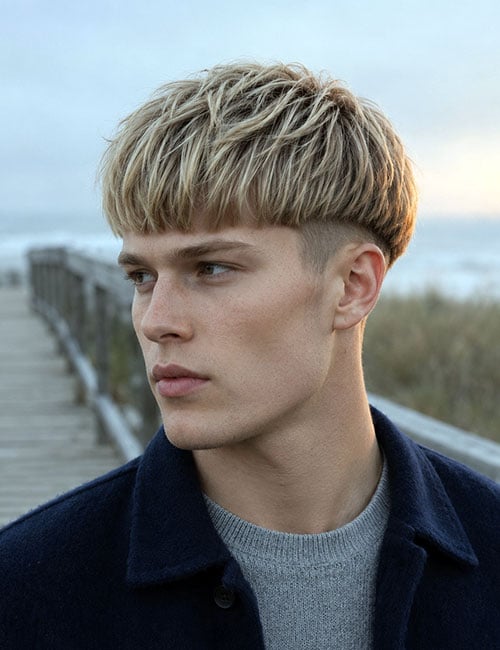
The bowl cut only works now because barbers stopped treating it like a literal bowl. The recognizable rounded perimeter remains, but layering, tapering and broken texture keep the hair from sitting as one dense shelf around the head. A heavier fringe can make the silhouette dramatic, while softer ends push it toward a fashion cut rather than a childhood accident. Straight hair makes the geometry most obvious. Curly hair produces an entirely different effect, with the rounded outline containing the volume instead of relying on a rigid line.
Brush Back
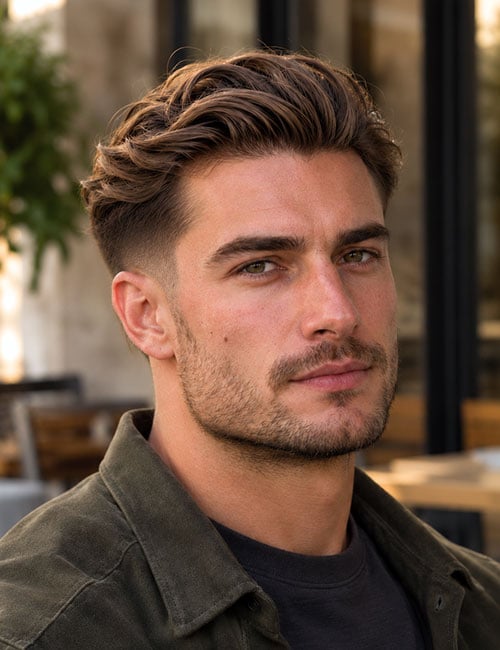
A brush back uses medium length and soft layers to move the hair away from the face without forcing it into a slick, perfectly combed surface. The extra length around the sides distinguishes it from an undercut or traditional slick back and gives the hair a fuller profile. It is especially useful when you want something that can move between relaxed and dressed-up depending on product. Blow-dry backward for shape, then decide whether the finish needs a light cream for movement or a little pomade for a more deliberate evening look.
Burst Fade Mohawk
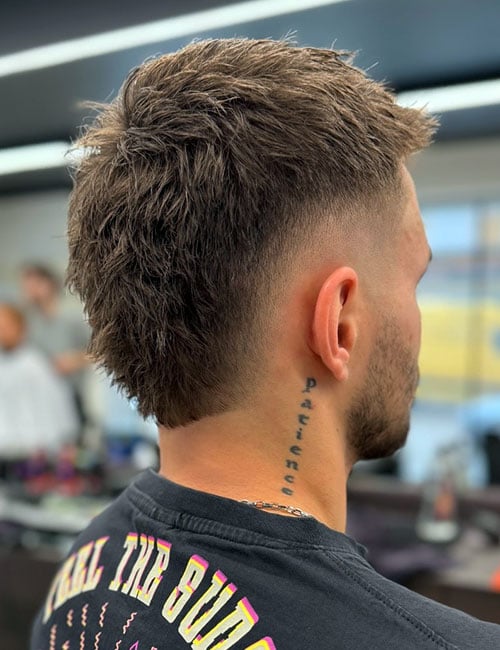
The burst fade mohawk concentrates the fade in a semicircle around the ears and leaves a continuous strip of length through the top and back. That curved transition is what separates it from a standard mohawk with uniformly short sides. The style can be subtle with a short textured top or much louder when the crown and nape are grown out. Curly and wavy hair give the central section natural volume, but straight hair can create a sharper silhouette. The key is keeping enough connection through the crown so the back does not feel detached.
Curly Fade
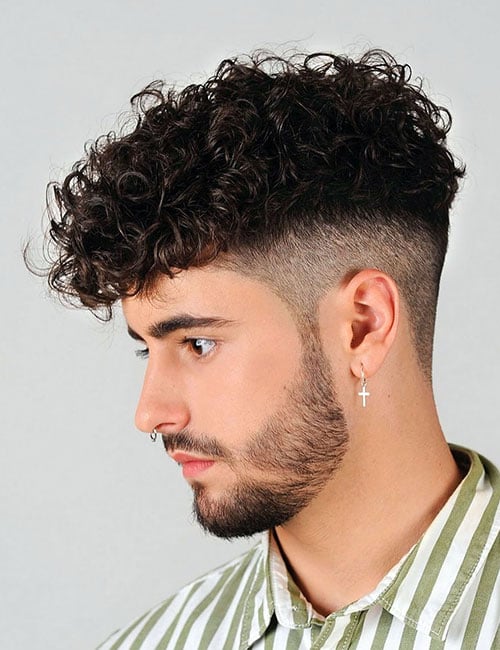
A fade gives curls a clean perimeter without sacrificing the volume that makes them worth wearing. Instead of removing the entire side, the shortest sections stay near the temples, sideburns and neckline while the curls remain fuller above. That reduces the hard mushroom line that can appear when curly hair expands outward. The barber should cut around the actual curl pattern rather than stretching the hair and guessing where it will spring back. At home, curl cream and a diffuser usually do more good than strong hold products.
“With curls, you have to pay attention to where the hair actually lives when it’s dry. Stretching everything out and cutting it like straight hair can completely change the shape once the curl springs back,” explains Garibay.
Comb Over
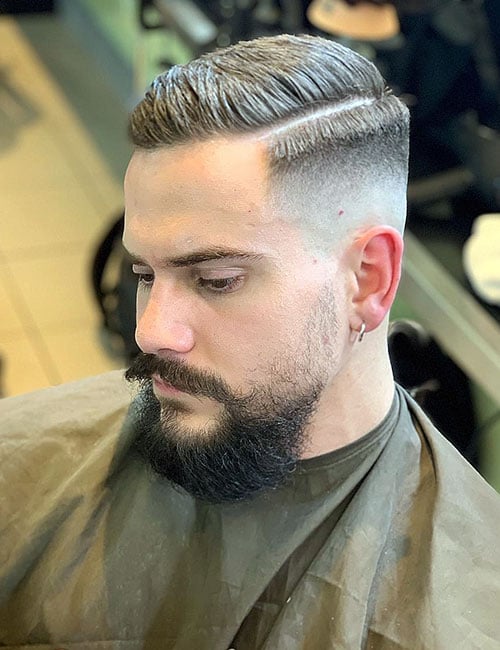
The comb over fade gives a classic side-swept shape a cleaner, more defined frame. The top keeps enough length to move across the head naturally, while the taper faded sides remove bulk and make the parting feel sharper without requiring a hard line. The best versions avoid the overly slick, shellacked finish that can make the style feel dated. A low-shine paste or cream keeps the hair flexible, and the barber should preserve enough weight near the part so the top does not look disconnected from the fade underneath.
Soft Mullet
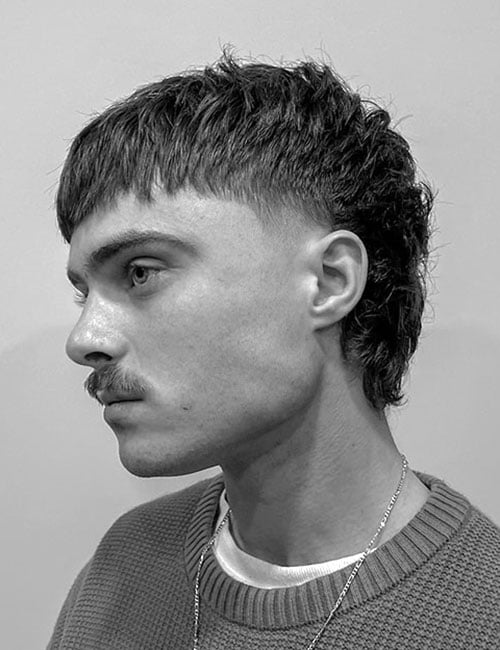
The soft mullet is for men who like the idea of extra length at the back but do not want the haircut announcing itself from across the room. The sides remain relatively full, the transition through the crown stays connected and the nape carries only enough length to change the profile. That restraint is what makes it wearable. Scissor-cut sides generally suit the concept better than an extreme fade because they allow the front, sides and back to flow into one another. Wavy hair makes the shape especially natural because the bends blur the boundaries between sections.
Edgar Cut
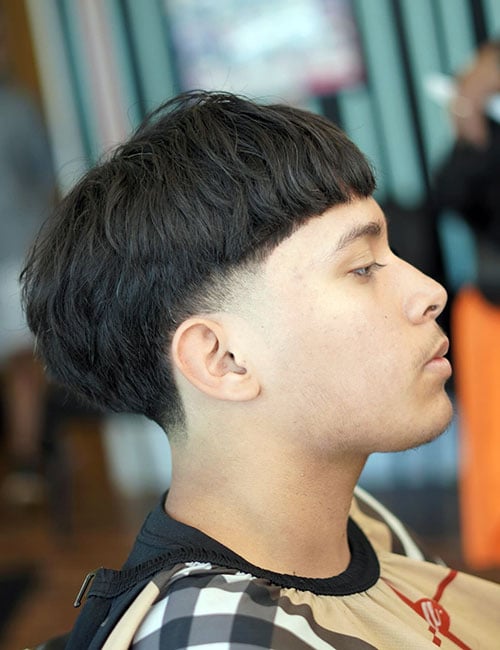
The Edgar turns the forward fringe into a much stronger line, often pairing a blunt front with a rounded or bowl-like top and tightly controlled sides. It is not a subtle haircut, which is exactly why it works for men who want the shape itself to make the statement. Dense hair helps support the heavy front edge. The danger is making the entire top equally solid, which can leave the haircut looking helmet-like. Texture farther back can relieve some of that weight without softening the fringe that defines it.
Side Part
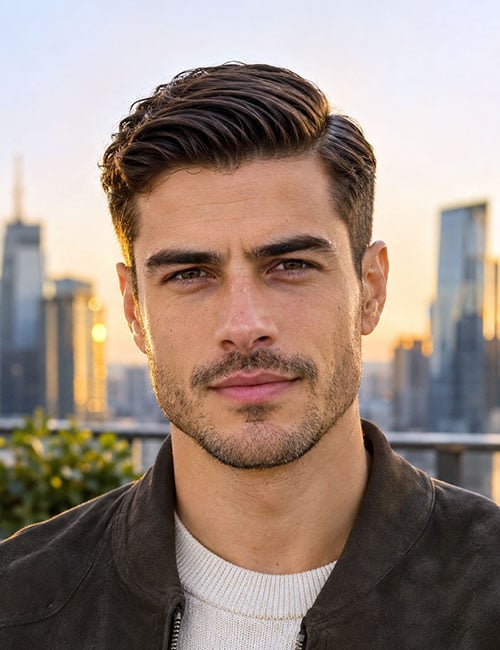
A side part remains useful because it imposes order without requiring a complicated haircut. The current version is generally softer than the razor-defined parts and high-shine comb overs that dominated a decade ago. Let the natural part determine where the hair separates, retain enough length for it to bend across the top and keep the sides proportional rather than automatically fading them to skin. A small amount of low-shine paste gives the style structure without freezing every comb line into place.
“A side part looks current when you stop over-engineering it. Follow the natural part, keep enough weight through the sides and let the top have some movement. The hard part and extremely tight fade are usually what make the style feel dated, not the side part itself,” advises Goodman.
Slick Back
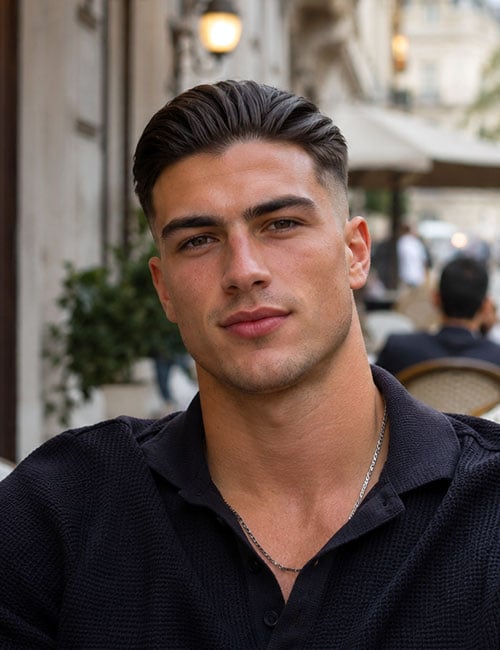
The slick back is supposed to expose the face, so there is nowhere for a weak shape to hide. The top needs enough length to travel backward, and the sides should either connect naturally or be intentionally separated through an undercut or fade. The softer approach keeps more length around the sides and uses a cream or pliable pomade rather than coating the hair in heavy shine. Men with strong cowlicks at the front may need a blow dryer to establish direction before adding product. Trying to solve resistance with more pomade usually creates grease, not control.
“The instinct with a slick back is usually to add more product when the hair won’t stay back, but that often just makes it heavier and greasier. Establish the direction with a blow dryer first, then use enough product to hold that shape without burying the natural texture,” says Dekmezian.
Buzz Cut
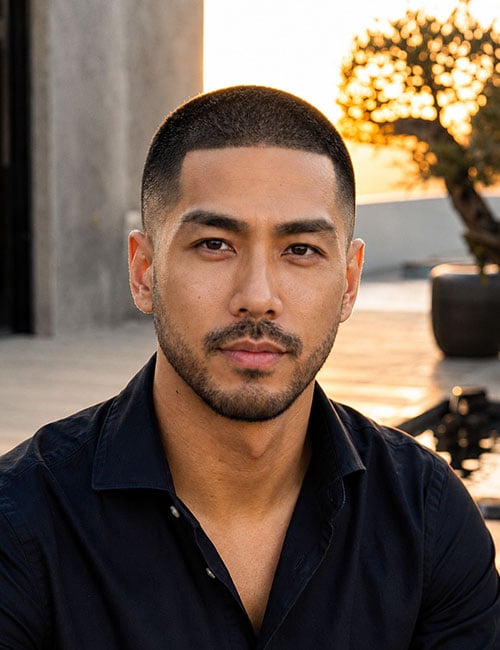
A buzz cut becomes more considered when the barber adjusts the length rather than running one guard indiscriminately over the entire head. Leaving the top slightly longer and tapering the sideburns and neckline gives the cut shape without adding any morning styling. It also makes head shape more important because there is almost no hair available to disguise proportion. A good barber can leave strategic length where the skull needs balance instead of treating the clipper number as the haircut. For maintenance, the outline will lose its precision before the overall length becomes a problem.
Side-Swept Fringe
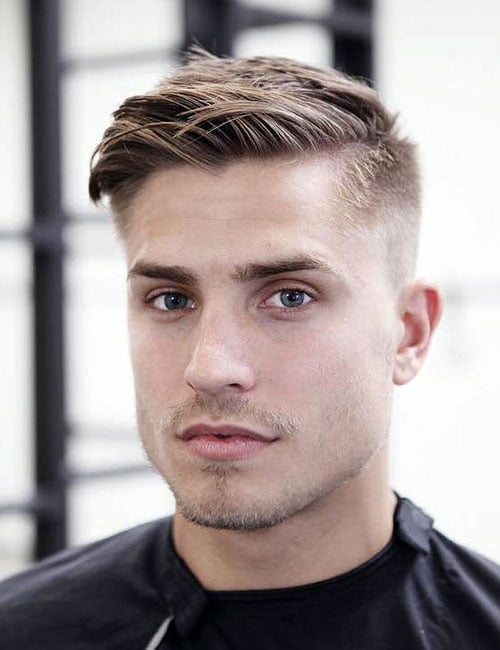
A side-swept fringe uses asymmetry to change the proportions of the front. One side carries more length and travels diagonally across the forehead, which can soften a strong hairline or keep a longer fringe out of the eyes without cutting it away. Straight and wavy hair are easiest to direct, although the cut should follow the natural growth pattern rather than insist on sweeping against a stubborn cowlick. Keep the product flexible. The moment the fringe becomes a solid, lacquered section, it starts looking much more dated than the haircut itself.
Layered Long Hair
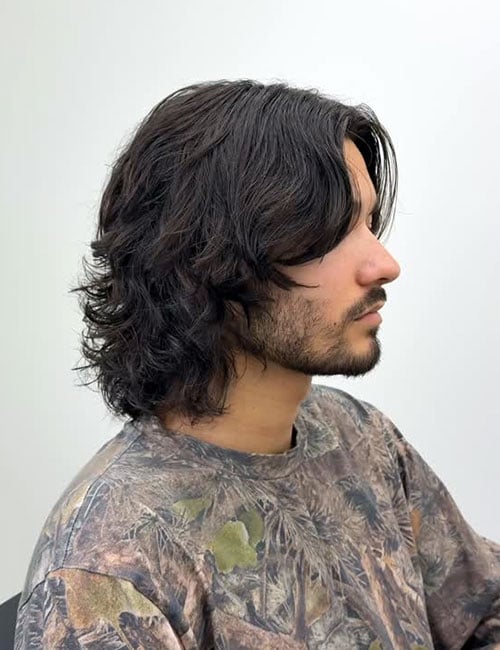
Layered long hair keeps the length but removes enough weight to stop the style from hanging as one heavy curtain. The shortest layers usually sit around the face and crown, while the longer sections preserve flow through the back. That makes the cut especially useful for thick or wavy hair, where too much uniform length can collapse at the roots and flare at the ends. For styling, work a light cream or leave-in conditioner through damp hair, then either air-dry for a softer finish or blow-dry with your fingers while lifting at the roots. Avoid heavy waxes or clays through the full length, which can drag the layers down and make the hair look greasy. “Here, the product should almost disappear once it’s applied. You want enough conditioning and control to keep the ends from looking dry, but not so much weight that the layers collapse and move together like one solid section,” advises Dekmezian.
Crew Cut
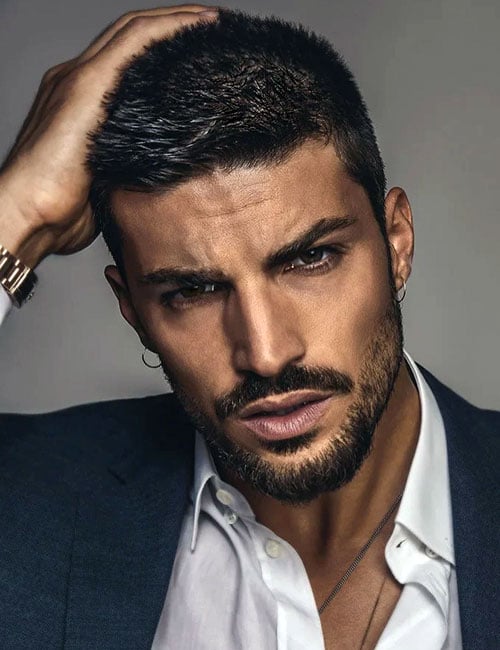
The crew cut leaves enough hair at the front to create a little lift while gradually shortening toward the crown. That difference is small, but it is what gives the haircut more character than a uniform buzz. The sides can be tapered, faded or scissor-cut depending on how conservative you want it to feel. Coarse straight hair often stands into the shape naturally. Finer hair may benefit from a slightly shorter top so it does not collapse. A pea-sized amount of paste is usually enough to give the front direction.
Ivy League
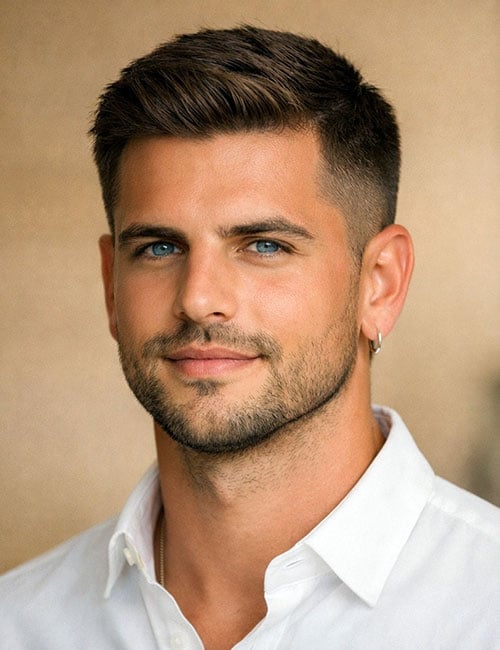
The Ivy League stretches the crew cut just far enough to create a part and a more polished front. It still stays compact around the head, but the added top length gives you the option to sweep the hair aside, brush it slightly back or wear it more casually on weekends. The cut is useful for men who want flexibility without committing to medium-length hair. Avoid taking the sides unnecessarily high. Keeping a little weight around the temples generally supports the classic proportions better than dropping a dramatic skin fade underneath them.
Short Afro
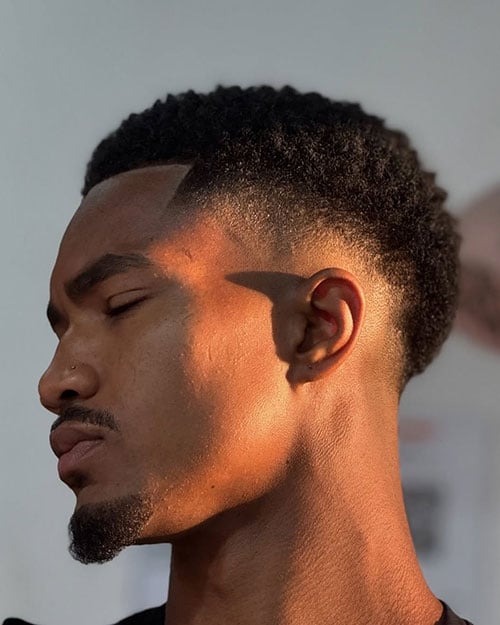
A short Afro keeps the overall silhouette full while sharpening only the edges. The top and upper sides maintain enough length to show the natural texture, while the temples and neckline are gradually tightened to give the shape definition. The haircut succeeds or fails on the outline. Removing too much from the sides can turn a balanced Afro into a narrow column, while leaving the perimeter untouched can make the shape lose definition as it grows. Moisture and conditioning matter more here than trying to force the texture into place with heavy styling product.
Caesar Cut
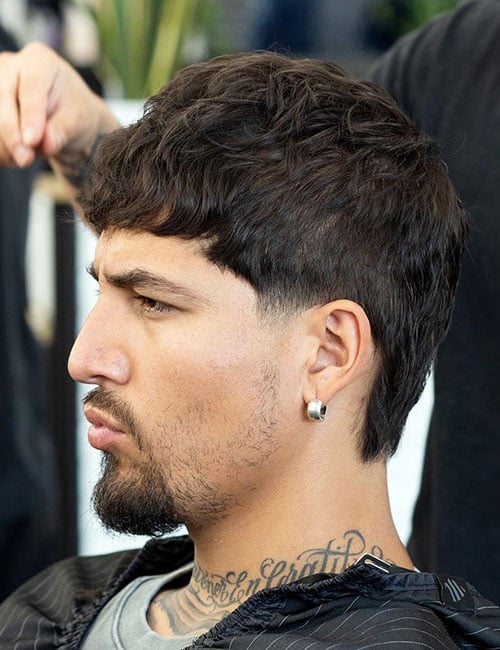
The Caesar keeps the top short and directs a compact fringe straight forward. Compared with a French crop, the top is usually more uniform and the fringe shorter, producing a tighter silhouette that asks very little of the wearer. That simplicity is useful if you want some coverage at the front without carrying several inches of hair above it. The style depends on proportion more than texture. A slight taper or softer sides can keep it contemporary, while a severe high fade changes the haircut into something much harder and more graphic.
High Top Fade
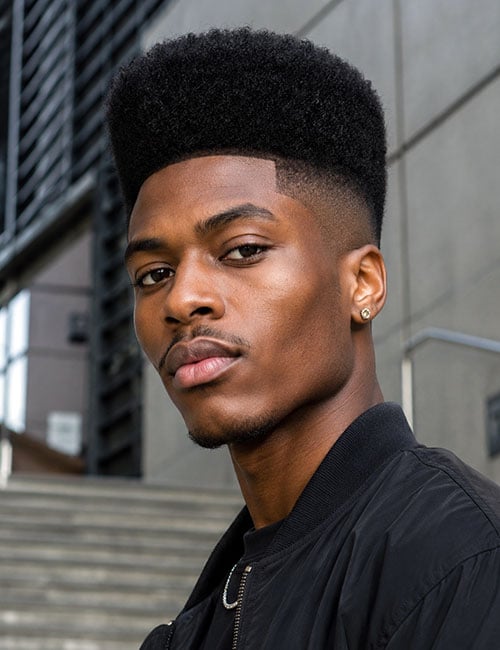
The high top fade uses vertical height as its defining proportion. The sides are taken close while the hair above rises into a taller, deliberately shaped silhouette. The current version does not need to reproduce the perfectly squared geometry of its late-’80s and ’90s predecessors. A softer top, rounded corners or visible natural texture can make the haircut feel less archival. The barber still needs enough density to establish the height and a strong transition at the sides so the shape reads clearly. Because that outline is precise, growth changes the haircut faster than it would on a looser Afro.
How To Choose A Men’s Hairstyle
Start with your hair rather than the photograph. Texture, density, growth direction and hairline determine how much work a haircut will require once you leave the shop. A loose flow may look easy on naturally wavy hair and require daily heat styling on hair that grows straight forward. A heavily textured crop can make dense hair easier to manage but expose too much scalp when the hair is fine.
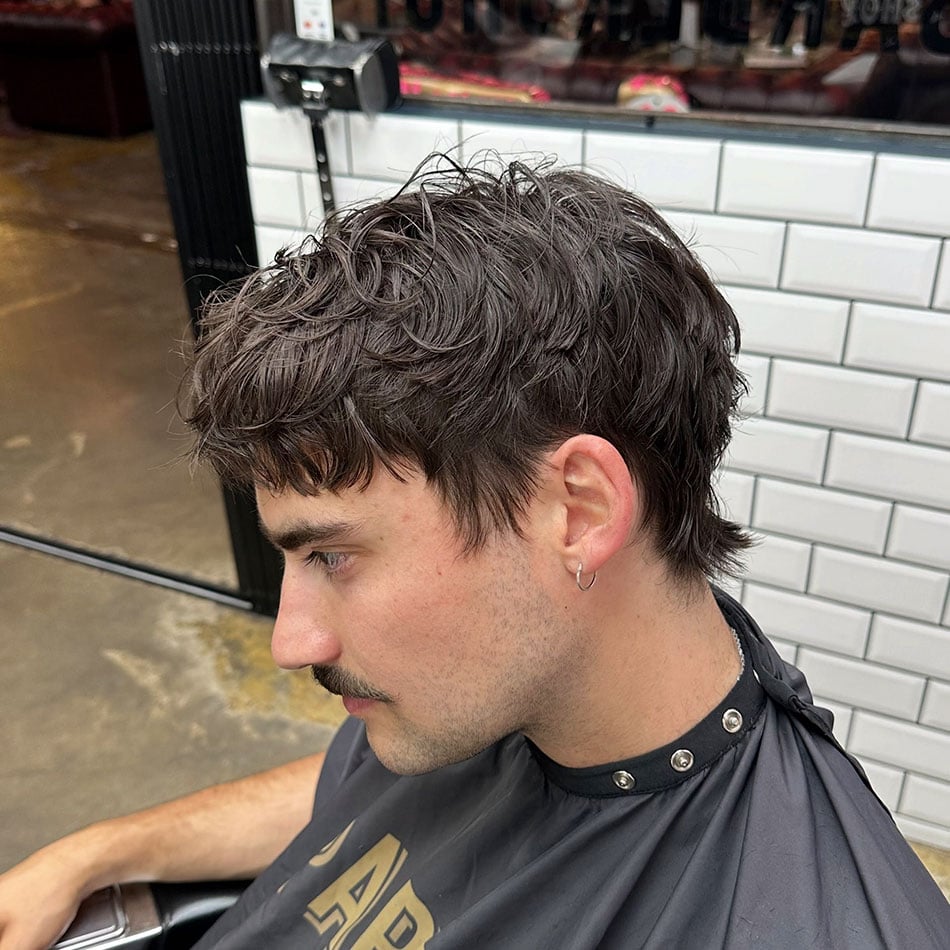
Then decide how much maintenance you actually want. Tight fades and precise outlines look strongest when recently cut. Tapers, layered medium styles and softer necklines usually tolerate more growth. The best haircut is one you still like three weeks later, not just the afternoon you leave the barber.
What To Tell Your Barber
Bring a reference photograph that shows more than the front. A side or three-quarter view can reveal the fade height, crown length, neckline and amount of weight that a head-on photograph hides.
Explain what you like about the image rather than assuming the haircut name communicates everything. Mention the length you want to keep, how much forehead you want exposed, whether you prefer the sides soft or tight and how much time you are willing to spend styling. A reference model with hair similar to yours is more useful than a perfect photograph of a texture or density you do not have.
“A reference photo gives me the silhouette, but it doesn’t tell me how that haircut needs to change for your hair. Tell your barber what you actually like about the image, whether it’s the fringe, the length, the fade or the texture, and that gives us something useful to work from,” explains Goodman.
How Often Should Men Get A Haircut?
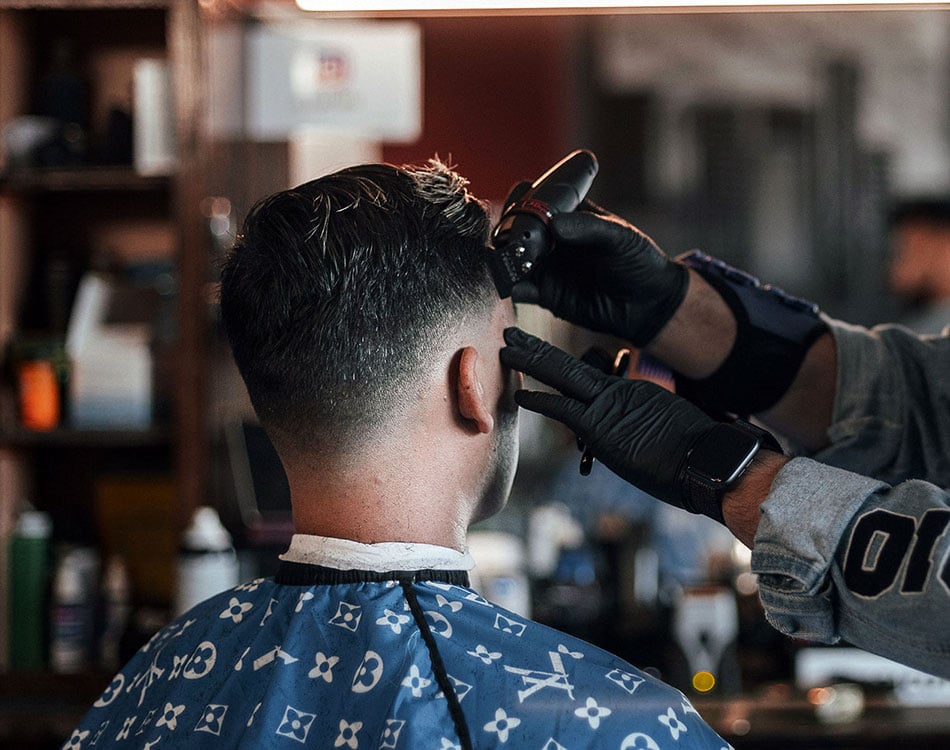
The sharper the haircut, the sooner growth becomes part of the look. Skin fades, lineups and tightly tapered short cuts may need attention every two to three weeks if you want them consistently crisp. Crops and crew cuts often settle into a three-to-five-week rhythm, while shags, flows, mullets and longer layered styles can usually go longer between full reshapes.
Do not schedule purely by the calendar. When the sides start pushing outward, the fringe stops behaving or the original silhouette disappears, the haircut is telling you it is ready.
Frequently Asked Questions About Men’s Hairstyles
What Are The Coolest Hairstyles For Men?
The trendiest men’s hairstyles include textured crops, middle parts, soft mullets, wolf cuts, longer flows and modern quiffs. The common thread is not one length or fade. A good haircut works with the natural hair, has a deliberate shape and does not depend on excessive styling to look convincing.
What Is The Easiest Haircut To Maintain?
A shaped buzz cut, short textured crop or crew cut is usually easiest to manage day to day. A buzz requires almost no styling, while a crop or crew cut may need only a small amount of matte product. Short cuts can still require frequent barber visits if you choose a skin fade or very precise lineup.
Should I Get A Fade or A Taper?
Get a fade when you want a more obvious transition and tighter sides. Choose a taper when you want to retain more weight and only clean up areas such as the temples and neckline. Tapers tend to grow out more softly, while skin and higher fades make regrowth noticeable sooner.
How Do I Know Which Hairstyle Will Suit Me?
Look first at hair texture, density, growth direction, hairline and the amount of styling you are willing to do. Face shape can refine proportions, but it should not become a rigid rule. A barber can add height, preserve width, adjust the fringe or change the fade placement to adapt the same haircut to different features.