
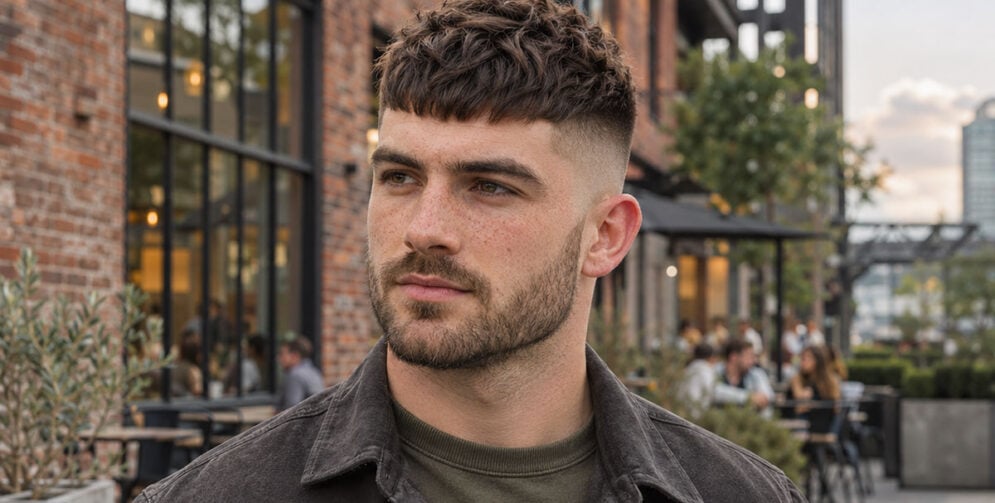
The French crop is a short men’s haircut built around one defining feature: a fringe that comes forward over the forehead. The top stays cropped enough to hold its shape, the sides are shortened to sharpen the outline, and the front can be blunt, broken or lightly textured depending on how polished you want the haircut to feel.
“The fringe is what defines a French crop. You can change the fade, the texture or the length, but if you lose that weight at the front, you’re starting to move into a different haircut,” says professional barber Eric Garibay. The front does most of the visual work. Its length and density can expose or soften the hairline, change the proportions of the face and determine whether the haircut reads clean and compact or loose and textured. Hair density matters just as much. Thick hair may need weight removed behind the fringe, while fine hair usually benefits from leaving more of it alone.
The 21 variations below cover my favorite versions that meaningfully change the shape, texture or side profile of the haircut. Some are subtle, while others push the cut into more directional territory. The point is not to collect every possible combination, but to understand what actually changes when you choose one over another.
Best French Crop Haircuts For Men
French Crop with Low Fade
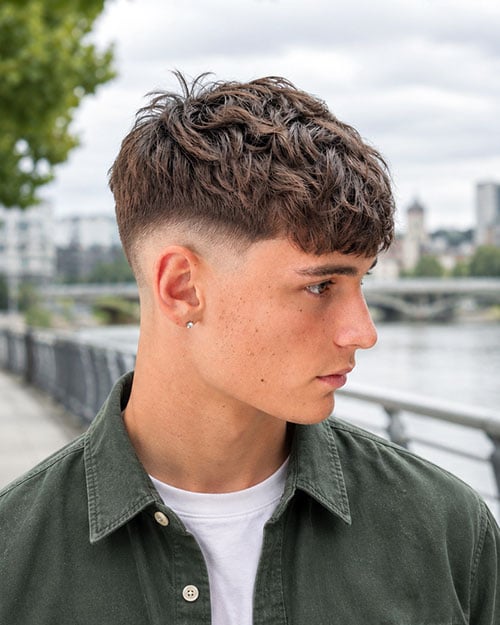
A low fade cleans up the lower sides without hollowing out the head above the temples. That makes it one of the easiest French crop combinations to wear and one of the more forgiving as it grows. The fuller upper sides keep the haircut connected to the top, while the shorter area around the ears and neckline sharpens the perimeter. It is also a useful proportion for longer or narrower faces because the sides retain some width. If the fade climbs too high, you lose the very softness that makes this variation appealing.
Textured French Crop
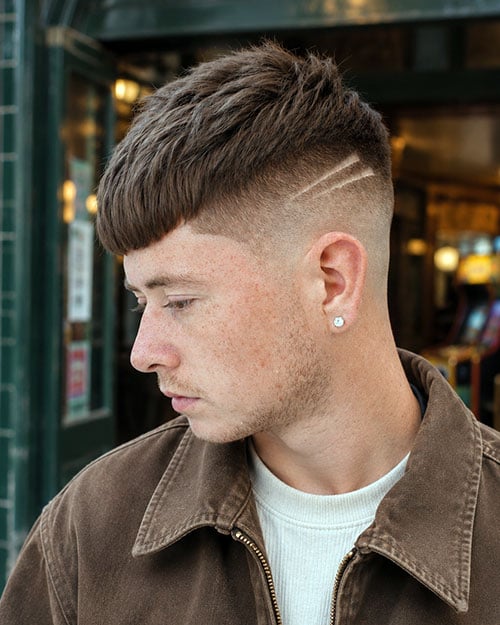
The textured version loosens the surface without sacrificing the heavier front that makes the haircut recognizably French. Point-cut layers break the top into sections, giving straight or thick hair somewhere to go instead of allowing it to sit as a single block. I would concentrate most of that separation behind the fringe.
“With thick hair, you want to remove weight without destroying the front. I’d rather take bulk out behind the fringe and leave enough density up front to keep the crop looking strong,” explains Garibay.
When the front becomes just as shredded as the crown, the haircut starts drifting toward a generic textured crop. A matte clay can exaggerate the cut texture, but the haircut itself should already provide enough separation that you are not sculpting every piece into place each morning.
Messy French Crop

A messy French crop should look disturbed, not unfinished. The top is cut with enough variation that sections can kick in different directions, while the fringe still gives the haircut a recognizable front edge. Hair with a little natural bend makes this easier because it already resists sitting perfectly flat. The styling should stay simple: rough-dry with your fingers and use just enough matte paste to keep a few pieces separated. Once every strand has been pinched into position, the supposed mess starts looking strangely meticulous.
Curly French Crop
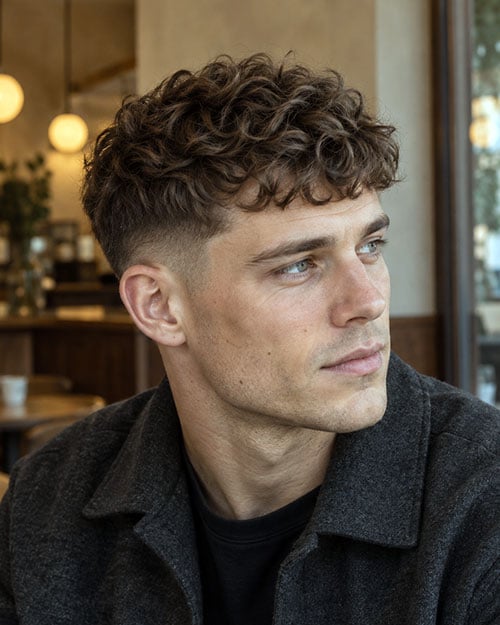
The curly French crop keeps the basic forward shape but stops pretending the fringe needs to be perfectly straight. Curls can gather across the forehead in an irregular edge, giving the cut more character than a forced horizontal line ever would. Length has to be judged in its dry state because shrinkage can move the fringe much higher than expected. This is also a cut where removing weight indiscriminately can backfire. The goal is to reduce bulk where the silhouette needs it while preserving enough density for the curls to group and hold definition.
French Crop with Taper Fade

The taper fade is the quieter option. Instead of erasing the sides, it concentrates the shortest hair around the sideburns and neckline and leaves more material through the middle. The result looks less engineered and grows out with fewer awkward stages, which makes it a strong choice if you want the fringe to carry the haircut rather than the fade. Thick hair may still need some internal weight removed to stop the sides from ballooning, but preserving that extra density gives the crop a fuller and more traditional silhouette.
French Crop Mullet
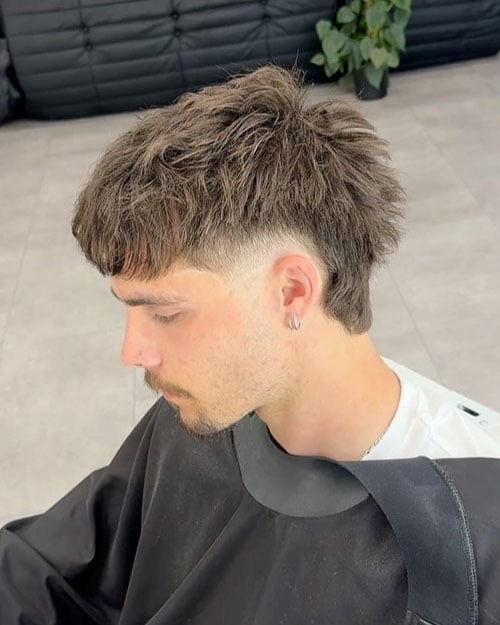
The French crop mullet takes the contrast between front and back seriously. A short forward fringe keeps the haircut recognizable from the front, while the crown extends into deliberate length at the nape. Done well, the transition feels continuous rather than like a crop pasted onto a separate mullet. That means leaving enough hair through the crown to connect both shapes. Straight and wavy hair make the progression particularly visible, but density matters more than texture. If the middle is thinned too heavily, the rear section can look stranded instead of integrated.
French Crop Mohawk
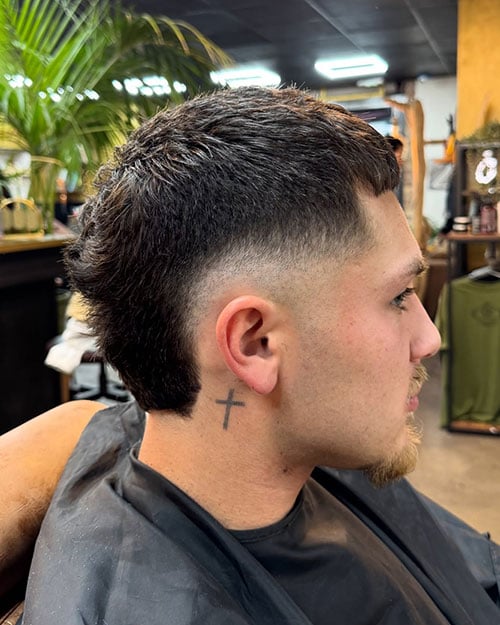
The French crop mohawk keeps the short, forward fringe at the front but narrows the haircut as it moves through the crown, creating a more pronounced center line from forehead to nape. The sides are usually faded tightly enough to expose that shape, which makes the haircut feel more directional than a standard crop without requiring the extreme separation of a traditional mohawk. Thick straight or wavy hair tends to hold the silhouette best because the top needs enough density to stay visible through the center. The key is continuity. If the barber removes too much weight between the front and crown, the crop and mohawk elements can look like two unrelated ideas instead of one connected shape.
Classic French Crop
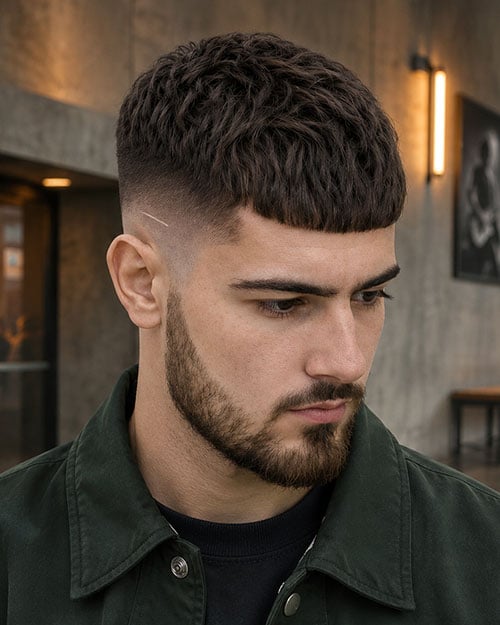
The classic French crop is a timeless men’s style where the hair sits short and controlled on top, the sides remain neat, and a substantial fringe comes forward to establish a clear line across the forehead. It should look deliberate without appearing severe. Straight hair tends to fall into this shape most easily, although a slight wave can soften the front nicely. If your hair is very dense, the barber can remove bulk farther back on the head while leaving the fringe relatively intact. That distinction matters. Thin the front too aggressively and the defining feature of the haircut disappears.
Short French Crop
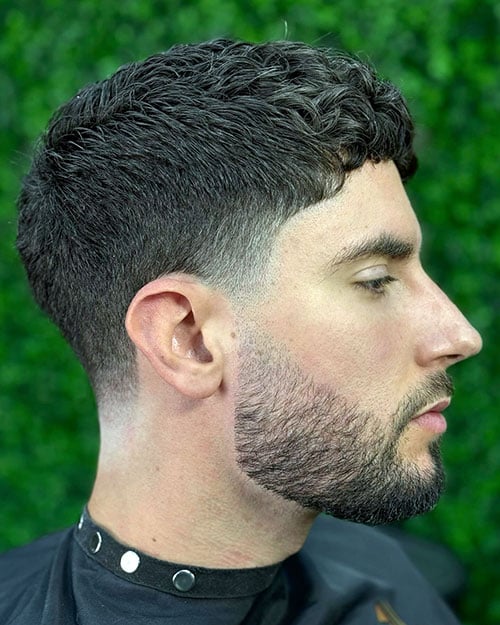
The short French crop strips the idea down to its most practical form. The top sits close enough to the head that it needs little persuasion, while the fringe finishes higher on the forehead and feels more architectural than soft. This is a useful choice for coarse or straight hair that wants to stand up because the reduced length gives it less room to misbehave. There is a tradeoff: the shorter you go, the less styling flexibility you have. If you occasionally want to sweep the front aside or wear the top with more movement, leave another half inch rather than chasing the shortest possible version.
Wavy French Crop

Waves take some of the severity out of a French crop. Instead of producing one rigid horizontal line, the fringe dips and rises with the natural pattern of the hair, while the top carries more depth than a straight crop at the same length. The barber should be conservative with thinning shears here. Wavy hair often needs its weight to settle properly, and stripping too much from the ends can make the cut expand or frizz. A slightly longer top usually gives the waves enough room to show themselves without turning the haircut into a full fringe hairstyle.
Textured Crop Fade with Beard
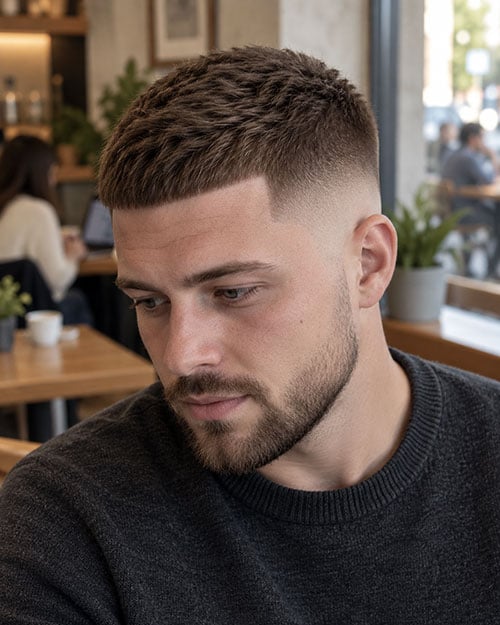
The textured crop fade with a beard is a popular combination that works because the haircut and facial hair create two separate points of structure without competing for attention. The broken texture on top keeps the cut from feeling too rigid, while the fade creates a clean transition into the beard and prevents the sides of the face from looking overly heavy. I would keep the beard shape intentional and proportional to the haircut rather than letting both the top and facial hair become equally dense. The strongest versions use the fade as the connection between them, so the haircut, sideburn area and beard read as one continuous shape.
French Crop with Mid Fade
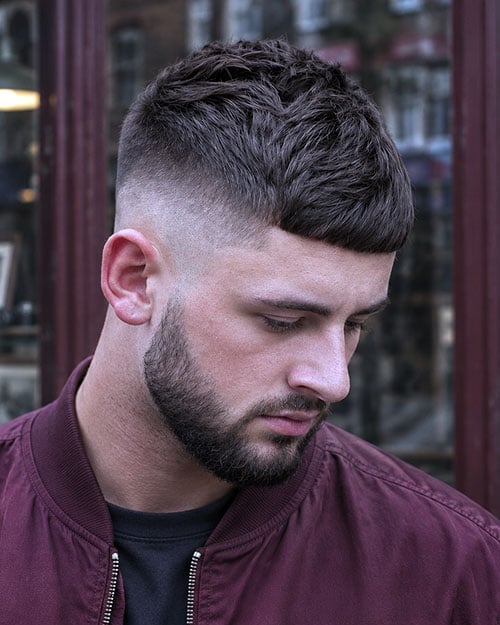
The mid fade pulls the sides in around temple height, making the top and fringe more prominent without turning them into an isolated cap of hair. It is a middle ground in the literal and visual sense: more obvious than a low fade, less aggressive than a high one. Medium and thick hair handle the transition especially well because there is enough density above the fade to keep the silhouette substantial. Ask the barber to watch the corners. Removing too much hair where the top meets the sides can leave a narrow shape that looks good from the front but oddly pinched in profile.
Long French Crop
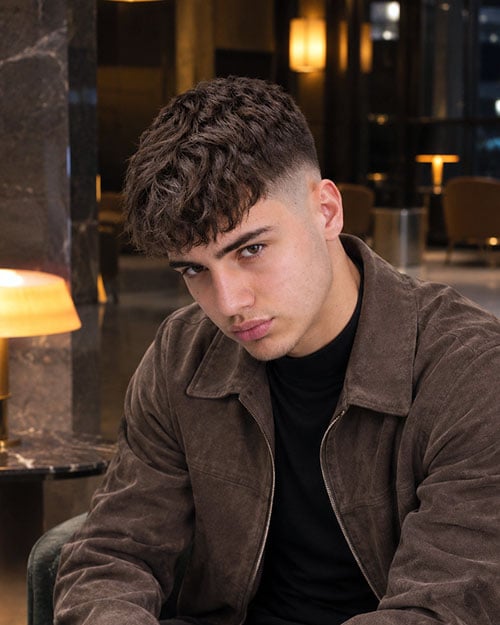
Adding length changes the character of the haircut more than changing the fade. The fringe can descend toward the eyebrows, the top gains enough weight to bend and separate, and the whole shape feels less rigid. Straight and wavy hair benefit most because the extra length reveals natural movement. The danger is bulk. If your barber leaves the top long but does nothing to manage weight through the crown and corners, the haircut can widen quickly and start resembling a bowl cut. The best versions retain substance at the front while quietly removing excess mass behind it.
French Crop with Skin Fade
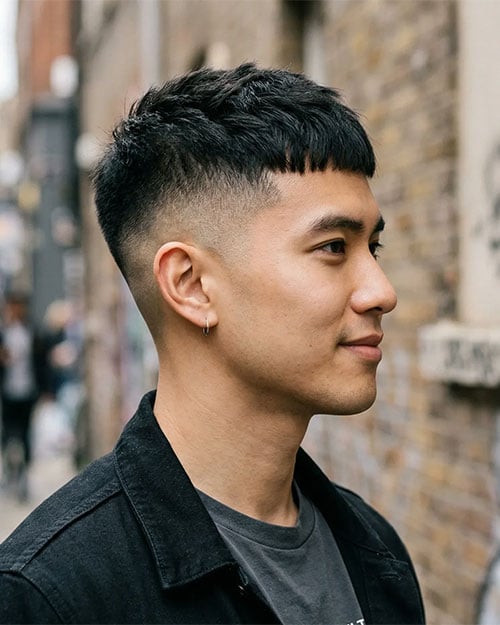
The skin fade removes the hair completely at the bottom of the sides, which makes every millimeter of growth visible and puts maximum emphasis on the crop above it. On dense hair, that sharp reduction can be useful because it removes width and lets the fringe dominate the composition. The barber’s blend matters more here than with a softer taper. Any dark band or abrupt shelf becomes obvious against bare skin. It is a crisp haircut when fresh, but that precision comes with a shorter shelf life. Expect the sides to lose their freshly cut appearance well before the top needs reshaping.
French Crop with Burst Fade
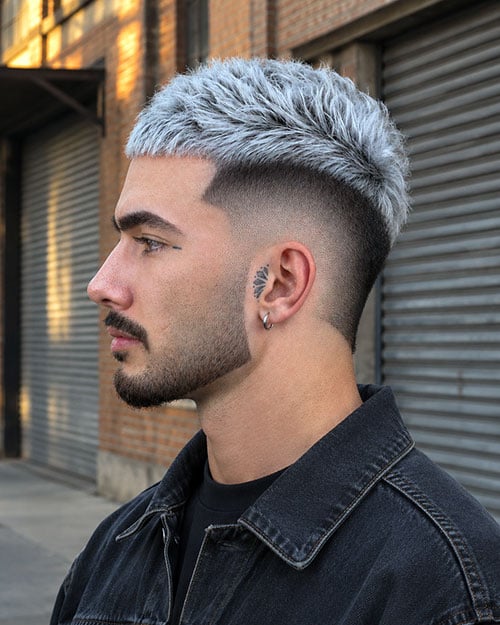
A burst fade concentrates the shortest hair around the ear and preserves more length as it travels toward the nape. That small change pushes the French crop into more directional territory and gives the rear of the haircut a stronger presence. It suits men who like the compact fringe of a crop but want something less conventional through the sides. Medium or thick hair helps because the additional density connects the top to the longer section behind the ear. Style the crown in the direction it naturally wants to move rather than forcing the entire haircut straight toward the forehead.
French Crop with High Fade
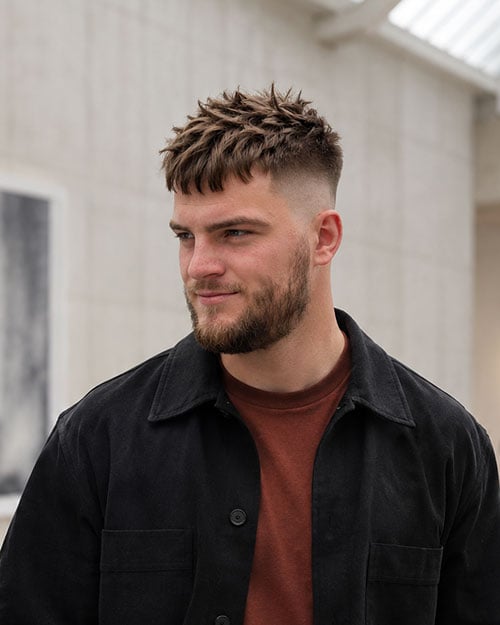
A high fade exposes much more of the sides and immediately makes the crop above look heavier. That can be useful if you want a sharper, narrower silhouette, particularly on a rounder face, but it also leaves less room for error. A long, dense top sitting above an extremely high fade can look disconnected rather than intentional. I prefer keeping the crop relatively compact when the fade is this aggressive. Regrowth also announces itself quickly because the shortest portion covers such a large area, so this is not the version to choose if you routinely stretch haircuts well past a month.
French Crop with Temp Fade
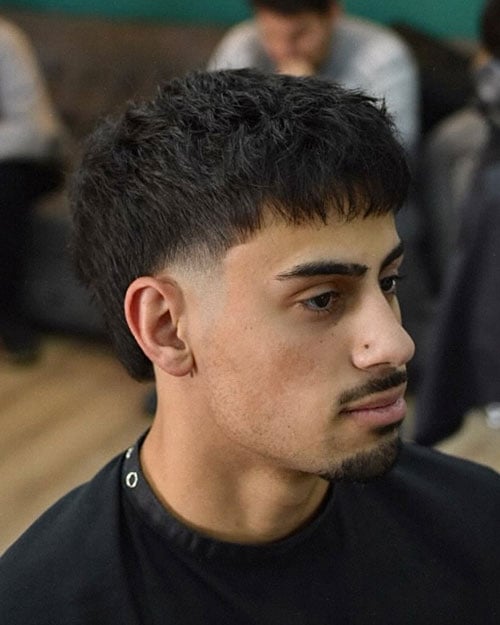
The French crop with a temp fade sharpens the haircut around the temples without removing much weight from the rest of the sides. That makes it a useful middle ground for men who want the front and top to stay dominant while still getting a cleaner, more defined outline around the face.
“Get a temp fade when you want the cut cleaned up around the face without stripping all the weight from the sides. It keeps the crop looking fuller and a little less aggressive,” Garibay recommends.
Because the fade is concentrated near the temples, this example keeps more fullness through the side profile than a low or mid fade, which can help the crop look less narrow from the front. The barber should keep the transition compact and avoid carrying the fade too far back, or the result starts reading like a conventional fade rather than a true temple treatment.
Edgy Crop
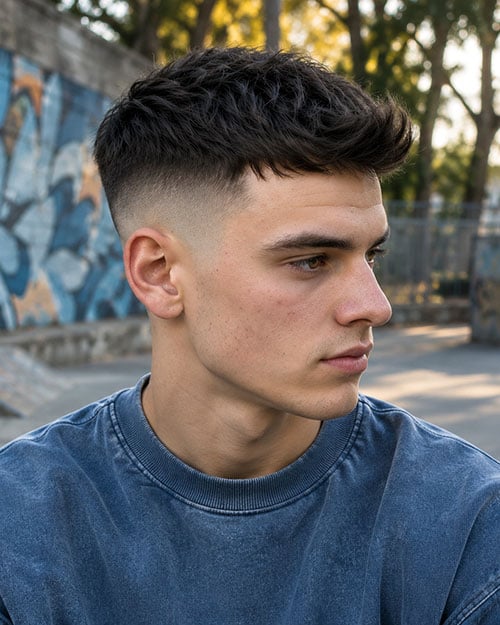
An edgy French crop pushes the haircut toward stronger contrast, rougher texture and a more deliberate fringe without abandoning the basic cropped shape. The top is usually cut with visible separation and irregularity, while the sides are kept tighter to exaggerate the difference between the compact perimeter and the broken texture above. The front can sit blunt, jagged or slightly asymmetric depending on how aggressive you want the result to feel. The key is restraint. Too many competing details can make a short haircut look chaotic rather than intentional.
“The best edgy haircuts still have some discipline to them. You can push the texture, the fade or the fringe, but if every part of the cut is trying to make a statement at once, you lose the shape that made it interesting in the first place,” advises Mondragon.
French Crop with Short Blunt Fringe
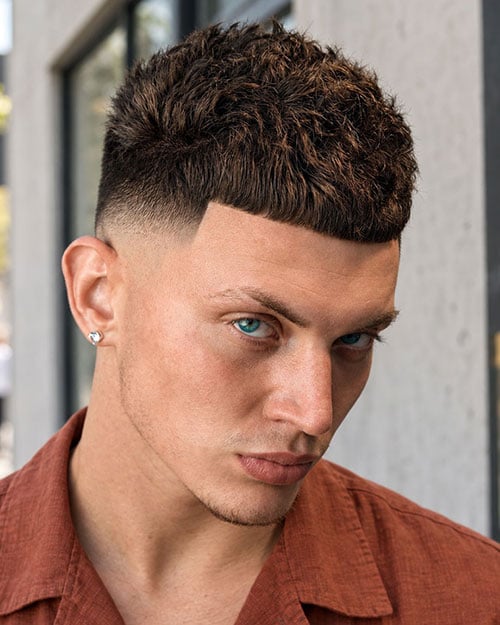
In this example, you’ll see a French crop with a short blunt fringe that makes the front edge the focal point. Instead of breaking the fringe into soft, irregular pieces, the barber cuts a cleaner horizontal line across the forehead, giving the haircut a stronger, more graphic shape. This works best when there is enough density at the front to keep the line looking solid. If the fringe is too thin or over-texturized, the blunt effect quickly falls apart.
French Crop with Drop Fade
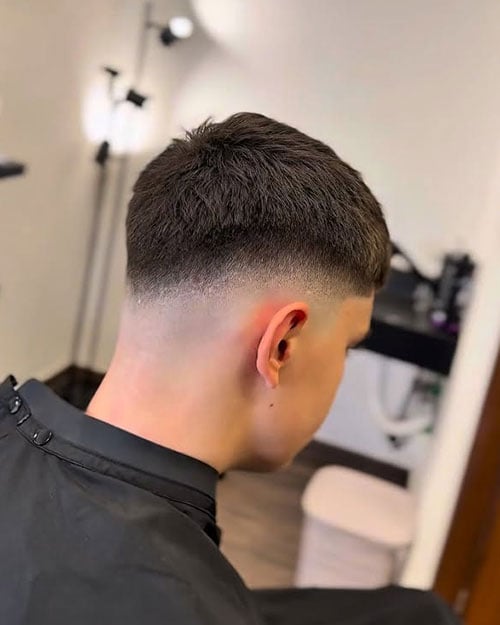
The drop fade earns its place because it changes the profile, not simply the fade height. The blend sinks behind the ear and follows the curve of the head, leaving more darkness toward the back and giving the haircut a rounder, more contoured finish from the side. This approach works when a straight fade line makes the rear of the head look flat. Keep the top comparatively straightforward. A dramatic fringe, complicated texture and conspicuous drop fade all fighting for attention can make a short haircut feel unnecessarily busy.
Classy French Crop Fade
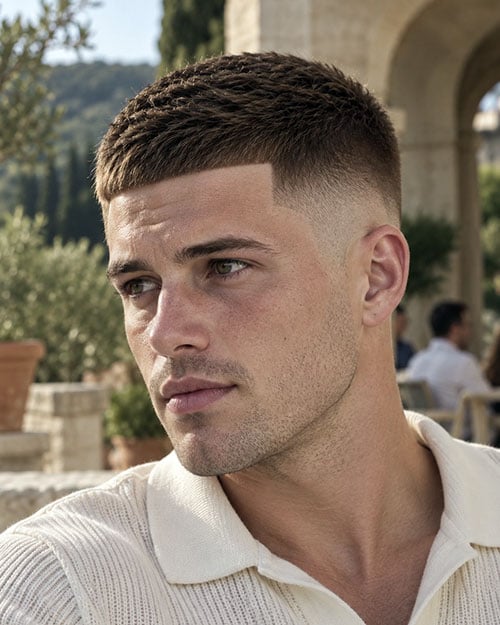
The classy French crop fade keeps the haircut polished by pairing a neat, controlled fringe with a softer fade that does not overpower the top. The texture is restrained, the outline stays clean and the overall shape feels refined rather than aggressive. A low or mid fade usually works best here, especially when the top retains enough weight to avoid looking too severe.
“For a cleaner look, I like keeping the fade balanced and the top controlled. You still want contrast, but the haircut should look polished from every angle instead of relying on an extreme fade to make it stand out,” Garibay says.
Shaggy French Crop
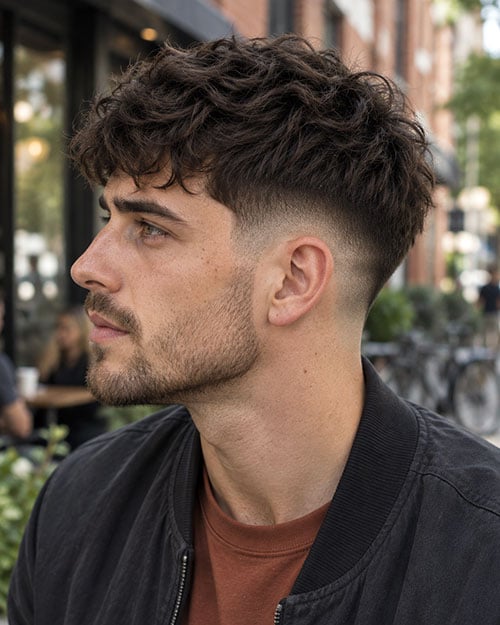
The shaggy French crop loosens the haircut by leaving more length through the top and fringe, allowing the hair to fall in uneven, layered sections instead of sitting in a compact shape. The front still moves forward, but the finish is softer and less controlled, which gives the cut a more relaxed, lived-in character. This version suits straight or wavy hair with enough density to support the extra length. The barber should remove bulk carefully rather than over-thinning the ends, otherwise the shaggy texture can turn wispy instead of substantial.
For styling, work a light sea salt spray or styling cream through damp hair, then rough-dry with your fingers while directing the front loosely forward. Let the top keep some irregular lift and separation instead of flattening it into a uniform fringe. Finish with a small amount of flexible matte paste through the mid-lengths and ends, then stop before the texture starts looking overly arranged.
How To Style A French Crop Haircut
A French crop should usually look better because of the haircut, not because of a complicated styling routine. The basic goal is to push the hair forward, preserve weight in the fringe and expose whatever texture has been cut into the top. Matte products tend to suit that finish because shine can make a short fringe look separated or greasy.
- Begin with damp hair. Towel-dry thoroughly so the hair can still be redirected without being saturated.
- Use a pre-styler only when it solves a problem. Sea salt spray can give straight hair more grip, while a light cream can calm coarse, wavy or dry hair.
- Dry the hair forward. Use your fingers instead of a brush for most crops. Lift slightly behind the fringe, but avoid turning the front into a quiff.
- Add a small amount of matte product. Work clay or paste from the back toward the front so the fringe does not receive the heaviest concentration first.
- Expose the texture. Separate selected sections through the top, then leave them alone. Overworking a short haircut usually makes it look more artificial, not more finished.
“A good French crop shouldn’t require you to fight your hair every morning. The cut should establish the direction and shape, then the product just emphasizes what’s already there,” suggests Sebastian Mondragon, founder of Barber’s Take.
What To Tell Your Barber
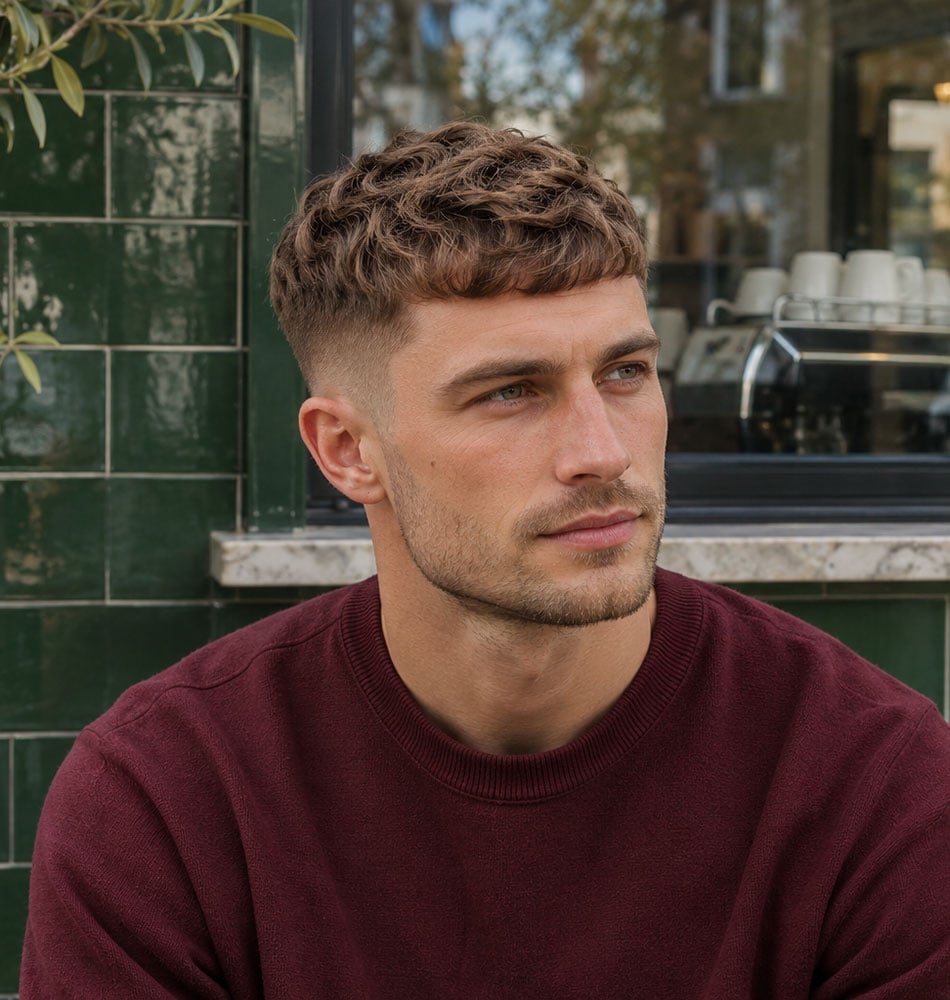
A reference photograph is more reliable than asking for a French crop and assuming you both picture the same thing. Choose an image that shows the fringe clearly and, if the side treatment matters to you, one that also shows the fade or taper from the side.
Tell your barber where you want the fringe to finish, whether you prefer a blunt or broken front, how much texture you want through the top and exactly what should happen on the sides. If your hair is fine, ask to preserve density through the fringe. If it is thick, discuss where weight can be removed without making the front sparse.
“With finer hair, I’m usually more careful about how much texture I cut into the front. You still want separation, but if you remove too much density, the fringe can start looking weaker instead of fuller,” Garibay says.
Should You Try This Style?
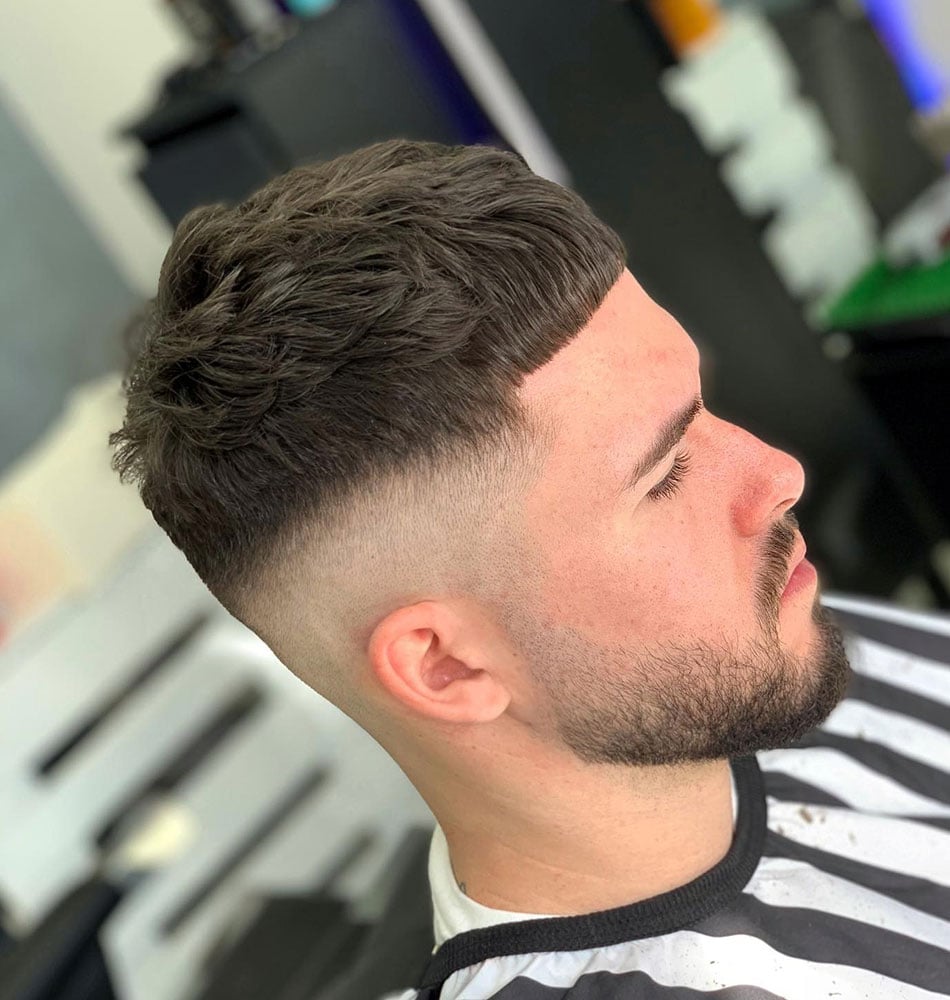
“The latest trend doesn’t work for everyone. I’d rather my clients choose a fringe style, length and fade or taper that complement their actual hair than force a popular look that you’ll have to fight every morning to pull off,” Mondragon advises. I think every barber would recommend this approach and every younger guy eventually understands this, too.
How Often Should You Get A Haircut To Maintain The French Crop?
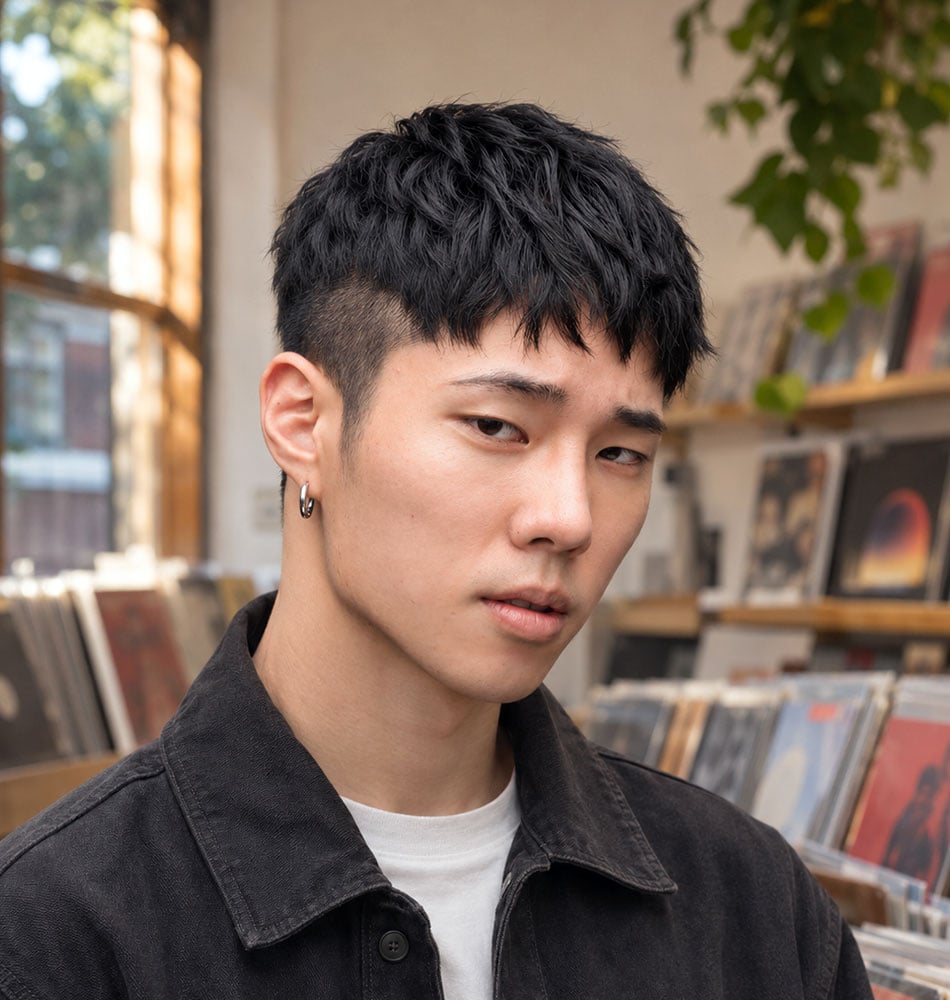
Three to five weeks is a sensible range for most French crops, but the side treatment often determines the schedule. Skin and high fades show regrowth quickly and may need attention after two or three weeks. A low fade or taper can remain presentable longer.
Watch the fringe as well as the sides. When it begins falling too low, splitting into awkward sections or losing the line that defines the haircut, the top needs reshaping.

French Crop vs. Textured Crop
The difference is mostly at the front. A French crop typically keeps more weight in the fringe and uses that line to frame the forehead. A textured crop breaks the front apart more aggressively and lets the separation across the entire top become the dominant feature.
There is plenty of overlap between them, which is why photographs are more useful than labels in the barber chair. If you want a stronger fringe and a more structured front, lean French. If you want the haircut to look looser and more fragmented, lean textured.
Frequently Asked Questions About The French Crop
What Is A French Crop Haircut?
A French crop is a short men’s haircut with cropped hair on top, shorter sides and a fringe directed forward across the forehead. The fringe can be blunt or lightly broken, while the sides may be tapered or faded. Its defining feature is the substantial forward front rather than any particular fade height.
“The best French crop isn’t necessarily the one with the sharpest fade. The fringe, your natural texture and how much styling you actually want to do matter more,” says Sebastian.
What’s The Best Way To Style A French Crop Haircut?
Start with damp hair, dry it toward the forehead and finish with a small amount of matte clay or paste. Keep the fringe relatively controlled and use your fingers to expose texture farther back on the top. Straight hair may benefit from sea salt spray first, while wavy or coarse hair often responds better to a light styling cream.
What’s The Difference Between A French Crop And A Textured Crop?
A French crop generally keeps a heavier, more deliberate fringe. A textured crop breaks the front into smaller pieces and puts more emphasis on irregular separation through the top. The categories overlap, so the better distinction is whether you want the fringe or the texture to dominate the finished haircut.
Is A French Crop Good For A Receding Hairline?
It can be. The forward fringe can reduce the amount of exposed hairline around mild temple recession and draw less attention to the corners. The barber should preserve density through the front rather than aggressively texturizing it. More advanced thinning may call for a shorter crop or another haircut that better reflects the available coverage.
Can You Get A French Crop With Curly Hair?
Yes. The fringe simply needs to follow the curl pattern instead of being forced into a perfectly straight line. Leave enough length for the curls to form, account for shrinkage before setting the fringe height and remove bulk selectively. Over-thinning curly hair can turn a controlled crop into a wide, frizzy shape.
Which Fade Is Best With A French Crop?
A low fade is the most balanced choice for many men because it cleans the lower sides while preserving weight above the temples. A mid or high fade produces a narrower, stronger outline, while a skin fade maximizes contrast. Tapers are softer and easier to grow out. The right choice depends on how much side weight you want to keep.
